
No, psilocybin-containing mushroom chocolate is illegal to carry through U.S. airport checkpoints, and you should not pack it. It falls under federal Schedule I drug law, which means TSA officers who spot it will call local police or CBP rather than wave you through. Federal penalties can include up to a year in jail for simple possession. Leave it home and choose a legal alternative instead.
TL;DR:
- Carrying psilocybin mushroom chocolate through U.S. airports is illegal under federal law, and TSA officers will involve law enforcement if detected.
- Penalties for simple possession can include up to one year in jail, and prosecution does not require proof of intent to sell.
- Suspected psilocybin products are flagged primarily by shape, density, packaging, or suspicious behavior during screening; law enforcement then takes over.
- Legally, only non-psychoactive mushroom products like dried, capsule, or liquid extracts are safe to travel with, as psilocybin items are prohibited regardless of state laws.
- Unregulated mushroom chocolates pose health risks due to mislabeling, contamination, and inconsistent dosing, raising both legal and safety concerns.
Table of Contents
- Is Mushroom Chocolate Illegal to Take Through TSA?
- How TSA and CBP Respond When They Find Mushroom Edibles
- What CDC and FDA Investigations Reveal About Mushroom Chocolate Safety
- What Happens at the Checkpoint If Something Gets Flagged
- What You Can Legally Pack Instead
- What We See Behind the Counter That Travelers Don’t
- Legal Mushroom Products You Can Actually Travel With
- Sources
Is Mushroom Chocolate Illegal to Take Through TSA?
Yes, and the reason has nothing to do with which state you’re flying from. Psilocybin, the psychoactive compound in magic mushrooms, sits on the federal Controlled Substances Act’s Schedule I list alongside heroin and LSD. That classification means the DEA treats it as having no accepted medical use and a high potential for abuse, regardless of what your home state says about it.
Airports are federal property, and TSA checkpoints operate under federal jurisdiction no matter which city or state you’re in. That single fact trips up a lot of travelers who assume decriminalization laws follow them through the terminal. They don’t. Oregon has legalized supervised psilocybin services. Colorado decriminalized personal possession and cultivation. Michigan cities including Ann Arbor have passed local decriminalization resolutions. None of that changes what happens at a TSA checkpoint, because state and local decriminalization has no bearing on federal enforcement at airports.
Pro Tip: If you’re connecting through multiple states, remember that airport security answers to federal law at every single stop, not the law of whichever state the plane happens to be sitting in.
The statute that actually governs a possession charge is 21 U.S.C. § 844, and it doesn’t require prosecutors to prove you intended to sell anything. Simple possession is enough.
Statistic Callout: A first-offense simple possession conviction under 21 U.S.C. § 844 carries a potential penalty of imprisonment and fines. Repeat offenses and larger quantities push penalties higher.
What separates a possession charge from something more serious usually comes down to context, not just the substance itself. Federal agents and prosecutors look at:
- Quantity. A single chocolate bar reads differently than a suitcase full of them.
- Packaging. Individually wrapped, labeled dosage units can suggest resale rather than personal use.
- Statements you make. Volunteering that you’re “bringing some to sell to friends” changes the legal calculus instantly.
- Accompanying paraphernalia. Scales, baggies, or ledgers found alongside the product raise the intent question fast.
None of this means a single bar automatically triggers a distribution charge. It does mean that “it’s just for personal use” is a defense you’d rather not need to make in the first place. The safest position is not having the product in your bag at all.
How TSA and CBP Respond When They Find Mushroom Edibles
TSA’s job at the checkpoint is narrow: screen for threats to aircraft, primarily weapons and explosives. Officers are not hunting for drugs. But screening technology doesn’t discriminate, and a dense, wrapped, unusually shaped item in a carry-on or checked bag routinely draws a second look regardless of what’s actually inside.
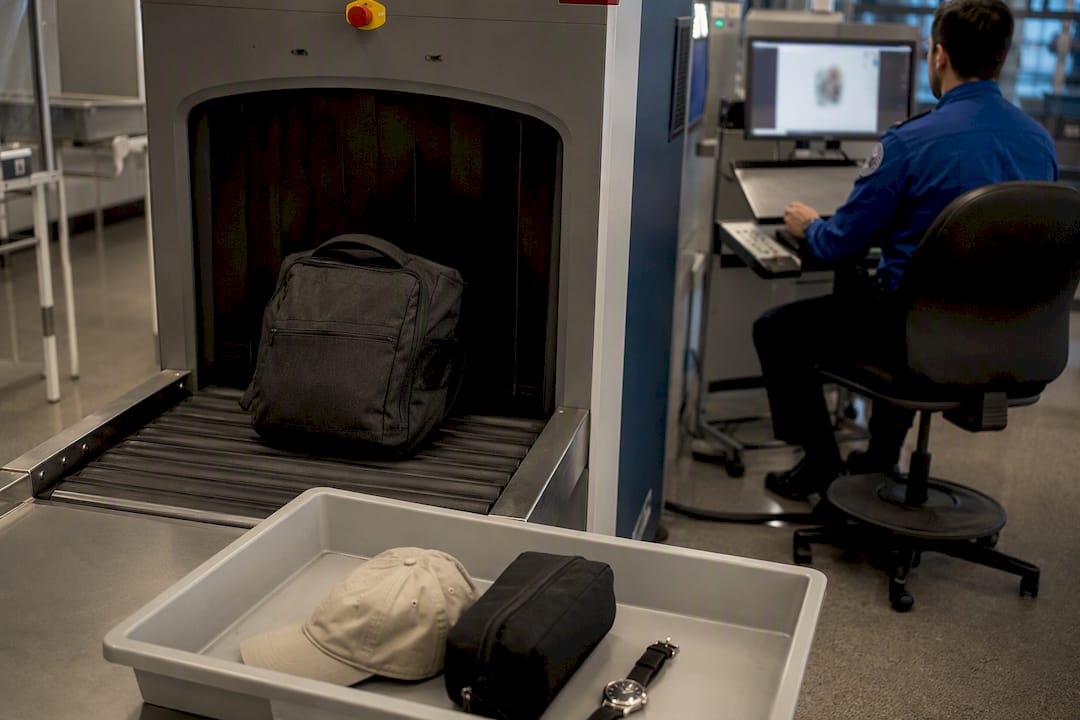
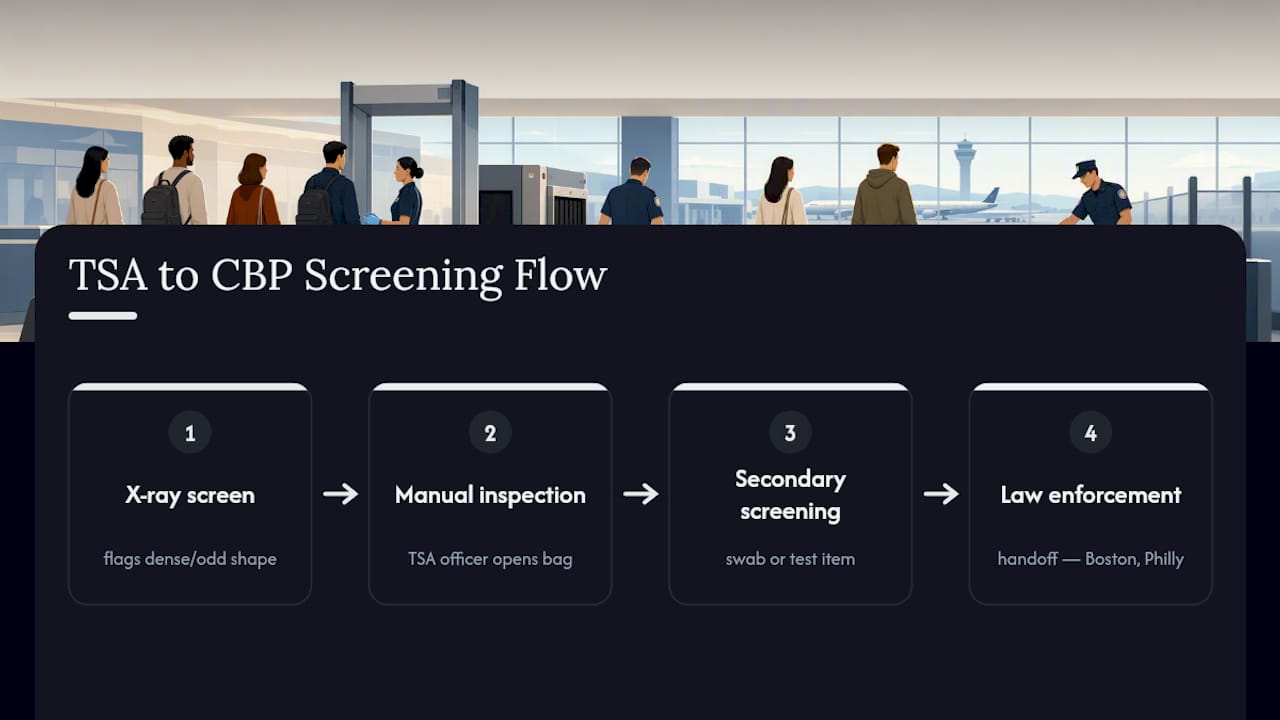
The typical sequence goes like this. An X-ray flags something with unusual density or an odd shape. A TSA officer opens the bag for a manual inspection. If the item still reads as suspicious, it moves to secondary screening, where officers examine it more closely and sometimes swab or test it. Once TSA has reasonable suspicion that an item is a controlled substance, its role effectively ends and law enforcement’s begins.
That handoff is not hypothetical. TSA has publicly described a case at Boston Logan International Airport where explosives-detection screening on checked baggage led officers to find commercial psilocybin chocolate bars, which were then turned over to police. Separately, CBP in Philadelphia intercepted magic mushrooms before an international departure, a case the agency highlighted publicly as a warning to travelers heading overseas.
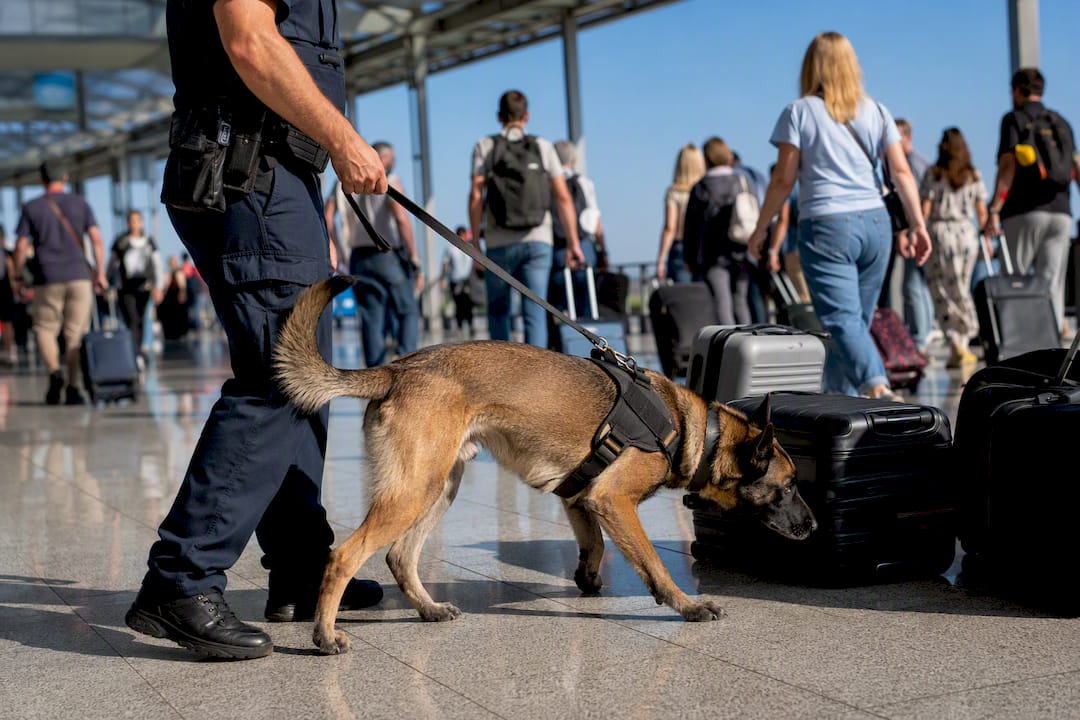
International travel adds another layer entirely. TSA’s canine teams are trained primarily to detect explosives, not narcotics. At international arrival points, though, CBP canine units and officers focus specifically on drugs, currency, and prohibited agricultural items, which means the odds of detection generally rise the moment you cross a border.
What CDC and FDA Investigations Reveal About Mushroom Chocolate Safety
Legal risk isn’t the only problem with mushroom chocolate. The product category itself has a documented safety track record, and it’s not a good one. The CDC’s MMWR investigation into severe illnesses tied to mushroom-containing chocolate products documented cases across multiple states between January and October 2024, with symptoms ranging from seizures to loss of consciousness.
Statistic Callout: The CDC’s investigation identified illnesses linked to mushroom-containing chocolate products across several states in 2024, prompting public-health follow-up and voluntary recalls.
The FDA’s parallel investigation into Diamond Shruumz-brand chocolate bars, cones, and gummies traced a wave of hospitalizations to a product line whose actual ingredients didn’t match what the label claimed. The FDA’s findings on the Diamond Shruumz outbreak pointed to contamination and mislabeling as the core problem, not just an intense reaction to psilocybin itself.
That distinction matters for anyone weighing risk. Unregulated mushroom chocolate can carry:
- Unlisted or mislabeled active ingredients, including compounds beyond psilocybin.
- Inconsistent dosing between bars from the same batch, or even within one bar.
- No verified sourcing trail if something goes wrong.
- No manufacturer accountability if the product triggers an adverse reaction.
A product that harms consumers tends to attract more regulatory attention, not less. Recalls generate press coverage, press coverage generates scrutiny, and scrutiny at the retail level often bleeds into scrutiny at checkpoints. Health risk and legal risk aren’t separate conversations here. They compound each other.
What Happens at the Checkpoint If Something Gets Flagged
Certain physical characteristics make a bag more likely to get pulled for a closer look. Vacuum-sealed packaging that doesn’t match typical retail food wrapping, a strong or unusual odor, and unusual density readings on X-ray are the three most common triggers officers describe. None of these guarantee a search, but each one raises the odds.
If your bag does get flagged, the process generally unfolds in a predictable order:
- Initial X-ray screening flags an anomaly in shape, density, or arrangement.
- Manual inspection follows, where an officer physically opens and examines the item.
- Secondary screening happens if the item still looks suspicious after the first look, sometimes involving additional testing.
- Law enforcement involvement begins the moment TSA develops reasonable suspicion of a controlled substance. At that point, DHS confirms the final call rests with the screening officer and responding agency, not with you.
How you behave during that sequence matters more than people expect. Stay calm, answer questions truthfully, and do not attempt to explain the product away as something it isn’t. Misrepresenting what’s in your bag to a federal officer is its own separate problem, on top of whatever the chocolate itself might cost you legally. If you’re detained rather than simply questioned, you have the right to ask for an attorney, and it’s reasonable to say so clearly and once.
Pro Tip: Never try to talk your way past a flagged item by claiming it’s “just candy” or “just a supplement.” If it’s tested and comes back positive, that statement becomes evidence you misrepresented a controlled substance to a federal officer, which is worse than the original possession issue.
What You Can Legally Pack Instead
The clean rule is simple: do not put psilocybin-containing chocolate, gummies, or capsules in a carry-on or checked bag for any U.S. flight, domestic or international. That’s true even for small personal amounts, even in states where possession has been decriminalized, and even if you’ve flown with it before without a problem. Past luck isn’t a legal defense.
Plenty of mushroom-based products travel just fine, though, because they’re built from culinary and functional mushroom species that carry no controlled-substance status at all. Lion’s mane, reishi, chaga, and cordyceps show up in coffee blends, capsules, tinctures, and yes, chocolate, none of which trigger the same legal exposure as psilocybin products.
A few practical packing notes:
- Solid functional mushroom products (capsules, dried powders, bars) generally travel in carry-on or checked luggage without issue.
- Liquid or gel forms, including canned mushroom extracts or broths, fall under TSA’s 3-1-1 rule, meaning containers of 3.4 ounces (100 ml) or less per item in your carry-on.
- Larger liquid quantities should go in checked luggage instead of carry-on, where the 3-1-1 limit doesn’t apply.
If you’re set on trying a legal, well-labeled mushroom chocolate product, buying at your destination from a regulated retailer beats packing anything questionable in your luggage. It’s worth understanding the practical differences in how different mushroom product forms affect detectability and consumer safety before you decide what, if anything, to bring along.
A few other travel realities worth knowing:
- Connecting through a state with different psilocybin laws than your origin or destination doesn’t change anything at the gate. TSA and any connecting-airport security checkpoint enforce federal law uniformly.
- International arrivals bring CBP into the picture, and CBP’s mandate explicitly includes narcotics detection, unlike TSA’s explosives-first focus.
- If you’re transporting other regulated but legal goods, like cigars, the same general principle applies: know the specific transport rules before you pack, because assumptions about what’s allowed can wreck a trip fast.
What We See Behind the Counter That Travelers Don’t
Running a dispensary means fielding a lot of questions that airport signage never answers, and the biggest misconception we hear is that a product being sold somewhere makes it automatically safe or legal to fly with. Those are two different questions entirely.
Mislabeling is the single biggest red flag we watch for when evaluating any mushroom product, our own or a customer’s. If a chocolate bar doesn’t list a specific batch number, a clear ingredient breakdown, or a sourced supplier, treat that as a warning sign, not a minor omission. Batch information exists so a product can be traced if something goes wrong, which matters given the illness clusters regulators have already documented.
Storage matters too. Heat and humidity degrade mushroom-based products faster than most people expect, which can change potency in ways a label won’t reflect. Readers who want a fuller breakdown of what to check before buying can look at our guide to storing and buying mushroom chocolate safely. The products worth trusting are the ones that make their sourcing boring and obvious, not the ones that make big claims and skip the details.
— Juiced
Legal Mushroom Products You Can Actually Travel With
Theelevatedremedies carries legal, clearly labeled mushroom products built specifically for people who want the wellness angle without the legal gray zone that psilocybin chocolate carries at airports.
Our amanita muscaria gummies and microdosing capsules are sourced and labeled with the batch transparency we talked about above, so you know exactly what you’re buying before you buy it. If you’re curious how amanita differs from psilocybin mushrooms and why that distinction matters for legality, our page on what amanita muscaria actually is breaks it down in plain terms. Whether you’re shopping online or stopping into our Ann Arbor location on Broadway Street, our team can walk you through which products fit your situation, travel plans included. Check out the full amanita muscaria lineup before your next trip and pick something you won’t have to worry about at the checkpoint.
Sources
- 21 U.S.C. § 844 — Penalties for simple possession
- CDC MMWR — Severe Illness Associated with Eating Mushroom-Containing Chocolate Products
- FDA investigation — Diamond Shruumz brand product illnesses and recalls
- Philadelphia CBP interrupts magic mushrooms trip to Spain — CBP press release
This article is general information, not a substitute for advice from a qualified lawyer. Consult a qualified legal professional about your own circumstances before acting on anything here.