
Ann Arbor has made enforcement of psilocybin and other entheogenic plants its lowest law-enforcement priority, but that is not legalization. The city’s 2020 resolution tells police and prosecutors to stand down on personal possession, growth, and use. It says nothing about buying, selling, or driving across state lines with mushrooms in your bag, and Michigan and federal law still classify psilocybin as a controlled substance. Washtenaw County’s prosecutor generally follows the city’s lead, but keeps the option to charge large-scale distribution or sales to minors.
TL;DR:
- Ann Arbor’s decriminalization resolution explicitly states police will treat personal possession and use as the lowest enforcement priority, but it does not legalize psilocybin or protect commercial sales.
- Michigan and federal law still classify psilocybin as a Schedule 1 controlled substance, meaning possession outside city limits or involving sales remains illegal and prosecutable.
- Local shops selling psilocybin products operate without licensing, relying on lab testing, harm reduction, and caution, but face ongoing legal and enforcement risks.
- Poison control emphasizes that decriminalization does not reduce the health risks of psilocybin, and users should follow harm reduction practices, including avoiding mixing substances and never driving.
- Residents can engage safely by reviewing primary policy documents, asking shops for testing results, and staying informed about state and federal laws to avoid legal complications.
Table of Contents
- What the Ann Arbor Psilocybin Decriminalization Resolution Actually Says
- How Does Washtenaw County’s Prosecution Policy Work?
- Does Michigan or Federal Law Still Ban Psilocybin?
- What Poison Control Wants Ann Arbor Residents to Know
- The Unregulated Shroom Shop Boom: What Buyers Should Know
- How Ann Arbor Residents Can Get Involved and Stay Safe
- Perspective: Ann Arbor’s Place in the National Decriminalization Map
- Where Ann Arbor Residents Can Find Lab-Tested Products Locally
- Sources
- FAQ
What the Ann Arbor Psilocybin Decriminalization Resolution Actually Says
The city council did not pass a vague statement of support. On September 21, 2020, it unanimously adopted Resolution 20-1389, a specific piece of legislation you can pull up on the city’s Legistar system and read for yourself. That’s worth doing, because the wording matters more than the headlines that followed it.
The resolution defines “entheogenic plants” broadly, covering psilocybin mushrooms along with other plant and fungi-based substances historically used for spiritual or personal growth, including things like ayahuasca and certain cacti. Its core operative language declares that investigating and arresting people for personal possession, use, growth, or cultivation of these substances should be the Ann Arbor Police Department’s lowest law-enforcement priority.
That phrase, “lowest priority,” is doing a lot of work here. It’s a directive about how the city allocates its own policing resources. It’s not a repeal of any law, and it does not create a legal right to possess psilocybin.
The resolution also carves out real limits. It explicitly does not protect commercial sales, distribution near or in schools, or conduct that creates genuine public-safety risks. A city council member and later local reporting confirmed the resolution represented about as far as the city could legally go on its own, since building a licensed commercial industry would require action at the state level.

How Does Washtenaw County’s Prosecution Policy Work?
City resolutions set police priorities. County prosecutors decide who actually gets charged, and Washtenaw County took its own formal step in 2021. That’s where the practical protection for residents mostly lives.
The Washtenaw County policy directive states the office will generally decline to prosecute possession, personal use, or cultivation of entheogenic plants, aligning closely with the city’s stance. It goes a step further than the resolution by spelling out the office’s own charging philosophy rather than just a policing priority.
The carve-outs mirror the city’s, with more nuance for prosecutors weighing an actual case. Large-scale distribution operations remain fair game for charges. So does selling to minors. Beyond those bright lines, the directive lists softer factors prosecutors weigh case by case, things like the quantity involved, how sophisticated the operation looks, and who the customers are. That leaves genuine discretion in the hands of individual prosecutors rather than a clean legal threshold anyone can point to.
For a resident inside Ann Arbor, this means two layers of protection are stacked together: police are told not to prioritize your case, and if it somehow reaches a prosecutor anyway, that office has committed to generally passing on it too. Neither layer, though, changes what’s written into Michigan’s statute books.
Does Michigan or Federal Law Still Ban Psilocybin?
Yes, completely. Michigan’s controlled substances schedule, MCL 333.7212, lists psilocybin and psilocyn as Schedule 1 substances. That classification exists independent of anything Ann Arbor or Washtenaw County decides about local enforcement priorities. State troopers, the Michigan State Police, and federal agencies like the DEA are not bound by a city council resolution or a county prosecutor’s internal policy memo.
That distinction shows up in real scenarios, not just legal theory. A traffic stop on I-94 involving a Michigan State Police trooper isn’t governed by Ann Arbor’s enforcement priorities the way a stop by Ann Arbor’s own police department might be. Cross the state line with mushrooms in your car, and you’ve triggered federal interstate transport concerns that no municipal resolution touches. A federal investigation, however unlikely for personal amounts, operates entirely outside local policy.
The practical risk breaks down by activity. Personal possession inside city limits carries the lowest realistic exposure, given the layered local policy. Selling mushrooms, whether from a storefront or a friend-of-a-friend network, sits in much riskier territory, since both the city resolution and county directive specifically exclude commercial sales from their protective language. Transporting product anywhere outside Washtenaw County removes even the thin protection you had.
None of this is unique to psilocybin. It’s the same layered structure that governs a lot of drug policy in the United States: local discretion sitting on top of state law that sits on top of federal law, with each layer free to enforce regardless of what the layer below it decided.

What Poison Control Wants Ann Arbor Residents to Know
Local decriminalization changes nothing about how your body reacts to psilocybin, and that’s exactly the warning the Michigan Poison & Drug Information Center issued after Ann Arbor’s resolution passed. The center’s public-service announcement makes a point that gets lost in a lot of decriminalization coverage: legal status and physiological risk are two completely separate questions.
Metabolic response to psilocybin varies significantly from person to person, depending on body weight, existing medications, and individual brain chemistry. Mixing psilocybin with other substances, especially certain antidepressants, alcohol, or stimulants, raises the risk of dangerous interactions. Wayne State’s poison center also flagged something advocates consider a genuine upside of decriminalization: people appear more willing to call for help without fearing arrest.
If something goes wrong, call the Michigan Poison & Drug Information Center at 1-800-222-1222 or dial 911. Tell them exactly what was taken, how much, and when. Withholding information out of legal fear is the single most dangerous choice in a bad situation.
A few harm-reduction basics apply every time:
- Never mix psilocybin with alcohol, stimulants, or prescription medications without knowing the interaction risk.
- Start with a low dose, especially with an unfamiliar product or supplier.
- Keep the original packaging or label so responders know exactly what was consumed.
- Never drive after taking psilocybin, regardless of how you feel.
- Have a sober person present, particularly for a first experience.
Elevated Remedies keeps a Michigan-specific safe-use guide for residents who want dosing and product context beyond what a poison-control bulletin can cover.
The Unregulated Shroom Shop Boom: What Buyers Should Know
Storefronts selling psilocybin products have multiplied across Ann Arbor since the 2020 resolution, with new shops opening as recently as January 2026. None of them operate under any municipal licensing structure, because none exists. That’s a critical difference from Michigan’s regulated cannabis industry, which has state licensing, zoning spacing requirements, and caps on the number of retail locations. Psilocybin retail has none of that scaffolding.
Operators know it. Shops selling psychedelic products in decriminalized cities have tended to borrow cannabis-industry habits voluntarily, things like lab testing and age verification, even though nothing legally requires it here. That self-imposed caution exists because the risk sits entirely on the operator’s shoulders. There’s no municipal authority granting a psilocybin business license in Ann Arbor, which means no regulatory body is inspecting these shops the way the state inspects a licensed dispensary. A shop is exposed to state or federal enforcement action at any time, and any building or code violation becomes the operator’s problem alone with no regulatory buffer.
If you’re buying from a local storefront, a few habits protect you:
- Ask specifically what lab testing was done and ask to see the results, not just a claim of testing.
- Keep your receipt and any product labeling in case you need to identify exactly what you consumed.
- Favor sellers who point you toward harm-reduction information rather than just a sales pitch.
- Be skeptical of dosing claims that aren’t backed by any visible testing documentation.
Pro Tip: Ask a shop directly which lab tested a specific batch and how recently. A vague answer, or no answer, tells you more about product quality than any label claim on the package.
How Ann Arbor Residents Can Get Involved and Stay Safe
Reading the primary documents yourself is the fastest way to speak with authority at a public meeting or in a conversation with a skeptical neighbor. The city resolution and the county policy directive are both public records, and citing them by name and date carries more weight than repeating something you read secondhand.
If you want to push policy further, here’s a practical starting point:
- Contact the Ann Arbor City Clerk’s office to find out when council next discusses drug policy or related agenda items.
- Submit public comment at a council meeting, citing the resolution number and specific language you want clarified or expanded.
- Reach out to the Washtenaw County Prosecutor’s Office directly if you have questions about how the 2021 directive applies to a specific situation.
- Partner with existing harm-reduction organizations rather than starting from scratch. They usually already have relationships with local officials.
- Propose specific model language rather than a general request. Councils respond better to concrete text than to broad appeals.
For your own safety, keep it simple: know your dose before you start, never mix substances, have a sober person nearby, and keep an emergency contact number visible. Elevated Remedies’ safe-use checklist for Ann Arbor walks through this in more detail.
Perspective: Ann Arbor’s Place in the National Decriminalization Map
Ann Arbor wasn’t first, and it won’t be last. Denver decriminalized psilocybin in 2019. Oakland, Santa Cruz, and Washington, D.C. followed with their own entheogen resolutions around the same period Ann Arbor acted. What separates Oregon and Colorado from all of these cities is that both states passed statewide measures creating licensed, supervised psilocybin services, something no city resolution can replicate on its own.
Ann Arbor’s approach fits its character: a university town willing to move ahead of state law on cultural issues, then wait to see whether Lansing eventually catches up. That’s not a knock on the city. It’s just an honest read of what a municipal resolution can and can’t accomplish.
The legal picture here keeps shifting. Storefronts keep opening, county policy keeps getting tested against real cases, and none of that guarantees where things stand a year from now. Check the primary sources yourself before you make a decision based on secondhand information.
— Juiced
Where Ann Arbor Residents Can Find Lab-Tested Products Locally
Elevated Remedies is a smoke shop and magic mushroom dispensary at 1123 Broadway St in Ann Arbor, built specifically for the gray area this article just walked you through: decriminalized enforcement, not legalized commerce, with real risk sitting on unverified products. The advantage here is straightforward. Products are claimed to be lab tested, sourced from foragers and labs, with dosing presented as precise rather than estimated, which is important given the metabolic variability the poison center warned about.
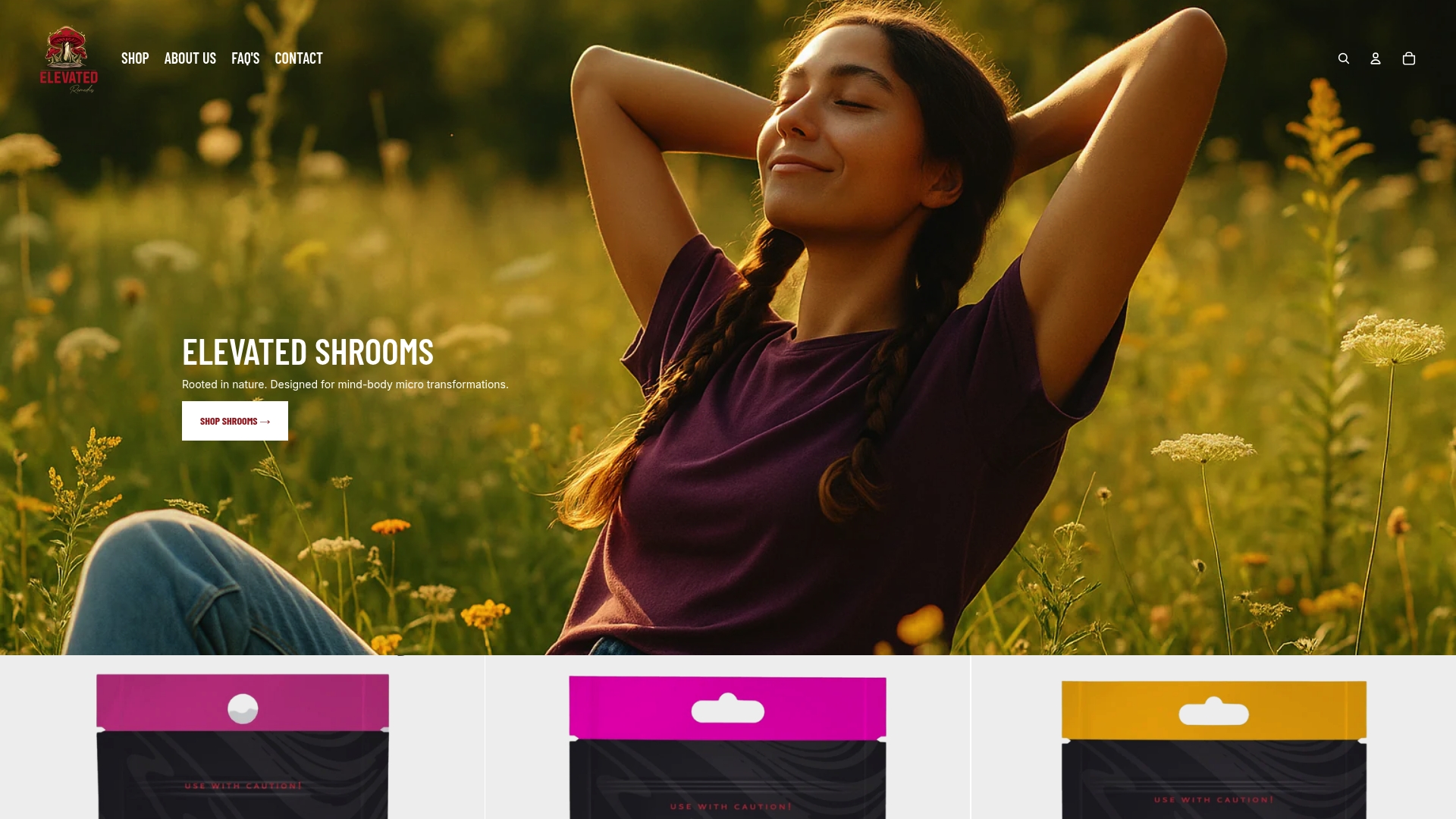
The product lineup covers the ways people actually use psilocybin locally. Mushroom Gummies suit anyone who wants a straightforward, pre-dosed edible. Mushroom Capsules are intended for microdosing routines where consistency matters more than intensity. The Mushroom chocolate bar offers an alternative format to capsules or gummies. None of this changes the legal picture laid out above. Municipal policy is not state legalization, and Elevated Remedies’ guidance is educational, not a substitute for knowing Michigan and federal law.
If you’re ready to buy or just want dosing guidance first, visit the shop at 1123 Broadway St or browse the full product collection online, and check the site’s safe-use guides before your first purchase.
Sources
Every claim in this article traces back to a document you can read yourself. Start with the primary sources, not secondhand summaries.
- City of Ann Arbor - File #: 20-1389
- POLICY DIRECTIVE 2021-06 (Washtenaw County public policy directive)
- Public Service Announcement: Psychedelics Decriminalized in Ann Arbor (Michigan Poison & Drug Information Center)
FAQ
Is Psilocybin Legal Anywhere in the United States?
No U.S. state has fully legalized psilocybin for general recreational use. Oregon and Colorado have created regulated, supervised psilocybin service programs at the state level, which is different from either simple decriminalization or outright legalization, and both remain Schedule 1 substances under federal law.
Is Psilocybin Decriminalized in Detroit?
Detroit has not passed a decriminalization resolution comparable to Ann Arbor’s Resolution 20-1389. Psilocybin remains a Schedule 1 controlled substance throughout Michigan, including Detroit, and Wayne County has not adopted a non-prosecution policy similar to Washtenaw County’s.
Can I Legally Buy Mushrooms From an Ann Arbor Storefront?
Buying is a gray area, not a green light. Ann Arbor’s resolution and the county’s policy directive both explicitly exclude commercial sales from their protective language, so a storefront transaction carries more legal exposure than personal possession does. Shops like Elevated Remedies operate with lab testing and careful sourcing, but no city or state licensing framework exists to formally regulate this retail category yet.
What Happens If I’m Caught With Mushrooms Outside Ann Arbor?
Once you leave Washtenaw County, the local decriminalization policies no longer apply. Michigan State Police and other jurisdictions are not bound by Ann Arbor’s enforcement priorities, and psilocybin possession remains prosecutable under state statute anywhere in Michigan outside the areas that have adopted their own local policies.
Does Decriminalization Mean Police Won’t Ever Arrest Me?
It means arrest for personal possession is the department’s lowest priority, not an impossibility. Public-safety exceptions, commercial sales, and distribution near schools all fall outside the resolution’s protection, and county prosecutors retain discretion to charge cases involving large-scale distribution or sales to minors.