TL;DR:
- Ann Arbor’s psilocybin collectives operate as education-focused peer support groups under local decriminalization.
- Microdosing involves careful dosing with dried mushrooms, capsules, chocolates, or gummies, starting low and tracking effects.
- Scientific evidence on benefits is mixed; user reports highlight mood and focus improvements, but risks include anxiety and legal limits.
If you’ve walked past a magic mushroom dispensary in Ann Arbor and wondered whether it’s legal, what happens inside, or whether it’s actually safe, you’re not alone. Psilocybin dispensaries in Ann Arbor operate as collectives under local decriminalization, not full legalization, which puts them in a space most people don’t fully understand. The confusion is real, and it keeps a lot of curious, wellness-focused people from making informed decisions. This guide cuts through the noise. You’ll learn how local dispensaries actually function, what products are available, what science says about microdosing benefits, and how to stay safe and smart as you explore psilocybin in Ann Arbor.
Table of Contents
- How magic mushroom dispensaries operate in Ann Arbor
- Magic mushroom products: types, dosages, and beginner tips
- Wellness, risks, and evidence: What the science and users say
- Legal and practical realities: Staying safe and smart in Ann Arbor
- Our take: Why Ann Arbor’s model works—and where most guides fall short
- Looking for trusted products and resources?
- Frequently asked questions
Key Takeaways
| Point | Details |
|---|---|
| Ann Arbor decriminalization | Magic mushroom dispensaries operate under local decriminalization, but psilocybin remains illegal statewide and federally. |
| Microdosing basics | Safe microdosing usually involves 0.1-0.5g dried mushrooms every couple days, starting with gentle strains and low amounts. |
| Wellness claims vs reality | Many users report benefits with microdosing, but scientific studies show mixed results and emphasize possible placebo effects. |
| Stay safe and legal | Never transport psilocybin outside Ann Arbor, and always ask dispensaries about testing and educational resources before buying. |
How magic mushroom dispensaries operate in Ann Arbor
Walking into a magic mushroom dispensary in Ann Arbor is nothing like walking into a cannabis store in a fully legal state. These are not retail shops with menus on a screen and a line at the register. They function as peer collectives, centered around education, community, and harm reduction rather than simple commerce.
Ann Arbor passed Resolution R-20-362, which made personal possession, use, and cultivation of psilocybin the city’s lowest law enforcement priority. That’s a meaningful local shift, but it does not change state or federal law. Psilocybin is still a Schedule I controlled substance under Michigan and federal law. This is the core tension every dispensary here navigates daily.
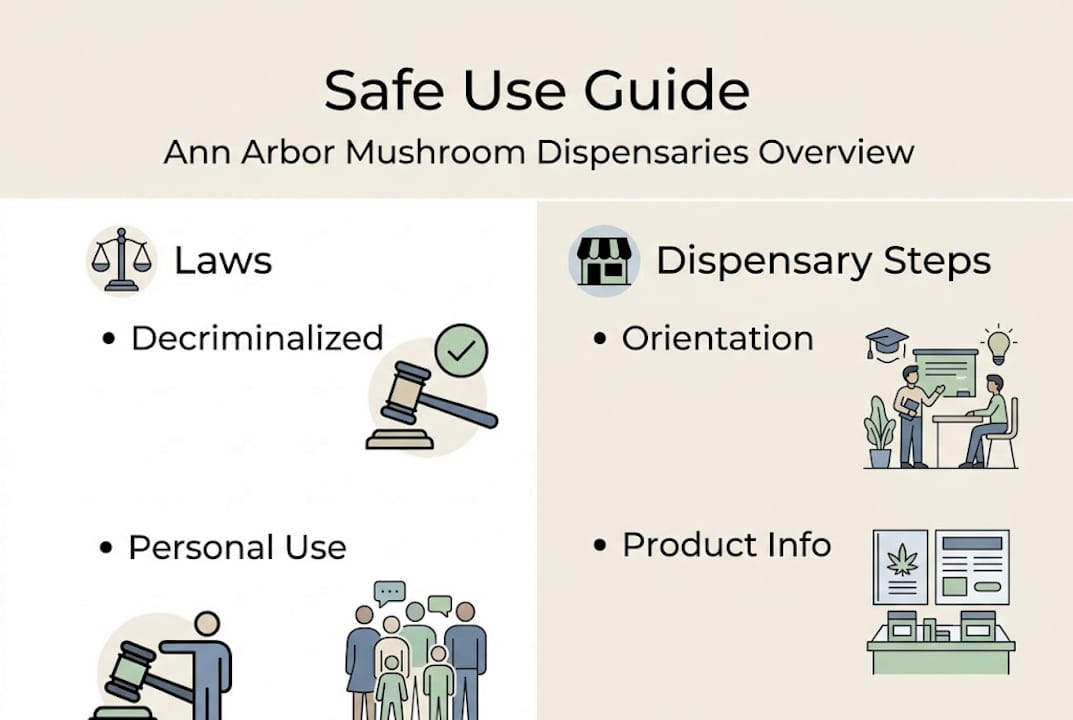
So what happens when you visit? Most collectives start with a member orientation. You’ll learn about the products, their sourcing, and responsible use practices before anything else. There’s a strong education focus, and staff are typically knowledgeable about dosing, strain differences, and risk factors. This approach aligns with safe steps for Ann Arbor users that responsible dispensaries actively promote.
Here’s a quick comparison so you can see exactly how these spaces differ from cannabis dispensaries:
| Feature | Ann Arbor Psilocybin Collective | Legal Cannabis Dispensary |
|---|---|---|
| Legal status | Locally decriminalized, state/federal illegal | State legal |
| Entry requirements | ID, orientation | ID only |
| Product labeling | Variable, often informal | Regulated, standardized |
| Staff focus | Education and peer support | Customer service and sales |
| Law enforcement risk | Lowest city priority | None at state level |
Key things to know before visiting:
- You must be 21 or older and expect to show valid ID
- Orientation is standard, not optional, at most reputable collectives
- Products vary in strain, potency, and form — ask questions
- No guarantees of lab testing exist at every location, so choose carefully
“The best dispensaries in Ann Arbor treat every visit like an educational session, not a transaction. That’s the culture that makes the local model work.”
For a broader look at what these spaces actually carry, psilocybin product examples from Michigan providers show the range of formats and potencies available locally.
Magic mushroom products: types, dosages, and beginner tips
Once you understand how dispensaries operate, the next step is knowing what you’re actually choosing between. Ann Arbor collectives typically carry four main product formats: dried whole mushrooms, capsules, chocolates, and gummies. Each has a different absorption rate, onset time, and ease of dosing.
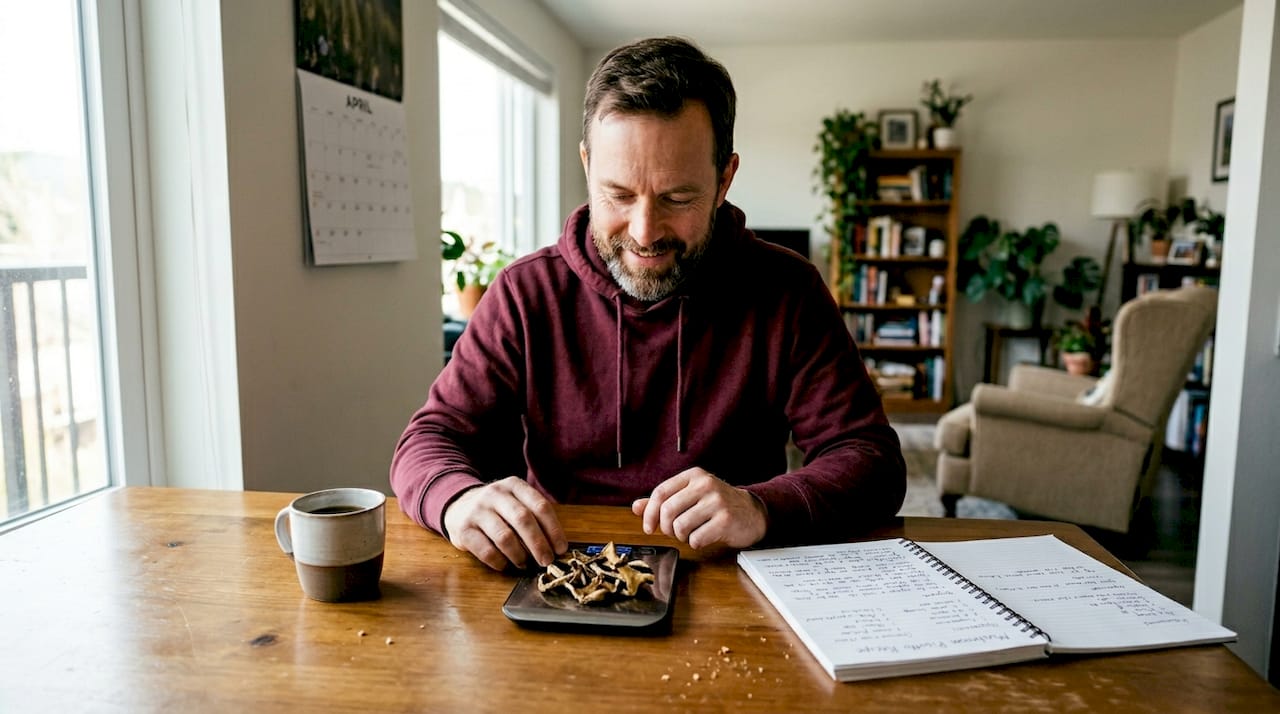
Dried mushrooms give you the most control but require a precise milligram scale. Capsules are pre-measured, making them the easiest format for consistent microdosing. Chocolates mask the earthy taste and are popular among newer users, while gummies vary widely in psilocybin content and should be approached cautiously until you know the source well.
Here’s how common strains and their typical uses break down:
| Strain | Potency | Best for |
|---|---|---|
| Golden Teacher | Mild to moderate | Beginners, first microdoses |
| B+ | Moderate | Versatile everyday use |
| Enigma | High | Experienced users only |
| Albino A+ | Moderate to high | Intermediate users |
A standard microdose of dried Psilocybe cubensis falls between 0.1 and 0.5 grams, with Golden Teacher recommended for beginners. High-potency strains like Enigma require 30 to 50 percent less than you’d use with a mild strain. Starting above your range doesn’t accelerate benefits — it mostly accelerates risk.
A practical beginner protocol looks like this:
- Choose dried Golden Teacher or a capsule equivalent
- Start at 0.1g and hold that dose for two full weeks
- Dose every 2 to 3 days, never daily, to avoid tolerance buildup
- Track your mood, focus, and sleep in a simple journal
- Only increase dose after two weeks if you feel no effects at all
Microdosing survey data shows improved mood, creativity, and focus among self-reporting users, though randomized controlled trials show no statistically significant improvement over placebo. That’s worth knowing before you set expectations. Explore the full psilocybin dosage guide for more detailed breakdowns by body weight and experience level.
Pro Tip: Never eyeball your dose. A milligram scale that costs under $15 is the single most important tool for any microdosing protocol. Caps and chocolates from verified collectives often have this step done for you, but with dried mushrooms, weigh every single time.
For more on safe protocols and strain-specific guidance, magic mushroom wellness tips cover practical approaches for both first-time and returning users.
Wellness, risks, and evidence: What the science and users say
Honesty matters here. Most Ann Arbor users who microdose report real benefits: better mood on dosing days, sharper focus, and a subtle creative lift that makes routine tasks feel more engaging. Those reports are consistent and widespread. But the clinical picture is more complicated.
Self-reports consistently show improved mood and cognitive flexibility, but when researchers run randomized controlled trials with placebo controls, the measurable cognitive and mood gains largely disappear. That’s not evidence that microdosing does nothing. It does suggest the effect is closely tied to expectation, mindset, and setting, which actually matters a lot for how you approach your own practice.
Here’s what the actual risk picture looks like for most Ann Arbor users:
- Anxiety and racing thoughts are the most common adverse effects, especially at higher doses or in unfamiliar environments
- GI upset (nausea, cramping) is common when consuming dried mushrooms on an empty stomach
- Bad trips are rare at microdose levels but possible if you accidentally take too much or mix with other substances
- Contraindications include a personal or family history of psychosis, schizophrenia, or serious heart conditions
- Drug interactions with SSRIs and lithium are a genuine concern — consult a doctor if you take either
Wellness benefits remain largely anecdotal and clinical evidence is still mixed, which is why transparency from your source and honest self-monitoring are non-negotiable.
If anxiety is a primary reason you’re exploring microdosing, read through microdose for anxiety guidance before starting, and check out the evidence on psilocybin chocolate benefits for format-specific considerations.
Pro Tip: Wait at least two full days between microdoses. Daily use accelerates tolerance faster than most people expect, and the risk of low-level perceptual disturbance increases significantly with consecutive dosing. Every 2 to 3 days is the sweet spot for sustained effects.
Legal and practical realities: Staying safe and smart in Ann Arbor
Ann Arbor’s decriminalization policy is genuinely progressive, but it has hard limits. The moment you leave the city, the protections disappear completely. Possession beyond city limits is a state and federal offense, and Ann Arbor officers can’t protect you from a state police stop on the highway outside town.
Here are the practical rules that every Ann Arbor user should internalize:
- Never transport psilocybin products outside Ann Arbor city limits, even to nearby cities
- Keep products in their original packaging to help establish local provenance if ever questioned
- Use at home or in a known, safe environment, not in public spaces
- Don’t drive after any psychedelic use, even at microdose levels
- Tell a trusted person where you are and what you’ve taken, especially for any dose above a microdose
On the dispensary side, reputable collectives actively emphasize education and harm reduction, but the unregulated market introduces real variability. Not every source has transparent testing. Adulterants are rare but not impossible when buying from unverified sellers.
Always ask these questions before purchasing:
- Where was this grown and how was it stored?
- Is there any lab or potency testing available?
- What’s the exact strain and estimated potency level?
- What’s the collective’s harm reduction protocol?
For a deeper look at responsible sourcing, psilocybin product safety outlines what to look for, and the history of magic mushrooms gives helpful context on how these plants have been used responsibly for centuries.
Pro Tip: Ask for clear product origin and content before every purchase. Any reputable source welcomes the question. If someone gets defensive when you ask about testing, walk away.
Our take: Why Ann Arbor’s model works—and where most guides fall short
Most online guides about Ann Arbor’s magic mushroom scene focus almost entirely on the legal technicality: decriminalized here, illegal there. They treat it like a compliance checklist and move on. That misses what actually makes this city’s approach work.
Ann Arbor’s model thrives because the community around these collectives prioritizes genuine education over quick transactions. The peer-driven culture here, where experienced users sit down with newcomers and talk through risks openly, is something no legal framework can manufacture. That’s the part other guides skip.
We also think it’s important to say clearly: the science is still catching up. Anyone who promises you measurable cognitive transformation from microdosing is overselling what we actually know. Honest wellness practices treat the current evidence with appropriate humility. The anecdotal benefits are real for many people, but they’re not guaranteed, and they’re not a substitute for professional mental health support.
The broader history of psilocybin shows that responsible, community-guided use has always outperformed purely individual or commercial approaches. Ann Arbor gets that instinctively. That’s what makes exploration here more thoughtful than almost anywhere else in the Midwest.
Looking for trusted products and resources?
If you’re ready to take the next step, Elevated Remedies at 1123 Broadway St is Ann Arbor’s go-to source for quality psilocybin products and real guidance. We carry dried magic mushrooms, capsules, and chocolates sourced for consistency and potency.
Browse our selection of mushroom chocolate bars for a beginner-friendly format, or check out our mushroom gummies if you’re curious about Amanita-based options. Not sure where to start? Our page on what is Amanita muscaria breaks down a popular alternative to psilocybin that’s worth understanding before you shop. Our team is here to help you explore responsibly, answer your questions, and point you toward what actually fits your goals.
Frequently asked questions
Is it legal to buy magic mushrooms from a dispensary in Ann Arbor?
Psilocybin remains illegal under state and federal law, but Ann Arbor treats personal use and local collectives as the city’s lowest enforcement priority, which is meaningfully different from being legal.
What’s the safest way to start microdosing with dispensary products?
Begin with 0.1 to 0.3 grams of dried Golden Teacher, use a milligram scale every single time, and only purchase from a reputable local collective that offers an educational orientation before you buy.
Do magic mushroom dispensaries require proof of residency or medical need?
Most Ann Arbor collectives require valid ID and a brief educational orientation, but dispensaries here do not ask for medical documentation or require city residency to participate.
Can I take magic mushroom products outside Ann Arbor city limits?
No. Carrying psilocybin outside Ann Arbor exposes you to state and federal criminal charges immediately, regardless of where you purchased the product.
Are there proven mental health benefits from Ann Arbor dispensary products?
User reports often highlight improved mood and focus, but RCTs show no significant effects versus placebo for microdosing, meaning the evidence remains mixed and largely preliminary at this point.
Recommended
- Magic mushroom consumption: Safe steps for Ann Arbor users – Elevated Remedies
- Magic mushroom dosage guide: safe & effective use in Michigan – Elevated Remedies
- Top magic mushroom wellness tips for safe, effective use – Elevated Remedies
- Michigan guide: psilocybin product examples & safe use – Elevated Remedies