
TL;DR:
- Microdosing psilocybin may influence mood by activating serotonin receptors and reducing neuroinflammation.
- Scientific evidence shows self-reports of anxiety relief are common, but controlled trials often find placebo effects.
- Legal risks remain high in Michigan, with psilocybin possession classified as a felony despite some local deprioritization.
Microdosing psilocybin for anxiety has moved from fringe wellness forums into serious scientific conversation, and Michigan residents are paying close attention. The idea is simple: take a tiny, sub-perceptual dose of psilocybin to reduce anxiety without tripping. But the reality is more layered. Evidence is mixed, legal risks are real, and the gap between what people hope for and what research confirms is wider than most guides admit. This article walks you through the biology, the actual data, practical protocols, and what living in Michigan means for your choices.
Table of Contents
- How does microdosing work for anxiety?
- Evidence snapshot: What the research really shows
- Protocols, dosing, and real-world practices
- Risks, side effects, and legal considerations in Michigan
- Why most microdosing guides skip Michigan’s hard truths
- Looking for safer wellness alternatives?
- Frequently asked questions
Key Takeaways
| Point | Details |
|---|---|
| Mechanisms show promise | Microdosing may reduce anxiety by boosting brain plasticity and lowering inflammation. |
| Evidence is mixed | Self-reports are positive, but clinical trials usually find no real difference versus placebo. |
| Michigan law strict | Psilocybin remains illegal and a felony in Michigan, with real legal risks for users. |
| Safer wellness available | Legal, natural wellness products can support anxiety relief without the risks of microdosing. |
How does microdosing work for anxiety?
To understand why people turn to microdosing, you need to know what psilocybin actually does inside your brain. It is not magic. It is chemistry, and fairly specific chemistry at that.
Psilocybin converts to psilocin in your body, which then binds to serotonin receptors, specifically the 5-HT2A receptors. These receptors are heavily involved in mood regulation, perception, and how flexible your thinking is. Activating them at low doses does not cause hallucinations, but it does shift how your brain processes emotion and stress. Think of it like adjusting the brightness on a screen rather than changing the whole image.
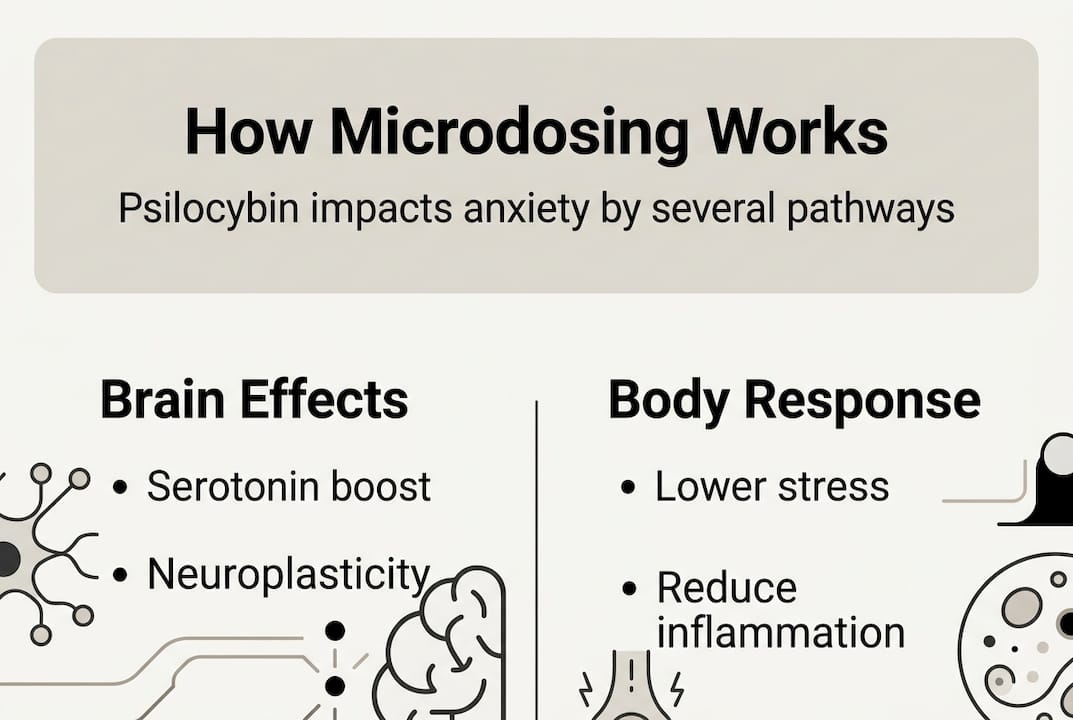
Beyond serotonin, psilocybin reduces neuroinflammation, lowers inflammatory markers like IL-6 and TNF-alpha, and boosts BDNF, which is brain-derived neurotrophic factor. BDNF is essentially fertilizer for your neurons. It supports new connections, which is why some researchers link it to improved mood and resilience. Higher BDNF means your brain is more adaptable, less stuck in anxious loops.
One of the most interesting effects involves the default mode network, or DMN. This is the brain system responsible for self-referential thinking, the mental chatter that says “what if” and “I should have” on repeat. Anxiety lives in the DMN. Psilocybin quiets it down, which may explain why some microdosers report feeling less caught in rumination.
Here is a quick look at the key biological effects:
- 5-HT2A activation: Shifts mood processing and emotional flexibility
- Lower inflammation: Reduced IL-6, TNF-alpha, and CRP levels
- BDNF increase: Supports neuroplasticity and new neural pathways
- DMN regulation: Less rumination, less anxious self-focus
| Mechanism | Effect on anxiety | Confidence level |
|---|---|---|
| 5-HT2A receptor activation | Improves emotional flexibility | Moderate |
| Neuroinflammation reduction | May lower baseline anxiety | Early stage |
| BDNF boost | Enhances brain adaptability | Promising |
| DMN quieting | Reduces rumination cycles | Moderate |
Pro Tip: If you want to understand how different strains interact with these mechanisms, check out how mushroom effects on mind and body vary before choosing a product. Not all mushrooms are equal in potency or effect profile, and mushroom strain potency can make a real difference in your experience.
Evidence snapshot: What the research really shows
Understanding the science is only part of the picture. Next, let’s see what real evidence says about whether microdosing makes a difference for anxiety.
Here is where things get honest. The biological mechanisms sound compelling, but translating them into clinical results is a different story.
Self-reported data is the most abundant. Thousands of people have logged their microdosing experiences in observational studies, and the pattern is consistent: mood and anxiety improve on dose days. People feel calmer, more present, and less reactive. That sounds great until you look at the controlled trials.
Randomized controlled trials, or RCTs, are the gold standard in medicine. They compare a real treatment against a placebo to separate actual drug effects from expectation effects. When microdosing psilocybin goes through this test for anxiety and depression, the results are often no better than placebo. That is a significant finding. It suggests that belief, routine, and intention may be doing a lot of the heavy lifting.
This does not mean microdosing does nothing. It means the evidence is not yet strong enough to say it works reliably beyond placebo for anxiety specifically.
Here is how self-reported outcomes compare to controlled trial results:
| Outcome type | Self-reported | RCT findings |
|---|---|---|
| Anxiety reduction | Frequently reported | Often matches placebo |
| Mood improvement | Common on dose days | Inconsistent |
| Focus and clarity | Widely noted | Limited controlled data |
| Long-term benefit | Anecdotal | Largely unstudied |
What gives researchers hope is what is coming next. A Phase 2 anxiety trial in Canada is currently testing microdosing specifically for generalized anxiety disorder. Results from that study could reshape the conversation entirely.
Here is what you should keep in mind as a wellness seeker:
- Self-reports are real experiences, but they are not clinical proof
- Placebo effects in mental health are powerful and should not be dismissed
- The best evidence for psilocybin currently involves full doses, not microdoses
- New trials may change what we know within the next few years
“The gap between what people feel and what trials confirm is not a reason to dismiss microdosing, but it is a reason to stay grounded in realistic expectations.”
If you are exploring this for mushrooms for focus or anxiety, pairing your curiosity with the Michigan wellness checklist is a smart starting point.
Protocols, dosing, and real-world practices
With the evidence landscape in mind, what does microdosing look like in practice? Here is how seekers put it into action.
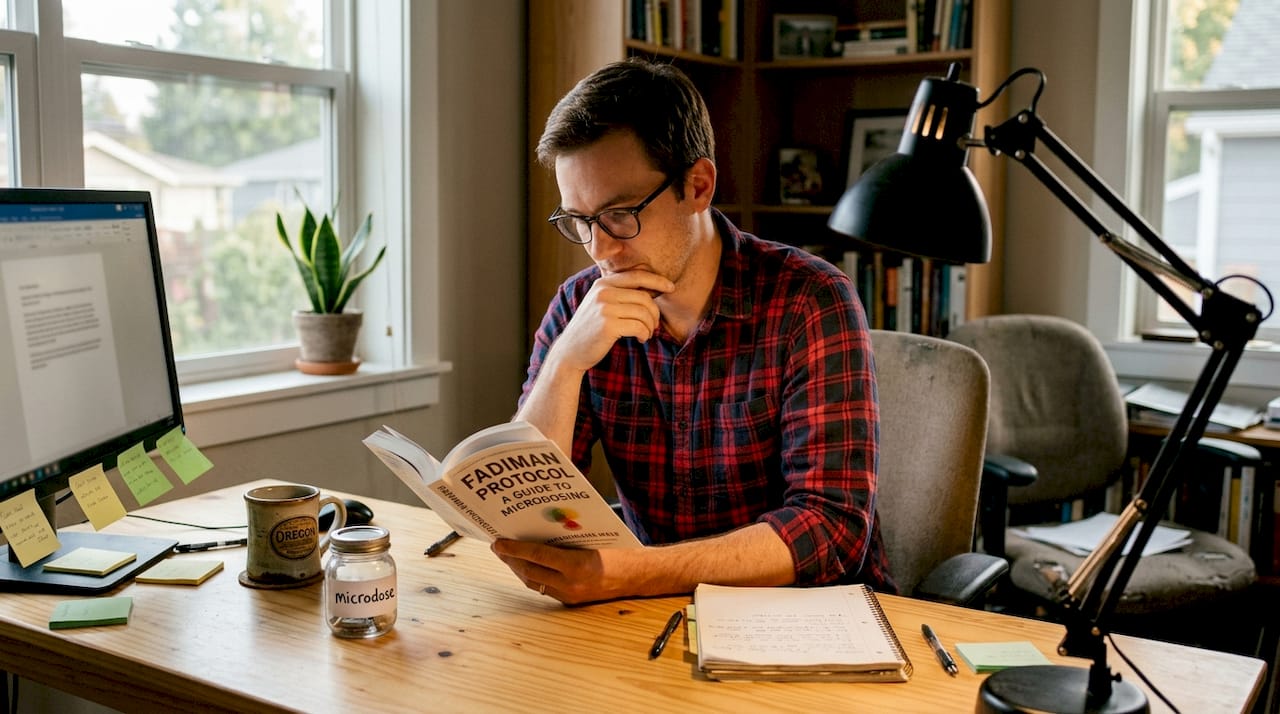
Most people follow one of two main protocols. The Fadiman protocol, developed by researcher James Fadiman, involves dosing one day on and two days off. This gives your brain time to reset and avoids tolerance buildup. The Stamets stack, named after mycologist Paul Stamets, involves four days on and three days off, often combined with lion’s mane mushroom and niacin for added neurological support.
Typical doses range from 0.1 to 0.3 grams of dried mushrooms, or around 2mg of pure psilocybin. Sub-perceptual means you should not feel high. If you notice visual changes or feel significantly altered, the dose is too high. Morning dosing is preferred because psilocybin can be mildly stimulating and may interfere with sleep if taken late.
Here is a step-by-step approach that experienced microdosers commonly use:
- Start at the lowest dose, around 0.1g, and hold there for two weeks
- Keep a daily mood and anxiety journal to track patterns
- Note sleep quality, energy, and social ease alongside anxiety levels
- Adjust dose only after two weeks of consistent tracking
- Take planned breaks every four to six weeks to reset tolerance
What to track during your practice:
- Morning anxiety rating: Scale of 1 to 10 before dosing
- Energy and focus: Note any changes by midday
- Sleep quality: Disruptions can signal a dose that is too high
- Social comfort: Many users report this as an early positive signal
- Off-day comparison: How do you feel on rest days versus dose days?
Pro Tip: Microdosing works best when it supports an already healthy routine, not when it replaces one. Pairing it with exercise, consistent sleep, and even therapy tends to produce better self-reported outcomes than taking it in isolation. For practical guidance, see our safe mushroom consumption guide and mushroom wellness tips for more on building a responsible practice.
Risks, side effects, and legal considerations in Michigan
Knowing how to microdose is only half the story. Staying safe and informed in Michigan requires some important caution.
Microdosing is not risk-free, and pretending otherwise does a disservice to anyone genuinely exploring it. The physical side effects are usually mild but real. They include short-term anxiety spikes, elevated blood pressure, and headaches, particularly on dose days. For most healthy adults, these are manageable. For some, they are a dealbreaker.
Certain people should not microdose without direct medical supervision, or possibly at all:
- Bipolar disorder: Psilocybin can trigger manic episodes
- Personal or family history of psychosis: Risk of destabilization is significant
- Heart conditions: Blood pressure increases add cardiovascular strain
- Current SSRI use: SSRIs may blunt effects or interact unpredictably
- Pregnancy or breastfeeding: No safety data exists
Tolerance also builds faster than most people expect. After a few weeks of consistent use, many users notice diminishing returns. This is why scheduled breaks are not optional, they are essential.
Now for the legal reality, which Michigan-specific guides often underplay. Psilocybin is a Schedule I controlled substance at the federal level. In Michigan, possession is a felony-level offense statewide. Ann Arbor passed a resolution in 2020 deprioritizing enforcement of natural psychedelic possession, which means local police are less likely to act. But deprioritization is not decriminalization. State law still applies. A felony conviction can affect employment, housing, and professional licenses.
For a full breakdown of what is and is not legal in your area, our psilocybin product use guide covers Michigan specifics in detail. If you are weighing your options, comparing dried mushrooms vs. chocolates can help you understand product differences before making any decisions.
Why most microdosing guides skip Michigan’s hard truths
Most online microdosing content is written for a general audience in states or countries where enforcement is looser or reform is further along. Michigan is not there yet, and that gap matters.
The honest truth is that microdosing’s promise is often overstated. The placebo-level results in RCTs do not mean the practice is worthless, but they do mean that the people seeing the most benefit are likely also doing other things right: sleeping well, managing stress, working with a therapist, and building community. Psilocybin may be supporting those efforts, or it may simply be the ritual of intentional self-care that is doing the work.
For Michigan residents, the legal risk is not abstract. A felony charge is life-altering. Ann Arbor’s deprioritization gives some breathing room, but it is not a shield. Anyone exploring microdosing here should be clear-eyed about that reality before they start.
We believe the most effective wellness approach puts professional support, lifestyle habits, and legal awareness first. Substances, even promising ones, work best as complements to a solid foundation. Before you decide, use the Michigan mental wellness checklist to assess where you actually stand and what gaps you might be trying to fill.
Looking for safer wellness alternatives?
If you are seeking natural relief but want to stay within legal boundaries, there are real options worth exploring.
At Elevated Remedies in Ann Arbor, we carry products designed for people who are curious about mushroom wellness without the legal gray areas. Our mushroom chocolate bar and mushroom capsules are sourced for consistency and quality, and our team is here to help you find what fits your goals. If you are new to the space, learning what Amanita muscaria is and how it differs from psilocybin mushrooms is a great starting point. Stop by 1123 Broadway St in Ann Arbor and let us help you navigate your options responsibly.
Frequently asked questions
Is microdosing psilocybin legal in Michigan?
No. Psilocybin is a Schedule I substance and possession is a felony in Michigan. Ann Arbor has deprioritized enforcement, but that is not the same as legalization.
Can microdosing really reduce anxiety symptoms?
Some users report real improvements in mood and anxiety, but RCTs show results that are often comparable to placebo, meaning expectation and routine may explain much of the benefit.
What are the risks of microdosing for anxiety?
Common risks include short-term anxiety increases, elevated blood pressure, and headaches, plus serious legal exposure in Michigan if you are caught with psilocybin.
What is the recommended microdosing protocol for anxiety?
The Fadiman protocol uses 0.1 to 0.3 grams every three days, while the Stamets stack runs four days on and three days off. Both emphasize consistent tracking and planned breaks.
Recommended
- Michigan mental wellness checklist 2026: anxiety & productivity – Elevated Remedies
- Michigan guide: psilocybin product examples & safe use – Elevated Remedies
- Magic mushrooms for focus: What Michigan residents need to know – Elevated Remedies
- Magic mushroom consumption: Safe steps for Ann Arbor users – Elevated Remedies
- THC Microdosing Explained: Wellness Without the High | Edwin’s Edibles & Elixirs