
TL;DR:
- Psilocybin concentrations vary widely across Psilocybe cubensis strains, affecting experience intensity.
- High-potency strains like Tidal Wave and Enigma deliver stronger effects than moderate or low-potency strains.
- Responsible use in Michigan requires lab-tested products, low dosing, and awareness of legal restrictions.
Not all magic mushrooms hit the same. Psilocybin concentrations across popular Psilocybe cubensis strains can swing from under 1% to nearly 4% of dry weight, meaning two people taking the same gram amount from different strains could have wildly different experiences. For Michigan residents curious about wellness, microdosing, or recreational exploration, understanding these differences is not just interesting — it is genuinely important. Choosing the wrong strain for your goal can mean the difference between a gentle mood lift and an overwhelming afternoon. This guide breaks down the chemistry, compares the most popular strains side by side, and gives you practical guidance for safe, intentional use.
Table of Contents
- Understanding mushroom strains and their chemistry
- Potency comparison: Popular strains and their effects
- How mushroom strains influence wellness, microdosing, and creativity
- Safety, legality, and smart use of mushroom strains in Michigan
- What most guides miss about mushroom strain effects
- Explore trusted mushroom products for your experience
- Frequently asked questions
Key Takeaways
| Point | Details |
|---|---|
| Strain potency varies widely | Some mushroom strains can be more than twice as potent as others, significantly affecting user experiences. |
| Moderate strains are safest | Strains like Golden Teacher offer reliable, predictable effects ideal for wellness or microdosing routines. |
| Scientific evidence matters | Recent research shows microdosing benefits are often overstated, so informed choices and caution are crucial. |
| Legal status can impact choices | In Michigan, psilocybin remains federally and state illegal, so safety and legality should always be considered. |
Understanding mushroom strains and their chemistry
A “strain” in the mushroom world refers to a genetically distinct variety within the same species, much like how different apple varieties share the same species but taste completely different. With Psilocybe cubensis, the most widely cultivated magic mushroom species, dozens of named strains exist. Each one carries a unique genetic fingerprint that influences how it grows, how it looks, and most importantly, how it affects you.
The two main psychoactive compounds (the ones responsible for the experience) are psilocybin and psilocin. Psilocybin is the prodrug, meaning your body converts it into psilocin after you consume it. Psilocin is what actually binds to serotonin receptors in the brain, producing altered perception, mood shifts, and sometimes profound psychological experiences. Think of psilocybin as the locked door and psilocin as the key that opens it.
What makes comparing mushroom strains so valuable is the sheer range of chemical variation. Research shows that psilocybin concentrations in P. cubensis range from 0.208 to 5.344 mg/g and psilocin from 0.651 to 3.509 mg/g, with high inter-strain variability driven by genetics, cultivation conditions, and environment. That is not a small gap. It means a “standard” dose can feel completely different depending on the strain.
Beyond psilocybin and psilocin, some researchers have proposed an “entourage effect” involving minor alkaloids like baeocystin and norbaeocystin. The idea is that these trace compounds might modify the overall experience. However, current evidence for this is mostly theoretical. The entourage hypothesis remains interesting but unproven, so it should not drive your strain decisions right now.
Here is a quick summary of what shapes a strain’s chemical profile:
- Genetics: The core blueprint inherited from parent cultures
- Cultivation method: Substrate, humidity, and temperature all influence alkaloid production
- Harvest timing: Earlier harvests often yield higher psilocybin content
- Drying and storage: Improper drying degrades psilocin rapidly
“Understanding the chemistry behind a strain is not about memorizing numbers. It is about knowing what variables actually drive your experience so you can make smarter choices.”
This foundation matters before you ever compare strain names or read potency charts.
Potency comparison: Popular strains and their effects
Once you understand the chemistry, the numbers behind specific strains start to tell a real story. Not all popular strains are created equal, and the gap between the mildest and most potent options is significant enough to change your entire experience.

Here is how the top mushroom strains compare based on total alkaloid content by dry weight:
| Strain | Total alkaloid content | Experience profile |
|---|---|---|
| Tidal Wave | 3.82% | Intense visuals, strong euphoria, fast onset |
| Enigma | 3.76% | Deep introspection, heavy body sensation |
| Yeti | 3.65% | Energetic, visual, unpredictable |
| Penis Envy | 2.90% | Potent, emotional, longer duration |
| Golden Teacher | 1.5 to 2.0% | Gentle, clear-headed, predictable |
According to strain alkaloid analysis, Psilocybe cubensis strains vary significantly in total alkaloid content, with Tidal Wave at 3.82%, Enigma at 3.76%, Yeti at 3.65%, Penis Envy at 2.90%, and Golden Teacher at 1.5 to 2.0% by dry weight.
What do these numbers actually mean in practice?
- A 1g dose of Tidal Wave delivers roughly twice the alkaloids of the same weight in Golden Teacher
- Experienced users often report that high-potency strains like Penis Envy produce more emotional intensity, not just stronger visuals
- Golden Teacher’s lower and more consistent alkaloid range makes it far more predictable across batches
- Strains above 3% total alkaloids are generally not recommended for beginners
Appearance tells you almost nothing about potency. A small, dense Penis Envy mushroom can outperform a large, fluffy Golden Teacher cap by a wide margin. Weight matters, but strain identity matters more.
For recreational users in Michigan, this comparison helps set realistic expectations. Choosing Tidal Wave expecting a Golden Teacher experience is a recipe for being caught off guard. The numbers are not just trivia. They are practical guides for planning your dose, your setting, and your day.
How mushroom strains influence wellness, microdosing, and creativity
Potency shapes more than just recreational intensity. It directly affects how useful a strain is for specific wellness goals, especially microdosing.
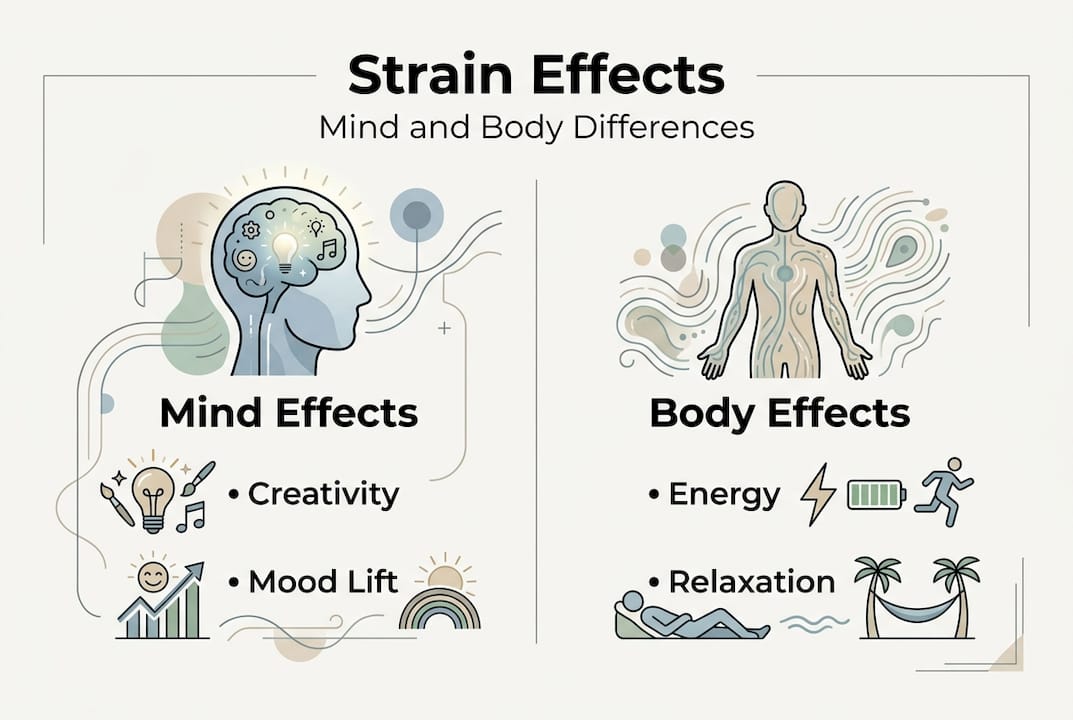
Microdosing typically means taking 0.1 to 0.3g of dried cubensis, a dose low enough to avoid perceptible psychedelic effects while (theoretically) supporting mood, focus, and creativity. The appeal is real, but the science is still catching up. Placebo-controlled microdosing trials show no significant cognitive or mood benefits over placebo, even though self-reports are consistently positive. Some participants also reported increased bodily discomfort. The gap between what people feel and what controlled studies measure is a live debate in psychedelic research.
For microdosing goals, strain potency matters a lot:
- High-potency strains (Tidal Wave, Enigma): Tiny measurement errors become significant. A 0.05g miscalculation with a 3.8% strain hits much harder than the same error with Golden Teacher.
- Moderate strains (Golden Teacher, B+): More forgiving dose windows, better suited for consistent routines.
- Consistency across batches: Lower-potency strains tend to show less batch-to-batch variation, which matters for a reliable weekly protocol.
For wellness tips for use, strain selection is just one piece. Set, setting, and intention all play roles that no alkaloid chart can replace.
When it comes to creativity and focus and magic mushrooms, many Michigan users report that moderate-potency strains support a cleaner, more workable headspace. High-potency strains at even slightly elevated doses can shift the experience away from productive creativity and into something harder to direct.
Here is a quick reference for matching strain to goal:
| Goal | Recommended potency | Suggested strain |
|---|---|---|
| Microdosing routine | Low to moderate | Golden Teacher, B+ |
| Creative sessions | Moderate | Golden Teacher, Mazatapec |
| Deep introspection | High | Penis Envy, Enigma |
| First-time exploration | Low to moderate | Golden Teacher |
Pro Tip: If you are starting a microdosing routine, use a precise digital scale that measures to 0.01g. Even a moderate strain like Golden Teacher can produce noticeable effects at 0.4g, which is above the typical microdose range.
Safety, legality, and smart use of mushroom strains in Michigan
Before you act on any of this information, you need a clear picture of where Michigan stands legally and what responsible use actually looks like.
Psilocybin is classified as a Schedule I controlled substance at the federal level and remains a felony under Michigan state law. Ann Arbor passed a resolution in 2020 deprioritizing enforcement of natural psychedelic possession, but that is not the same as legalization. Decriminalization at the city level does not override state law. Knowing this distinction protects you.
For anyone in Michigan exploring mushroom products, here is a practical safety framework:
- Source matters: Only use products from suppliers who can provide lab-tested potency information. Unlabeled or unverified products introduce unnecessary risk.
- Start low, go slow: Especially with any new strain, begin at the lower end of the dose range and wait a full 90 minutes before considering more.
- Know your strain: As strain alkaloid data confirms, empirical data favors moderate strains like Golden Teacher for consistency, making them the smarter starting point.
- Set your environment: Use mushrooms in a safe, familiar space with a trusted person present, especially for higher doses.
- Avoid mixing: Combining psilocybin with alcohol, cannabis, or other substances changes the experience in unpredictable ways.
For safe steps for use, the basics of preparation and environment are just as important as strain selection. Check out the Michigan psilocybin guide for a deeper look at product types and local context. If wellness is your primary goal, the mental wellness in Michigan resource offers a broader framework for integrating these experiences responsibly.
Pro Tip: Keep a simple journal after each session. Note the strain, dose, setting, and how you felt. Over time, this personal data is far more useful than any general potency chart.
What most guides miss about mushroom strain effects
Here is the thing most strain guides will not tell you: chasing the highest potency number is usually the wrong move, especially for newcomers and wellness-focused users in Michigan.
High-potency strains like Tidal Wave and Enigma have a much narrower “sweet spot.” The margin between a productive, enjoyable experience and an overwhelming one shrinks considerably when you are working with nearly 4% total alkaloids. More potent does not mean better. It means less room for error.
Michigan’s product landscape adds another layer of complexity. Batch-to-batch variation in locally sourced products means that even if you know a strain’s average potency, your actual sample may differ. This is why lab-tested, clearly labeled products are not a luxury. They are a practical necessity.
The potency and safety guide makes this point clearly: strategy and process matter more than strain hype. The most experienced users we see are not the ones hunting for the strongest strain. They are the ones who have found a reliable product, a consistent dose, and a repeatable approach that works for their specific goals. That is the real edge.
Explore trusted mushroom products for your experience
Ready to take the next step on your mushroom journey with peace of mind?
At Elevated Remedies, located at 1123 Broadway St in Ann Arbor, we carry a curated selection of mushroom products sourced for quality and consistency. Whether you are curious about a mushroom chocolate bar for a more measured experience, looking for mushroom gummies as an accessible starting point, or want to learn about amanita muscaria as a non-psilocybin alternative, our team is here to help you find the right fit. We believe informed exploration is safer exploration, and we are happy to walk you through your options in person.
Frequently asked questions
Which mushroom strain offers the most consistent effects for microdosing?
Golden Teacher is favored for microdosing because its moderate and predictable potency range makes it easier to dial in a consistent dose across sessions.
Are there legal magic mushroom options in Michigan for wellness?
Psilocybin mushrooms remain Schedule I and a felony under Michigan state law, though Ann Arbor has deprioritized enforcement and certain non-psilocybin mushroom products like amanita muscaria are available legally.
How much can effects differ between strong and mild mushroom strains?
Alkaloid content can more than double between strains: Tidal Wave at 3.82% versus Golden Teacher at 1.5 to 2.0%, meaning the same gram weight can produce dramatically different experiences.
Does microdosing magic mushrooms genuinely improve mood or creativity?
Self-reports are largely positive, but placebo-controlled trials show no significant measurable benefit over placebo for cognition or mood, making the evidence mixed at best.
Recommended
- Magic mushroom strains: Effects, potency & top picks – Elevated Remedies
- The Real Magic Mushroom? – Elevated Remedies
- Magic mushroom consumption: Safe steps for Ann Arbor users – Elevated Remedies
- Why Compare Mushroom Strains? Potency, Safety & Results – Elevated Remedies
- How THC works in the body: A 2026 guide to effects | Edwin’s Edibles & Elixirs