
TL;DR:
- Scientific evidence does not support significant cognitive benefits from microdosing psilocybin.
- Psilocybin chocolate masks taste, allows precise dosing, and offers discretion but remains illegal in Michigan.
- Legal options like Amanita muscaria products provide safer wellness alternatives under Michigan law.
Psilocybin chocolate has become one of the most talked-about wellness tools in Michigan, and for good reason. But if you’ve been told it will sharpen your focus, supercharge your creativity, and lift your mood all at once, the reality is more nuanced. A meta-analysis of 14 studies involving over 1,600 participants found no overall cognitive benefit from microdosing psilocybin. That doesn’t mean psilocybin chocolate is without value. It means the conversation deserves more honesty. This guide covers the science, the preparation, the legal landscape in Michigan, and what responsible use actually looks like in 2026.
Table of Contents
- What is psilocybin chocolate and how does it work?
- Evidence-based benefits: What science tells us in 2026
- How to prepare and dose psilocybin chocolate safely
- Legal considerations for psilocybin chocolate in Michigan (2026)
- What most guides miss about psilocybin chocolate
- Explore legal alternatives and next steps with Elevated Remedies
- Frequently asked questions
Key Takeaways
| Point | Details |
|---|---|
| Limited cognitive benefits | Recent studies show microdosing psilocybin chocolate does not enhance cognitive performance in healthy individuals. |
| Mood effects are nuanced | Psilocybin may modestly improve mood in specific populations but is not a mental health cure-all. |
| Chocolate aids taste and dosing | Infusing psilocybin in chocolate masks bitter flavors and allows for more precise and discreet dosing. |
| Michigan legality is restrictive | Psilocybin remains illegal in Michigan, so users must consider both state law and local enforcement. |
| Safer alternatives available | Legal mushroom chocolates and gummies can offer wellness benefits without legal risk. |
What is psilocybin chocolate and how does it work?
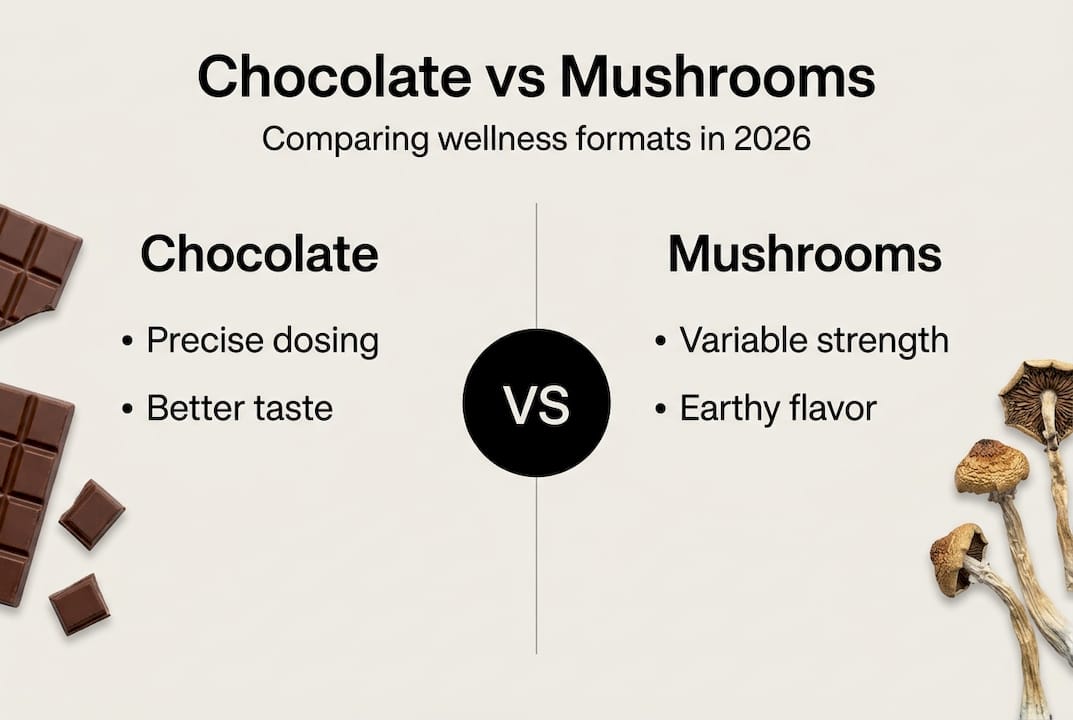
Psilocybin chocolate is exactly what it sounds like: magic mushrooms infused into chocolate, typically crafted to deliver a consistent, measured dose of psilocybin. The format isn’t just a novelty. It solves a real problem. Raw dried mushrooms taste earthy and unpleasant to many people, and eyeballing a dose from a bag of dried fungi is imprecise at best. Chocolate changes both of those things.
When you eat psilocybin chocolate, your body converts the psilocybin into psilocin. Psilocin then binds to serotonin 5-HT2A receptors, which may reset certain brain circuits, support neuroplasticity, and influence mood. This is the mechanism researchers are studying in treatment-resistant depression models, and it’s why psilocybin has attracted serious scientific attention over the past decade.
Chocolate itself plays a supporting role beyond just masking the taste. Cacao contains compounds that act as mild MAOIs (monoamine oxidase inhibitors), which can subtly slow the breakdown of psilocin in the body and slightly extend or deepen the experience. It’s a small effect, but it’s real, and it’s one reason why the chocolate format is more than just a marketing choice.
Here’s what makes psilocybin chocolate stand out as a delivery method:
- Taste: Chocolate effectively masks the bitter, earthy flavor of dried mushrooms
- Dosing precision: Pre-measured bars or squares allow for more consistent intake
- Discretion: Looks and travels like any other chocolate product
- Onset: Fat content in chocolate may slightly slow absorption, creating a more gradual onset
- Cacao synergy: Natural MAOIs in dark chocolate may subtly enhance the experience
Making psilocybin chocolate at home involves drying and grinding mushrooms to a fine powder, then gently melting chocolate using a double boiler kept below 40°C to avoid degrading the psilocybin. The powder is mixed evenly into the melted chocolate before pouring into molds. Even distribution is everything. If the mushroom powder clumps in one area, your dosing becomes unpredictable.
Pro Tip: If you want to learn more about how dark chocolate interacts with microdosing, our microdose dark chocolate guide breaks down the science in plain terms.
For Michigan residents exploring this format, understanding the mechanics helps set realistic expectations before the first square ever hits your tongue.
Evidence-based benefits: What science tells us in 2026
With a grasp of the basics, let’s explore what current science actually reveals about psilocybin chocolate’s benefits. The short answer: some real promise, a lot of nuance, and a few uncomfortable truths.
| Area | Finding | Evidence Level |
|---|---|---|
| Mood (treatment-resistant depression) | Some improvement in clinical models | Moderate (RCTs ongoing) |
| Cognitive performance | No overall benefit; possible decrease in cognitive control | Meta-analysis (N=1,614) |
| Anxiety reduction | Preliminary positive signals | Early-stage studies |
| Neuroplasticity | Possible enhancement at therapeutic doses | Preclinical and early human data |
| Safety profile | Generally well-tolerated at microdose levels | RCT evidence |
The cognitive performance story is the one most people get wrong. A 14-study meta-analysis found an overall effect size of d=0.06, essentially zero, and a statistically significant reduction in cognitive control (d=0.34). That’s not a ringing endorsement for using psilocybin chocolate to get sharper at work.

On the mental wellness side, results are more encouraging but still limited. An 8-week RCT using 2mg psilocybin microdoses in adults with major depressive disorder found the protocol was safe and well-tolerated, but it did not produce significant symptom reduction compared to placebo. Researchers noted a possible synergy with psychotherapy, which is where the real clinical interest is heading.
What does this mean for you as a Michigan resident interested in microdosing?
- Don’t expect dramatic cognitive upgrades. The data simply doesn’t support it.
- Mood benefits are real but subtle. Most users report a gentle lift, not a transformation.
- Safety is a genuine strength. At microdose levels, psilocybin appears well-tolerated in healthy adults.
- Pairing with therapy may matter. Solo microdosing without structured support may limit outcomes.
- Individual response varies widely. Your experience will not look like someone else’s.
For a deeper look at how microdosing compares to full psychedelic experiences, the microdosing vs psychedelic experiences breakdown is worth reading. And if you’re building a broader wellness routine, the Michigan mental wellness checklist offers a grounded starting point.
The honest takeaway: psilocybin chocolate is a tool, not a treatment. It works best when paired with intention, structure, and realistic expectations.
How to prepare and dose psilocybin chocolate safely
If you’re considering trying psilocybin chocolate, it’s important to know how to prepare and dose it safely. Getting this wrong doesn’t just waste product. It creates real risk.
Here’s a step-by-step overview of the preparation process:
- Source quality mushrooms. Start with dried Psilocybe cubensis from a trusted, consistent source.
- Grind to a fine powder. A coffee grinder works well. Uniform particle size is key for even distribution.
- Melt chocolate carefully. Use a double boiler and keep the temperature below 40°C to avoid degrading active compounds.
- Mix thoroughly. Add the mushroom powder slowly and stir continuously to avoid clumping.
- Pour into molds. Use silicone molds for easy removal and consistent portion sizes.
- Cool and store. Let set at room temperature, then store in an airtight container away from heat and light.
| Format | Dosing precision | Taste | Discretion | Shelf life |
|---|---|---|---|---|
| Psilocybin chocolate | High (when standardized) | Excellent | High | Moderate |
| Dried mushrooms | Low (variable potency) | Poor | Low | Long |
| Capsules | High | Neutral | High | Long |
Potency loss is a real concern. Ultrasonic extraction with methanol yields up to 3.42% psilocybin from whole mushrooms, but heat, light, and oxygen all degrade that content quickly. This is why cold-infusion methods and airtight storage matter so much.
Pro Tip: Store finished psilocybin chocolate in a vacuum-sealed container in a cool, dark place. Even a few days of exposure to light and air can reduce potency noticeably.
For a side-by-side look at how chocolates compare to raw mushrooms in real-world use, the dried mushrooms vs chocolates guide covers the tradeoffs honestly. And if you’re working out where to start with dosing, the psilocybin dosage guide is built specifically for Michigan residents.
Legal considerations for psilocybin chocolate in Michigan (2026)
Understanding the preparation process isn’t enough. Being aware of the legal landscape in Michigan is crucial before you go any further.
Here’s the current reality:
- Psilocybin is Schedule I at both the state and federal level in Michigan as of 2026
- Possession, sale, and manufacture are all illegal under state law
- House Bills HB4686 and HB5980 have proposed limited exemptions for PTSD treatment and personal use, but neither has passed as of this writing
- Ann Arbor has formally deprioritized enforcement of psilocybin-related offenses, meaning local police treat it as a low priority
- Detroit and Hazel Park have passed similar decriminalization resolutions
Important: Deprioritization is not legalization. Psilocybin remains Schedule I in Michigan, and state or federal charges are still legally possible regardless of local policy.
This distinction matters. Living in Ann Arbor gives you a degree of practical tolerance that someone in a rural Michigan county does not have. But it does not give you legal protection. If you’re caught with psilocybin chocolate at a state facility, on federal property, or during a traffic stop that escalates, local deprioritization won’t shield you.
For anyone navigating this space, staying informed is non-negotiable. The microdosing safety in Michigan resource walks through practical steps for minimizing risk. The psilocybin product guide is also worth bookmarking as the legal landscape continues to shift.
Responsible use starts with knowing exactly where you stand legally, not just where you hope things are heading.
What most guides miss about psilocybin chocolate
Legal realities set the stage for a deeper conversation, and here’s where most guides miss the mark entirely.
The microdosing community has a tendency to overclaim. You’ll read testimonials about dramatic mood transformations, creative breakthroughs, and cognitive leaps. The science, as we’ve covered, doesn’t back most of that up at a population level. But here’s the part that rarely gets said: the experience is deeply personal and often ambiguous.
Many people who microdose psilocybin chocolate report feeling subtly more present, slightly more patient, or a little less reactive on hard days. That’s real. It’s just not the same as a measurable cognitive upgrade. The gap between lived experience and clinical data is where most guides get lost.
In Michigan specifically, the intersection of legal gray areas, social stigma, and genuine wellness curiosity creates a situation where informed choices matter more than anywhere else. The psilocybin focus guide explores this tension honestly. Moderation, self-awareness, and community support aren’t just nice-sounding advice. They’re the actual variables that determine whether psilocybin chocolate becomes a useful tool or a source of confusion and risk.
Explore legal alternatives and next steps with Elevated Remedies
Ready to explore legal, trusted options for your wellness journey? At Elevated Remedies, we carry products designed for people who take this space seriously.
Our mushroom chocolate bar selection and mushroom gummies offer legal, accessible alternatives for Michigan residents who want the experience of mushroom wellness without the legal exposure of psilocybin. If you’re curious about what these products actually contain, our Amanita muscaria overview explains the science behind legal mushroom compounds in plain language. Stop by our shop at 1123 Broadway St in Ann Arbor, and our team will help you find the right fit for where you are in your wellness journey.
Frequently asked questions
Does psilocybin chocolate really boost cognitive performance?
The evidence says no. A meta-analysis of 1,614 participants found no meaningful cognitive benefit from microdosing psilocybin, with some studies showing a reduction in cognitive control.
Is psilocybin chocolate legal in Michigan in 2026?
No. Psilocybin is Schedule I at both the state and federal level in Michigan, though cities like Ann Arbor have deprioritized enforcement rather than legalized it.
What are safer alternatives to psilocybin chocolate in Michigan?
Legal functional mushroom products, including Amanita muscaria chocolates and gummies, are available in Michigan and do not contain psilocybin, making them a lower-risk option for wellness-focused consumers.
How is dosing more reliable with chocolate than whole mushrooms?
When prepared correctly, psilocybin chocolate distributes the active compound more evenly than whole mushrooms, allowing for more consistent and predictable dosing across servings.
Recommended
- Dried mushrooms vs chocolates: safer psilocybin in 2026 – Elevated Remedies
- Microdose dark chocolate: benefits, science & Michigan guide – Elevated Remedies
- Psilocybin Dosage Guide for Michigan Wellness in 2026 – Elevated Remedies
- Top magic mushroom wellness tips for safe, effective use – Elevated Remedies