TL;DR:
- Microdosing gently alters serotonin receptors without perceptual changes, offering mood support.
- Full psychedelic experiences significantly disrupt brain networks, leading to ego dissolution and lasting change.
- Clinical evidence supports full doses for mental health issues, while microdosing benefits are often placebo-driven.
Microdosing and full psychedelic experiences are both gaining serious traction for mental wellness, yet most people treat them as interchangeable options on the same menu. They are not. Both approaches tap into the same receptor system in your brain, but the outcomes, risks, and ideal use cases are fundamentally different in ways that most guides gloss over. If you’re in Ann Arbor exploring psilocybin for personal growth or mental health, understanding those differences before you choose a path is not optional. It’s the whole point. Both approaches act on 5-HT2A receptors but produce strikingly different results depending on dose.
Table of Contents
- How microdosing and psychedelic experiences work in the brain
- Empirical evidence: mood, productivity, and mental health outcomes
- Risks, edge cases, and who should be cautious
- Choosing your path: when microdosing or full psychedelic experiences make sense
- Our take: what most guides miss about microdosing vs psychedelic experiences
- Explore wellness options with Elevated Remedies
- Frequently asked questions
Key Takeaways
| Point | Details |
|---|---|
| Mechanism matters | Microdosing and psychedelic experiences use similar receptors but produce very different effects. |
| Clinical evidence varies | Full psychedelic experiences have stronger support for depression and PTSD than microdosing. |
| Safety is critical | Certain health conditions and medications may pose serious risks with these practices. |
| Choose intentionally | Consider your goals and safety when deciding between microdosing and full experiences. |
How microdosing and psychedelic experiences work in the brain
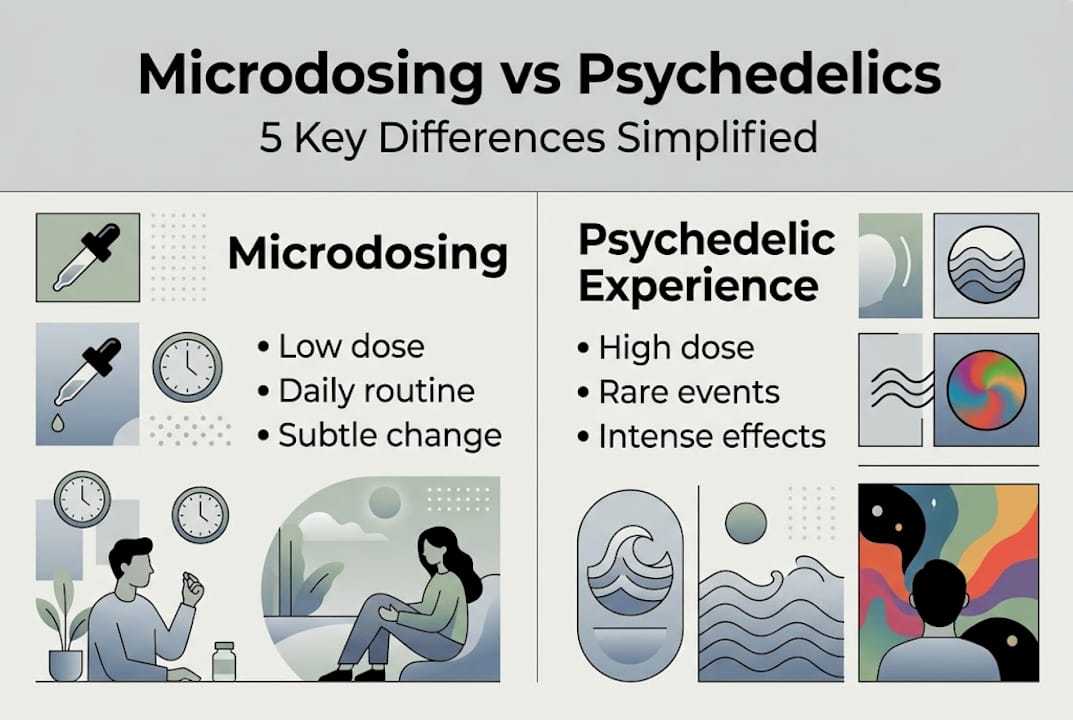
Here’s the surprising part: microdosing and macrodosing (a full psychedelic experience) both stimulate the same receptor pathway, called the 5-HT2A serotonin receptor. Think of it like a volume knob. A microdose turns it up slightly. A full dose cranks it to maximum and changes the entire song.
With microdosing, the dose is typically around one-tenth of a standard psychedelic dose. It’s sub-perceptual, meaning you don’t hallucinate, you don’t feel high, and you can go to work. What you might notice is a subtle lift in mood, sharper focus, or a slight reduction in mental noise. Research suggests microdosing may reduce inflammation and gently support neuroplasticity, which is your brain’s ability to form new connections.
Full psychedelic experiences work very differently. At macrodose levels, psilocybin disrupts the default mode network (DMN), which is the brain system responsible for your sense of self and internal narrative. When the DMN goes quiet, people often report ego dissolution, meaning the boundary between “self” and “everything else” temporarily dissolves. This is where the profound, sometimes life-changing experiences come from.
“Microdosing subtly enhances mood without full perceptual changes, while full doses create immersive entropy and ego dissolution.” — ScienceDirect, 2025
Here’s a quick comparison of how these two approaches differ at the brain level:
| Feature | Microdosing | Full psychedelic experience |
|---|---|---|
| Dose range | 0.1 to 0.3g dried mushrooms | 2 to 5g dried mushrooms |
| Perception | No change | Strong perceptual shifts |
| Default mode network | Mildly altered | Significantly disrupted |
| Ego dissolution | Rare | Common |
| Duration | 4 to 6 hours | 4 to 8 hours |
| Neuroplasticity support | Subtle, cumulative | Acute and intense |
Key neural effects by approach:
- Microdosing: Gentle serotonin modulation, possible anti-inflammatory effects, mild mood lift, enhanced focus
- Macrodosing: Strong DMN disruption, ego dissolution, intense emotional processing, lasting neural rewiring
Understanding how different strains impact the mind adds another layer to this, since potency varies considerably across varieties.
Empirical evidence: mood, productivity, and mental health outcomes
Now that you understand what’s happening in the brain, let’s look at what the research actually says about results. The gap between popular belief and clinical evidence here is significant.
Microdosing generates enormous enthusiasm online. Thousands of self-reports describe better mood, sharper productivity, and reduced anxiety. But when researchers run placebo-controlled trials, a different picture emerges. Placebo-controlled trials often show no significant benefits beyond what participants expected to feel. That’s a big deal. It means a meaningful portion of reported microdosing benefits may be driven by expectation, not pharmacology.
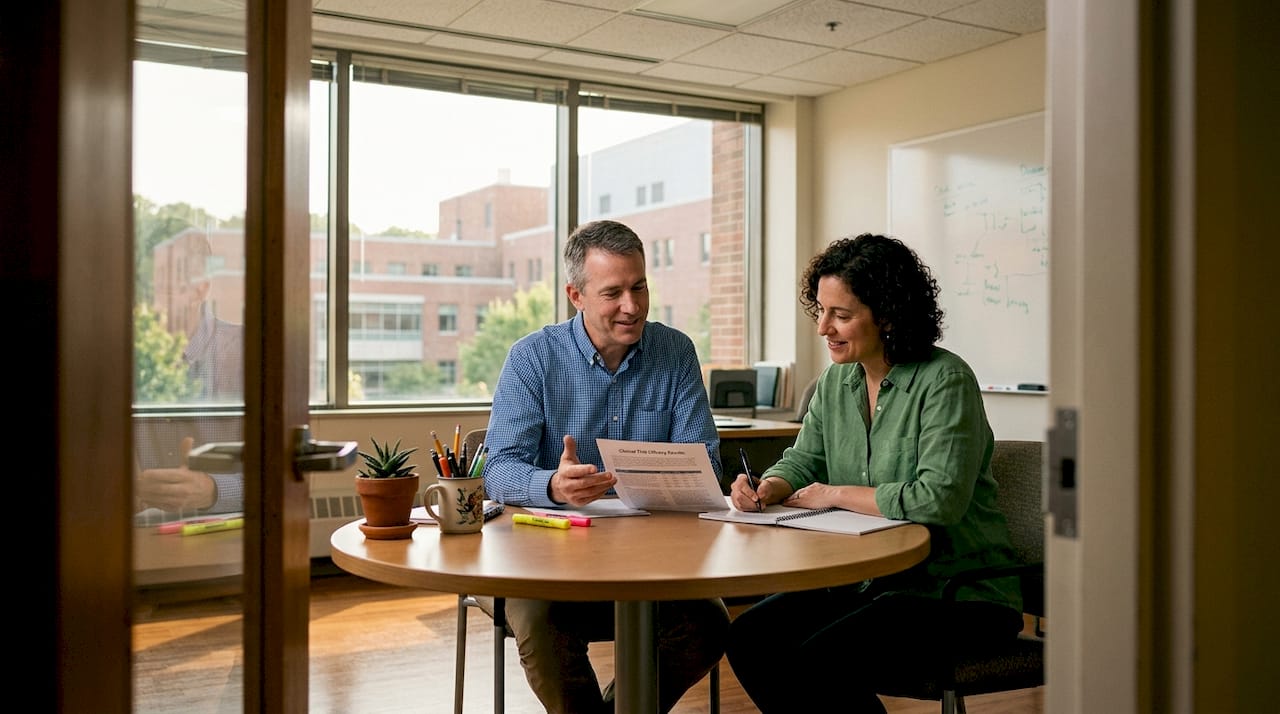
Full psychedelic experiences, on the other hand, have shown stronger results in clinical settings. Multiple controlled studies have demonstrated real, lasting improvements in depression and PTSD symptoms after one or two guided sessions. This isn’t anecdote. It’s peer-reviewed data.
| Outcome | Microdosing evidence | Macrodosing evidence |
|---|---|---|
| Mood improvement | Mostly self-report | Supported by clinical trials |
| Productivity | Anecdotal | Not a primary focus |
| Depression relief | Weak vs. placebo | Strong clinical support |
| PTSD reduction | Limited data | Demonstrated efficacy |
| Anxiety relief | Mixed results | Promising in trials |
Here’s a practical breakdown of what current evidence supports:
- Self-reported microdosing benefits are real to the people experiencing them, but they don’t consistently outperform placebo in controlled settings.
- Macrodosing has the strongest clinical backing for depression and PTSD, particularly in guided therapeutic contexts.
- Expectancy shapes experience more than most people realize, especially with sub-perceptual doses.
- Integration after a full experience appears to be what drives lasting change, not just the session itself.
If you’re exploring microdosing for anxiety or want to understand the role of microdose dark chocolate as a delivery method, those are worth reading alongside your broader mental wellness checklist. And if you’re unsure about dosing, our psilocybin dosage guide breaks it down clearly.
Risks, edge cases, and who should be cautious
Benefits get most of the attention. Risks don’t. That’s a problem, because both approaches carry real considerations that depend heavily on your personal health profile.
With microdosing, the risks are often underestimated because the doses are small. But small doesn’t mean zero. Microdosing risks include anxiety, elevated blood pressure, tolerance buildup, and potential cardiac concerns with long-term use. For some people, microdosing actually worsens depression rather than improving it. That’s the opposite of the goal.
Key risk factors to know:
- Bipolar disorder or schizophrenia: Both microdosing and full experiences carry elevated risks for people with these conditions
- Heart conditions: Psilocybin affects serotonin receptors in the heart, not just the brain
- SSRIs and Lithium: These medications can interact dangerously with psilocybin
- Anxiety disorders: Some people experience heightened anxiety, especially at unexpected dose levels
- Tolerance: Microdosing every day leads to rapid tolerance, which is why most protocols use an every-other-day or Fadiman schedule
“Psilocybin is not a one-size-fits-all solution. Individual biology, mental health history, and current medications all change the risk profile significantly.” — Psychology Today
Pro Tip: If you’re on any psychiatric medication, talk to a healthcare provider before exploring psilocybin in any form. The interaction between SSRIs and psilocybin can blunt effects or, in some cases, create unpredictable responses.
There’s also a middle ground worth knowing about: the “museum dose,” typically around 0.5 to 1g. It’s above a microdose but well below a full experience. You stay functional, but perception shifts slightly. This range is understudied but popular among people who want more than subtle mood effects without committing to a full journey.
For a full breakdown of safe practices, our magic mushroom safety tips cover what you need to know. And if focus is your primary goal, magic mushrooms for focus explores that angle specifically.
Choosing your path: when microdosing or full psychedelic experiences make sense
With risks and benefits on the table, the real question is: which approach fits your situation?
This isn’t a competition. These are different tools. Choosing between them depends on what you’re actually trying to accomplish and what your health profile allows.
Here’s a practical framework:
- If you want subtle, ongoing support for mood or focus without disrupting your daily life, microdosing may be a reasonable starting point. Think of it as maintenance mode.
- If you’re dealing with entrenched depression, PTSD, or a desire for deep personal growth, the clinical evidence points more strongly toward full psychedelic experiences, ideally with preparation and integration support.
- If you’re new to psilocybin entirely, starting with a low dose to understand your sensitivity before committing to a full experience is simply smart.
- If you’re skeptical about whether microdosing is “working”, remember that expectancy drives many reports of benefit. That doesn’t mean it’s not helping, but it’s worth being honest with yourself about what you’re experiencing versus what you expected to experience.
- Intention and integration matter at every level. A full experience without reflection afterward is a missed opportunity. A microdosing protocol without any mindfulness or behavioral support is just taking a pill and hoping.
Pro Tip: Journal during any protocol, whether microdosing or preparing for a full experience. Tracking mood, sleep, and energy across two to four weeks gives you real data to evaluate, not just impressions.
Our psilocybin product guide helps you navigate what’s available in Michigan, and our mushroom product comparison breaks down dried mushrooms versus chocolates if you’re deciding on format.
Our take: what most guides miss about microdosing vs psychedelic experiences
Most articles compare microdosing and full experiences like they’re reviewing two competing products. They list benefits, mention risks briefly, and leave you to figure out the rest. What gets skipped is the context that actually determines whether either approach works for you.
Ann Arbor is a thoughtful, curious community. People here ask better questions than “which one is stronger?” The better question is: what am I trying to change, and am I willing to do the work that makes any of this stick?
Real transformation, whether from a microdosing protocol or a full journey, comes from integration. That means sitting with what you experienced, adjusting your habits, and letting the insight land in your actual life. The dose is just the beginning.
We also think the hype around microdosing deserves honest scrutiny. It’s not magic. For some people it’s genuinely useful. For others, it does very little beyond placebo. Understanding how different mushroom strains differ is part of making an informed choice rather than a trendy one. Evidence over enthusiasm, always.
Explore wellness options with Elevated Remedies
At Elevated Remedies, we stock products for every point on this spectrum, from microdosing capsules to dried mushrooms and mushroom chocolates, all sourced for quality and consistency. We’re located at 1123 Broadway St in Ann Arbor, and our team is here to answer real questions, not just hand you a product.
If you’re curious about alternatives beyond psilocybin, we also carry Amanita muscaria products, including our popular mushroom gummies for those exploring a different kind of experience. Whatever direction you’re heading, we want you going in informed. Come in, ask questions, and let’s figure out what actually makes sense for you.
Frequently asked questions
What is the main difference between microdosing and a psychedelic experience?
Microdosing uses very small, sub-perceptual doses that subtly shift mood without altering perception, while a full psychedelic experience produces immersive ego dissolution and significant perceptual changes. The dose is the dividing line, but the brain effects are entirely different in scale and character.
Are the benefits of microdosing proven in clinical trials?
Self-reports are overwhelmingly positive, but placebo-controlled trials show that microdosing often performs no better than placebo in controlled settings. Expectancy appears to play a large role in perceived benefits.
Who should avoid microdosing or psychedelic experiences?
People with bipolar disorder, schizophrenia, or significant heart conditions should avoid both approaches, and cardiac concerns with psilocybin are real even at low doses. Anyone on SSRIs or Lithium should consult a doctor before trying either.
Is microdosing better for maintenance, or should I try a full psychedelic experience?
Microdosing may work well for ongoing mood maintenance if you notice real, sustained benefits over time. Full experiences have stronger clinical support for transformative mental health progress and are better suited for deep therapeutic work.
Recommended
- Microdose dark chocolate: benefits, science & Michigan guide – Elevated Remedies
- Michigan guide: psilocybin product examples & safe use – Elevated Remedies
- Psilocybin Dosage Guide for Michigan Wellness in 2026 – Elevated Remedies
- Why Compare Mushroom Strains? Potency, Safety & Results – Elevated Remedies