TL;DR:
- Indigenous cultures used psilocybin mushrooms for sacred healing, divination, and community bonding.
- Western research rediscovered psilocybin’s potential for treating mental health conditions in controlled settings.
- Ann Arbor decriminalized personal possession, but psilocybin remains illegal federally and at the state level.
Magic mushrooms have been used for healing, ritual, and spiritual insight for at least 5,000 years, yet some of the most exciting clinical research on psilocybin has happened in just the last two decades. That contrast is striking. Ancient Mesoamerican cultures built entire ceremonial traditions around these fungi, while modern neuroscientists are rediscovering what those traditions may have always understood. Ann Arbor sits at an interesting crossroads in this story. As one of the first U.S. cities to decriminalize psilocybin, this city is part of a global shift in how people think about mental health, consciousness, and plant-based healing. Here is what you need to know about where magic mushrooms come from, how they entered Western culture, and why any of this matters right now.
Table of Contents
- Ancient and indigenous origins: Sacred use and traditions
- Western discovery and the rise of psychedelics
- The science renaissance: Clinical research and mental health breakthroughs
- Ann Arbor today: Local context, decriminalization, and future possibilities
- A new paradigm: Lessons and cautions from psilocybin’s journey
- Discover magic mushroom products and safe options in Ann Arbor
- Frequently asked questions
Key Takeaways
| Point | Details |
|---|---|
| Ancient roots | Magic mushrooms have been used in sacred rituals for thousands of years. |
| Modern rediscovery | Scientific research since 2000 shows promising mental health benefits for psilocybin. |
| Cultural shifts | Ann Arbor’s decriminalization reflects growing openness to responsible use and research. |
| Ethical awareness | Respect for indigenous practices and careful education is crucial as interest grows. |
Ancient and indigenous origins: Sacred use and traditions
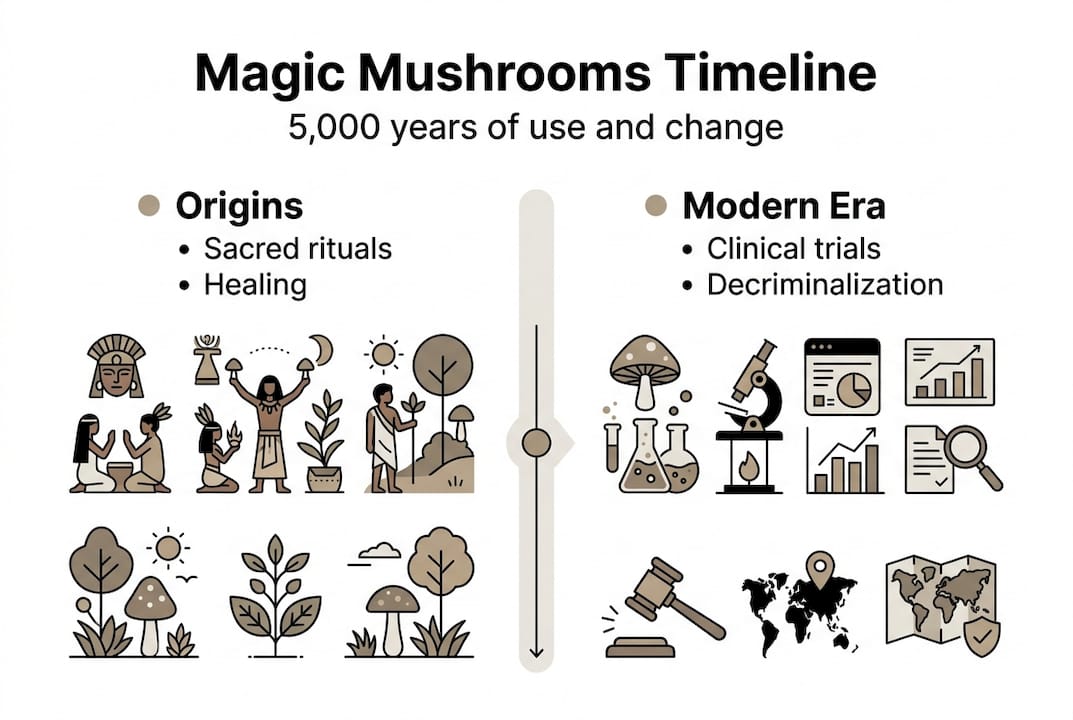
The story of magic mushrooms does not begin in a laboratory or a 1960s dorm room. It begins in the highlands of Mexico and Central America, where indigenous communities were building ceremonial relationships with psilocybin fungi long before written history. Archaeological evidence suggests humans used psilocybin mushrooms as far back as 5000 BCE, making this one of the oldest documented relationships between humans and a psychoactive substance.
The Aztecs called them teonanácatl, which translates roughly to “flesh of the gods.” That name alone tells you something important: these were not recreational substances. They were sacred. The Mazatec people of Oaxaca, Mexico, developed some of the most sophisticated ceremonial frameworks around mushroom use, with healers called curanderas guiding participants through nighttime ceremonies called veladas focused on healing and divination.
Key indigenous uses of psilocybin mushrooms:
- Healing: Addressing physical and emotional illness within a community context
- Divination: Seeking guidance on decisions, conflicts, or the unknown
- Community bonding: Reinforcing shared values and spiritual identity
- Communication: Connecting with ancestors, spirits, or the natural world
Here is what often gets lost in modern conversations: indigenous use was almost never individual. It was collective, land-based, and embedded in a living cultural system. The mushrooms were not a product you consumed for personal benefit. They were part of a reciprocal relationship with the earth and community.
| Feature | Indigenous use | Modern Western use |
|---|---|---|
| Setting | Ceremonial, communal | Clinical, individual |
| Purpose | Healing, divination, ritual | Therapy, wellness, recreation |
| Guide | Trained curandera | Therapist or none |
| Frequency | Seasonal or as needed | Variable |
| Cultural framework | Embedded in tradition | Often absent |
“The mushroom ceremonies of the Mazatec are not simply about the substance. They are about relationship, responsibility, and the health of the whole community.”
This distinction matters enormously when we talk about how magic mushrooms entered Western culture. The context that made these ceremonies meaningful for thousands of years did not travel with the fungi when they crossed cultural borders.
Western discovery and the rise of psychedelics
For most of Western history, psilocybin mushrooms were invisible. Indigenous communities in Mexico and Central America continued their traditions largely out of sight, until 1957, when a banker and amateur mycologist named R. Gordon Wasson changed everything. His Life magazine article introduced psilocybin mushrooms to a mass Western audience for the first time, describing his participation in a Mazatec ceremony led by the now-famous curandera Maria Sabina.
That article set off a chain reaction.
The Western timeline of psilocybin:
- 1957: Wasson’s Life article reaches millions of readers across America
- 1958: Swiss chemist Albert Hofmann isolates and synthesizes psilocybin in a laboratory
- Early 1960s: Timothy Leary and Richard Alpert launch the Harvard Psilocybin Project
- Mid-1960s: Psilocybin becomes a symbol of the counterculture movement
- 1970: The Harvard Psilocybin Project contributes to a backlash that leads to Schedule I classification under the Controlled Substances Act
The counterculture era reframed psilocybin as an agent of personal liberation and political rebellion. That reframing was powerful, but it also stripped away the communal and ceremonial structures that had made indigenous use so intentional for millennia. What had been a guided, collective, spiritually grounded practice became something people did at concerts or in apartments.
Before you explore psilocybin, understanding the psilocybin safety comparison between different product forms is a smart starting point.
“The counterculture did not discover magic mushrooms. It borrowed them, often without acknowledgment of where they came from or what they meant to the people who had tended that knowledge for generations.”
Pro Tip: If you are curious about psilocybin, take time to learn about its cultural origins. Understanding where something comes from shapes how responsibly you can engage with it.
The 1970 ban did not stop curiosity. It just forced it underground for three decades.
The science renaissance: Clinical research and mental health breakthroughs
The backlash of the 1970s put formal research on pause, but scientific curiosity eventually won out. Starting around 2000, Johns Hopkins researchers began carefully reintroducing psilocybin into controlled clinical settings. What they found over the next two decades reshaped how psychiatry thinks about treatment-resistant mental health conditions.
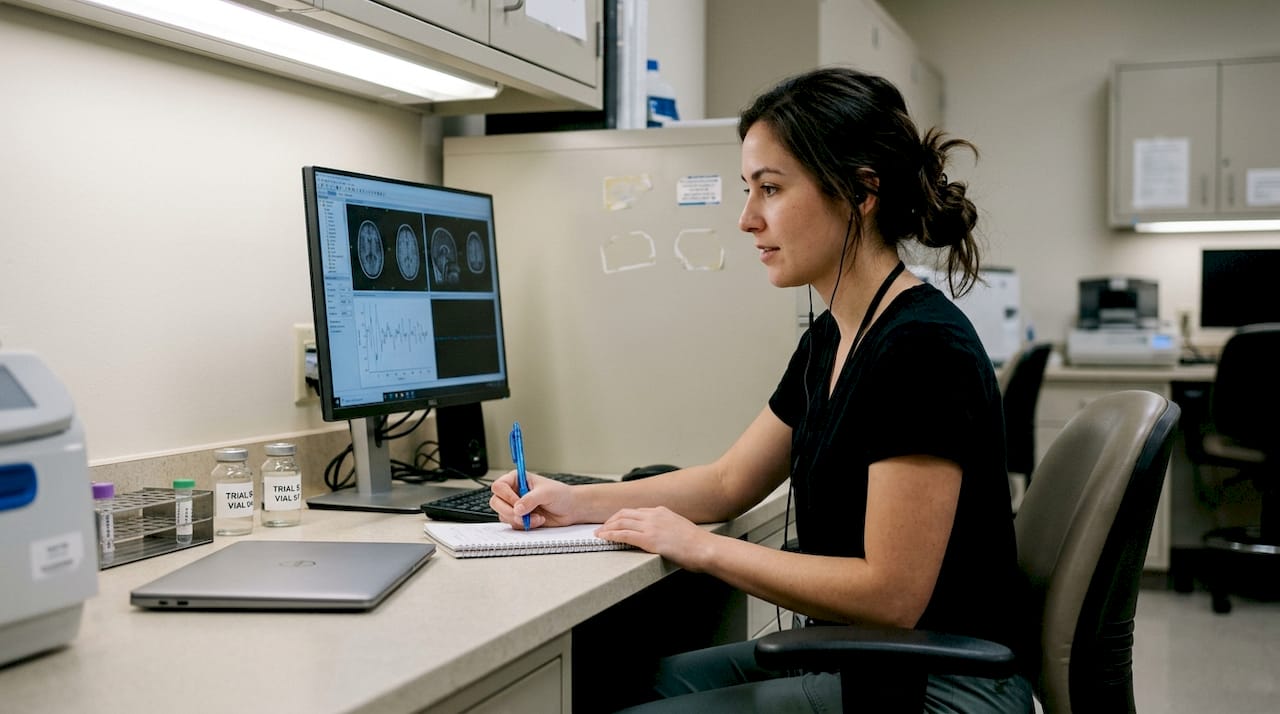
Psilocybin works primarily by binding to 5-HT2A receptors in the brain, which are serotonin receptors concentrated in areas tied to perception, mood, and self-referential thinking. This binding temporarily disrupts the default mode network, the brain system associated with rumination and rigid thought patterns. The result is a kind of neurological reset that, in the right setting, can produce lasting changes in outlook and emotional flexibility.
What the research shows:
- 71% of participants responded to psilocybin-assisted therapy in major depression trials
- 54% achieved full remission in some randomized controlled trials
- Meta-analyses show moderate effect sizes for depression compared to controls, with rare adverse events in structured settings
- Effects can persist for 6 to 12 months after a single or small number of sessions
- Neuroplasticity increases have been observed, meaning the brain becomes more adaptable after treatment
71% response rate and 54% remission in clinical psilocybin trials for major depression represent some of the strongest outcomes seen in psychiatric research in decades.
Understanding how magic mushrooms affect the brain helps explain why results in these trials can feel so different from casual use. The Michigan mental wellness checklist is also a useful resource if you are thinking about psilocybin in a wellness context.
| Study metric | Result |
|---|---|
| Response rate (MDD trial) | 71% |
| Remission rate (MDD trial) | 54% |
| Effect duration | 6 to 12 months |
| Adverse events (controlled) | Rare |
| Neuroplasticity changes | Observed post-session |
Pro Tip: The outcomes from clinical trials reflect carefully structured environments with trained support. Informal use without preparation or guidance produces very different results. Set, setting, and support are not optional extras. They are the mechanism.
Larger studies are still underway, and ethical debates around access, cost, and cultural responsibility are ongoing. The science is promising, but it is not finished.
Ann Arbor today: Local context, decriminalization, and future possibilities
Understanding this scientific and cultural journey sets the stage for how Ann Arbor has become part of psilocybin’s modern story. In September 2020, Ann Arbor’s City Council passed a resolution making enforcement of entheogen laws the lowest priority for local police. Detroit and Ypsilanti followed with similar measures shortly after, signaling a regional shift in how Michigan communities are approaching psychedelic policy.
What Ann Arbor’s decriminalization means in practice:
- Personal possession and home cultivation of psilocybin mushrooms are the lowest enforcement priority for local police
- No formal legal protection exists at the state or federal level
- Selling psilocybin remains illegal under Michigan and federal law
- The resolution reflects community values around harm reduction and personal autonomy
- It creates space for education, research support, and mental health exploration
“Decriminalization is not the same as legalization. It means local police have deprioritized enforcement, not that the law has changed.”
This distinction is critical. Many people hear “decriminalized” and assume they are fully protected. They are not. Michigan state law and federal law still classify psilocybin as a Schedule I substance. The practical risk of arrest in Ann Arbor for personal use is low, but the legal risk is not zero.
For anyone navigating this landscape, the Michigan psilocybin product guidance and safe use tips from Elevated Remedies are worth reading before making any decisions.
Pro Tip: Decriminalization creates breathing room, not immunity. Know exactly where you stand legally before you act, and prioritize harm reduction at every step.
Ann Arbor’s move reflects a broader national trend. Oregon and Colorado have moved toward regulated psilocybin therapy programs, and federal rescheduling discussions are accelerating. Ann Arbor was ahead of that curve.
A new paradigm: Lessons and cautions from psilocybin’s journey
Here is something that rarely gets said directly: the Western enthusiasm for psilocybin and the indigenous traditions that first developed these practices are not the same story. They share a substance, but almost nothing else. Indigenous ceremonial use developed over thousands of years within specific cultural, ecological, and spiritual systems. Western clinical use developed in academic institutions with entirely different goals and frameworks.
This matters because the risk of ethical appropriation is real. When Western medicine claims to have “discovered” the healing potential of psilocybin, it erases a lineage of knowledge that was never lost. It was just ignored. Ann Arbor’s community, including clinics, dispensaries, and individuals, has a responsibility to hold that awareness.
Oversimplifying psilocybin as a miracle cure is also dangerous. The clinical data is genuinely exciting, but the trials are conducted in highly controlled environments. The real-world picture is more complicated. When exploring comparing mushroom strains, you start to see how much variation exists even within psilocybin products. True advancement in this space means balancing scientific rigor, cultural humility, and honest communication about what we still do not know.
Discover magic mushroom products and safe options in Ann Arbor
If this history has sparked genuine curiosity about psilocybin, the next step is finding reliable information and quality products from people who actually know what they are talking about.
At Elevated Remedies, located at 1123 Broadway St in Ann Arbor, we carry dried magic mushrooms, mushroom capsules for microdosing, and magic mushroom chocolates, all sourced for consistency and quality. We also stock educational resources and can walk you through what different products are and how they are used responsibly. If you are curious about alternatives like Amanita muscaria, we have information on that too. Whether you are just starting to explore or you already know what you are looking for, come in and talk to us.
Frequently asked questions
When did humans first use magic mushrooms?
Archaeological evidence suggests humans used psilocybin mushrooms for ritual and healing purposes since at least 2000 to 3000 years ago, with some findings pointing as far back as 5000 BCE.
Are magic mushrooms legal in Ann Arbor?
Ann Arbor decriminalized personal possession and cultivation of psilocybin in 2020, making enforcement the lowest local priority, but psilocybin remains illegal under Michigan state and federal law.
How effective is psilocybin for depression?
Clinical trials at Johns Hopkins and other institutions show psilocybin can rapidly reduce depression symptoms, with 71% of participants responding and 54% achieving full remission in some studies.
What’s the difference between indigenous and modern uses?
Indigenous use is communal, ritual-based, and embedded in living cultural traditions, while modern Western use tends to be individual and clinical, raising ethical and cultural concerns about appropriation and responsibility.