
TL;DR:
- Magic mushrooms contain psilocybin, which converts to psychoactive psilocin in the body.
- Dosage ranges from microdoses (0.1-0.3g) to heroic doses (5g+), with increasing effects.
- Michigan users should verify product labels, understand strain potency differences, and use trusted sources.
If you’ve ever picked up a menu at a Michigan dispensary and felt like you needed a decoder ring, you’re not alone. Terms like “heroic dose,” “cubensis strain,” and “Fadiman protocol” get thrown around constantly, and the gap between casual slang and actual science can leave even experienced users second-guessing themselves. Getting your vocabulary straight isn’t just satisfying. It directly shapes whether your experience is safe, intentional, and worth repeating. This guide walks you through the key terms, species, dosing language, and Michigan-specific slang so you can walk into any conversation or dispensary with real confidence.
Table of Contents
- What are magic mushrooms? Key species, compounds, and basics
- Microdosing, macrodosing, and the language of dosage
- Strains, potency, and how to interpret mushroom labeling
- Talk like a pro: Popular slang, resources, and key Michigan-specific terms
- Our expert take: What most mushroom guides leave out
- Michigan’s trusted source for mushrooms and education
- Frequently asked questions
Key Takeaways
| Point | Details |
|---|---|
| Magic mushrooms basics | Magic mushrooms contain psilocybin, which your body converts into the psychedelic compound psilocin for unique psychoactive effects. |
| Dosage terms decoded | Understanding microdosing, macrodosing, and dosing protocols helps you safely explore mushrooms. |
| Species and strain matter | Strain and species strongly affect potency and effects, so always read labels and verify with trusted suppliers. |
| Slang evolves | Staying up-to-date with Michigan-specific terms can help you avoid confusion and make safer choices. |
What are magic mushrooms? Key species, compounds, and basics
Magic mushrooms, often called “shrooms” in everyday conversation, are fungi that contain naturally occurring psychoactive compounds. The term covers a wide range of species, but they all share one defining trait: the ability to alter perception, mood, and thought through their active chemistry.
The science behind the experience starts with psilocybin, which converts to psilocin once it enters your body. Psilocin is the compound that actually binds to serotonin receptors in your brain, producing the effects you feel. Psilocybin itself is essentially a prodrug, meaning it needs that conversion step before it becomes active. This matters because the speed of that conversion can affect how quickly effects come on, which is one reason onset times vary from person to person.
When it comes to species, there are over 200 species that fall under the broad umbrella of psychedelic fungi, most belonging to the Psilocybe genus. In Michigan dispensary products, you’ll most commonly encounter Psilocybe cubensis because it’s relatively easy to cultivate and produces consistent results. Other species like Psilocybe semilanceata, Psilocybe cyanescens, and Psilocybe azurescens are less common but show up in specialty products.
Here’s a quick reference for the species you’re most likely to encounter:
| Species | Psilocybin content | Common nickname | Notes |
|---|---|---|---|
| Psilocybe cubensis | 0.5 to 0.9% | Golden Teacher, B+ | Most widely available |
| Psilocybe semilanceata | 0.9 to 1.3% | Liberty Cap | Potent, wild-growing |
| Psilocybe cyanescens | 0.8 to 1.2% | Wavy Cap | Strong visual effects |
| Psilocybe azurescens | 1.0 to 1.8% | Flying Saucer | Highest natural potency |
A few key terms worth knowing before you go further:
- Psilocybin: The primary compound found in magic mushrooms, inactive until metabolized
- Psilocin: The active form that produces psychedelic effects
- Baeocystin: A secondary alkaloid found in many species, possibly contributing to the overall experience
- Serotonin receptors: Specifically the 5-HT2A receptors that psilocin binds to, triggering altered perception
Understanding magic mushroom strain effects at the species level gives you a real foundation for every other term in this guide. You can also review Health Canada’s overview for a broader regulatory and scientific perspective on these substances.
With a shared vocabulary in place, we can now dive into the terminology surrounding magic mushroom dosage.
Microdosing, macrodosing, and the language of dosage
Dosage language is where most confusion happens, and where the stakes are highest. Getting this wrong doesn’t just lead to a disappointing experience. It can lead to an overwhelming one.
Microdosing means taking a sub-perceptual dose, typically 0.1 to 0.3 grams of dried mushrooms. Sub-perceptual means you shouldn’t be seeing visuals or feeling high. The goal is subtle mood enhancement, improved focus, or reduced anxiety without any noticeable alteration of consciousness. It’s become popular for wellness applications and is the starting point for many first-time users in Michigan.
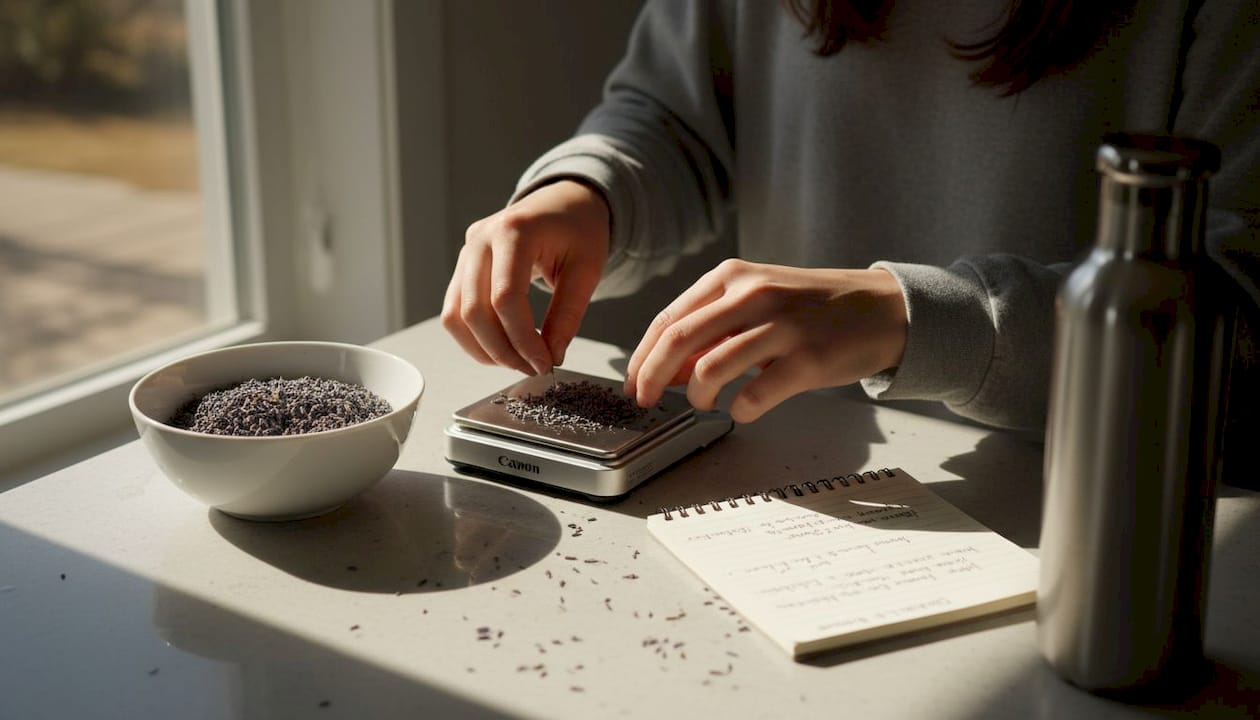
Two protocols dominate the microdosing conversation. The Fadiman protocol follows a one day on, two days off schedule, named after researcher James Fadiman. The Stamets Stack runs four days on and three days off, and combines psilocybin with Lion’s Mane mushroom and niacin for what proponents describe as enhanced neurogenesis benefits. These aren’t just internet trends. They’re structured approaches with real communities behind them.
Macrodosing covers everything above the sub-perceptual threshold. A moderate dose of 1 to 3.5 grams produces noticeable psychedelic effects: visual shifts, emotional openness, and altered time perception. A full experience at this range typically lasts four to six hours.
At five grams or more, you enter what’s known as a heroic dose. This term, popularized by ethnobotanist Terence McKenna, describes an experience that can involve complete ego dissolution, intense visionary states, and a profound loss of ordinary reference points. It’s not for beginners, and it requires serious preparation, a safe setting, and ideally an experienced guide or sober sitter.
| Dose type | Amount (dried) | Expected effects |
|---|---|---|
| Microdose | 0.1 to 0.3g | Sub-perceptual, mood and focus |
| Low dose | 0.5 to 1g | Mild shifts, light visuals |
| Moderate dose | 1 to 3.5g | Clear psychedelic experience |
| High dose | 3.5 to 5g | Strong visuals, deep introspection |
| Heroic dose | 5g+ | Ego dissolution, intense visionary states |
Pro Tip: Always measure by weight using a digital scale, not by visual appearance. Two pieces of dried mushroom that look identical can have very different weights and potency levels. Eyeballing doses is one of the most common mistakes new users make.
For a deeper breakdown, our psilocybin dosage guide covers Michigan-specific context, and our piece on microdosing vs full experience helps you decide which approach fits your goals.
Equipped with dosing terminology, let’s look closer at the specific strains and potency differences that Michigan users encounter.
Strains, potency, and how to interpret mushroom labeling
Here’s a distinction that trips up a lot of people: species and strain are not the same thing. A species is a biological classification. Psilocybe cubensis is a species. A strain is a specific genetic variety cultivated within that species. Golden Teacher, B+, and Penis Envy are all strains of Psilocybe cubensis. Think of it like apples: Granny Smith and Fuji are both apples, but they taste and look different.
Why does this matter? Because potency varies widely even within the same species. Golden Teacher is considered a mild to moderate strain, while Penis Envy is known for significantly higher potency despite both being cubensis. Other alkaloids like baeocystin also contribute to the overall effect profile, which means psilocybin percentage alone doesn’t tell the full story.
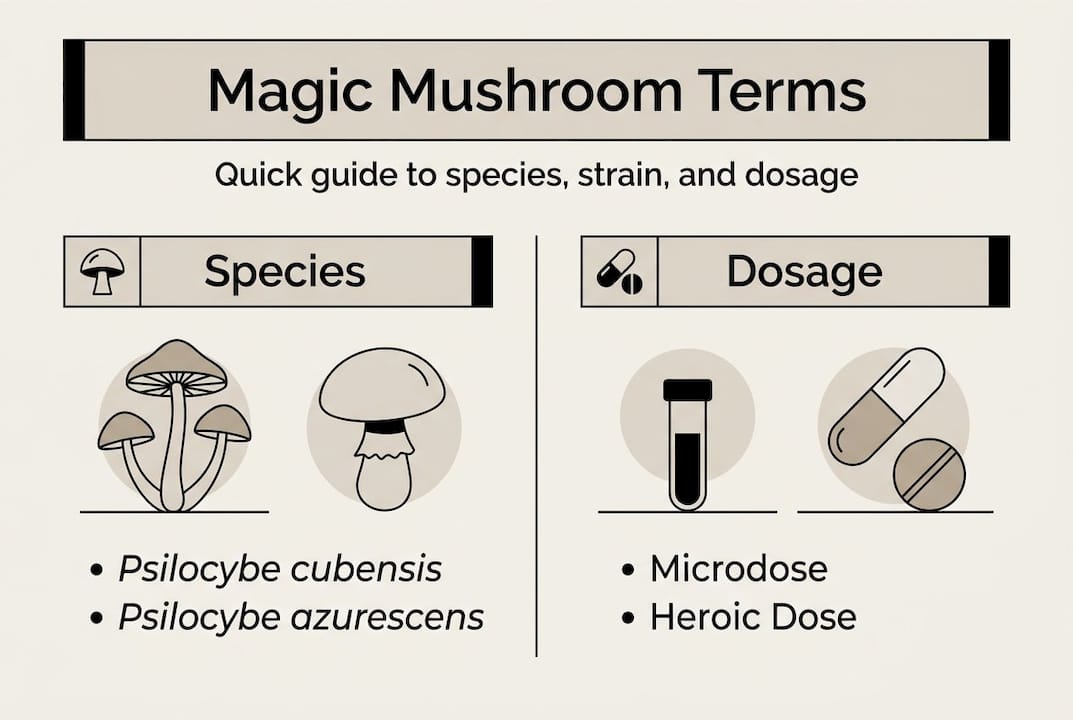
Looking at the broader species range, Psilocybe azurescens sits at the top with up to 1.8% psilocybin content, making it roughly two to three times more potent than a standard cubensis product. If you’re used to cubensis and pick up an azurescens product without adjusting your dose, the difference will be significant.
When reading Michigan mushroom product labels, here’s what to look for:
- Species name: Tells you the biological baseline for potency
- Strain name: Gives you more specific potency and effect expectations
- Weight: Always listed in grams; this is your dosing reference
- Format: Dried, capsule, or chocolate each affects onset and duration differently
- Lab verification: The gold standard; confirms actual psilocybin content
For a side-by-side look at how product format affects your experience, our guide on dried vs chocolate mushrooms is worth reading before you buy. And for a full breakdown of how different strains behave, our strain effects explained article goes deep.
Pro Tip: Ask your supplier directly whether their products are lab-verified. A reputable source will have no problem answering that question. If they can’t, that tells you something important.
Now that you know how to read labels and compare strains, let’s demystify some of the most confusing terms you’ll hear and find trustworthy resources for further learning.
Talk like a pro: Popular slang, resources, and key Michigan-specific terms
The language around magic mushrooms is a mix of street slang, scientific terminology, and community-specific shorthand that has evolved quickly over the past decade. Knowing the difference between these layers helps you communicate clearly and avoid costly misunderstandings.
Common terms like “shrooms,” “magic mushrooms,” and “psilocybin” all point back to the same broad class of fungi, but they carry different connotations depending on context. “Shrooms” is casual and social. “Psilocybin” is clinical and scientific. “Magic mushrooms” sits in the middle and works across most conversations.
Here are terms you’ll hear regularly in Michigan’s mushroom community:
- Caps and stems: The two physical parts of a dried mushroom. Caps are often considered more potent, though this varies by strain
- Trip: A colloquial term for the full psychedelic experience
- Set and setting: Popularized by Timothy Leary, this refers to your mindset (set) and your physical environment (setting) going into an experience
- Sitter: A sober person who stays present during someone else’s experience to provide safety and support
- Functional mushrooms: Non-psychedelic species like Lion’s Mane or Reishi, often sold alongside psilocybin products. These are not the same thing
- Edible mushrooms: Culinary varieties like shiitake or portobello. Completely different category
One of the most common mistakes in Michigan dispensaries is confusing functional mushroom products with psilocybin products. Labels matter. Read them carefully.
“The vocabulary is evolving as fast as the science. Reliable knowledge helps you stay safe.”
For Michigan-specific guidance, our Michigan psilocybin product guide covers what’s available locally and how to use it responsibly. If you’re interested in chocolate-based products, our piece on microdose chocolate in Michigan is a solid starting point. And for practical safety tips, our wellness tips for magic mushrooms article covers the essentials.
We’ve clarified Michigan’s unique mushroom language. Now, see below for a practical summary of expert takeaways you won’t find in typical guides.
Our expert take: What most mushroom guides leave out
Most terminology guides treat magic mushroom language as a fixed glossary. In Michigan’s actual market, it’s anything but fixed. Slang shifts, new strains get named by cultivators with creative marketing instincts, and product labels don’t always align with scientific naming conventions. A strain called “Blue Meanie” could refer to Psilocybe cubensis or Panaeolus cyanescens depending on who’s selling it. These are two very different species with very different potency profiles.
The real risk isn’t ignorance of the terms themselves. It’s assuming that knowing a term means you know the product. We see this regularly. Someone reads about microdosing, learns the Fadiman protocol, and then measures their dose visually instead of by weight. The terminology was there. The application wasn’t.
Our honest advice: use the vocabulary as a starting point, not a finish line. Always verify what’s actually in the product, ask questions, and match your approach to your actual experience level. Our guide on focus with magic mushrooms digs into practical application for Michigan users specifically.
Michigan’s trusted source for mushrooms and education
Now that you’ve got the vocabulary, the next step is finding products you can actually trust.
At Elevated Remedies, located at 1123 Broadway St in Ann Arbor, we carry dried magic mushrooms, mushroom capsules for microdosing, and mushroom chocolate bars sourced for quality and consistency. Every product we carry is selected with Michigan users in mind, whether you’re just starting with a low microdose or you’re a seasoned user looking for something specific. We also stock educational resources and our team is genuinely knowledgeable, not just sales-focused. If you’re curious about Amanita muscaria and how it differs from psilocybin products, we can walk you through that too. Come in, ask questions, and leave knowing exactly what you’re working with.
Frequently asked questions
What is the difference between a magic mushroom species and a strain?
A species is the biological classification, like Psilocybe cubensis, while a strain is a specific cultivated variety within that species, such as Golden Teacher. Think of species as the category and strain as the specific product within it.
How much is a typical microdose of magic mushrooms?
A typical microdose is 0.1 to 0.3 grams of dried mushrooms, which is roughly 5 to 10 percent of a standard psychoactive dose. At this level, you should not experience hallucinations or feel noticeably altered.
What does ‘heroic dose’ mean in the context of magic mushrooms?
A heroic dose is five grams or more of dried magic mushrooms and typically produces intense visionary states, ego dissolution, and a complete departure from ordinary consciousness. It is not recommended for beginners.
Can potency labels on Michigan mushroom products be trusted?
Lab-verified products are the most reliable, but potency varies widely by species and strain even within the same batch. Always ask your supplier about testing and don’t rely on labels alone when adjusting your dose.
Are magic mushroom terms the same everywhere, or does Michigan have unique slang?
While terms like “shrooms” and “magic mushrooms” are widely recognized, Michigan’s community has developed local product language and slang shaped by regional culture and the state’s evolving legal landscape. When in doubt, ask for clarification from a knowledgeable local source.
Recommended
- Magic mushroom dosage guide: safe & effective use in Michigan – Elevated Remedies
- Michigan guide: psilocybin product examples & safe use – Elevated Remedies
- Psilocybin Dosage Guide for Michigan Wellness in 2026 – Elevated Remedies
- Magic mushrooms for focus: What Michigan residents need to know – Elevated Remedies