
Psilocybin is illegal statewide in Michigan in 2026. Some cities direct police to deprioritize enforcement, but that does not legalize psilocybin or create immunity from prosecution. The controlling statute is MCL 333.7212, and two pending bills, House Bill 4686 and Senate Bill 802 would change that if enacted, but neither has passed as of this writing.
TL;DR:
- Michigan classifies psilocybin as a Schedule I drug, with no current legal retail, medical, or personal-use exemptions statewide.
- City resolutions de-prioritize enforcement for personal possession but do not alter state law or prevent prosecution at the county or federal levels.
- Business violations occur when products test positive for psilocybin, leading to license revocation, zoning penalties, and potential criminal charges despite deprioritization policies.
- Active research programs, such as those at the University of Michigan, provide the only legal supervised access to psilocybin in Michigan in 2026.
- Retailers and individuals should verify product contents via lab tests, document sourcing, and understand local zoning rules to minimize legal risks.
Table of Contents
- State law and statutes that control psilocybin in Michigan
- City-level deprioritization: where it exists and what it actually does
- Penalties, enforcement patterns, and recent cases affecting businesses
- Pending legislation and how to track it
- Lawful access options for Michigan residents in 2026
- How businesses and individuals can reduce legal risk
- A local, safety-first read on where this is heading
- Lawful alternatives and resources from Elevated Remedies
- Primary sources and quick links
- Sources
- FAQ
State law and statutes that control psilocybin in Michigan
Michigan places psilocybin and psilocyn on Schedule I, the same classification tier reserved for substances the state considers to have high abuse potential and no accepted medical use. MCL 333.7212 is the statute that does this, and the practical effect is blunt: there is no statewide legal retail channel, no medical program and no personal-use exemption for psilocybin anywhere in Michigan right now.
Two companion statutes set the penalties. MCL 333.7403 governs possession, and a related use provision covers consumption itself. Penalties scale with the conduct involved: simple possession for personal use typically carries misdemeanor-level exposure with fines and jail time measured in months, while manufacture or delivery charges climb into felony territory with years of potential incarceration. Courts and prosecutors also treat intent to distribute, quantity and prior record as factors that push a case from the lower tier into the higher one. Michigan’s zero-tolerance approach to controlled substances behind the wheel means any detectable psilocybin metabolite can support a driving charge regardless of impairment. None of this is unique to Michigan, but the specific thresholds and language live in the statute text, not in common assumptions about how strict or lenient a county tends to be.
City-level deprioritization: where it exists and what it actually does
Several Michigan cities have passed resolutions directing local police to treat psilocybin mushrooms and other entheogenic plants as their lowest enforcement priority. These include:
- Ann Arbor, one of the earliest Michigan cities to adopt this approach
- Detroit
- Ferndale
- Hazel Park
- Ypsilanti
- Jackson, referenced in similar municipal discussions
These resolutions, covered in local news on Ann Arbor’s decriminalization move, instruct officers to deprioritize arrests for personal possession. They do not rewrite state law, do not bind county prosecutors or the Michigan Attorney General, and do not stop federal enforcement. A city council vote cannot override MCL 333.7212. For individuals, that mostly means a lower chance of a street-level arrest in those specific cities. For businesses, it means almost nothing: licensing boards, zoning officials and county prosecutors can still act, and often do.
Penalties, enforcement patterns, and recent cases affecting businesses
Deprioritization resolutions shape how municipal police respond to personal possession calls. They do nothing to stop county prosecutors, state police or administrative bodies that license retail businesses, and that gap is where most real enforcement risk now sits.
A sequence of enforcement actions in Hazel Park involving a retailer connected to Spores Detroit shows how this plays out. According to court filings from the Michigan business court.pdf), products seized from the business tested positive for psilocybin, and the city revoked the business license that followed, even though Hazel Park itself had adopted a deprioritization posture toward personal use. The same filings describe how zoning rules and consumer-protection enforcement gave the city tools that had nothing to do with police deprioritization. Courts have upheld revocations in similar situations where a business sold a product marketed as a “functional” or non-psychoactive mushroom item that lab testing showed actually contained a controlled substance.
For a retail operator, the exposure is layered: criminal liability for possession or delivery, administrative license revocation, zoning violations tied to the type of goods sold, civil liability if a mislabeled product harms a customer and contracts that may be unenforceable if they involve an illegal sale.

Pending legislation and how to track it
Two bills currently define the legislative conversation in Lansing.
House Bill 4686, introduced in 2025, proposes a narrow personal-use exemption for adults 21 and older, with possession limits around a small amount in some drafts and, in certain versions, a requirement tied to a documented PTSD diagnosis; the bill text has not been enacted as of October 2026.
- Senate Bill 802, introduced in 2026, takes a broader approach, aiming to exempt certain conduct involving what the bill calls “qualified psychoactive substances” from criminal penalty under specified conditions; the bill page shows it was referred to committee in 2026 and has not advanced to a floor vote.
Bills introduced in one session commonly die without a vote, and multi-session efforts are the norm rather than the exception for drug policy changes. The most reliable way to track either bill is the Michigan Legislature’s own site, which shows committee referrals, sponsor statements and fiscal notes. A committee vote moving a bill forward is meaningfully different from a bill simply sitting in committee, and neither is the same as the governor signing it into law.
Lawful access options for Michigan residents in 2026
The only fully legal route to supervised psilocybin for a Michigan resident right now is an approved clinical trial, and ClinicalTrials.gov lists active psilocybin studies that researchers are currently enrolling. The University of Michigan runs its own active research program through the Michigan Psychedelic Center, which publishes studies and opportunities for participation.
Oregon and Colorado both run regulated psilocybin service programs for their own residents and visitors, but traveling there does not solve the underlying problem for a Michigan resident: psilocybin remains a federally controlled substance, and carrying it back across state lines is a separate federal and state crime regardless of where it was obtained legally. The safer position is to treat any out-of-state access as something that ends at that state’s border.

How businesses and individuals can reduce legal risk
Retailers and individuals in Michigan’s psychedelic-adjacent market face a genuinely narrow legal corridor. A few practical steps keep that corridor from closing:
- Never sell or represent a product as psilocybin-free without lab verification, since marketing claims do not override chemistry.
- Keep all licensing applications transparent about product contents and sourcing.
- Confirm local zoning rules before opening or expanding a retail location that touches mushroom products.
- Call the municipal clerk’s office directly for the current text of any deprioritization resolution rather than relying on summaries.
- Keep dated records of lab results, supplier invoices and marketing copy in case a license or zoning question comes up later.
Pro Tip: If a product is marketed as a “functional mushroom” item, confirm with a certified lab that it contains no detectable psilocybin before it ever reaches a shelf. Courts have shown little patience for businesses that got this wrong, even by mistake.
A local, safety-first read on where this is heading
Michigan’s psilocybin picture in 2026 is a patchwork, not a path. The cities moving fastest on deprioritization are not the ones writing the eventual statewide rules, and anyone treating a city resolution as a legal shield is reading it wrong.
— Juiced
Lawful alternatives and resources from Elevated Remedies
Elevated Remedies sells functional mushroom products, including Mushroom Gummies, Mushroom Capsules at $45.00, and a Mushroom chocolate bar also at $45.00, each described by the company as lab tested and sourced for consistency. 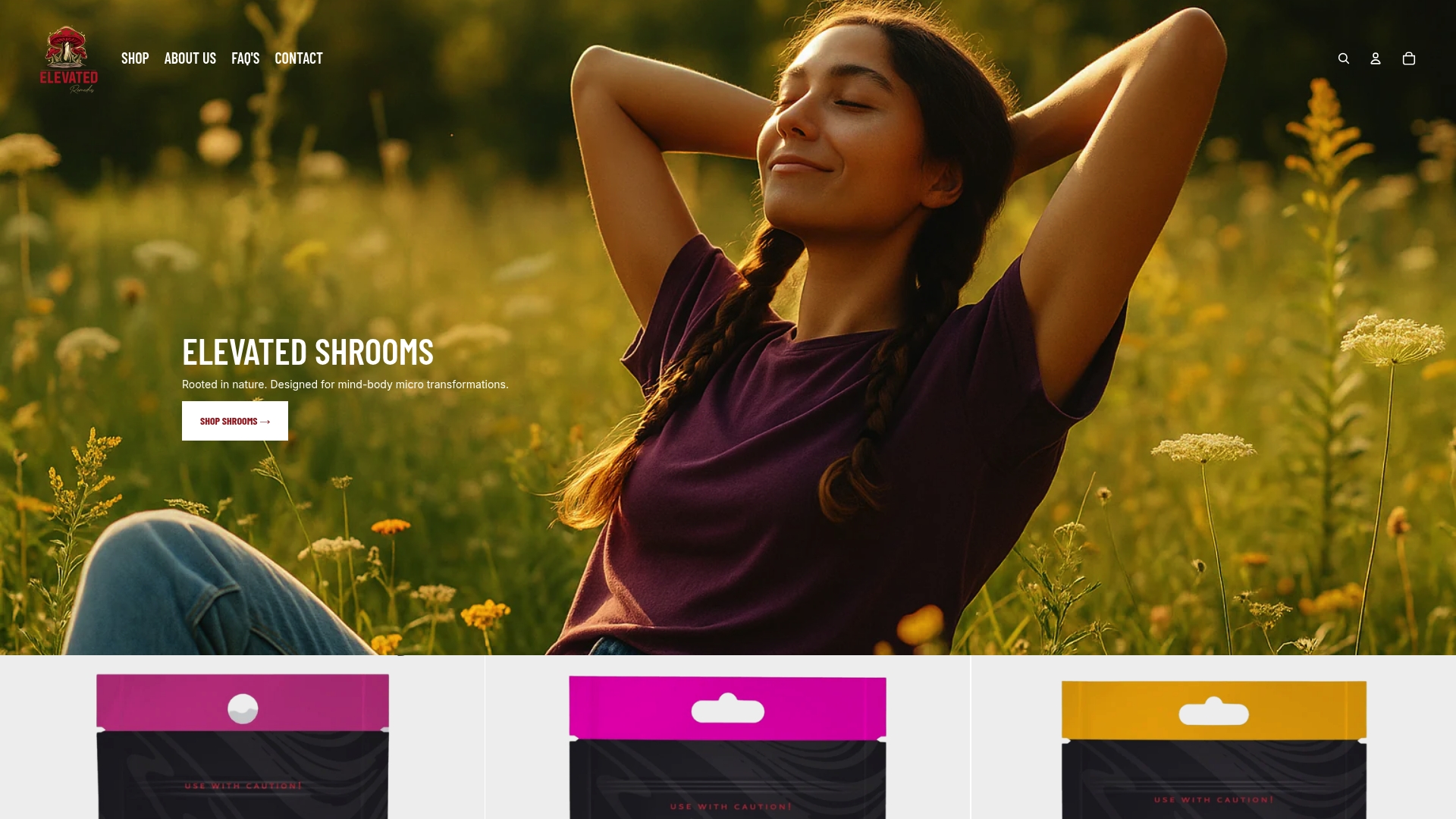
These products are built around non-psilocybin ingredients, and our guide on functional mushroom products and safe use walks through exactly what separates them from Schedule I psilocybin mushrooms. This is informational context, not legal advice, so pair it with the primary sources above before making any purchasing or legal decision. Browse the Mushroom Capsules collection to see current options.
Primary sources and quick links
- MCL 333.7212: the statute classifying psilocybin as Schedule I
- House Bill 4686 text and Senate Bill 802: pending reform bills
- Michigan Psychedelic Center: lawful research access through the University of Michigan
- For a contrast with another country’s framework, see this overview of Canadian psilocybin policy
This article is general information, not a substitute for advice from a qualified lawyer. Consult a qualified legal professional about your own circumstances before acting on anything here.
Sources
Primary sources beat secondhand summaries every time, especially in a legal environment that is actively shifting.
- MCL 333.7212 — Michigan Legislature
- 2025-HB-4686 bill text — Michigan Legislature
- 2026-SB-0802 — Michigan Legislature
- Michigan Psychedelic Center research pages — University of Michigan
FAQ
Is there a mushroom dispensary in Michigan?
There is no legal statewide dispensary model for psilocybin mushrooms in Michigan, since the substance remains Schedule I. Retailers like Elevated Remedies instead sell functional mushroom and amanita muscaria products that fall outside that classification.
Does a city deprioritization resolution mean psilocybin is legal there?
No. These resolutions, passed in cities like Ann Arbor and Detroit and covered in local news reporting, direct police to make personal possession their lowest priority, but they do not change state law or stop county prosecutors, zoning enforcement or license revocation.
What happens if a business sells products that test positive for psilocybin?
Enforcement history in Hazel Park shows that license revocation and court action can follow even in cities with deprioritization policies. Businesses face criminal exposure, license loss and zoning violations if lab testing shows a product contains psilocybin.
Can I legally access psilocybin through research or travel?
Enrolling in an active clinical trial listed on ClinicalTrials.gov, or through programs tracked by the Michigan Psychedelic Center, is a lawful supervised route. Traveling to a regulated state like Oregon does not make it legal to bring psilocybin back into Michigan, since transporting it across state lines remains a separate crime.