
TL;DR:
- Psilocybin remains illegal under Michigan state law despite local decriminalization efforts, which do not equate to legalization.
- The safest approach involves participating in regulated clinical trials or exploring legal wellness alternatives like functional mushrooms and supplements.
Michigan sits in a genuinely strange position right now. Psilocybin mushrooms are still illegal under state law, yet several cities have softened enforcement, wellness seekers are more curious than ever, and a growing body of clinical research keeps pushing the conversation forward. If you’re trying to figure out what’s actually allowed, what’s smart, and how to protect yourself while exploring psilocybin for health and wellness purposes, you’re not alone. This guide walks through the legal landscape, preparation steps, safest pathways, and the real science behind microdosing so you can make informed choices in 2026.
Table of Contents
- Understanding the legal landscape in Michigan
- Preparing: What you need to know before purchasing
- Step-by-step: Navigating safe purchase and use
- Mental health and microdosing: Expectations vs. evidence
- A candid perspective: Navigating Michigan’s mushroom market in 2026
- Explore legal wellness alternatives with Elevated Remedies
- Frequently asked questions
Key Takeaways
| Point | Details |
|---|---|
| Legal risk is real | While local enforcement has softened in some areas, statewide and federal laws still prohibit psilocybin. |
| Preparation is essential | Always check city ordinances and prepare to document your process before seeking mushrooms. |
| Safest path: clinical trials | Your best evidence-based route is regulated research or waiting for licensed services, not informal supply chains. |
| Mental health evidence mixed | Psilocybin can help some, but clinical trials show benefits and risks, and microdosing outcomes aren’t guaranteed. |
| Legal alternatives exist | You can support your wellness with regulated, mushroom-inspired products without legal uncertainty. |
Understanding the legal landscape in Michigan
The first thing to get straight: local resolutions and state law are not the same thing. Several Michigan cities have passed measures to deprioritize psilocybin enforcement, but that doesn’t mean mushrooms are legal. It means local police have been directed to treat personal possession as a low priority. The distinction matters enormously if you’re making decisions based on what you think the law permits.
Psilocybin remains a controlled substance in Michigan under state law, regardless of what any city council resolution says. So if you’re in Ann Arbor, Detroit, or Jackson and you assume you’re legally protected because of a local vote, you’re taking a risk you may not fully understand.
Here’s a quick breakdown of where things stand city by city:
| City | Status | Key detail |
|---|---|---|
| Ann Arbor | Deprioritized enforcement | Personal possession lowest law enforcement priority |
| Detroit | Deprioritized enforcement | City passed resolution in 2021 |
| Jackson | Deprioritized enforcement | Recent 2025 council vote |
| Statewide | Illegal | Schedule 1 controlled substance |
“Local deprioritization does not equal legalization. State law enforcement agencies, including the Michigan State Police and federal agencies, are not bound by city resolutions.”
There is movement at the state level. Michigan House Bill 4686 was introduced in 2025 and would create certain exemptions, but it has not yet passed into law. For now, the state treats psilocybin mushrooms the same way it always has.
Edge cases carry real risk too. Being near a school, involving minors, or possessing quantities that suggest distribution rather than personal use will attract enforcement attention even in cities with deprioritization policies. Knowing where you are on the map, literally and legally, is step one. For a broader look at how wellness laws and safe use intersect in Michigan, that’s worth reading before you go further. Getting fluent in basic mushroom terminology will also help you ask better questions and understand product labels if you’re exploring the market.
Preparing: What you need to know before purchasing
With the legal picture framed, here are your essential steps before seeking any product.
Most people skip preparation entirely. They hear that their city deprioritized enforcement and jump straight to sourcing. That’s where things go wrong. Real preparation means understanding the gap between what’s technically tolerated and what’s genuinely protected.
What to check before anything else:
- Confirm your city or township has an active deprioritization resolution. Not every municipality in Michigan does.
- Look up whether your specific address is near a school, park, or public facility. These locations elevate your risk profile significantly.
- Know your personal use threshold. Carrying small amounts for personal use reads very differently to law enforcement than carrying larger quantities.
- Verify your age. No resolution or bill in Michigan proposes any access for minors.
The proposed House Bill 4686 exemptions would allow adults with PTSD to possess up to 2 ounces under specific conditions, but this bill has not been enacted. Do not treat proposed legislation as current law.
Edge cases leave individuals exposed to both state and federal enforcement in ways that local resolutions can’t shield against. Federal law still classifies psilocybin as Schedule I. If a transaction or possession situation crosses into federal jurisdiction, no city resolution provides any protection whatsoever.
| Factor | Lower risk | Higher risk |
|---|---|---|
| Location | Private residence in decrim city | Public space, near schools |
| Quantity | Small personal amount | Bulk quantities |
| Documentation | Wellness purpose, personal use | No clear rationale |
| Age | Adult | Minor involvement |
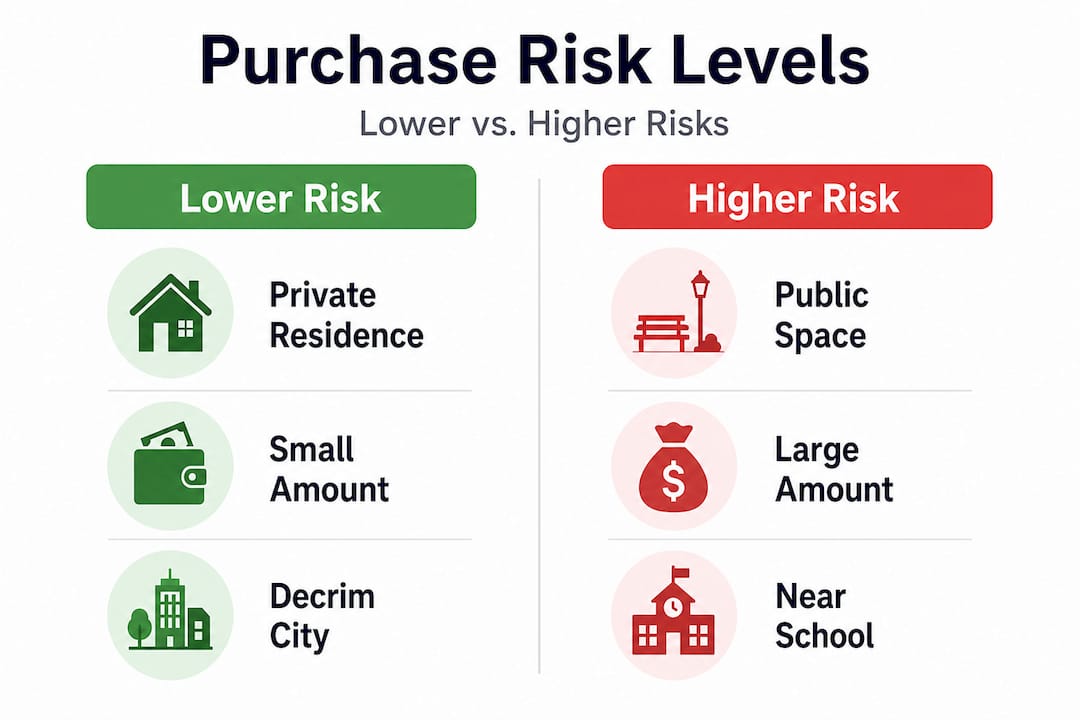
Pro Tip: Before sourcing anything, write down your purpose, your quantity, and your location. If you can’t articulate a clear personal wellness rationale in plain terms, that’s a signal to slow down and do more research first.
Our psilocybin product guide covers what different product formats look like and how to evaluate them. If you’re thinking about sharing or gifting, read the section on gifting mushrooms safely first, because social sharing carries a different legal weight than solo personal use. And if you’re new to consumption itself, the guide on safe consumption in Ann Arbor is a practical starting point.
Step-by-step: Navigating safe purchase and use
Once prepared, here are step-by-step instructions covering what to do and what to avoid.
Step 1: Establish your legal baseline Know exactly what your city’s enforcement posture is and confirm it’s current. Resolutions can be reversed or modified. Check your city council’s website for the most recent language.
Step 2: Research regulated clinical pathways first The safest route to psilocybin access remains participation in regulated clinical research. Yale’s psilocybin trials and similar programs at other research institutions provide supervised, evidence-based access with medical oversight. You won’t get the same flexibility as buying a product yourself, but you get real protection and real data about your experience.
Step 3: Evaluate legal alternatives Before sourcing psilocybin specifically, consider whether legal wellness alternatives meet your goals. CBD, kratom, and adaptogenic mushroom products offer measurable wellness benefits without the same legal exposure. Functional mushrooms like lion’s mane and reishi have solid research behind cognitive and immune support. These aren’t placeholders; for many wellness goals, they’re genuinely effective.
Step 4: If pursuing psilocybin, verify your source carefully Unverified sources carry risks beyond legality. Contamination, misidentification, and inconsistent potency are real problems in unregulated markets. If you’re purchasing from any source, ask specific questions about origin, preparation, and storage. Consistency matters for dosing.
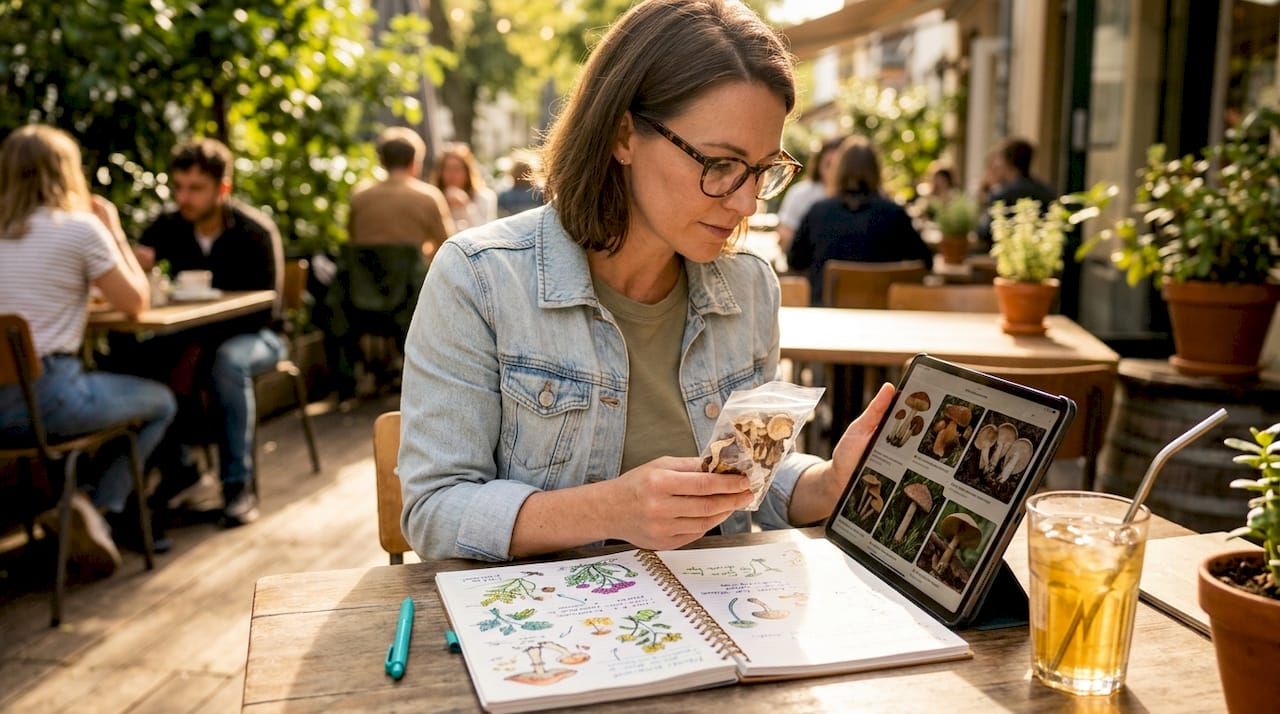
Step 5: Start with the right dosage framework New users should start far lower than they think necessary. A microdose is typically 0.1 to 0.3 grams of dried psilocybin mushrooms. A moderate dose is 1 to 2.5 grams. A full experience dose begins around 3 grams. The dosage guide for Michigan users lays this out clearly with context for different goals.
Step 6: Document everything Keep a simple record of what you took, when, how much, and what you experienced. This serves two purposes: it helps you refine your approach, and it creates a paper trail that supports a personal wellness rationale if you ever need to explain your use.
“Documentation isn’t just good wellness practice. In a legally ambiguous environment, being able to clearly articulate your purpose, quantity, and personal use context is meaningful.”
Pro Tip: Set a clear intention before each session. Research consistently shows that set and setting, meaning your mindset and your physical environment, significantly shape the quality and safety of any psilocybin experience. Don’t skip this step.
For a structured approach to responsible use, our psilocybin wellness dosage guide offers specific frameworks. If you’re exploring psilocybin specifically for focus and productivity, check out the mushrooms for focus guide for context on how and when that application actually works.
Mental health and microdosing: Expectations vs. evidence
Finally, let’s review the latest science behind psilocybin for wellness and microdosing, because this area is genuinely complex and often oversimplified.
The clinical picture for psilocybin in treating depression, PTSD, and anxiety is genuinely promising. Multiple trials have reported strong response rates among treatment-resistant patients. A major JAMA Psychiatry trial reported meaningful reductions in depression scores with adverse events that were manageable under clinical supervision. That’s significant. But clinical supervision is a key phrase there.
A Nature Medicine 2025 review confirmed that while psilocybin shows real effects across multiple psychiatric conditions, outcomes are not uniformly positive and adverse-event monitoring is essential, especially for individuals with personal or family histories of psychosis or bipolar disorder.
| Application | Evidence quality | Notes |
|---|---|---|
| Treatment-resistant depression | Strong (RCTs) | Best results with clinical support |
| End-of-life anxiety | Strong (multiple trials) | High response rates reported |
| PTSD | Moderate (ongoing trials) | Promising but fewer completed studies |
| Microdosing for focus | Weak to mixed | Placebo effects significant in RCTs |
| General wellbeing | Mixed | Naturalistic data more positive |
Where microdosing gets complicated:
- Randomized controlled trials on microdosing show limited benefits beyond placebo effects. When people don’t know whether they’re taking an active dose or a sugar pill, the advantage nearly disappears in some studies.
- Naturalistic survey data from 2025 tells a different story: people who microdose in real-world settings report meaningful improvements in mood, creativity, and wellbeing on dosing days.
- The gap between these findings likely reflects expectation effects, lifestyle factors among microdosers, and the difficulty of blinding studies when people can feel a difference.
“The honest takeaway for Michigan users is this: psilocybin may genuinely help you, but it is not guaranteed to help everyone, and unsupervised use carries real risks that clinical settings are designed to manage.”
Not everyone responds the same way. People with anxiety disorders sometimes experience increased anxiety at higher doses. People with a predisposition to psychosis face real risk. Knowing your mental health history and ideally discussing it with a healthcare provider before exploring psilocybin isn’t optional if you want to be responsible about this.
Our mushroom wellness protocols and mental wellness checklist can help you structure a thoughtful, evidence-aware approach to whatever your wellness goals are.
A candid perspective: Navigating Michigan’s mushroom market in 2026
Here’s what we see from our position in Ann Arbor: most buyers dramatically underestimate the legal exposure they carry, not because they’re careless people, but because the conversation around decriminalization has outpaced the actual legal changes. It’s easy to hear “Ann Arbor decriminalized mushrooms” and conclude you have nothing to worry about. That’s not the reality.
The practical wisdom that tends to get skipped is patience. People looking for genuine wellness benefits, especially around mental health, are far better served by the evidence-based, regulated paths currently available than by rushing into unverified supply chains. Clinical research participation is not glamorous or convenient, but it provides real data, real medical support, and real protection. Legal alternatives, including functional mushroom products and adaptogenic compounds, work meaningfully for many wellness goals while you wait for Michigan’s legal picture to clarify.
We also see people arrive with unrealistic expectations about what psilocybin will do for them personally. The research is encouraging, but it’s not a guarantee. Mental health is complex. Some people have profoundly positive experiences. Others hit walls they didn’t expect. The honest position is that psilocybin is a serious compound that deserves a serious, structured approach rather than a casual experiment.
If you’re going to explore this space, do it thoughtfully. Read the wellness laws guide for Michigan. Understand what you’re actually protected from and what you’re not. Build a dosing approach that starts low and respects your own biology. And don’t treat local decriminalization as a legal green light when it simply isn’t.
Explore legal wellness alternatives with Elevated Remedies
Ready to explore, but want to stay on solid legal ground? Elevated Remedies at 1123 Broadway St in Ann Arbor carries a range of mushroom-inspired wellness products that let you explore this space without the legal complexity of psilocybin specifically.
Our mushroom chocolate bar is one of our most popular options for those curious about mushroom-based products. We also carry 1500mg Amanita muscaria gummies for a different kind of mushroom experience. Not sure what Amanita muscaria actually is or how it differs from psilocybin? The Amanita muscaria info page breaks it down clearly. Come in, talk to our team, and find the path that fits your wellness goals.
Frequently asked questions
Is it legal to purchase psilocybin mushrooms in Michigan in 2026?
No. Psilocybin remains a controlled substance under Michigan state law, and some cities have only deprioritized enforcement rather than legalized possession or purchase.
What is the safest way to use psilocybin for wellness in Michigan?
Participating in regulated clinical research is the safest option, providing medical oversight and legal protection that informal sourcing simply can’t offer.
Are there any legal exemptions for psilocybin possession in Michigan?
Limited exemptions have been proposed in Michigan House Bill 4686 for adults with PTSD possessing small amounts, but these exemptions have not yet been signed into law.
Does microdosing psilocybin improve mental health?
Randomized trials show limited benefits beyond placebo in controlled settings, but naturalistic survey data suggests many users report genuine improvements in mood and wellbeing on dosing days.
Recommended
- How to Gift Magic Mushrooms Safely in Michigan – Elevated Remedies
- Michigan guide: psilocybin product examples & safe use – Elevated Remedies
- Magic mushroom dosage guide: safe & effective use in Michigan – Elevated Remedies
- Michigan mushrooms for wellness: Laws, benefits, and safe use – Elevated Remedies