
TL;DR:
- Functional mushrooms are non-psychoactive species used in dietary supplements for wellness benefits like immunity and cognition. Their benefits derive from bioactive compounds such as beta-glucans and triterpenoids, which interact with biological systems beyond nutrition; product form and standardization matter for efficacy. Industry standards are evolving to verify active compounds, emphasizing quality and transparency in labeling and preparation methods.
Defining functional mushrooms sounds simple until you realize the term gets applied to lion’s mane lattes, reishi capsules, and psilocybin products all in the same breath. That confusion is not your fault. The wellness industry has stretched the phrase across three genuinely different categories of mushrooms, and most content online does nothing to separate them. This article fixes that. You will walk away with a precise understanding of what functional mushrooms actually are, what makes them work at the biological level, how they differ from culinary and psychoactive varieties, and what 2026 industry standards say about product quality.
Table of Contents
- Key takeaways
- Defining functional mushrooms clearly
- What makes them “functional”: the bioactive science
- Supplements vs. culinary use: not the same thing
- Industry standards shaping the definition in 2026
- Top functional mushrooms and what they actually do
- My take on where functional mushrooms actually stand
- Explore functional mushrooms at Theelevatedremedies
- FAQ
Key takeaways
| Point | Details |
|---|---|
| Functional mushrooms are non-psychoactive | They are distinct from psilocybin mushrooms and marketed for wellness benefits like immunity and cognition. |
| Bioactive compounds drive the benefits | Beta-glucans, triterpenoids, and lectins are the chemistry behind functional mushroom health claims. |
| Product form affects what you get | Fruiting body extracts and mycelium preparations deliver different bioactive profiles. |
| Culinary and supplement uses differ significantly | Whole-food fiber benefits and concentrated extract benefits are not interchangeable. |
| Industry standards are catching up in 2026 | The Functional Mushroom Council now works to verify active compounds and set quality benchmarks. |
Defining functional mushrooms clearly
The most precise current definition comes from the OPSS 2026, which identifies functional mushrooms as non-psychoactive species used in dietary supplements for wellness purposes. That single phrase does a lot of work. It tells you what functional mushrooms are not (psychoactive), what form they typically take (supplements), and what purpose they serve (wellness beyond basic nutrition).
The species that consistently appear under this label include:
- Lion’s mane (Hericium erinaceus): studied for cognitive support and nerve growth
- Reishi (Ganoderma lucidum): associated with immune modulation and stress response
- Cordyceps (Cordyceps militaris or sinensis): linked to energy metabolism and athletic endurance
- Turkey tail (Trametes versicolor): one of the most researched species for immune function
- Shiitake (Lentinula edodes): valued for cardiovascular and immune benefits
- Chaga (Inonotus obliquus): noted for antioxidant activity
- Maitake (Grifola frondosa): studied for metabolic and immune effects
These mushrooms reach consumers as powders, capsules, tinctures, and drink mixes. One distinction that often gets glossed over is fruiting body vs mycelium preparations. The fruiting body is the cap-and-stem structure you recognize as a mushroom. The mycelium is the root-like network beneath it. Each yields a different bioactive profile, and some products use one, the other, or both. Knowing which you are buying matters more than most labels suggest.
Functional mushrooms are explicitly separated from psychoactive species like psilocybin-containing mushrooms. Those operate through entirely different compounds and fall into a completely different regulatory and experiential category.
What makes them “functional”: the bioactive science
The word “functional” points to a specific chemistry-to-function story. These mushrooms contain bioactive compounds that interact with biological systems in ways that go beyond basic caloric or micronutrient value. A 2026 MDPI review identifies the primary classes as beta-glucans, lectins, triterpenoids, nucleosides, and phenolic compounds, each with distinct mechanisms of action.
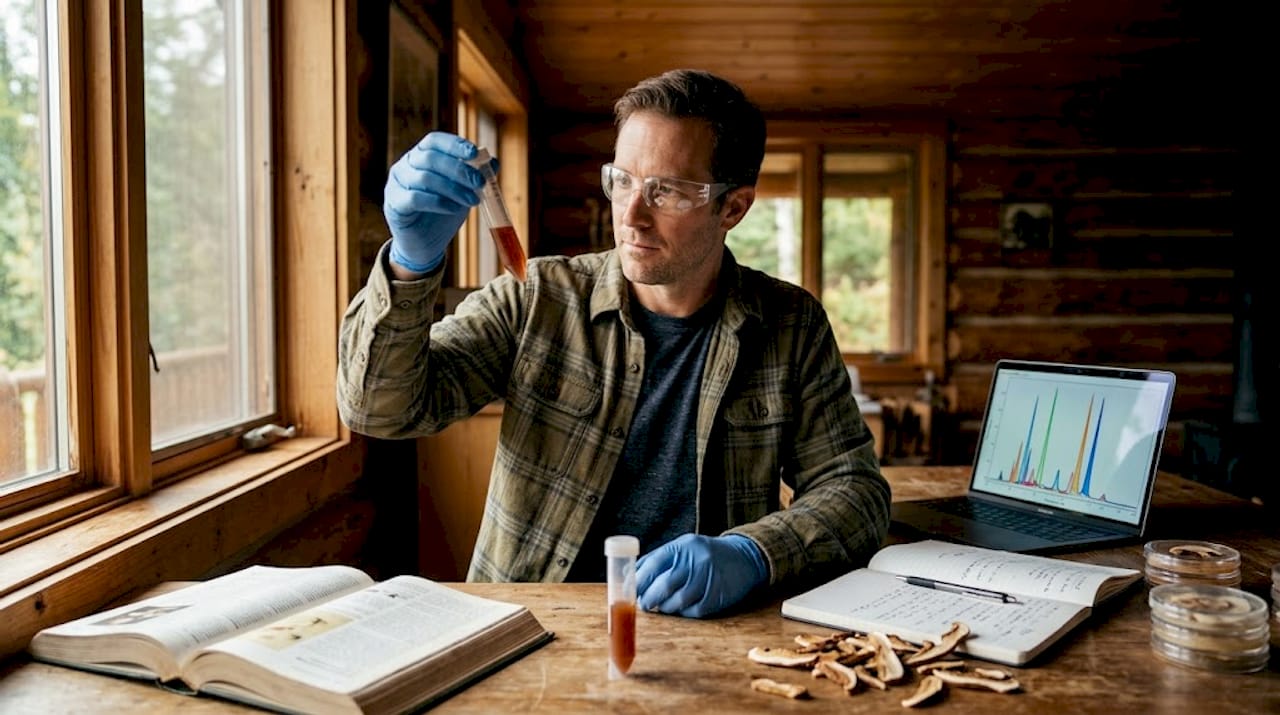
Beta-glucans are the most studied. They bind to receptors on immune cells and trigger a modulating response, which means they can both stimulate and regulate immune activity depending on context. Triterpenoids, particularly abundant in reishi, show anti-inflammatory and adaptogenic properties in laboratory research. Lectins demonstrate selective binding activity that researchers associate with anticancer potential.
A 2026 review in European Food Research and Technology links these compounds to immune support, cancer prevention, and metabolic and neurodegenerative benefits across preclinical and some clinical studies.
Here is where honest science requires you to pump the brakes slightly. Bioavailability and standardization remain genuine bottlenecks. Beta-glucan oral bioavailability sits around 2 to 5 percent in many formulations, which means the gap between what a product contains and what your body actually uses can be wide. Clinical evidence quality varies significantly by species and preparation method. The biology is real. The translation to consistent consumer products is still catching up.
Pro Tip: When evaluating a functional mushroom supplement, look for products that specify beta-glucan content by percentage rather than listing only the mushroom species. A product showing 30% beta-glucans from a fruiting body extract tells you far more than one that simply says “500 mg lion’s mane.”
The key bioactive classes and their primary studied effects:
- Beta-glucans: immunomodulatory, antitumor, cholesterol-lowering
- Triterpenoids: anti-inflammatory, adaptogenic, liver-protective
- Lectins: selective cytotoxic activity in cancer cell research
- Phenolic compounds: antioxidant and neuroprotective activity
- Nucleosides (cordycepin): energy metabolism, anti-fatigue
Supplements vs. culinary use: not the same thing
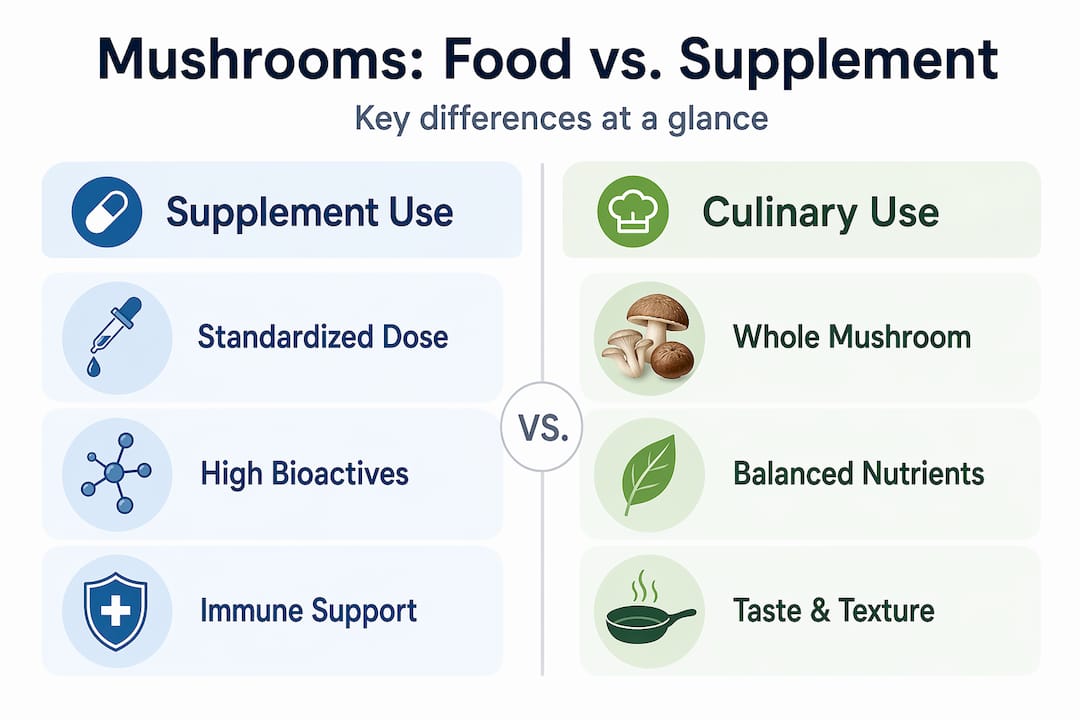
This is a distinction the wellness industry consistently collapses, and it leads to real confusion. Functional mushrooms in supplement form and mushrooms used as culinary functional ingredients operate through completely different mechanisms and deliver different outcomes.
| Feature | Supplement use | Culinary use |
|---|---|---|
| Primary benefit | Concentrated bioactive delivery | Whole-food fiber and prebiotic support |
| Form | Extracts, powders, capsules | Whole mushrooms in meals |
| Active compound focus | Beta-glucans, triterpenoids at standardized levels | Dietary fiber, prebiotics, micronutrients |
| Dosing logic | Standardized extract dose per serving | Pattern-based dietary contribution |
| Consumer goal | Targeted health outcome | General gut health and nutritional variety |
When you eat shiitake in a stir-fry, you are getting fiber, some B vitamins, and a modest beta-glucan contribution. That is genuinely valuable, especially as part of the fibermaxxing trend that culinary professionals are embracing in 2026. Whole mushrooms are being used in professional kitchens as efficient functional fiber sources that improve gut health without requiring chefs to overhaul their menus.
But that is categorically different from taking a standardized reishi extract to support immune function. One works through diet patterns over time. The other works through concentrated bioactive exposure at a controlled dose. Neither is wrong. They are just not the same.
Industry standards shaping the definition in 2026
The most significant development in how the industry understands and communicates functional mushrooms in 2026 is the Functional Mushroom Council, launched to build research, education, and quality standards for a market that has grown faster than its verification infrastructure.
“The Functional Mushroom Council’s multi-year research and testing program aims to operationalize ‘functional mushroom’ definitions through active compound verification and product quality standards.” — Nutraingredients, 2026
What this means practically is that the definition of “functional mushroom” is moving beyond species labeling toward active compound verification. A product that says “contains lion’s mane” is increasingly insufficient. What percentage of beta-glucans? From fruiting body or mycelium? Tested for heavy metals and contaminants? These are the questions that industry standards are beginning to formalize.
For consumers, this shift is meaningful. It means the gap between a premium functional mushroom product and a low-quality one is becoming more measurable and more visible. Brands that invest in chemical composition testing and publish those results are the ones worth paying attention to. The Council’s work also shortens the learning curve for newer brands entering the space, giving them quality benchmarks to build toward rather than starting from scratch.
Labeling clarity remains a challenge. Many products still blur the line between supplement structure-function claims and disease treatment claims, which creates both regulatory risk and consumer confusion. Standardization across extraction methods, dose ranges, and bioactive percentages is the frontier where the definition of “functional mushroom” will be settled.
Top functional mushrooms and what they actually do
Understanding the species individually gives you a much sharper lens when reading product labels or choosing between options. Here are the seven species you will encounter most often:
- Lion’s mane: Studied for supporting nerve growth factor production and cognitive function. Common in nootropic supplements and brain health stacks. Best sourced from fruiting body extracts for hericenone content.
- Reishi: The most recognized adaptogen in the group. Triterpenoids support stress response and immune regulation. Often used in evening wellness formulas given its calming associations.
- Cordyceps: Historically used in endurance and energy contexts. Cordycepin, its key nucleoside, influences cellular energy metabolism. Athletes frequently use it pre-workout.
- Chaga: Extremely high in antioxidants, particularly melanin complexes and phenolic acids. Harvested from birch trees, not cultivated like most others. Watch for wild-harvested sourcing claims.
- Turkey tail: The most clinically studied species. PSK (polysaccharide-K) from turkey tail has been researched alongside cancer treatment protocols in Japan. Strong gut health and immune data.
- Shiitake: Contains lentinan, a beta-glucan with well-documented immune activity. Also provides eritadenine for cardiovascular support. Widely available in both food and supplement form.
- Maitake: The D-fraction extract has been studied for blood sugar regulation and immune response. Strong metabolic research profile compared to most other species.
Pro Tip: For people new to mushroom supplements, starting with a single-species product before moving to blends makes it easier to identify what works for your body. Turkey tail or lion’s mane are both well-researched starting points with strong safety profiles.
Product quality varies substantially across brands. Interaction risks are real for people on immunosuppressants or blood thinners, particularly with reishi and turkey tail. Always check with a healthcare provider if you are managing a chronic condition. You can also read more about Michigan mushrooms for wellness to understand the legal and safety landscape if you are shopping locally.
My take on where functional mushrooms actually stand
I have watched the functional mushroom space move from fringe wellness topic to mainstream supplement aisle in what feels like a very short time. And what I have seen consistently is that the people who get the most out of these products are the ones who treat species labeling as a starting point, not the whole story.
The word “functional” in 2026 is doing more work than it can realistically handle. It carries both a precise scientific meaning (bioactive compounds with plausible mechanisms) and a marketing connotation (this product does something for your health). Those two things are not always the same thing in a given product.
What I have learned from years of watching this category develop is that standardization is the actual differentiator. Not the species name on the front of the package. Not the price point. Not whether the brand has a good Instagram aesthetic. The brands and products that can tell you their beta-glucan percentage, their extraction method, and whether they use fruiting body or mycelium are the ones worth trusting.
The culinary angle is genuinely exciting and underappreciated. Whole mushrooms as a prebiotic fiber source in everyday meals is a legitimate functional benefit that does not require buying a single supplement. The two paths, culinary and supplement, serve different goals and work best when you understand which one you actually need.
Ongoing research will continue to refine which species, which extracts, and which doses produce consistent outcomes in humans. The science is young. The potential is real. The consumer responsibility is to ask better questions of the products they buy.
— Juiced
Explore functional mushrooms at Theelevatedremedies
If this article clarified what you have been trying to understand about functional mushrooms, Theelevatedremedies is where curiosity meets quality product selection. Located at 1123 Broadway St in Ann Arbor, Michigan, Elevated Remedies carries mushroom products sourced for potency and consistency, not just category presence. Whether you are exploring mushroom capsules for a structured wellness routine or curious about where functional mushrooms end and psychoactive mushrooms begin, the team at Elevated Remedies can walk you through it. For those interested in learning more about the broader world of mushroom wellness, including the fascinating case of Amanita muscaria, Elevated Remedies has resources and products that go beyond what most shops even stock. Come in informed and leave with exactly what fits your goals.
FAQ
What are functional mushrooms, exactly?
Functional mushrooms are non-psychoactive species like lion’s mane, reishi, and turkey tail, used in dietary supplements for health benefits beyond basic nutrition. They are not the same as psilocybin-containing mushrooms.
How do functional mushrooms differ from magic mushrooms?
Functional mushrooms contain bioactive compounds like beta-glucans and triterpenoids and produce no psychoactive effects, while magic mushrooms contain psilocybin and produce significant alterations in perception and consciousness.
What compounds make functional mushrooms beneficial?
The primary bioactives are beta-glucans, triterpenoids, lectins, and phenolic compounds, which show immunomodulatory, antioxidant, anti-inflammatory, and metabolic activity in scientific research.
Does it matter if a product uses fruiting body or mycelium?
Yes. Fruiting body and mycelium preparations yield different bioactive profiles, so the form used directly affects what compounds are present and at what levels in the final product.
Are functional mushroom products regulated for quality?
Formal regulation is limited, but the Functional Mushroom Council launched in 2026 to build research programs and quality verification standards across the industry. Consumers should look for brands that publish third-party testing results.
Recommended
- Why Compare Mushroom Strains? Potency, Safety & Results – Elevated Remedies
- Michigan mushrooms for wellness: Laws, benefits, and safe use – Elevated Remedies
- Dried mushrooms vs capsules: The essential user guide – Elevated Remedies
- Why choose strong mushroom strains? Potency & wellness – Elevated Remedies