
TL;DR:
- Dried mushrooms are natural but have variable potency, requiring precise weighing for safety.
- Capsules offer consistent dosing when lab-tested but depend on quality source documentation.
- Proper storage, sourcing, and tracking are essential for safe, effective psilocybin use across formats.
Choosing between dried magic mushrooms and psilocybin capsules feels simple until you’re actually standing at the crossroads. Which one is safer? Which is more predictable? Which one fits a microdosing routine versus a deeper wellness experience? These aren’t just beginner questions. Even experienced users in Ann Arbor get tripped up by potency swings, inconsistent effects, and dosing guesswork. This guide cuts through the noise and walks you through exactly how to compare, prepare, and use both formats safely, so you can make an informed decision that fits your actual goals and lifestyle.
Table of Contents
- Comparing dried mushrooms and capsules: Pros, cons, and safety
- Preparation: What you need before you start
- Step-by-step: How to use dried mushrooms and capsules
- Verifying your results: Tracking, adjusting, and troubleshooting
- Elevated Remedies’ perspective: What most guides miss about format choice
- Explore locally trusted options in Ann Arbor
- Frequently asked questions
Key Takeaways
| Point | Details |
|---|---|
| Potency varies by format | Dried mushrooms can vary in strength up to 20% while capsules offer more consistent dosing. |
| Lab testing matters | Always choose products with third-party lab testing for best safety and reliability. |
| Avoid daily dosing | Taking regular breaks helps prevent building up a tolerance to psilocybin. |
| Preparation ensures safety | Using the right tools and checking legality reduces risk and improves your experience. |
Comparing dried mushrooms and capsules: Pros, cons, and safety
Now that you know the stakes of this decision, let’s break down each option.
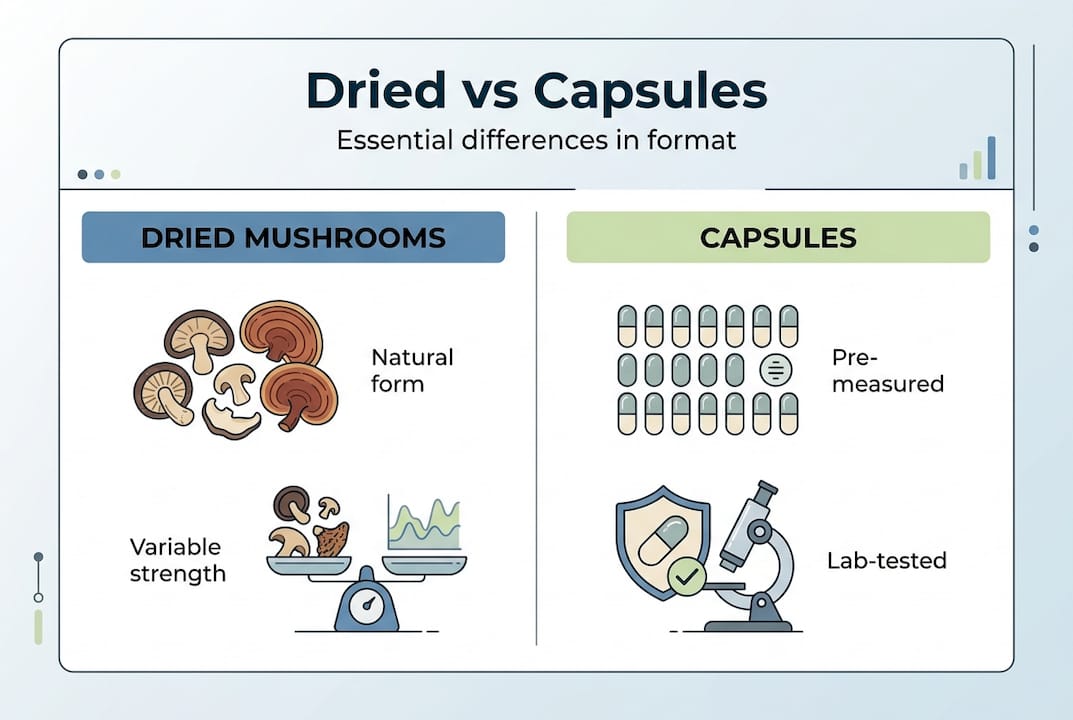
Dried mushrooms are the traditional form. They’re natural, minimally processed, and often favored by people who want the full-spectrum experience of psilocybin. You can see what you’re getting, smell it, and break it apart. The tradeoff is that potency can vary considerably between strains, between harvests (called “flushes”), and even between different parts of the same mushroom cap versus stem. Getting a consistent dose requires a precise digital scale, patience, and some baseline knowledge of the strain you’re working with.
Psilocybin capsules solve a lot of those inconsistency problems. They’re pre-measured, usually standardized across a batch, and much easier to incorporate into a daily or scheduled routine. For microdosing especially, capsules shine because you’re not grinding, weighing, or tasting anything. The main concern with capsules is transparency. Not all products are created equal, and sourcing from a shop that carries lab-tested options matters far more than most guides acknowledge.
As the microdosing research from Addiction Center confirms, dried potency can vary by 10 to 20 percent depending on strain and flush, making a precise scale non-negotiable. Capsules reduce that variability, but only when they’ve been properly lab-tested. Understanding potency and wellness outcomes can help you decide which level of consistency you need for your specific goals.
Side-by-side comparison
| Feature | Dried mushrooms | Capsules |
|---|---|---|
| Potency consistency | Variable (10-20% swing) | High (when lab-tested) |
| Dosing accuracy | Requires scale | Pre-measured |
| Onset time | 30 to 60 minutes | 45 to 90 minutes |
| Shelf life | 6 to 12 months (dry storage) | 12 to 24 months (sealed) |
| Ease of use | Moderate | Easy |
| Taste | Earthy, noticeable | None |
| Discretion | Low | High |
Here’s a quick look at the core safety considerations for both:
- Contamination risk: Dried mushrooms need proper storage to prevent mold; capsules need sealed, tamper-proof packaging
- Tolerance buildup: Both formats carry the same psilocybin-based tolerance curve; format does not change this
- Overuse: Easier to accidentally overuse dried mushrooms due to inconsistent potency; capsules reduce this risk when dosed correctly
- Sourcing risk: Both formats require trustworthy, transparent sourcing; lab testing matters for capsules especially
“The format you choose matters less than the habits you build around it. Accurate measuring and informed sourcing are the true safety tools, regardless of whether you’re working with grams of dried mushrooms or pre-packed capsules.”
Browsing quality capsule options with lab-tested sourcing is one of the most practical ways to reduce uncertainty right from the start.
Preparation: What you need before you start
With a clear understanding of both options, here’s everything you need to prepare.
Before you ever open a bag of dried mushrooms or pop your first capsule, preparation makes a real difference in how safe and satisfying your experience will be. This isn’t overcautious advice. It’s the practical difference between a consistent, purposeful session and an unpredictable one.
Essential materials
For dried mushrooms:
- A digital scale accurate to 0.01 grams (kitchen scales rarely work; invest in a jewelry-grade scale)
- Airtight glass jars or vacuum-sealed bags for storage
- A cool, dark, dry storage space (heat and humidity are the enemy)
- A clean cutting surface and bowl for breaking apart and separating material
- A journal or tracking app to log dose weight and effects
For capsules:
- A pill organizer with labeled compartments for each day or session
- Airtight, moisture-proof storage (manufacturer packaging is often sufficient if sealed)
- A tracking journal or notes app to monitor timing and effects
- Access to product documentation, including batch numbers and lab results
How to evaluate your source
Whether you’re using dried or capsules, sourcing is everything. For dried mushrooms, you want to know the strain, the supplier’s growing practices, and whether the product has been properly dried to under 10 percent moisture content. Wet or improperly dried mushrooms have a significantly higher contamination risk.
For capsules, look for third-party lab testing documentation. Reputable products come with certificates of analysis (COAs), which confirm the active ingredient content and rule out contaminants. If a retailer can’t tell you anything about where the product was tested or what’s in it, that’s a red flag worth taking seriously.
It also helps to compare mushroom strains before committing to a dried product, since different strains can produce wildly different intensity levels even at the same gram weight. Consulting a reliable dosage guidance resource before your first use is equally important.
Legal reminders for Ann Arbor and Michigan
Ann Arbor decriminalized psilocybin mushrooms in September 2020, making personal possession and use a low enforcement priority. That said, they remain a Schedule I controlled substance at the federal level. Buying from a local, established dispensary like Elevated Remedies puts you in the safest possible position as a consumer in this region.
Pro Tip: Store dried mushrooms with a food-grade desiccant packet inside your jar. Silica gel packets pull excess moisture and can extend shelf life by several months, significantly reducing contamination risk.
As research confirms, dried potency varies by strain and by each flush, which is why having a precise scale isn’t optional. It’s the foundation of any responsible use practice.
Step-by-step: How to use dried mushrooms and capsules
Once you’re set up with your supplies, follow these steps for each approach.
Using dried mushrooms
Step 1: Choose your strain and target dose. For beginners, 1 gram is a gentle starting point. Experienced users often work between 2 and 3.5 grams for a fuller experience. Note that potency varies by strain, so Golden Teacher at 2 grams may feel very different from Penis Envy at 2 grams. Research your specific strain before dosing.
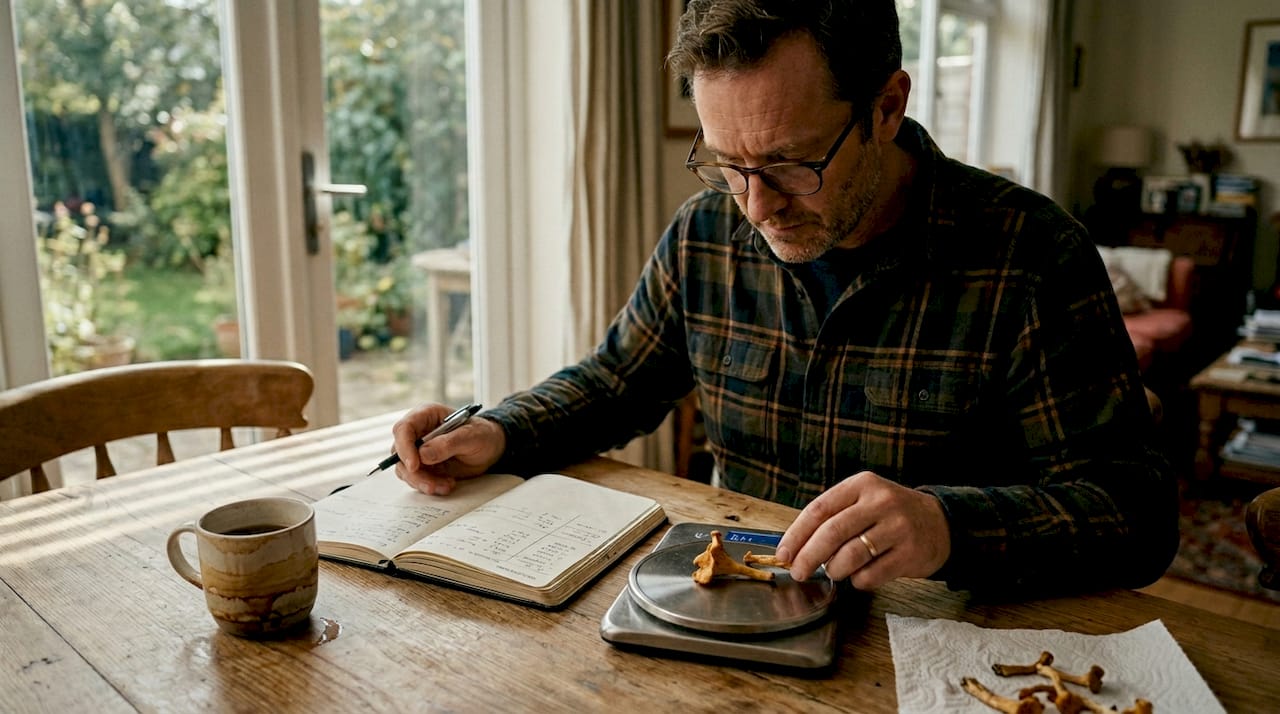
Step 2: Weigh precisely. Set your digital scale to zero with the empty container on it (called “taring”). Add your dried mushrooms in small increments until you hit your target weight. Don’t estimate. Even a 0.5 gram difference can produce a noticeably different experience.
Step 3: Choose your ingestion method. You can eat dried mushrooms directly, brew them into a tea (steep for 15 to 20 minutes, then strain), or grind and mix them into food. Tea reduces nausea for many people and can slightly speed up onset. Eating them directly is the simplest method.
Step 4: Set your intention and environment. This step isn’t optional. Your mental state and physical setting shape the experience dramatically. Choose a calm, familiar environment with no obligations for 4 to 6 hours.
Step 5: Note your start time and onset. Most people feel effects within 30 to 60 minutes. Avoid redosing before 90 minutes. Impatience is one of the most common causes of unintentionally intense experiences.
Using capsules
Step 1: Read the label completely. Check the serving size, milligram amount of psilocybin or mushroom extract per capsule, and any inactive ingredients.
Step 2: Start low. For microdosing, 0.1 to 0.3 grams is typical. For a mild experiential dose, one capsule per session is usually appropriate unless the label indicates otherwise.
Step 3: Take with water on a light stomach. Onset may take slightly longer than dried mushrooms (45 to 90 minutes) due to the capsule shell dissolving first.
Step 4: Log your session. Track the dose, time, how you felt beforehand, and what you notice during and after. This data becomes your most valuable reference for adjusting future sessions.
Good wellness tips cover the nuances of set and setting in detail, and understanding how to microdose safely is essential reading whether you choose dried or capsules.
The tolerance rule
This applies to both formats: avoiding daily dosing is critical to preventing tolerance buildup. Psilocybin builds tolerance quickly, often within two to three consecutive days of use. Most structured microdosing protocols recommend dosing one day on, two days off, or following the Fadiman Protocol (one day on, two days off, repeat).
Pro Tip: Keep a simple five-point daily mood and focus rating scale in your journal. After four weeks, patterns in your notes will tell you far more about what’s working than any single session can.
Verifying your results: Tracking, adjusting, and troubleshooting
After using your preferred method, it’s important to check in and make adjustments as needed.
Tracking your results is where most users fall short, and it’s also where the biggest gains in consistency and safety come from. Whether you’re microdosing for focus and mood or exploring larger wellness doses, you need data on how your body and mind respond over time.
What to track after each session
- Mood before and after: Rate it on a simple 1 to 10 scale
- Cognitive clarity: Did you feel sharper, foggy, or neutral?
- Sleep quality that night: Disrupted sleep is often an early sign of excessive frequency
- Appetite and energy: Significant changes can signal tolerance or dosing mismatch
- Emotional tone: Anxiety, calm, openness, resistance? Note it all
Troubleshooting inconsistent results
If you’re using dried mushrooms and your experiences feel wildly different session to session, the cause is almost always potency variation. Each flush of mushrooms, even from the same batch, can differ. Switching to a new bag or a different strain without adjusting your dose is a common culprit.
If capsule results feel inconsistent, the first thing to check is whether you’re taking them in similar conditions each time. Food intake, hydration, sleep quality, and stress levels all affect how psilocybin absorbs and acts. The product itself may be fine while your internal conditions are the variable.
“Inconsistency in experience rarely means your product is bad. More often, it means your baseline conditions (sleep, stress, diet) are doing more work than the mushrooms themselves.”
As research supports, avoiding daily dosing is the single most effective way to keep results consistent and prevent tolerance from flattening your experience into nothing.
When to pause or switch formats
Pause for one to two weeks if:
- Effects feel significantly weaker than they did in your first few sessions
- You feel the urge to increase your dose just to feel anything
- Mood or sleep has noticeably worsened since starting
Consider switching formats if:
- Dried mushroom results are too unpredictable despite careful weighing
- Capsule onset timing doesn’t fit your lifestyle
- You want more variety in how you consume, such as through a microdose chocolate option
Comparing what works for your goals across different methods, including understanding microdosing vs full dose approaches, keeps you from getting locked into one format out of habit rather than genuine effectiveness.
Elevated Remedies’ perspective: What most guides miss about format choice
Bringing it all together, here’s our perspective on how to navigate these choices wisely.
Most articles frame this as a binary: capsules for beginners, dried for purists. That framing misses the bigger point. The real question isn’t which format is objectively better. It’s which format serves your goals right now, and whether you’re willing to stay flexible as those goals evolve.
We’ve talked with hundreds of customers in Ann Arbor who started with dried mushrooms because they felt “more natural” and switched to capsules once they realized how much mental energy went into accurate weighing and preparation. We’ve also seen the opposite: people who started with capsules and eventually moved to dried because they wanted more control over how they tailored each session.
The variable that matters most is lab testing and transparent sourcing. Especially with capsules, this removes the guesswork that makes people nervous. Exploring the differences between comparing supplement formats like dried mushrooms and chocolates highlights just how much sourcing quality shapes the whole experience. Local guidance, honest product information, and the freedom to experiment safely are what make a real difference, not strict loyalty to one form.
Explore locally trusted options in Ann Arbor
Ready to make your choice? Find trusted options right here in Ann Arbor.
At Elevated Remedies, 1123 Broadway St, we carry both formats with quality and transparency at the front of every purchasing decision. Whether you want the hands-on approach of dried mushrooms or the precision and ease of psilocybin capsules, we can walk you through exactly what we carry and why.
For those who prefer an edible format, our mushroom gummies are a popular alternative worth exploring, especially if you’re curious about Amanita-based options. Not sure where to start? Our Amanita guide breaks down the differences in plain language so you can decide with confidence. Come in, browse, ask questions, and leave knowing exactly what you’re working with.
Frequently asked questions
Is dosing more accurate with capsules or dried mushrooms?
Capsules offer more accurate dosing because they are pre-measured and often lab-tested, while dried mushroom potency can vary by up to 20 percent between strains and flushes.
How can I reduce the risk of building a tolerance?
Avoid daily dosing and give your body regular breaks to reset sensitivity, regardless of whether you’re using dried mushrooms or capsules.
What should I look for when choosing a mushroom capsule?
Always prioritize products with third-party lab-testing documentation to confirm potency and rule out contaminants before you buy.
Are capsules or dried mushrooms safer?
Lab-tested capsules tend to be safer due to standardized dosing and quality screening, while dried mushrooms carry a higher risk of potency variation and potential contamination without proper storage and sourcing.