
Most mushroom chocolate stays good for 3 to 12 months when kept cool, dry, dark, and sealed away from air, with some vacuum-sealed and frozen batches holding up past a year. The single rule that matters more than any other: control moisture and oxygen, because those two factors degrade the active compound faster than they spoil the chocolate itself. Potency fades gradually rather than all at once, so an older bar might still taste fine while delivering a noticeably weaker effect.
TL;DR:
- Mushroom chocolate remains potent for 3 to 12 months when stored in a cool, dark, airtight environment, with vacuum sealing and freezing extending shelf life beyond a year.
- Exposure to heat, light, moisture, and oxygen accelerates psilocybin degradation, making proper storage techniques essential for maintaining potency.
- Refraining from repeated fridge cycles and sealing portions in vacuum packs with desiccants helps prevent moisture and oxygen-related potency loss over time.
- Most commercial mushroom chocolates are designed to be shelf-stable, but storage conditions significantly influence how long they retain effective doses.
- Regularly checking for mold, off odors, and fat separation, along with proper labeling and portioning, can ensure safety and more predictable effects.
Table of Contents
- Mushroom Chocolate Shelf Life: Realistic Ranges By Storage Method
- Why Mushroom Chocolate Loses Potency: The Degradation Drivers
- The Storage Setup That Actually Preserves Potency
- Refrigeration and Freezing: Helpful or Risky?
- How Fast Does Potency Actually Decline?
- Signs a Mushroom Chocolate Has Gone Bad
- Labeling and Portioning Habits Worth Building
- How Elevated Remedies Applies Storage and Testing Standards
- Why Conservative Storage Beats Convenience Every Time
- Where to Find Tested Mushroom Chocolate and Storage Guidance
- Sources
- FAQ
Mushroom Chocolate Shelf Life: Realistic Ranges By Storage Method
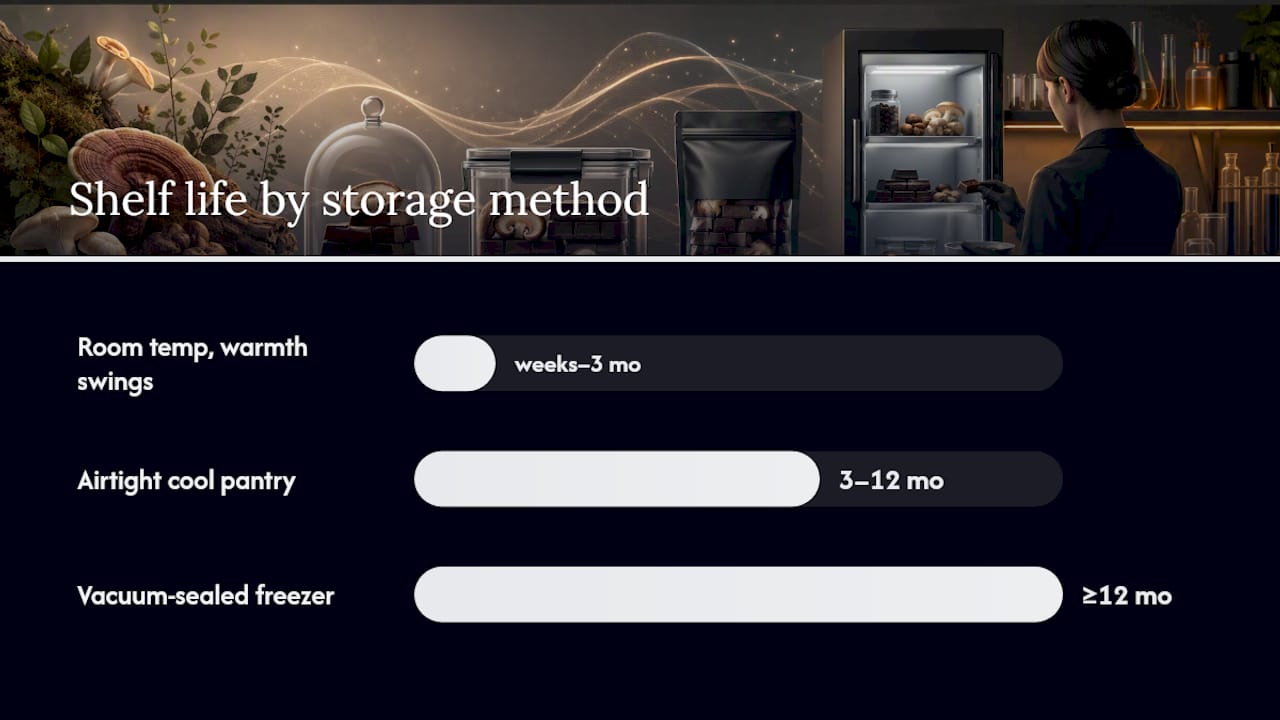
The honest answer to “how long does mushroom chocolate last” depends entirely on where you keep it, not just how long it sits on a shelf. Three tiers cover almost every real-world scenario.
Short-term (weeks to 3 months): This applies to chocolate left at room temperature in a kitchen cabinet, a car, or anywhere exposed to warmth swings and occasional light. Chocolate itself might look fine for much longer, but the psilocybin content inside starts thinning out faster once temperatures climb above 70°F consistently.
Medium-term (3 to 12 months): This is the realistic window for chocolate stored in an airtight container, in a cool pantry or cupboard, away from windows and heat sources. Most commercially produced psilocybin chocolates fall into this range under normal home storage, and it lines up with what consumer guides report for mushroom chocolate durability.
Long-term (12 months or more): Reaching this tier requires layered preservation, typically vacuum sealing combined with freezer storage and a desiccant packet inside the bag. Dried mushrooms alone can remain potent for close to a year when kept dry, cool, and sealed, and chocolate infused with that material can match or exceed that window if the fat in the chocolate itself doesn’t turn rancid first.
You’ll see wildly different numbers across the internet, some guides citing 3 months, others claiming 24. That spread isn’t guides disagreeing on facts. It reflects real variation in formulation, mushroom-to-chocolate ratio, whether the product uses dried powder or an extract, and how the buyer actually stores it once it leaves the shop. Bon Appétit’s coverage of mushroom chocolate notes the format is fairly shelf-stable by nature, but stresses that storage conditions, not the chocolate’s age alone, decide how long the product stays worth eating.
Why Mushroom Chocolate Loses Potency: The Degradation Drivers
Psilocybin and its active metabolite psilocin aren’t chemically stubborn compounds. Both are prone to hydrolysis and oxidation, meaning they break down when exposed to water molecules or oxygen over time, and heat speeds that reaction up considerably. This is a documented property of the psilocybin molecule itself, not marketing language from any single brand.
Four factors drive most of the potency loss you’ll actually encounter:
- Heat accelerates the chemical breakdown of psilocybin into inactive byproducts, which is why a car dashboard or a sunny windowsill does more damage in a week than a pantry does in a month.
- Light, particularly UV exposure, degrades both the mushroom compounds and the chocolate’s fat structure, leading to that dusty gray “bloom” you sometimes see on old chocolate bars.
- Moisture introduces water activity that promotes hydrolysis, and it’s also the main trigger for mold growth in a product that already contains organic mushroom material.
- Oxygen exposure oxidizes both the cocoa butter and the psilocybin content, which is why resealable bags that get opened and closed repeatedly lose potency faster than a bar that stays sealed until use.
A PMC review of psychedelic compound stability found that low-moisture, low-oxygen environments consistently slow degradation compared to standard ambient storage. The chocolate matrix itself plays a role too. Cocoa butter’s fat content can actually buffer the mushroom compounds somewhat, slowing their exposure to air compared to a loose powder, but only if the chocolate hasn’t already started to oxidize. Products with dairy solids, added oils, or minimal preservatives tend to have shorter practical shelf lives than simpler dark chocolate formulations, since dairy fat turns rancid faster than pure cocoa butter.
The Storage Setup That Actually Preserves Potency
Getting this right isn’t complicated, but it does require a few deliberate steps rather than tossing the bar in a drawer.
- Vacuum seal individual portions. A vacuum sealer removes the oxygen that drives oxidation, and it’s one of the most effective single upgrades you can make over a standard zip-top bag.
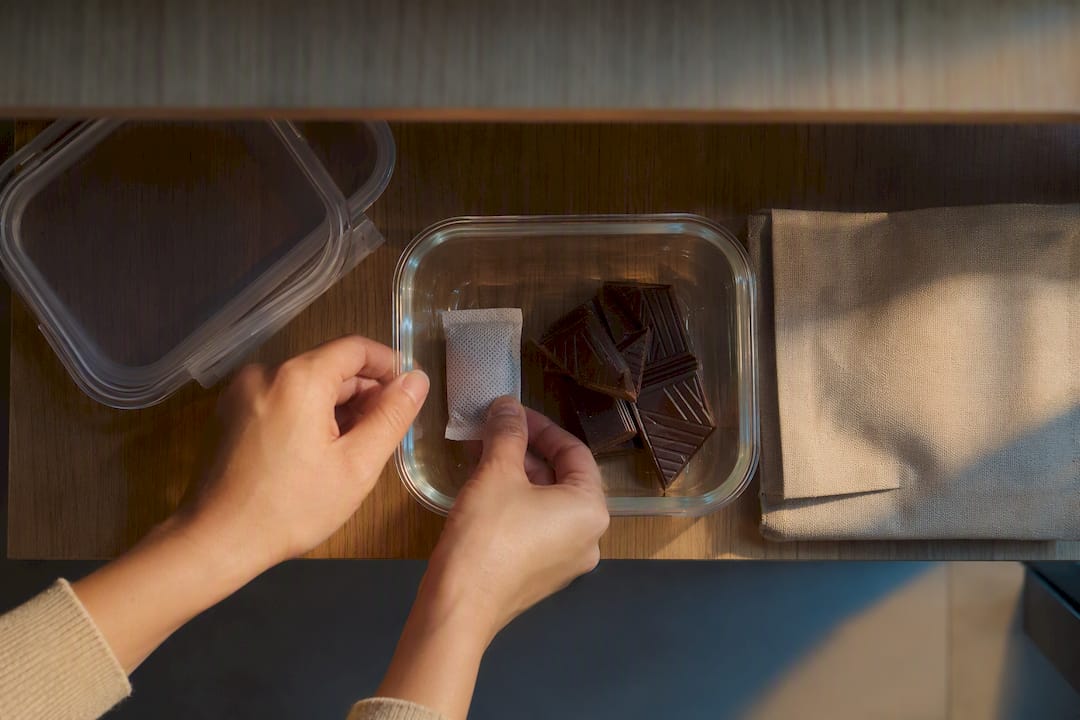
- Add a food-grade desiccant packet. Silica gel packets absorb residual moisture inside the sealed package, which matters even in vacuum-sealed bags since some humidity gets trapped during the sealing process itself.
- Store between 60 and 70°F, away from appliances. Avoid spots near ovens, dishwashers, or sunny counters where temperature swings 10 to 15 degrees throughout the day. Consistency matters as much as the actual number.
- Keep it dark. A cabinet or drawer beats a countertop, even one that never gets direct sun, because ambient room light still contributes to gradual degradation over months.
- Portion into single doses before storing. Every time you open a container, you introduce fresh oxygen and humidity. Pre-cutting or pre-wrapping individual doses means most of your stock stays untouched and sealed.
- Date-stamp the package the day you receive or make it. Write the production date or purchase date directly on the wrapper or container lid.
Combining these steps creates what’s sometimes called layered storage, and it works because each method covers a different weakness. Vacuum sealing handles oxygen, desiccants handle moisture, and cool dark placement handles heat and light. Layering these protections together extends usable potency well beyond what any single method achieves alone.
Pro Tip: Buy a small pack of 1-gram silica gel packets and drop one into every airtight container you use for edibles, not just mushroom chocolate. They’re inexpensive, reusable after a quick oven-dry, and they solve the moisture problem that ruins more potency than heat does in most home kitchens.
Refrigeration and Freezing: Helpful or Risky?
Cold storage isn’t automatically better, and used wrong, it can actively hurt your chocolate. Here’s when it helps and when it backfires.
- Refrigeration helps if you live somewhere hot and humid and lack reliable climate control, since consistent cold slows the chemical reactions that degrade psilocybin. It’s less necessary in a stable, air-conditioned home.
- The condensation risk is real. Pulling chocolate in and out of the fridge repeatedly creates temperature swings that cause moisture to form on the surface, which is exactly the humidity exposure you’re trying to avoid.
- Freezing works better for long-term storage, but only with proper packaging: vacuum seal the chocolate first, then double-wrap it in freezer-safe packaging or a second zip bag to block any stray moisture from the freezer’s own humidity cycles.
- Thaw slowly at room temperature, still sealed, rather than opening it straight from the freezer. Opening a cold package immediately exposes it to warmer, moister room air, and that temperature gap is what causes condensation to form directly on the chocolate.
- Freeze-drying beats simple freezing when it’s available as an option, since it removes moisture directly rather than just suspending it, giving the driest possible starting point before cold storage even begins.
If you’re only ever using regular refrigeration for short stretches between doses, the risk is low. The trouble starts with repeated in-and-out cycling over months, which is worse for potency than just leaving a well-sealed bar in a cool cabinet the entire time.
How Fast Does Potency Actually Decline?
Psilocybin converts to psilocin in the body, and it’s psilocin that produces the psychoactive effect, but psilocin itself is even less chemically stable than its parent compound. That instability is why potency decline in edibles tends to be gradual and hard to predict just by looking at the product.
Under good storage, a mushroom chocolate can retain most of its labeled strength for 6 to 12 months. Under poor storage, meaningful loss can begin in a matter of weeks, particularly with heat exposure. The tricky part is that appearance and smell tell you almost nothing about potency specifically. Chocolate can look and smell completely normal while having lost a real percentage of its active compound, because oxidation of psilocybin doesn’t necessarily produce a visible or detectable change the way mold or rancid fat does.
A few practical habits help here:
- Treat any chocolate older than 6 to 8 months, even if stored well, as potentially reduced in strength and start with a smaller portion than you normally would.
- Keep a simple log of purchase or production dates alongside notes on how a dose felt, so you build your own reference point over time.
- Favor products with visible lab documentation, since a certificate of analysis typically reports potency in milligrams per gram, giving you a real baseline to compare against if the edible seems weaker than expected.
- When in doubt with older stock, dose conservatively and wait longer than usual before deciding whether to take more.
Signs a Mushroom Chocolate Has Gone Bad
Some warning signs point to a real safety issue, not just a potency question, and those deserve zero hesitation.
- Visible mold, usually appearing as fuzzy spots in white, green, or black, means discard immediately, no exceptions, regardless of how the chocolate smells otherwise.
- An off or sour odor that wasn’t there originally is one of the clearest signs of spoilage, especially in chocolate containing dairy or added oils.
- Slimy texture or oily separation on the surface suggests either moisture contamination or fat breakdown, both of which mean the product is past safe use.
- A grayish, dusty film, known as chocolate bloom, is usually cosmetic rather than dangerous. It happens when cocoa butter or sugar crystallizes on the surface from temperature swings, and it’s a quality issue, not a safety one.
- A stale or flat smell without sourness often just signals reduced potency and freshness rather than spoilage, but it’s a reasonable cue to use the product soon or discard it if you’re uncertain.
Inspect unopened packages the same way you would opened ones. A sealed wrapper doesn’t guarantee the product inside was stored properly before it reached you, so check for any signs of prior moisture exposure, like a wrapper that feels slightly damp or a bag with visible condensation inside. When mold or a sour smell shows up, don’t try to salvage the batch by cutting away the affected part. Toss the whole thing.
Labeling and Portioning Habits Worth Building
Good record-keeping does more for your peace of mind than any single storage upgrade.
- Write the production or purchase date directly on the packaging the moment you get it.
- Note the ingredient list and strain, if known, since different mushroom sources and formulations degrade at different rates.
- Mark the first-open date separately from the original date, since a sealed bar and an opened one age very differently.
- Portion into single-dose pieces before storing long-term, so you’re not repeatedly exposing the whole batch to air.
- Keep a short log of how each dated batch performed, building your own timeline for when potency noticeably shifts.
These habits directly tie back to the shelf-life ranges above. A bar dated and portioned correctly on day one gives you an honest way to judge whether it’s still in its 3 to 12 month window or drifting into questionable territory.
How Elevated Remedies Applies Storage and Testing Standards
Elevated Remedies applies batch testing and consistent sourcing across its mushroom chocolate line, an approach the dispensary details in its guidance on chocolate onset timing and safety. Batch testing matters because it gives you a documented potency figure rather than a guess, and it’s the same principle behind a proper lab certificate of analysis.
A typical COA reports the active compound content in milligrams per gram, along with screening for common contaminants like mold or heavy metals when relevant. If you’re buying mushroom chocolate anywhere, not just from Elevated Remedies, it’s worth asking three questions before you commit to a purchase: does the seller provide a certificate of analysis, is there a clear packaging or production date on the product, and does it come in single-dose portions rather than one large, uncut bar? Single-dose packaging in particular solves two problems at once. It gives you precise, repeatable dosing, and it limits how often you’re opening the full package and exposing the rest of your stock to fresh air and moisture.
Why Conservative Storage Beats Convenience Every Time
The biggest mistake people make with mushroom chocolate isn’t poor storage. It’s overconfidence in old stock. A bar that’s been sitting in a cabinet for ten months might still be perfectly safe, but assuming it’s still at full strength is a guess dressed up as certainty.
Smaller batches, bought and used within a few months, beat bulk buying for anyone who actually cares about consistent effects. When you do hold onto product longer, prioritize moisture control above every other consideration, since it’s the factor most likely to quietly wreck both safety and potency without any obvious warning sign. If you have the option, freeze-dried or professionally vacuum-packaged products are worth the extra step for anything you don’t plan to use within a couple of months.
— Juiced
Where to Find Tested Mushroom Chocolate and Storage Guidance
Some sellers provide documented testing behind their products, which offers an alternative to guessing at storage conditions. Every batch of the mushroom chocolate bar is sourced and tested with potency consistency in mind, so you’re starting from a known baseline instead of an unlabeled bar of uncertain age.
If chocolate isn’t your preferred format, the mushroom capsules, priced at $45.00, offer a shelf-stable microdosing option with less concern about fat oxidation than a chocolate matrix carries. For readers who want the storage details before buying anything, Elevated Remedies also publishes a practical guide to storing and buying mushroom chocolate that walks through the same airtight, cool, dark principles covered here. Have questions about dosing an older batch or picking the right format for your climate? Visit the mushroom chocolate bar product page or stop by the Ann Arbor location to talk through storage and dosing with staff directly.
Sources
- How to safely dry and store psychedelic mushrooms | Leafly
- Psilocybin - PubChem
- PMC article related to psychedelic compound stability
- Mushroom chocolates are fancier than ever | Bon Appétit
FAQ
How Long Would Mushroom Chocolate Last in the Fridge?
Refrigerated mushroom chocolate typically holds its quality for several months, especially in hot or humid climates where consistent cold slows chemical breakdown of the active compound. The catch is condensation: repeated trips in and out of the fridge introduce moisture that speeds degradation faster than steady room-temperature storage in a cool, dark cabinet.
Do Mushroom Edibles Go Bad?
Yes, both in terms of food safety and potency. Mold, sour odors, or oily separation signal the product should be discarded, while gradual potency loss from heat, light, and oxygen exposure happens even when the chocolate still looks and smells fine.
Can I Eat Three-Year-Old Chocolate?
Plain chocolate stored properly can sometimes remain edible for a couple of years past its best-by date if no mold or rancid odor is present, but that’s a food-safety question, not a potency one. A three-year-old mushroom chocolate has almost certainly lost significant strength even if it’s technically still safe to eat, so treat it as unreliable for dosing purposes.
Will a Mushroom Chocolate Bar Show Up on a Drug Test?
Standard workplace drug panels don’t typically screen for psilocybin or psilocin, since they’re not part of the standard five-panel or ten-panel tests most employers use. Specialized tests capable of detecting psilocybin do exist, so anyone facing a specific or advanced screening should treat that possibility seriously rather than assume it will never come up.