“Mushroom Love” most often names a small farm, artisan brand, or local dispensary selling edible, functional, or psilocybin mushroom products. If you want to buy now in the U.S., Theelevatedremedies carries mushroom gummies, capsules, and chocolate bars for online purchase and in-store pickup at 1123 Broadway St, Ann Arbor, Michigan.
Your three fastest purchasing routes:
- In-store pickup: Visit Theelevatedremedies in Ann Arbor for same-day access to gummies, capsules, and chocolate bars with staff guidance.
- Local farm or farmers market: Search your city’s weekend markets for fresh gourmet mushrooms from small producers.
- Regulated dispensary: In states where psilocybin products are legal, licensed dispensaries carry lab-tested edibles and capsules.
A review of 17 studies spanning 1966 to 2020 found that eating mushrooms daily was associated with a lower risk of total cancer — a figure that has fueled enormous consumer interest in mushroom products across every format.
Key Takeaways
Mushroom Love brands span small farms, artisan makers, and dispensaries — the fastest buying route for lab-tested mushroom gummies, capsules, and chocolate bars in the U.S. is Theelevatedremedies in Ann Arbor, Michigan.
| Point | Details |
|---|---|
| Fastest buying route | Theelevatedremedies in Ann Arbor offers in-store pickup for gummies, capsules, and chocolate bars today. |
| Always check COAs | Request third-party lab results before buying any mushroom edible or capsule product. |
| Legal variation matters | Psilocybin remains federally scheduled, while Amanita muscaria products are legal nationally and ship freely. |
| Dietary evidence is strong | Eating mushrooms daily was linked to a lower risk of total cancer in pooled observational studies. |
| Medicinal claims need scrutiny | Mayo Clinic experts say most functional mushroom therapeutic claims are still awaiting rigorous clinical trial confirmation. |
Table of Contents
- What does “mushroom love” actually refer to?
- What products do mushroom love brands typically sell?
- Where and how are these products sold in the U.S.?
- U.S. legal status and safety considerations for mushroom products
- How to choose a vendor and what to ask before you buy
- What does the research actually say about mushroom health benefits?
- An honest note on what we carry and how we operate
- Theelevatedremedies: mushroom products you can buy today in Ann Arbor
- Sources
What does “mushroom love” actually refer to?
The phrase covers at least four distinct types of businesses, and knowing which one you found saves real time.
Small gourmet farms are the most common match. Mushroom Love Co, based in the Colorado High Rockies near Buena Vista, is a good example: a small operation selling fresh fungi at local farmers markets with wholesale contacts listed on its site. These farms typically grow oyster, shiitake, or lion’s mane varieties and sell direct to consumers or local restaurants.
Artisan gift and product makers use the name for non-food lines. TinyBeeCards sells a “Mushroom Love” greeting card made on sustainable paper, blank inside for personal messages. Other makers sell mushroom-themed candles, prints, and handmade goods under similar branding.
Natural self-care brands occupy a third lane. Some small makers position themselves as wellness-focused, selling soy candles, essential-oil blends, and crystal-infused products under a “Mushroom Love” identity, often through Squarespace or Etsy storefronts.
Cultivation and research communities round out the picture. Mush.Love focuses on building controlled growing environments and supporting open mushroom research, appealing to home cultivators and enthusiasts rather than casual buyers.
To confirm which entity you found, look for three things: a city or market location, a specific product list with prices, and a working contact method. A site with none of those is likely a placeholder or a brand in early development.
What products do mushroom love brands typically sell?
Product categories vary widely depending on whether the brand is culinary, functional, or psilocybin-focused.
- Fresh gourmet mushrooms: Oyster, shiitake, lion’s mane, and maitake sold at farmers markets or through CSA subscriptions. Culinary use, no dosing considerations beyond cooking portions.
- Dried culinary mushrooms: Shelf-stable versions of the above, often sold in 1–4 oz bags. Long shelf life; rehydrate before cooking.
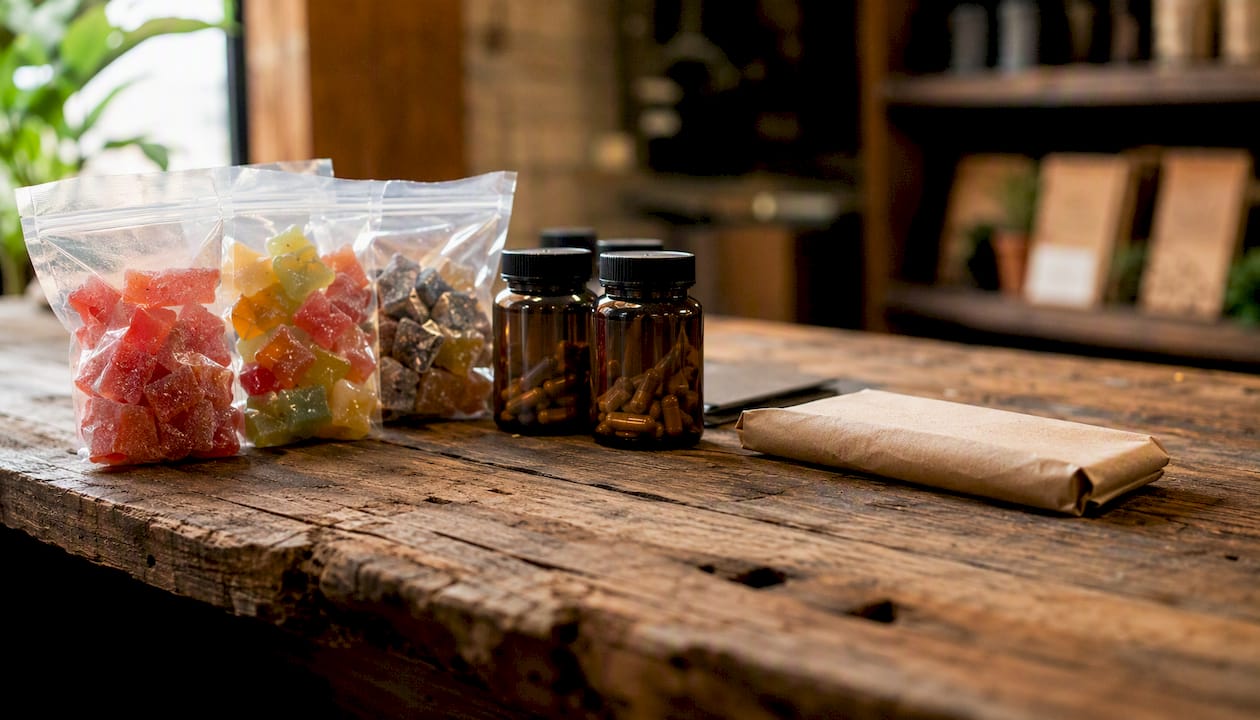
- Mushroom gummies: Chewable edibles made with either functional mushroom extracts (reishi, lion’s mane, cordyceps) or, where legal, psilocybin or Amanita muscaria. Labels should state mg per serving and active-ingredient source.
- Mushroom capsules: Common for microdosing routines, with doses typically measured in milligrams per capsule. Look for species name, extract ratio, and batch number on the label.
- Mushroom chocolate bars: Edible format combining chocolate with functional or psychoactive mushroom extract. Portion size matters; reputable products mark the mg content per square.
- Tinctures and teas: Liquid extracts or dried blends for brewing. Potency varies significantly by extraction method.
- Supplements and powders: Standardized extracts in capsule or powder form, often marketed for immune or cognitive support. The strongest evidence here supports regular dietary inclusion rather than short-term supplementation.
- Accessories: Grow kits, substrate bags, and cultivation tools for home growers.
Mushrooms supply selenium, potassium, B vitamins, and antioxidants including ergothioneine and glutathione, which support energy production and immune function. That nutrient profile is what drives demand across all these formats, culinary and functional alike.
For a deeper look at how different strains compare for energy versus calming effects, the energizing vs calming mushroom strains guide from Theelevatedremedies breaks it down clearly.
Where and how are these products sold in the U.S.?
Sales channels depend almost entirely on product type.
Local farms sell through farm stands, weekend farmers markets, and CSA subscriptions. Seasonality matters: fresh mushrooms peak in spring and fall for most cultivated varieties, though indoor growers supply year-round. Farm tours are common at larger operations and double as marketing for wholesale buyers.
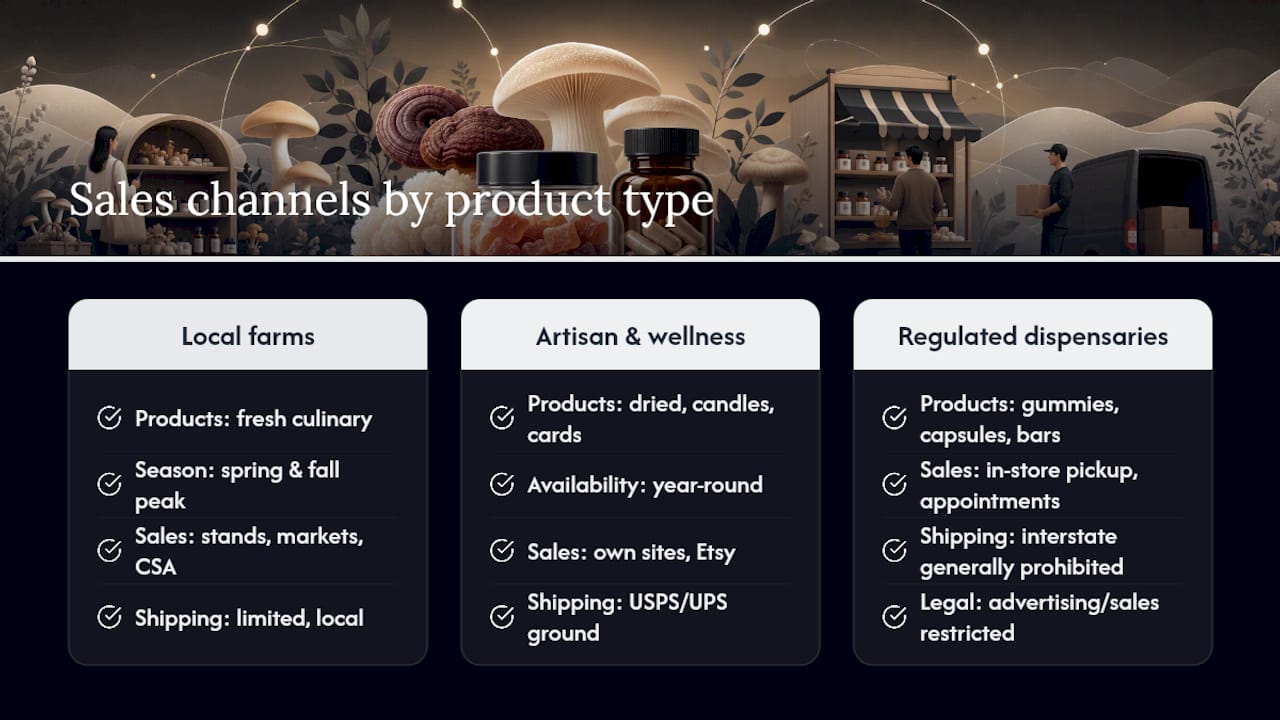
Artisan and wellness makers sell primarily through their own websites (Squarespace, Shopify) or Etsy. Shipping is standard for non-perishable items like candles, cards, and dried mushroom products. Delivery times follow standard USPS or UPS ground timelines.
Regulated dispensaries operate under a different model entirely. In-store pickup and appointment systems are common because many jurisdictions restrict how psychoactive products can be advertised or sold remotely. Theelevatedremedies in Ann Arbor operates as a walk-in dispensary with in-store pickup available for its mushroom gummy, capsule, and chocolate bar lines.
Pro Tip: Shipping psychoactive mushroom products across state lines is generally prohibited under federal law regardless of the destination state’s local rules. If a vendor offers to ship psilocybin products to any U.S. address with no questions asked, treat that as a red flag, not a convenience.
Non-psychoactive functional mushroom supplements (lion’s mane, reishi, cordyceps) are widely shipped nationally because they are sold as dietary supplements under FDA oversight. The channel distinction matters: culinary and functional products ship freely; psilocybin products do not.
U.S. legal status and safety considerations for mushroom products
Federal law classifies psilocybin as a Schedule I controlled substance. At the state level, the picture is more varied. Oregon and Colorado have established regulated frameworks for psilocybin services. Several cities, including Ann Arbor, Michigan, have deprioritized enforcement of personal possession. That does not mean psilocybin is legal in those places — it means local police resources are directed elsewhere. For state-specific rules, check your state legislature’s website or state health department directly.
Amanita muscaria products occupy a separate legal category. Amanita muscaria is not a scheduled substance under federal law, which is why Theelevatedremedies can sell Amanita-based gummies and edibles online and in-store. The Amanita muscaria product page explains the species and what to expect.
Safety checks every buyer should run before purchasing:
- Lab testing and COAs: Third-party Certificates of Analysis confirm potency, species identity, and absence of contaminants. Ask for them; reputable vendors provide them.
- Species identification: A Frontiers in Nutrition review confirms that some mushroom species carry toxic compounds, including lethal amatoxins in Amanita phalloides. Never consume unidentified wild mushrooms.
- Clear potency labeling: mg per serving, active ingredient named, and serving size stated.
- Allergen and ingredient disclosure: Full ingredient list, not just the active mushroom extract.
- Storage and shelf life: Gummies and chocolates have specific temperature and humidity requirements; dried products need airtight storage away from light.
Pro Tip: For Michigan-specific legal context, the cosmic mushrooms in Michigan guide from Theelevatedremedies covers the state’s current legal posture and safe-use practices in plain language.
How to choose a vendor and what to ask before you buy
A trustworthy seller answers these questions without hesitation. A reluctant or vague answer is your signal to keep looking.
Check the product page for:
- Third-party COA linked or available on request
- Exact species or strain name (not just “mushroom extract”)
- Batch number and expiry date
- Customer reviews with verified purchase indicators
- A physical address or phone number
Ask the vendor directly:
- “Do you provide third-party lab testing, and can I see the COA for this batch?”
- “What are your storage recommendations after opening?”
- “Do you ship outside your state, and what are the restrictions?”
- “What is your return or refund policy if the product arrives damaged?”
Pro Tip: Three red flags worth walking away from: potency claims with no mg figure attached (“ultra-strong”), no physical address or contact method anywhere on the site, and inconsistent batch labeling across product photos. Any one of those alone warrants caution; two together means find a different vendor.
For buyers comparing gummy formats to other edible supplement options, this breakdown of CBD gummies versus CBD edibles from Hempthy covers format differences that apply to mushroom edibles as well.
What does the research actually say about mushroom health benefits?
The evidence for dietary mushrooms is genuinely strong. The evidence for specific medicinal claims is thinner than most marketing suggests.
That is an observational association, not a controlled trial, but the signal is consistent across the study pool. Mushrooms also deliver selenium, potassium, B vitamins, and antioxidants like ergothioneine and glutathione, nutrients with well-documented roles in immune function and oxidative stress reduction.
The functional mushroom category is where claims outrun evidence. Mayo Clinic experts note that many medicinal claims for lion’s mane, reishi, and similar species remain unproven and recommend prioritizing nutritional benefits while waiting for rigorous clinical trials to confirm therapeutic outcomes. That is not a dismissal of the category — it is a calibration. The bioactive compounds in edible mushrooms, including antioxidant, anti-inflammatory, and immunomodulatory agents, are real and documented. What is still being established is which specific compounds, at which doses, produce which clinical outcomes reliably.
The practical takeaway: regular dietary inclusion of common edible mushrooms has the most consistent evidence base. For supplements, look for standardized extracts with transparent ingredient lists rather than proprietary blends with vague potency claims.
An honest note on what we carry and how we operate
At Theelevatedremedies, the products we stock reflect what we’d actually recommend to someone walking in for the first time. Our mushroom gummies use Amanita muscaria extract, clearly labeled with mg per serving. Our mushroom capsules are formulated for microdosing, with batch numbers and COAs available. The chocolate bar is exactly what it sounds like: a well-made edible with transparent dosing per piece.
We carry COAs for every mushroom product we sell. If you ask to see one in-store, we’ll pull it up. If you’re new to any of this, our staff will walk you through the differences between product formats, what to expect from each, and how to start at a dose that makes sense for you. That’s the part of this job we take seriously.
Theelevatedremedies: mushroom products you can buy today in Ann Arbor
Skip the guesswork of tracking down a small farm or verifying an unknown online seller. Theelevatedremedies at 1123 Broadway St, Ann Arbor, Michigan carries three ready-to-buy mushroom product formats with lab-tested sourcing and in-store staff who can answer your questions on the spot.
Mushroom gummies are the easiest entry point — clear dosing per piece, no prep required, and a format most buyers find approachable. Mushroom capsules suit buyers who want precise, consistent microdosing without the sugar. The mushroom chocolate bar is the pick for buyers who want an edible with a little more enjoyment built in. All three are available for in-store pickup today. Browse online or stop in — the staff at Theelevatedremedies will point you to the right product for where you’re starting.
Sources
- 7 health benefits of mushrooms | UCLA Health
- Mushroom marvels: understanding their role in human health | Frontiers in Nutrition
This article is general information, not a substitute for advice from a qualified lawyer. Consult a qualified legal professional about your own circumstances before acting on anything here.