
TL;DR:
- Energizing mushroom strains stimulate cognitive function and physical stamina, while calming strains reduce stress and aid recovery. The effects depend on the targeted biological systems and secondary compounds within each strain, with benefits building gradually over weeks of consistent use. Choosing the right strain and timing doses appropriately enhances results and prevents common mistakes in microdosing.
Energizing mushroom strains stimulate cognitive function and physical stamina, while calming strains reduce stress and support recovery through entirely different biological pathways. This energizing vs calming mushroom strains guide covers the key functional species, Lion’s Mane and Cordyceps for energy, and Reishi for calm, along with their mechanisms, optimal timing, and practical dosing strategies. Whether you are building a microdosing routine or simply trying to sleep better, the strain you choose and when you take it determines your results. Theelevatedremedies carries curated mushroom products in Ann Arbor designed to support both goals with consistency and quality.
What makes energizing and calming mushroom strains work differently?
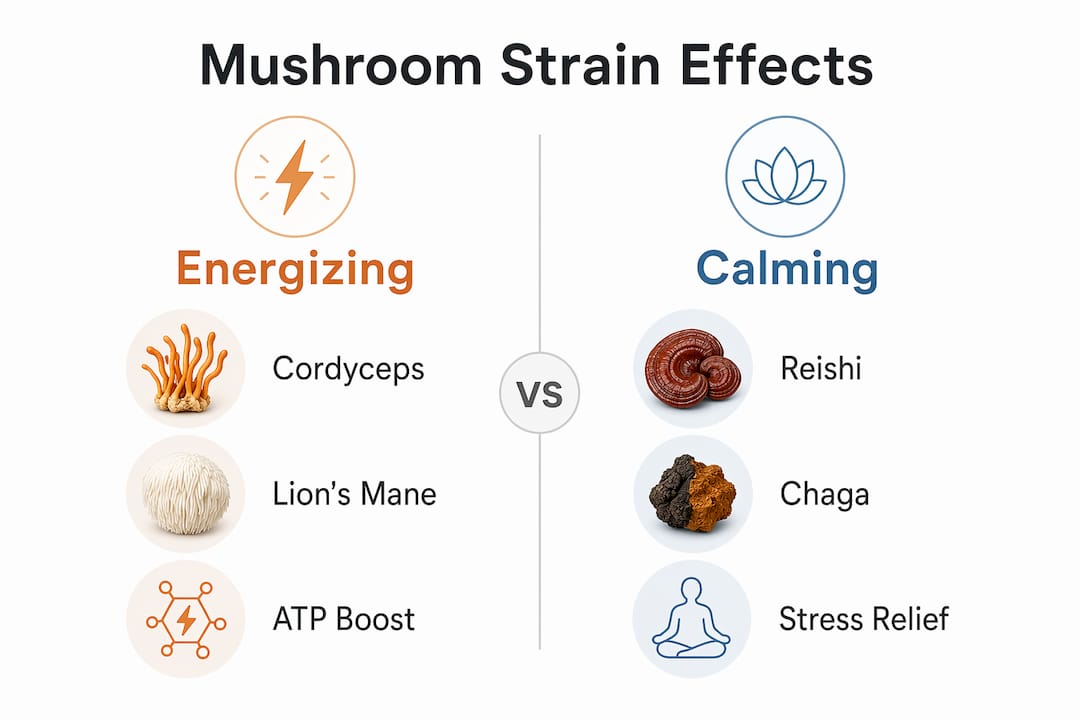
The distinction between energizing and calming mushroom strains comes down to which biological systems each one targets. Lion’s Mane supports nerve growth factor, a protein that promotes neuron repair and cognitive function. Cordyceps enhances ATP production and oxygen utilization, which translates directly to physical stamina and mental alertness. Reishi, by contrast, acts on GABA receptors, the same system that anti-anxiety compounds target, producing a measurable calming effect without sedation.

These mechanisms rely on distinct bioactive compounds. Cordyceps delivers its energy benefits through polysaccharides and cordycepin. Reishi’s triterpenes require ethanol extraction to become bioavailable, which is why a simple Reishi tea rarely delivers the same calming effect as a standardized extract. Beta-glucans appear across all three species and support immune function as a shared baseline benefit.
Subjectively, the differences are real but subtle. Cordyceps users typically report improved endurance and clearer thinking during physical activity. Lion’s Mane users notice sharper recall and reduced mental fog over time. Reishi users describe a quieter mental state, less reactive to stress, without feeling drowsy.
One critical point: functional mushrooms build effects gradually over 2–8 weeks of consistent use. This is not a caffeine situation. You will not feel a Cordyceps capsule within an hour of taking it.
Pro Tip: Do not judge a functional mushroom by its first week. Neurotrophic and metabolic benefits accumulate with daily use, so consistency matters far more than dose size.
Key compound differences at a glance:
- Lion’s Mane: Hericenones and erinacines stimulate nerve growth factor for cognitive support
- Cordyceps: Cordycepin and polysaccharides boost ATP and oxygen efficiency for stamina
- Reishi: Triterpenes modulate GABA receptors and stress hormones for calm
- Beta-glucans: Present in all three; support immune function across the board
How to choose mushroom strains for your wellness goals
Choosing the right mushroom strain starts with identifying your primary goal. Energy and focus, calm and sleep support, and cognitive sharpness each point to a different species. Getting this wrong does not cause harm, but it does waste time and money.
Start by answering one question: what does your day most need? If you are struggling with afternoon mental fatigue or low physical drive, Cordyceps is the right starting point. If you want sharper recall and reduced brain fog over weeks, Lion’s Mane fits better. If stress, poor sleep, or anxiety is your main concern, Reishi is the clear choice among the best calming mushrooms available.
Pro Tip: Start with a single strain for at least four weeks before adding a second. Stacking too early makes it impossible to know which mushroom is producing which effect.
A practical selection framework:
- Define your goal clearly. Write it down. “I want more energy in the morning” is specific. “I want to feel better” is not.
- Match the goal to a strain. Cordyceps for stamina and energy. Lion’s Mane for focus and cognition. Reishi for stress and sleep quality.
- Start at the lower end of the dosage range. Cordyceps doses run 1,000–3,000 mg per day; Reishi extract runs 1,000–2,000 mg per day. Begin at the minimum.
- Time your dose correctly. Energizing strains go in the morning. Calming strains go in the evening. Timing is not optional.
- Track your response for four weeks. Note sleep quality, energy levels, mood, and focus. Adjust dose only after you have a baseline.
- Add a second strain only after the first is established. Combining energizing and calming strains at different times of day is safe and effective when you follow serving size guidelines.
Chaga and Turkey Tail are worth mentioning here because they often appear in mushroom blend discussions. These species focus on antioxidant and immune support rather than energy or calm, and their timing is more flexible. They complement an energizing or calming routine but do not replace the primary strain for your core goal. For a deeper look at how these species work together, the guide on mushroom blends for wellness at Theelevatedremedies covers the evidence clearly.
What is the best timing and dosing routine for each strain?
Timing is the most underrated variable in a functional mushroom routine. The right strain taken at the wrong time produces the wrong result.
| Strain | Goal | Best Timing | Typical Daily Dose |
|---|---|---|---|
| Cordyceps | Energy, stamina | Morning, before exercise | 1,000–3,000 mg |
| Lion’s Mane | Focus, cognition | Morning or early afternoon | 500–3,000 mg |
| Reishi | Calm, sleep support | 60–90 minutes before bed | 1,000–2,000 mg |
Taking energizing mushrooms after 2 PM risks disrupting sleep, particularly with Cordyceps, which can cause overstimulation when taken late in the day. This is not a minor inconvenience. Poor sleep undermines every benefit you are trying to build.
Reishi’s calming effects align with the body’s natural evening increase in GABA activity. Taking it 60–90 minutes before bed positions the triterpenes to work with your circadian rhythm rather than against it. Reishi is stress-modulating, not sedating, so you will not feel knocked out. You will simply feel less wired.
Stacking both types in a single day is a legitimate strategy:
- Take Cordyceps or Lion’s Mane with breakfast or a morning beverage
- Take Reishi 60–90 minutes before your target sleep time
- Keep each dose within the recommended range and do not double up on either strain
One caution applies if you take stimulants, SSRIs, or blood thinners. Cordyceps may amplify stimulant effects. Reishi has mild anticoagulant properties. Consult a healthcare provider before adding either to a medication routine.
What are common mistakes when microdosing energizing and calming mushrooms?
Most problems with functional mushroom routines come from impatience, not the mushrooms themselves. People take too much too soon, switch strains before effects build, or take energizing fungi varieties at night and blame the product when sleep suffers.
The most common mistakes:
- Taking Cordyceps in the evening. This is the single most reported cause of sleep disruption in functional mushroom users.
- Expecting acute effects. Functional mushrooms are not stimulants. Expecting a coffee-like response leads to dose escalation and wasted product.
- Ignoring potency differences. With higher-potency psilocybin strains used in microdosing, experienced users should reduce their starting dose by 60–70% compared to a standard strain. High-potency strains have narrower therapeutic windows.
- Skipping days inconsistently. Functional mushrooms reward consistency. Random dosing produces random results.
- Stacking too early. Adding a second strain before the first has had four weeks to establish a baseline makes it impossible to read your own response.
“The most common mistake I see is people quitting after two weeks because they don’t feel anything dramatic. Functional mushrooms work on a timeline measured in weeks, not hours.”
Pro Tip: Keep a simple daily log. Note your dose, timing, energy level, mood, and sleep quality. After four weeks, patterns become obvious and adjustments become informed rather than guesswork.
Signs to pause and consult a healthcare professional include persistent headaches, significant mood shifts, or any interaction with existing medications. These are not common, but they are real signals worth taking seriously.
How do secondary compounds shape the character of each strain?
Two mushroom products can share identical total potency and still produce noticeably different experiences. The reason is secondary compounds. Minor alkaloids like baeocystin, along with specific psilocybin to psilocin ratios, shape the visual and body sensation character of a given strain even when the headline numbers match.
This matters most for people microdosing psilocybin mushrooms. The subjective differences between strains at equal potency are real and documented. One strain may produce a cleaner cognitive lift. Another may carry more body sensation or visual quality at the same dose. These are not placebo effects. They reflect genuine chemical variation.
Practical implications for product choice:
- Read beyond total potency. Ask about extraction method and compound profile when buying functional mushroom products.
- Ethanol-extracted Reishi delivers more bioavailable triterpenes than water-extracted versions. This directly affects calming efficacy.
- Strain variability in psilocybin mushrooms means that switching strains mid-routine requires a reset period, even if the dose looks the same on paper.
- Blended products can smooth out variability by combining complementary compound profiles. The guide on terpenes and mushroom effects at Theelevatedremedies explains how secondary compounds interact in practice.
Understanding compound complexity is not about chasing the perfect strain. It is about making informed choices so your routine produces consistent, predictable results.
Key takeaways
Matching your mushroom strain to your goal and taking it at the right time of day is the single most important factor in a functional mushroom routine.
| Point | Details |
|---|---|
| Strain selection by goal | Cordyceps and Lion’s Mane for energy and focus; Reishi for calm and sleep support. |
| Timing is non-negotiable | Energizing strains before 2 PM; Reishi 60–90 minutes before bed. |
| Effects build over weeks | Functional mushrooms accumulate benefits over 2–8 weeks, not hours. |
| Secondary compounds matter | Minor alkaloids like baeocystin shape strain character beyond total potency. |
| Start low, track consistently | Begin at minimum dose, log daily responses, and adjust only after four weeks. |
What I have learned from stacking energizing and calming mushrooms
The most useful thing I can tell you is that patience is not optional with functional mushrooms. People come in expecting a supplement that works like an energy drink or a sleep aid. What they get instead is a slow, steady shift in their baseline. That shift is real, but it takes weeks to notice.
The stack I find most practical is Lion’s Mane in the morning and Reishi in the evening. Cordyceps is excellent for people with physically demanding days, but it is easy to overdo. The window between “effective dose” and “too stimulating” is narrower than most people expect, especially with higher-potency products.
One thing that surprises people: calming mushrooms do not make you feel calm in the moment. Reishi does not hit like a sedative. What it does is lower your reactivity over time. After three or four weeks, you notice that things that used to spike your stress response just… don’t. That is the effect. It is subtle and it is worth waiting for.
If you are microdosing psilocybin alongside functional mushrooms, keep the two protocols separate in your tracking. They work through different systems and conflating their effects makes it nearly impossible to calibrate either one correctly. Treat them as parallel tools, not a single stack.
— Juiced
Theelevatedremedies: your source for curated mushroom products
Theelevatedremedies carries a curated selection of magic mushroom products designed for both wellness seekers and experienced microdosers. Located at 1123 Broadway St in Ann Arbor, Michigan, the shop stocks dried mushrooms, microdosing capsules, and mushroom chocolates sourced for consistency and quality. The team at Theelevatedremedies understands the difference between energizing and calming strain profiles and can point you toward the right product for your specific goal. Whether you are starting your first functional mushroom routine or refining an existing one, the curated blends available at Theelevatedremedies take the uncertainty out of product selection.
FAQ
What is the difference between energizing and calming mushroom strains?
Energizing strains like Cordyceps and Lion’s Mane boost ATP production and nerve growth factor to support stamina and cognition. Calming strains like Reishi act on GABA receptors to reduce stress reactivity and support sleep quality.
When should I take energizing versus calming mushrooms?
Take energizing strains in the morning or before exercise, and avoid them after 2 PM. Take Reishi 60–90 minutes before bed to align with your body’s natural circadian GABA increase.
How long before I feel the effects of functional mushrooms?
Functional mushrooms build their benefits gradually over 2–8 weeks of consistent daily use. Acute effects similar to caffeine or sedatives are not typical with these species.
Can I combine energizing and calming mushroom strains?
Yes. Taking an energizing strain in the morning and a calming strain in the evening is a safe and well-supported stacking approach, provided you stay within recommended serving sizes for each.
Why do two strains with the same potency feel different?
Minor compounds like baeocystin and specific psilocybin to psilocin ratios shape the subjective character of a strain beyond its total potency. These secondary alkaloids explain why identical doses from different strains can produce noticeably different experiences.