
TL;DR:
- Proper bong cleaning involves disassembling the piece, soaking with high-concentration isopropyl alcohol and coarse salt, scrubbing, rinsing thoroughly, and drying completely to prevent resin buildup and bacteria. Using coarse salt and ensuring complete air drying are essential steps, while small parts like downstems require separate cleaning with pipe cleaners. Regular maintenance with proper materials and technique ensures optimal performance, flavor, and hygiene.
Step by step bong cleaning is the process of disassembling your piece, chemically dissolving resin with 90%+ isopropyl alcohol, scrubbing it loose with coarse salt, rinsing thoroughly, and drying completely before your next session. Done right, this routine takes about 15 minutes for a standard clean and protects both your glass and your lungs. The tools are simple: isopropyl alcohol, coarse sea salt or rock salt, pipe cleaners, and rubber stoppers. Skip any one of those steps and you get sticky buildup, off flavors, and a piece that hits harder than it should. This guide covers everything from materials to method to common mistakes.
What tools do you need to clean a bong?
The right materials make the difference between a five-minute job and a frustrating scrub session. Gather everything before you start so you are not hunting for supplies mid-clean.
Core cleaning supplies:
- Isopropyl alcohol (90% or higher): Lower concentrations contain too much water and will not dissolve resin efficiently. Look for 91% or 99% at any pharmacy.
- Coarse salt: Use sea salt, rock salt, or Epsom salt. Fine table salt dissolves too quickly in alcohol and loses the abrasive grain you need to scrub resin off glass.
- Pipe cleaners and cotton swabs: These reach the narrow holes in downstems and percolator slits that no brush can touch.
- Rubber stoppers or plugs: These seal the openings while you shake. Your hands work in a pinch, but plugs keep things cleaner.
- Resealable plastic bags: Drop your bowl and downstem into separate bags with alcohol and salt for a hands-free soak.
- Warm water: For pre-rinsing and final rinsing. Not hot. Not boiling.
- Protective gloves and old towels: Alcohol strips skin oils fast, and resin stains fabric permanently.
Optional natural alternatives:
Some users prefer a mix of white vinegar and baking soda for a chemical-free clean. This method works on light buildup but falls short on heavy resin. It is a solid choice for a mid-week refresh between deep cleans.
| Supply | Purpose | Notes |
|---|---|---|
| 91–99% isopropyl alcohol | Dissolves resin chemically | Lower % is less effective |
| Coarse sea or rock salt | Mechanical abrasion | Never use fine table salt |
| Pipe cleaners | Clears narrow holes and slits | Essential for downstems |
| Rubber stoppers | Seals openings during shaking | Hands work as backup |
| Resealable bags | Soaks small parts separately | One bag per piece |
Pro Tip: Buy a bottle of Randy’s Glass Cleaner if you want a purpose-built bong cleaner that skips the alcohol-and-salt prep entirely. It is a solid option for quick weekly cleans.
How do you clean a bong step by step?
This is the full process. Follow it in order and you will not miss a spot.
Step 1: disassemble your bong first
Remove the bowl and downstem before doing anything else. Cleaning the bong as one assembled unit is ineffective and risks snapping the downstem at the joint. Set each piece aside on a towel.
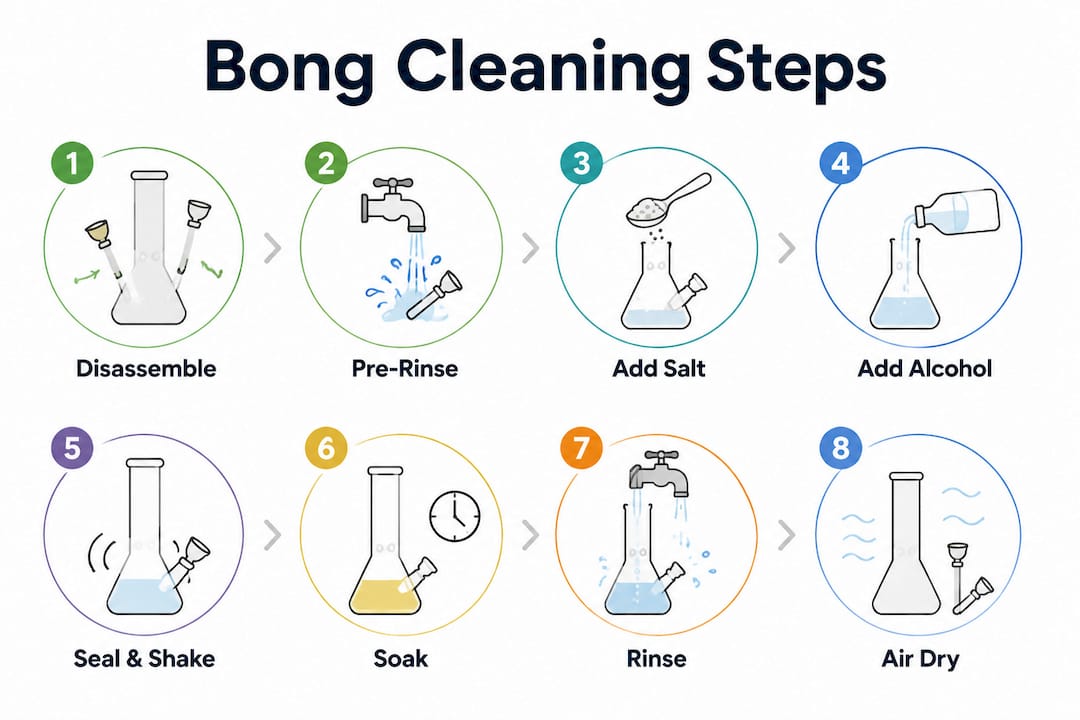
Step 2: dump the old water and pre-rinse
Pour out the bong water and rinse the chamber with warm tap water to soften the resin layer. Warm water loosens buildup without putting your glass at risk. Boiling water causes thermal shock, which can crack even thick glass.
Step 3: add salt and alcohol
Pour 2–4 tablespoons of coarse salt directly into the bong chamber. Follow with enough 90%+ isopropyl alcohol to coat the interior, typically a quarter to a third of the chamber’s volume. The industry-standard ratio for routine cleaning is 2–4 tablespoons of salt per cleaning session, with a 15-minute soak for light buildup and up to 60 minutes or overnight for heavy resin.
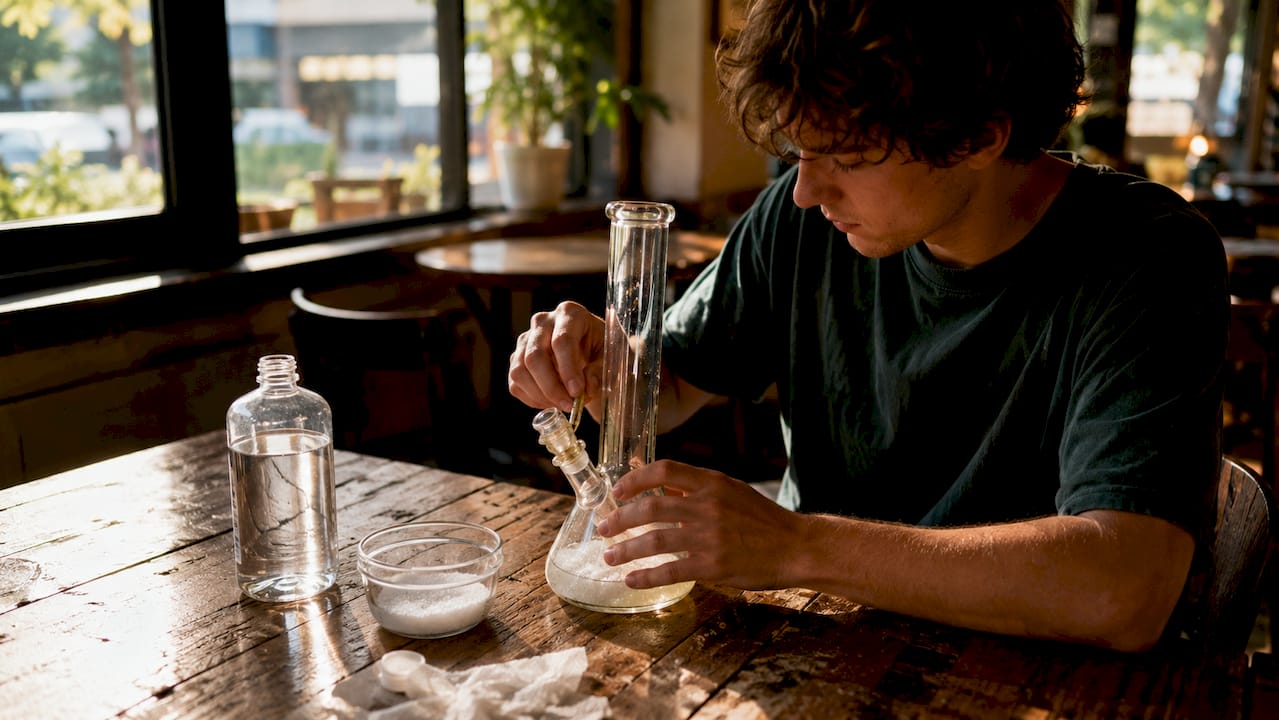
Step 4: seal and shake
Cover the mouthpiece and downstem opening with rubber stoppers or your palms. Shake the bong firmly for 2–3 minutes. The salt acts as a mechanical abrasive, with each grain physically scrubbing resin off the glass walls while the alcohol dissolves it chemically. You are running two cleaning processes at once.
Pro Tip: Shake in a circular motion rather than straight up and down. This keeps the salt-alcohol solution in contact with the curved walls of the chamber longer.
Step 5: soak if needed
For light buildup, the 2–3 minute shake is enough. For heavy resin, let the alcohol and salt sit inside the bong for 15–60 minutes before shaking again. Overnight soaks work for pieces that have not been cleaned in months. The alcohol continues dissolving resin even while the piece sits still.
Step 6: clean small parts separately
Place the bowl and downstem in separate resealable bags. Add a tablespoon of coarse salt and enough alcohol to submerge each piece. Seal the bags and shake them for 1–2 minutes. Use pipe cleaners to push through the downstem holes and bowl opening. Pipe cleaners clear the narrow slits that shaking alone cannot reach, and those slits are what control your airflow.
Step 7: rinse until the smell is gone
Rinse the bong chamber with hot water multiple times. Keep rinsing until you cannot detect any alcohol scent. Residual isopropyl alcohol vapors are respiratory irritants. Inhaling them during a session causes throat and lung irritation. This step is not optional.
Step 8: air dry completely
Set the bong upside down on a clean towel and let it air dry for at least 15–30 minutes. Moisture trapped inside the piece creates the exact conditions bacteria need to grow. Reassembling a wet bong immediately after rinsing defeats the purpose of cleaning it.
How do you clean percolators, ash catchers, and diffusers?
Complex bongs with percolators, ash catchers, or tree diffusers need extra attention. The standard shake method still works, but the narrow geometry of these components requires more patience.
- Percolators: Soak longer, typically 30–60 minutes, because the alcohol needs time to penetrate the tight slits. Shake gently at first to avoid stressing fragile percolator arms, then increase force once you confirm the piece is stable.
- Downstem holes and percolator slits: Use pipe cleaners or cotton swabs to manually clear each slit after soaking. Blocked slits kill airflow and make every hit feel restricted.
- Ash catchers: Clean these separately from the main bong. They collect the most concentrated resin and need their own salt-and-alcohol treatment. Neglecting ash catchers transfers buildup back into a freshly cleaned bong.
- Glass vs. silicone parts: Glass handles isopropyl alcohol without issue. Silicone bongs and silicone components should be cleaned with warm soapy water or a silicone-safe cleaner. Alcohol can degrade silicone over time.
- Cleaning frequency for accessories: Clean ash catchers and downstems every time you deep clean the main bong. Percolators can go slightly longer between cleans if you change the water daily, but weekly cleaning is the standard for regular users.
Understanding how your bong slides affect your session helps you prioritize which components need the most attention during cleaning.
What mistakes should you avoid when cleaning a bong?
Most cleaning failures come from skipping steps or using the wrong materials. These are the errors that matter most.
- Using fine table salt: Fine salt dissolves almost immediately in isopropyl alcohol. You lose all abrasive action within seconds. Always use coarse sea salt, rock salt, or Epsom salt.
- Using boiling water: Boiling water causes thermal shock in glass. Use warm tap water for pre-rinsing and hot (not boiling) water for the final rinse.
- Not rinsing enough: One rinse is never enough. Rinse at least three times and check for alcohol smell before reassembling.
- Skipping the air-dry step: Putting your bong back together while it is still wet traps moisture inside. That moisture leads to bacterial growth and off-flavors in your next session.
- Forgetting the small parts: Bowls and downstems hold as much resin as the chamber. A clean bong with a dirty downstem still hits like a dirty bong.
“Change your bong water daily and deep clean weekly. For heavy users, every few days is the right call.” — Weedmaps
Pro Tip: For stubborn water stains that alcohol will not touch, fill the bong with undiluted white vinegar and let it soak for an hour. The acidity breaks down mineral deposits that isopropyl alcohol ignores.
Handle glass carefully throughout the entire process. Set pieces on a folded towel, not a hard counter. Never mix isopropyl alcohol with bleach or other household cleaners. The combination produces toxic fumes.
Key takeaways
Consistent cleaning with 90%+ isopropyl alcohol and coarse salt is the most effective method for maintaining a bong’s performance and hygiene.
| Point | Details |
|---|---|
| Use the right alcohol | 90%+ isopropyl alcohol dissolves resin; lower concentrations are too diluted to work. |
| Coarse salt only | Fine table salt dissolves instantly and loses abrasiveness; use sea salt or rock salt. |
| Disassemble first | Remove the bowl and downstem before cleaning to protect glass and reach every surface. |
| Rinse until odor-free | Repeat rinsing until no alcohol smell remains to avoid inhaling respiratory irritants. |
| Air dry completely | Allow 15–30 minutes of drying time to prevent bacterial growth before reassembly. |
Why i think most people clean their bong wrong
Most bong users I talk to skip the air-dry step. They rinse, shake out the water, and reassemble within two minutes. That is the single biggest hygiene mistake in the whole process. A damp bong is a bacteria incubator. The off-flavors people blame on their herb are often coming from a piece that never fully dried between sessions.
The second most common error is using whatever salt is in the kitchen. Fine iodized table salt feels like it should work. It does not. It dissolves before you finish shaking and leaves you with salty alcohol and zero abrasive action. Coarse salt is not a preference. It is a functional requirement.
My actual routine: I change the water after every session. Once a week, I run the full alcohol-and-salt clean on the chamber and soak the downstem in a bag overnight. That schedule keeps resin from ever getting thick enough to need a 60-minute soak. Prevention is faster than remediation.
If you own a piece with a percolator, like a GRAV beaker, budget extra time for the soak. Those slits are narrow and resin loves them. A pipe cleaner through each slit after soaking is not optional. It is the whole job.
The readers who get the most out of their glass are the ones who treat cleaning as part of the ritual, not an afterthought. A clean bong hits cleaner, tastes better, and lasts longer. That is not an opinion. It is physics.
— Juiced
Explore more at Theelevatedremedies

Theelevatedremedies carries everything you need to keep your setup running clean, from quality glass to accessories that make maintenance easier. Located at 1123 Broadway St in Ann Arbor, Michigan, the shop stocks bongs, bowls, pipe cleaners, and the full range of smoking accessories you need for a proper beginner bong setup workflow or an upgrade to your current rig. Beyond the glass, Theelevatedremedies is also Ann Arbor’s go-to source for wellness products. If you pair your sessions with a mindful wellness routine, check out the mushroom capsules for microdosing support sourced for quality and consistency. Come in, get comfortable, and get what you actually need.
FAQ
How often should you deep clean your bong?
Deep clean weekly for regular users and every few days for heavy users. Change the water after every single session to slow resin and bacterial buildup.
Can you clean a bong without isopropyl alcohol?
Yes. White vinegar and baking soda remove light buildup and mineral deposits. This method works for routine maintenance but will not cut through heavy resin the way 90%+ isopropyl alcohol does.
Why does coarse salt work better than fine salt?
Coarse salt maintains its grain size in alcohol long enough to physically scrub resin off glass. Fine table salt dissolves almost immediately and provides no abrasive action.
Is it safe to use a bong right after cleaning?
Only after a complete rinse and full air dry. Residual alcohol vapors are respiratory irritants. Rinse until no alcohol smell remains, then let the piece air dry for at least 15–30 minutes before use.
Do you need to clean the downstem separately?
Yes. The downstem collects concentrated resin and must be cleaned in its own bag with salt and alcohol. Run a pipe cleaner through the holes after soaking to clear any remaining buildup and restore full airflow.