
TL;DR:
- Kief is a powder made from cannabis trichomes that contains high concentrations of THC and terpenes. It can be collected using grinders, sifting boxes, dry ice, or bubble bags, with each method varying in effort and yield. Proper storage and patience improve the quality, potency, and overall experience of working with kief.
Kief is the loose powder of detached cannabis trichomes — the tiny resin glands that hold most of the plant’s THC, CBD, and terpenes. According to the Cannabis Glossary, kief typically tests at a 2–3× higher THC concentration than the flower it came from, simply because you’re collecting the most potent part of the plant in concentrated form. The fastest path to your first collection: grind your cannabis in a 4-piece grinder with a kief-catcher screen, let it accumulate over time, then scrape it out with a metal tool.
Quick-start checklist:
- Check whether your grinder has a bottom kief-catcher chamber (most 4-piece models do)
- Let kief build up over 7–10 grams of ground herb before scraping
- Use a stainless-steel scraper, not a plastic card or your finger
- Store collected kief in a small, airtight glass jar in a cool, dark place
For bigger batches, a sifting box (pollen box) or dry-ice method scales up yield significantly. Bubble bags add another tier for those chasing the cleanest possible extract.
Table of Contents
- How to collect kief: four methods ranked by effort
- How to press kief into hash or rosin at home
- How to store kief safely, dose it wisely, and stay legal
- Key Takeaways
- The part most guides skip about kief
- Get the right tools at Theelevatedremedies
- Useful sources and further reading
How to collect kief: four methods ranked by effort
1. The 4-piece grinder (easiest, slowest)
A 3- or 4-piece grinder with a kief-catcher is the simplest entry point. The bottom chamber sits below a fine mesh screen; trichomes that shake loose during grinding fall through and accumulate passively.
Steps:
- Load your grinder normally and grind your cannabis
- Tap the grinder lightly on a hard surface after each grind to knock trichomes through the screen
- Let kief accumulate for 1–2 weeks or roughly 7–10 grams of ground herb
- Scrape the chamber clean with a stainless-steel scraper — purpose-built metal tools collect more efficiently and avoid the static cling that plastic cards introduce
Pro Tip: Place a small coin (a clean nickel works) in the grinding chamber. The added agitation knocks significantly more trichomes through the screen with each grind.
2. Kief box / pollen box (moderate effort, better yield)
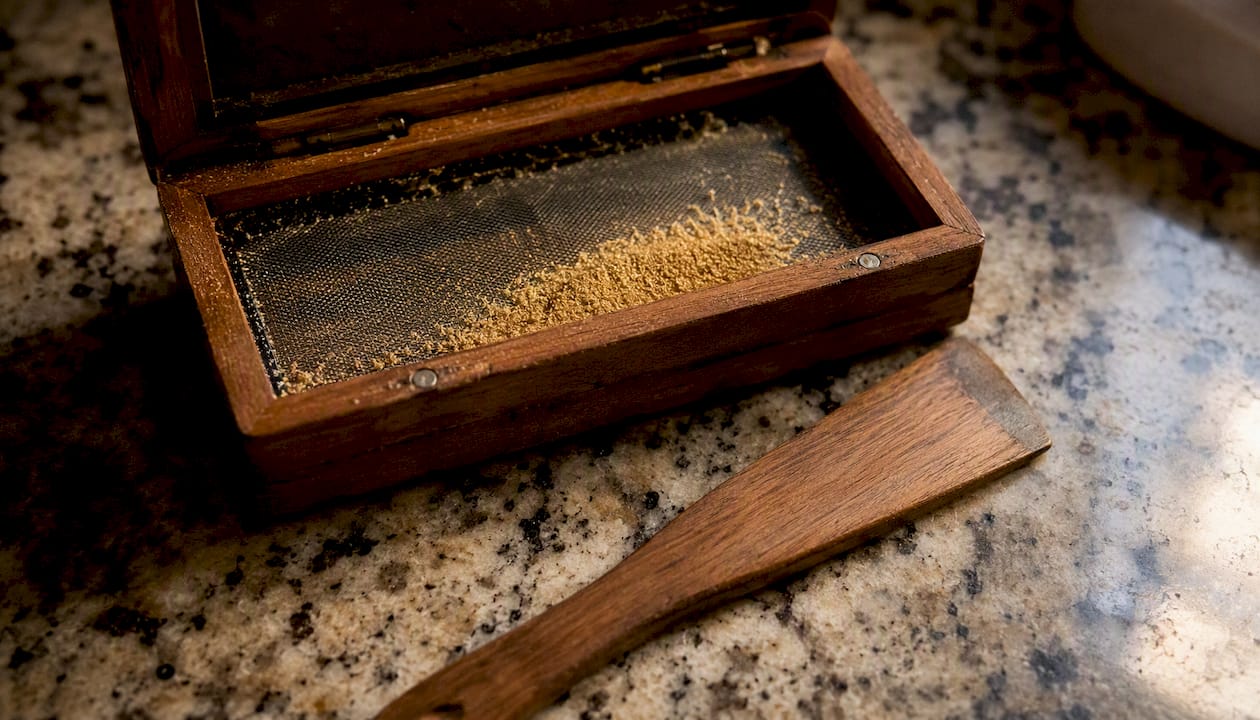
A kief box is a wooden or acrylic box with a fine mesh screen stretched across the middle. You place cannabis on the screen, shake or lightly tumble it, and trichomes fall through to a collection tray below.
Steps:
- Break cannabis into small pieces (don’t over-grind — you want trichome heads intact)
- Place material on the screen and close the lid
- Shake gently in a back-and-forth motion for 30–60 seconds per pass
- Collect the fallen kief from the tray with a metal scraper
- Run a second pass for more yield, but keep it separate — later passes pick up more plant matter and produce greener, lower-grade kief
3. Dry-ice sifting (high yield, larger batches)
Dry ice freezes trichomes so thoroughly they snap off with minimal agitation. Cannabis Now’s guide to dry-ice kief separation describes common mesh choices of 120–220 μm for this method, with the first shakes yielding the cleanest product.
Steps:
- Combine cannabis material and dry ice in a bucket (roughly equal volumes)
- Let the mixture sit for 3–5 minutes to freeze the trichomes fully
- Place a 120–160 μm mesh bag or screen over a clean collection surface
- Shake the bucket over the screen for 30–60 seconds
- Collect the first pass separately — it’s your best grade
- Continue shaking for additional passes, keeping each grade in its own jar
Safety: Always wear insulated gloves when handling dry ice. Work in a ventilated space — CO2 sublimation is harmless outdoors but can displace oxygen in an enclosed room. Never seal dry ice in an airtight container.
4. Bubble bags / ice-water extraction (highest purity, most work)
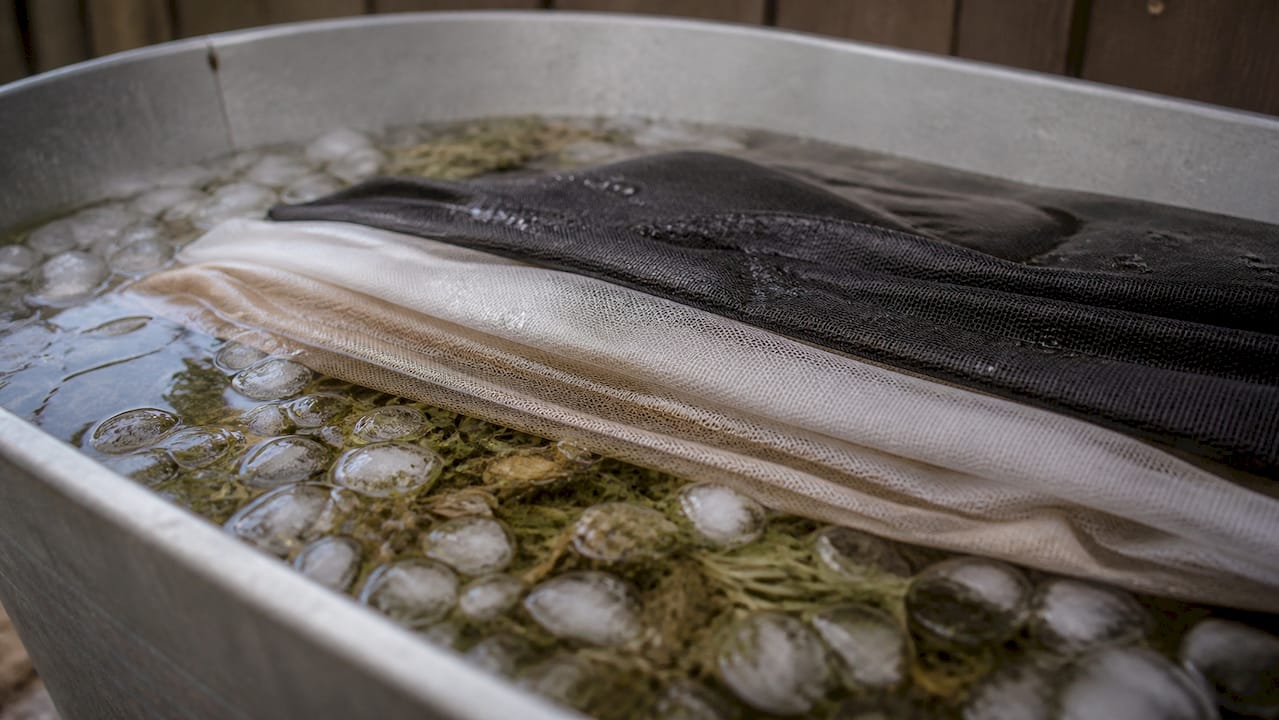
Bubble bags are a set of micron-filter bags used with ice water to wash trichomes off plant material. The result is often called bubble hash rather than kief, but the principle is the same: cold agitation separates trichome heads from plant matter.
You fill a bucket with ice, water, and cannabis, agitate for several minutes, then drain through progressively finer bags. Each bag catches a different grade. The 73–90 μm bags typically yield the cleanest, most potent material. After collection, spread the wet hash on parchment and allow it to dry completely (24–48 hours minimum) before storing.
How to press kief into hash or rosin at home
Pressing hash with a pollen press
A pollen press turns loose kief into a compact puck that’s easier to store, handle, and dose.
- Fill the press cylinder with dry kief (don’t pack it wet or it may mold)
- Screw both end caps down firmly by hand
- Leave the press assembled for 4–8 hours at room temperature; overnight is better
- Unscrew and push the puck out with the included rod
The resulting hash puck is denser and more shelf-stable than loose kief. You can break off small pieces to smoke or crumble into a bowl.
Making rosin from kief
Rosin is solventless concentrate made by applying heat and pressure to kief until the resin flows out. A dedicated rosin press gives the most control, but a hair straightener with a temperature display works for small test batches.
Basic kief rosin steps:
- Fold a small amount of kief (0.3–0.5 g) inside a folded piece of parchment paper
- Set your press or straightener to 160–180°F (lower temperatures preserve terpenes; higher temperatures increase yield but can degrade flavor)
- Apply firm, even pressure for 3–5 seconds
- Release, unfold the parchment, and collect the pressed rosin with a metal dabber
Watch for these pitfalls:
- Moisture in kief causes sputtering and uneven pressing — always dry kief thoroughly before pressing
- Temperatures above 200°F burn off terpenes quickly and produce a harsher product
- Avoid pressing large amounts at once; thin, even layers press more consistently than thick pucks
- Keep first-pass and later-pass kief separate when pressing — mixing grades produces inconsistent rosin
How to store kief safely, dose it wisely, and stay legal
Storage
Kief degrades faster than whole flower when exposed to heat, light, or humidity. The cannabinoids and terpenes that make it valuable are also the first things to break down.
Do:
- Store in a small, airtight glass jar (silicone-sealed lids work well)
- Keep in a cool, dark drawer or cabinet — a consistent 60–70°F is ideal
- Add a small Boveda 58% humidity pack if storing for more than a few weeks
Don’t:
- Use plastic bags or containers for long-term storage — plastic creates static and can leach compounds over time
- Leave kief in direct sunlight or near a heat source
- Store in the freezer unless the container is perfectly airtight (condensation on thawing degrades quality)
Dosing
Because kief concentrates potency, the usual flower dose is too much for most people. Start with a small pinch on a bowl — less than you think you need. For edibles, the delayed onset (up to 2 hours) means patience matters more than adding more. Keep a simple log of how much you used and how you felt; it takes the guesswork out of future sessions.
Legal reminder
Cannabis laws in the United States vary significantly by state. Kief is a cannabis concentrate, and some states regulate concentrates differently from flower — including possession limits and home-processing rules. Check your state cannabis regulator’s website before collecting, processing, or storing kief. This article is general information, not legal advice; confirm current rules with your state’s official cannabis authority or a qualified professional.
For a broader look at how Michigan law handles related products, this overview of CBD and kratom regulations is a useful starting point for Michigan readers.
Key Takeaways
Kief collection works best when you match the method to your scale: a 4-piece grinder handles casual use, a sifting box or dry-ice run handles larger batches, and the right mesh size determines whether you get clean gold or green-tinted trim.
| Point | Details |
|---|---|
| Kief = concentrated trichomes | Detached cannabis trichome heads, typically 2–3× more potent than source flower. |
| 90 μm is the sweet spot | Finer mesh yields purer, paler kief; 100–150 μm is standard for most grinder screens. |
| Metal scraper beats plastic | Purpose-built stainless-steel scrapers reduce waste and avoid static contamination. |
| Store in airtight glass | Cool, dark glass jars preserve cannabinoids and terpenes far better than plastic. |
| Theelevatedremedies carries the tools | Grinders, scrapers, pollen presses, and sifting accessories are available in-store and online in Ann Arbor. |
The part most guides skip about kief
Most kief articles focus on yield numbers and mesh sizes, which is useful — but the thing that actually separates a good kief collection habit from a frustrating one is patience with accumulation and honesty about your screen.
Here’s what I see consistently: people scrape their grinder after every session and end up with a tiny, barely-there dusting that’s more effort than it’s worth. Let it build. Two weeks of regular grinding produces a meaningful amount. That shift in mindset — from “collect immediately” to “accumulate, then harvest” — changes the whole experience.
The other thing worth saying plainly: a cheap zinc grinder with a flimsy screen is not a kief collection tool. It’s a grinding tool that occasionally drops some powder into a chamber. If you’re serious about kief, the screen quality in your grinder matters more than the brand name on the lid. A tight, consistent 100–150 μm stainless mesh will outperform a loose, warped screen at any price point.
And on potency: the 2–3× multiplier is real, but it’s also a range. Kief from mid-shelf flower through a coarse screen is not the same as first-pass dry-sift from premium material through a 90 μm screen. Both are kief. Neither is what the other is. Knowing which one you have changes how you dose it.
Get the right tools at Theelevatedremedies
You’ve got the method. Now you need hardware that actually holds up. Theelevatedremedies stocks a hand-picked selection of 4-piece grinders with quality kief-catcher screens, stainless-steel scrapers, pollen presses, and sifting accessories — all tested against the same standards described in this guide. No guessing about screen quality or material grade; the team at the Ann Arbor shop has used this gear and can answer questions in person.

Whether you’re picking up your first grinder with a kief catcher or upgrading to a proper pollen press, everything is available in-store at 1123 Broadway St in Ann Arbor or through the online shop. Stop in, ask the team what they’d personally reach for, and leave with tools that will still be working well a year from now. Visit Theelevatedremedies to browse the current selection or plan your visit.
Useful sources and further reading
The sources below are worth bookmarking if you want lab-level detail, method protocols, or state legal resources.
- Cannabis Glossary — kief
- Why micron size matters in kief extraction — The Grind Blog
- ncbi.nlm.nih.gov
- Kief — Wikipedia
- How to Collect Kief From Grinder: Complete Guide 2026 — Keefer Scraper
- Dry Ice Kief Separation — Cannabis Now
- What Is Kief? — Sticky Selects
- The Ultimate Guide to Dry Sift — The Press Club
- What is kief and what to do with it — Cannigma