
TL;DR:
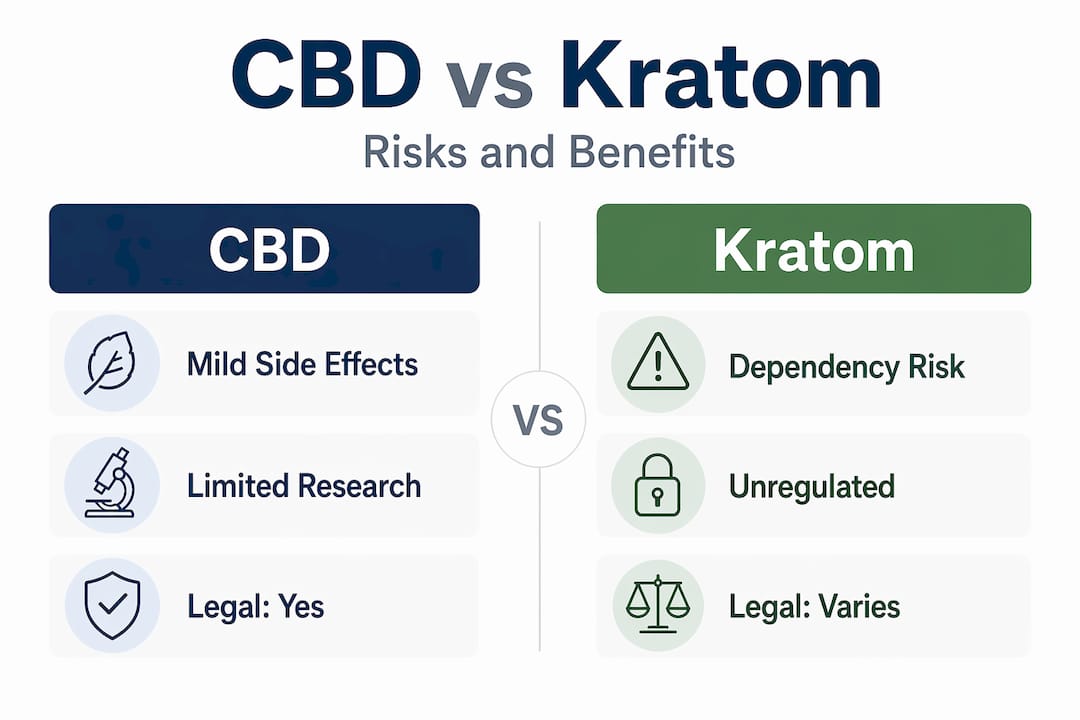
- CBD and kratom differ significantly in their chemistry, effects, and risks, despite often being grouped together. While CBD interacts broadly with the body’s endocannabinoid system, kratom’s alkaloids bind directly to opioid receptors, increasing dependence risks. In Michigan, CBD is legal with proper labeling, but kratom remains unregulated, emphasizing the importance of sourcing from reputable, tested retailers for safe consumption.
Walk into any wellness conversation in Michigan right now, and you’ll likely hear CBD and kratom mentioned in the same breath. Both are sold as natural options for pain relief and anxiety, both sit on shelves in the same shops, and both attract people who want something beyond conventional pharmaceuticals. But lumping them together is a mistake that can carry real health consequences. Their chemistry is fundamentally different, their risk profiles are not even close to equivalent, and Michigan’s legal landscape treats them in distinct ways that are still actively changing in 2026. This guide breaks down exactly what you need to know before choosing either one.
Table of Contents
- CBD and kratom: What are they and how do they work?
- Benefits and evidence: How do CBD and kratom compare for pain and anxiety?
- Risks, side effects, and what most people miss
- Michigan law and practical guidance for safer choices
- Why the conventional CBD vs kratom debate misses the real risks
- Explore safer natural wellness options in Michigan
- Frequently asked questions
Key Takeaways
| Point | Details |
|---|---|
| Different mechanisms | CBD and kratom work differently in the body and should not be used interchangeably. |
| Evidence is mixed | CBD shows some context-dependent benefits, while kratom lacks high-quality support and carries more risks. |
| Risks are significant | Kratom’s dependence and toxicity risks, especially with concentrated products, are much higher than CBD’s. |
| Michigan requirements | Kratom use is legal but increasingly regulated in Michigan; always check labels and source. |
| Safety first | Prioritize lab-tested, clearly labeled products and consult a trusted provider for all wellness remedies. |
CBD and kratom: What are they and how do they work?
To understand how CBD and kratom might affect you, let’s clarify what they actually are and how they function in the body.
CBD, short for cannabidiol, is one of over 100 cannabinoids extracted from hemp or cannabis plants. Unlike THC, it does not produce a high. What makes CBD interesting from a science perspective is how broadly it interacts with the body. It touches the endocannabinoid system, yes, but it also modulates serotonin receptors, vanilloid receptors involved in pain perception, and inflammatory pathways. That wide reach is why people report such varied effects from it, ranging from subtle calm to relief from localized discomfort.
Kratom is a completely different story. It comes from the leaves of Mitragyna speciosa, a tree native to Thailand, Indonesia, and Malaysia. The active compounds are alkaloids, primarily mitragynine and 7-hydroxymitragynine. These alkaloids bind directly to opioid receptors in your brain and body. That single fact separates kratom from CBD more than any other. Research confirms that CBD and kratom act on fundamentally different biological targets, with kratom’s opioid-receptor activity driving both its effects and its risk of dependence.
Here’s a quick side-by-side breakdown of what people typically reach for each one to address:
| Concern | CBD commonly used for | Kratom commonly used for |
|---|---|---|
| Pain relief | Inflammation, joint discomfort | Acute pain, opioid withdrawal symptoms |
| Anxiety | General stress, sleep issues | Social anxiety (low dose), self-management |
| Energy or focus | Rarely | Low-dose stimulant effect |
| Opioid withdrawal | Peripheral support only | Primary self-management tool |
People also reach for both products in situations where CBD versus traditional painkillers is the more relevant comparison, particularly when they want to avoid standard over-the-counter options. If you’re also curious about how other plant-based approaches fit into a wellness routine, exploring microdosing for anxiety can offer useful additional context.
Pro Tip: Don’t assume all “herbal” products are equally safe just because they come from plants. Kratom contains opioid-receptor-active compounds. That is a fundamentally different category of biological activity than what CBD produces.
Benefits and evidence: How do CBD and kratom compare for pain and anxiety?
Once you understand what CBD and kratom are, it’s crucial to examine what the latest research says about their actual benefits and evidence for key wellness concerns.
Starting with CBD, the picture is mixed and context-dependent. Some people report real relief, especially for acute discomfort or sleep-related anxiety. But when you look at controlled clinical trials, CBD for chronic pain shows inconsistent results, with benefits appearing in some conditions and not others. High doses in particular can increase side effects without proportionally increasing benefit. CBD sometimes enhances the effectiveness of opioid-based medications, but that finding doesn’t translate into recommending it as a standalone chronic pain treatment.
For kratom, the evidentiary landscape is even thinner and more concerning. There are no FDA-approved uses for kratom. Zero. The FDA warns against kratom use due to risks of addiction, abuse, and dependence, and specifically flags concerns about its opioid-like effects. Evidence that kratom reliably relieves anxiety in humans is essentially absent from peer-reviewed literature, despite its popularity for that purpose in online communities.
“FDA is concerned about kratom’s potential for abuse, addiction, and serious health consequences, including death.” — U.S. Food and Drug Administration
The science of CBD for stress shows more promise than kratom for anxiety, though it still requires careful dosing and realistic expectations. If you want a full breakdown of what controlled research actually supports about CBD for wellness, we’ve covered that in depth separately.
Here’s a practical framework for weighing the evidence before trying either product:
- Check for human clinical trials, not just animal studies or anecdotal reports. Both CBD and kratom have plenty of online testimonials; what matters is controlled research.
- Identify your specific concern. CBD has better evidence for inflammation-driven discomfort and sleep anxiety than for generalized chronic pain.
- Look at dose ranges in studies. CBD effects are highly dose-dependent. The amount used in a successful study may be far higher than what’s in a typical retail product.
- Assess whether the product is intended for acute or ongoing use. Kratom in particular carries greater risks with repeated, long-term use.
- Consult a healthcare provider. Especially if you’re managing an existing condition or taking other medications, both CBD and kratom can interact with pharmaceuticals in ways that matter.
| Evidence category | CBD | Kratom |
|---|---|---|
| Human clinical trials | Yes, limited and mixed | Minimal, mostly low quality |
| FDA-approved uses | Yes (Epidiolex for epilepsy) | None |
| Chronic pain benefit | Inconsistent in trials | No controlled evidence |
| Anxiety relief | Some support, dose-dependent | No quality evidence |
| Addiction risk | Low | Significant |
Risks, side effects, and what most people miss
Benefits are just one side of the story. Being aware of the full risk profile is just as essential.
CBD’s side effects are real, though generally mild at moderate doses. The most commonly reported include fatigue, changes in appetite, and digestive upset. At higher doses, liver enzyme elevations have been documented, especially in people combining CBD with other medications that are metabolized by the liver. The CBD safety guide covers these interactions well and is worth reading before starting any CBD regimen.

Kratom’s risk profile is considerably more serious. According to NIDA, kratom carries documented risks including dependence, withdrawal symptoms, psychiatric effects, cardiovascular problems, gastrointestinal distress, and in severe cases, respiratory depression. These aren’t rare theoretical concerns. They are increasingly documented in medical literature and poison control data.
The specific risks to know about for both substances:
- Kratom dependence and withdrawal: Regular users report opioid-like withdrawal symptoms including muscle aches, insomnia, irritability, and nausea when stopping use.
- High-potency kratom products: Products enriched with 7-hydroxymitragynine are significantly more dangerous than traditional kratom leaf. This alkaloid has much higher opioid receptor affinity and is driving an increase in serious adverse events.
- Multi-substance interactions: Combining kratom with alcohol, benzodiazepines, or opioids dramatically increases overdose risk.
- CBD and drug interactions: CBD inhibits certain liver enzymes (CYP450 pathway) that process common medications, potentially raising blood levels of those drugs.
- Psychiatric effects of kratom: High-dose or long-term use has been associated with psychosis, hallucinations, and paranoia.
A critical statistic: Poison center reports involving kratom have been rising, with high-potency products containing concentrated 7-hydroxymitragynine appearing repeatedly in adverse event data. This isn’t the same product your great-grandmother might have brewed into a tea in rural Southeast Asia.
Pro Tip: If a kratom product doesn’t specify alkaloid concentrations on the label, treat it the same way you’d treat an unlabeled, unregulated supplement. The absence of that information is itself a safety concern.
Understanding how different psychoactive plants interact with the mind and body is genuinely complex. For broader context, you might find it useful to read about psychoactive plant effects or how microdosing versus high-dose experiences differ in terms of risk and effect. When approaching any natural substance safety question, the rule is always the same: “natural” does not mean “safe.”
Michigan law and practical guidance for safer choices
In Michigan, legality and consumer protection are rapidly evolving. Here’s what you need to know to stay safe and compliant.
CBD from hemp with less than 0.3% THC is federally legal and sold openly in Michigan. State law aligns with federal regulations here, so purchasing hemp-derived CBD from a licensed retailer is straightforward and legal. Full-spectrum products contain trace amounts of THC, so it’s worth checking exactly what you’re buying if you’re concerned about drug testing.
Kratom’s legal status is more complicated. As of 2026, kratom is not a controlled substance at the Michigan state level, meaning it remains legal to purchase. However, Michigan is actively moving toward regulation. A 2027 licensing and regulation framework has been proposed, which would require kratom vendors to obtain licenses and comply with labeling and consumer protection standards. MDARD, the Michigan Department of Agriculture and Rural Development, has already issued consumer advisories urging caution.
| Substance | Michigan legal status (2026) | Federal status | Regulation trend |
|---|---|---|---|
| Hemp CBD | Legal | Legal (Farm Bill) | Stable |
| THC products | Legal (licensed dispensaries) | Schedule I federally | Expanding |
| Kratom | Legal, unregulated | Not controlled; FDA opposes | Moving toward licensing in 2027 |
| Magic mushrooms | Decriminalized in Ann Arbor | Schedule I federally | Evolving |
Steps to evaluate any new herbal or plant-based product before you buy:
- Research the legal status in Michigan. Laws change faster than most people track. Always verify current status, not what was true two years ago.
- Look for a Certificate of Analysis. Third-party lab testing verifies that a product contains what it claims and is free from heavy metals, pesticides, and adulterants.
- Check alkaloid concentrations for kratom. Legitimate vendors disclose mitragynine and 7-hydroxymitragynine percentages.
- Ask the retailer questions. A reputable Michigan shop will welcome questions about sourcing, testing, and proper dosing guidance.
- Start with the lowest effective dose. Both CBD and kratom have dose-dependent effects. More is not always better and with kratom, more is often dangerous.
For those exploring safer natural product choices, understanding how regulated Michigan retailers handle sourcing and lab verification is a good model for evaluating any wellness product, including CBD and kratom.
Pro Tip: For any hemp or kratom product, always ask for a current Certificate of Analysis from a third-party lab. Purchase only from Michigan retailers who can produce that documentation on request.
Why the conventional CBD vs kratom debate misses the real risks
With all this in mind, where do we actually stand on the great CBD vs kratom question? Here’s what actually matters most.
Most comparisons treat this as a “which plant wins” debate. That framing misses everything important. The real issue isn’t CBD versus kratom as abstract categories. It’s about the specific product you’re holding, its concentration, its sourcing transparency, and whether your individual biology and health context make it appropriate at all.
We see this constantly. Someone switches from a pharmaceutical to kratom thinking they’re making a safer choice, not realizing that high-potency kratom products have more in common pharmacologically with opioids than with an herbal tea. Or someone tries CBD at a dose far below what any clinical study used and then concludes it doesn’t work, without ever understanding that product quality and dose are the determining factors.
Michigan’s fast-shifting regulatory environment adds another layer that conventional comparisons almost always skip. The kratom products sitting on shelves today may face completely different labeling and testing requirements by 2027. Buying now from an unregulated seller means you have no guarantee of what you’re actually consuming.
The most useful framework we’ve landed on: treat any unfamiliar wellness product the way you’d treat a new prescription. Research it, consult a provider who understands it, and only buy from sources that publish third-party testing. The CBD safety and science we cover on our blog reflects that same philosophy. Natural sourcing is a starting point for a conversation about safety, not the conclusion of it.
Explore safer natural wellness options in Michigan
If you’re looking for a reputable, transparent place to start your natural wellness journey in Michigan, the foundation is always quality and accountability.
At Elevated Remedies, located at 1123 Broadway St in Ann Arbor, we carry CBD and kratom products alongside our full range of psilocybin wellness options, and we take sourcing seriously. Our team can walk you through what lab testing actually tells you, how to read a Certificate of Analysis, and which products are a better fit for your specific goals. For those who are curious about plant-based wellness beyond CBD and kratom, our mushroom capsules for microdosing and mushroom chocolate bars are sourced for consistency and quality. Ann Arbor has always attracted people who take their wellness seriously. We’re here to support that with real information and products you can trust.
Frequently asked questions
Is kratom legal to buy or use in Michigan in 2026?
Kratom is not a controlled substance in Michigan, so it remains legal to purchase in 2026, but licensing and labeling rules are scheduled to take effect in 2027, bringing significant new consumer protections.
Can CBD help with chronic pain or anxiety?
CBD’s benefits for chronic pain are not conclusive in controlled trials; results are context-dependent and more consistent for acute discomfort and mild anxiety than for long-term chronic conditions.
What are the main risks with kratom products?
The biggest risks include physical dependence, withdrawal, liver toxicity, psychiatric effects, and serious adverse reactions that are rising with high-potency, 7-hydroxymitragynine-enriched products.
Is CBD safer than kratom for most people?
CBD generally carries a more favorable safety profile at moderate doses, while kratom’s opioid-receptor activity produces documented serious adverse effects, dependence risk, and no FDA-approved medical uses.
How can I choose a safe CBD or kratom product in Michigan?
Prioritize products with clear labeling, verified alkaloid or cannabinoid concentrations, and third-party lab Certificates of Analysis. Michigan’s proposed 2027 regulations are moving toward exactly these standards, so choosing brands that already meet them is the safest approach today.
Recommended
- Michigan mushrooms for wellness: Laws, benefits, and safe use – Elevated Remedies
- How to microdose safely in Michigan: A 2026 guide – Elevated Remedies
- Cosmic mushrooms in Michigan: Safety, science, and the law – Elevated Remedies
- Blue Meanies: Michigan guide to benefits, risks, and safe microdosing – Elevated Remedies