
Bong bowls come in three standard sizes: 10mm, 14mm, and 18mm, measured by joint diameter at the connection point. If you don’t know which one fits your piece, 14mm is the safest default since it fits the largest share of bongs on the market. Diameter is only half the equation, though. You also need to match joint gender (male or female) or the bowl won’t seat at all.
TL;DR:
- The most common bong joint size is 14mm, making it the safest default choice unless you know your piece requires a different size.
- Correctly matching the joint gender is crucial, as most bongs have female joints that require male bowls; mismatches are the primary cause of return issues.
- Measuring tools like coins or calipers help verify joint size accurately at home, but worn or handmade pieces may require in-store assessment.
- Larger joints like 18mm provide more airflow and capacity, ideal for group sessions, while 10mm joints are suited for concentrated use with tighter draws.
- Properly selecting a bowl involves matching size, gender, shape, and capacity to your smoking style to ensure optimal performance and fit.
Table of Contents
- Bong Bowl Sizes Explained: What 10mm, 14mm, and 18mm Actually Mean
- How to Measure Your Bowl or Joint Size at Home
- Male vs Female Joints and Why Gender Matters
- Choosing a Size Based on Airflow, Draw, and Capacity
- Adapters, Downstems, and Mixing Sizes
- Estimating Bowl Capacity and Choosing the Right Depth
- Replacement Bowl Shopping Checklist
- Shop-Tested Tips From Juiced at Elevated Remedies
- Find Your Next Piece at Elevated Remedies
- Sources
Bong Bowl Sizes Explained: What 10mm, 14mm, and 18mm Actually Mean
Joint size refers to the diameter of the connection point where the bowl inserts into the bong, measured in millimeters. It’s not the size of the bowl itself, the width of the tube, or anything to do with how much flower it holds. It’s purely the width of that ground or tapered glass connection. Get this number wrong, and the bowl either falls straight through or won’t go in past the tip.
10mm is the smallest standard size, and you’ll find it almost exclusively on mini rigs, dab rigs, and compact travel pieces. Because the opening is narrow, airflow is restricted, which means you feel more draw resistance when you pull. That resistance isn’t a flaw. It’s actually part of why 10mm rigs are popular for concentrated, controlled hits rather than big lung-busting rips.
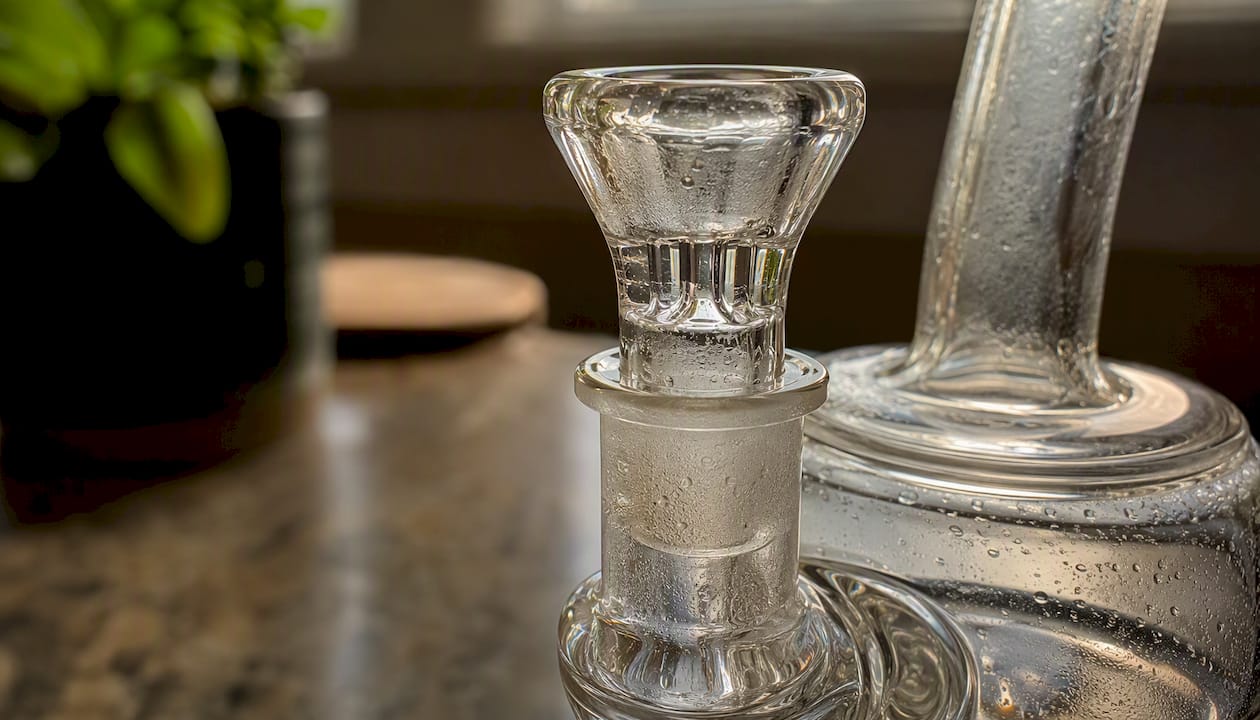
14mm is the market standard, and according to Roots Glass, it’s the most common joint size sold across the industry. It hits a sweet spot: enough airflow for a satisfying pull, enough resistance to keep smoke concentrated instead of thin and harsh. Most beginner-to-mid-range bongs on shelves right now use 14mm, which is exactly why it’s the default recommendation when you can’t identify your piece any other way.
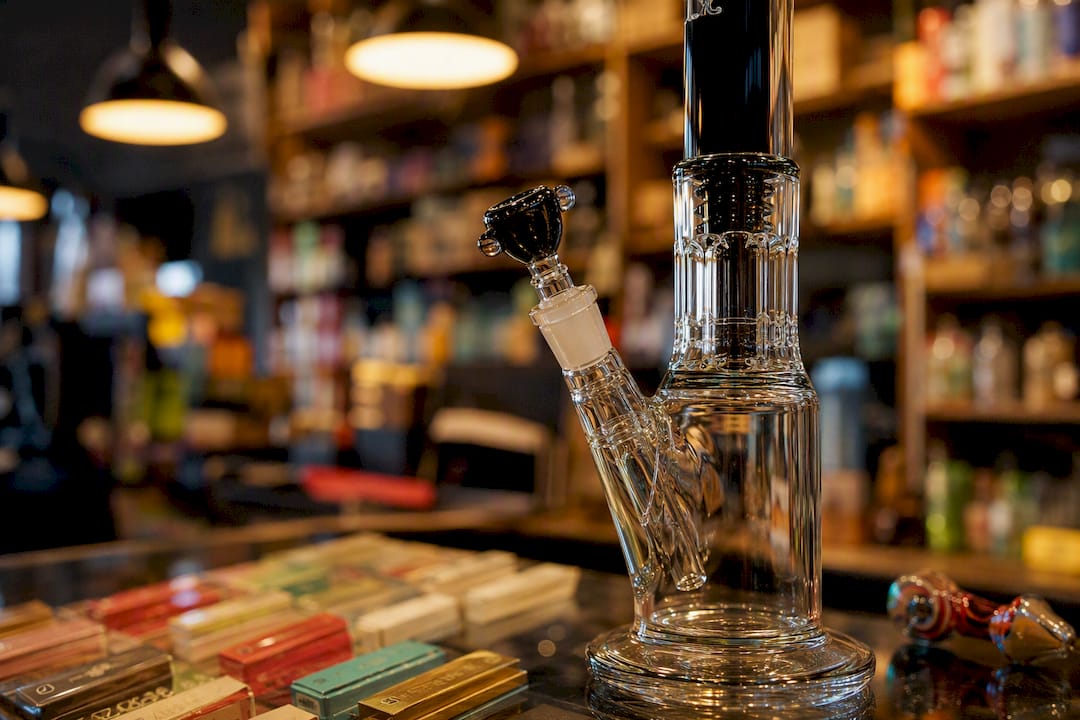
18mm is the largest of the three, built for bigger bongs, percolator-heavy pieces, and situations where you want maximum airflow. Less resistance means bigger, smoother hits, and larger bowls in this size hold more flower per pack. That makes 18mm the natural fit for group sessions or anyone who prefers volume over control.
Here’s how the three compare side by side:
- 10mm: tightest draw resistance, smallest bowl capacity, found on mini rigs and dab rigs, best for solo concentrate use or careful dosing.
- 14mm: balanced airflow and resistance, moderate bowl capacity, found on most standard bongs and bubblers, best for everyday flower use.
- 18mm: loosest draw resistance, largest bowl capacity, found on bigger bongs and percolator pieces, best for group sessions and bigger hits.
None of this is arbitrary. Glass manufacturers settled on these three diameters decades ago, and the whole secondary market of bowls, downstems, and adapters is built around them. Straying outside that trio (some novelty and artisan pieces do) usually means a proprietary fit that limits your replacement options down the road.
How to Measure Your Bowl or Joint Size at Home
Before you order a replacement bowl, confirm the size yourself. It takes less than two minutes and saves you a return shipment.
- Grab a dime and a penny. These two coins happen to line up closely with the two most common joint sizes.
- Test the dime against the joint opening. A dime measures close to 14mm across, so if it fits snugly into the opening, you’re almost certainly looking at a 14mm joint.
- Test the penny if the dime is too small. A penny runs closer to 19mm, so if it drops into the opening with room to spare, that’s a strong signal you’ve got an 18mm joint.
- If neither coin comes close, check for 10mm. No common coin matches that diameter well, so this is where a set of digital calipers earns its keep.
- Measure with calipers for precision. Open the jaws, place them across the outer edge of the joint opening, and read the display. You’re looking for a number close to 10, 14, or 18.
- Round to the nearest standard size. Glass isn’t machined to laboratory tolerances, so a reading of 13.8mm or 14.3mm both mean 14mm in practice.
Calipers cost about $10 and are worth owning if you buy replacement glass more than once. A measurement app or accessory guide can help you cross-check readings against known product specs before you commit to a purchase.
Troubleshooting gets trickier with older, worn, or handmade pieces. Heavy use can wear down ground glass joints slightly, and some artisan glassblowers work outside the standard trio entirely. If your readings fall between two standard sizes and neither coin nor caliper gives you confidence, bring the piece into a shop rather than guessing online.
Pro Tip: If your calipers read 14.5mm, don’t assume you need a custom bowl. That’s still within normal tolerance for a 14mm joint. Manufacturing on consumer glass isn’t precise enough to justify chasing a half-millimeter.
Male vs Female Joints and Why Gender Matters
Diameter is only step one. The connection also has a gender, and mismatching it is the single most common mistake customers make when ordering replacement bowls.
A male joint is the piece that inserts into another, tapering to a narrower point. A female joint is the piece that receives it, with a wider, hollow opening. Most bongs sold to consumers are built with female joints on the tube, which means they need male bowls to fit into them. That’s worth remembering because it flips the intuitive assumption a lot of first-time buyers make.
Correct matches look like this: a 14mm male bowl into a 14mm female bong joint, or an 18mm male downstem into an 18mm female joint on the tube. Wrong matches happen when someone buys a female bowl for a female bong (it simply won’t seat), or gets the diameter right but the gender backward.
A few quick visual checks confirm which one you’re dealing with:
- Look at the joint opening on your bong. If it’s a hollow socket, you need a male bowl.
- Look at the base of your current bowl. If the stem tapers down to a point, it’s male.
- Hold the two pieces near each other before buying. If both taper inward or both open outward, they won’t mate no matter the size.
Shop staff at Roots Glass report that gender mismatches, not diameter mismatches, cause the bulk of wrong-order returns. Confirm gender first. Diameter second.
Choosing a Size Based on Airflow, Draw, and Capacity
Size doesn’t just determine whether a bowl physically fits. It shapes the entire feel of the hit, and that’s the part most first-time buyers overlook until they’re already smoking out of the wrong piece.
Smaller diameters restrict airflow, which raises draw resistance. That’s why 10mm setups feel tighter and more deliberate, well suited to dab rigs where you want controlled, concentrated hits rather than a huge cloud. Move up to 14mm and resistance drops to a comfortable middle ground, enough pull to feel satisfying without turning every hit into a lung workout. Jump to 18mm and airflow opens up considerably, trading some of that concentrated flavor for volume and ease, which is exactly what a group passing one piece around usually wants.
Match the size to how you actually smoke, not how you imagine smoking:
- Solo, flavor-first sessions: 10mm or 14mm, since tighter airflow tends to preserve terpene flavor better across a slower pull.
- Everyday, balanced use: 14mm, the size built for exactly this kind of general-purpose session.
- Group sessions or big hits: 18mm, where higher airflow and larger bowl capacity mean less repacking and easier passing.
By the numbers: Industry retail data from Roots Glass identifies 14mm as the single most common joint size sold across the glass market. That prevalence is exactly why it’s the default recommendation any time you can’t identify your existing joint size with certainty. It fits more bongs than either alternative, so the odds favor you when you guess 14mm.
None of this means one size is objectively “better.” A dab rig running 18mm would feel loose and wasteful, while a party-sized bong stuck at 10mm would leave a group waiting on refills all night. Match the size to the session, not the other way around.
Adapters, Downstems, and Mixing Sizes
Sometimes the bowl you want doesn’t match the bong you have, and buying a whole new piece isn’t realistic. That’s where adapters come in, and they’re a legitimate fix, just not always the best one.
The two most common adapter types are:
- Diameter adapters (14mm to 18mm or 18mm to 14mm): these let a smaller bowl sit in a larger joint, or vice versa, using a stepped connector piece.
- Gender changers: these flip a male joint to female or a female joint to male without altering the diameter at all.
Both work, but every adapter you add is another seam where air can escape. A single well-fitted adapter usually seals fine. Stack two or three together (a diameter adapter plus a gender changer, say) and you start losing suction at each connection point, which weakens your pull and wastes smoke. Retail guidance from Hightide Inc. recommends buying correctly sized parts whenever it’s practical, treating adapters as a fallback rather than a permanent setup.
That said, adapters make sense in specific situations: you’re traveling with mismatched gear, you inherited a piece with an odd joint, or you want to test a bowl style before committing to buying the exact matching size. For daily use, though, a properly matched bowl and joint will seal better and pull cleaner than any adapter chain.
Pro Tip: If you notice a hissing sound or your hits feel weaker than usual after adding an adapter, check the seam with a drop of water. Bubbles forming at the joint mean you’ve got a leak worth fixing before you smoke again.
Estimating Bowl Capacity and Choosing the Right Depth
Bowl size tells you the joint diameter, but bowl shape determines how much you can actually pack, and that’s a separate decision worth thinking through before you buy.
A shallow, wide bowl burns faster and cashes out quicker, which suits people who want a quick hit without committing a full bowl’s worth of flower. A deeper bowl holds more and burns slower from the edges inward, which means better cornering (that technique where you only light part of the bowl to save the rest for later) and more sessions per pack. You can estimate rough capacity just by eyeballing the bowl against a standard reference: a bowl roughly the size of a dime’s diameter and a similar depth holds close to 0.1 to 0.2 grams, while a bowl the width of a quarter and noticeably deeper can hold three or four times that.
For different use cases:
- Micro-sessions or quick solo hits: a shallow 10mm or 14mm bowl that burns fast and doesn’t waste flower on a session you’re not finishing.
- Everyday personal use: a medium-depth 14mm bowl that allows cornering across a few sessions.
- Group sessions: a wide, deep 18mm bowl that holds enough to pass around without repacking every two minutes.
If you’re switching between solo and group use regularly, owning two bowls in different depths (even at the same joint size) often beats trying to make one bowl do both jobs.
Replacement Bowl Shopping Checklist
Before you check out on a replacement bowl, run through this list. It takes thirty seconds and prevents the return shipment that eats into whatever you saved by buying online instead of in-store.
- Confirm the diameter field on the product page. It should state 10mm, 14mm, or 18mm explicitly, not just “standard” or “universal.”
- Confirm the gender field separately. Diameter and gender are two different specs, and product pages sometimes bury one or the other in the description rather than the title.
- Check the material. Borosilicate glass resists thermal shock far better than cheap soda-lime glass, which means fewer cracked bowls from normal heat cycling.
- Look for ground glass vs. tapered stems. Ground joints tend to seat more securely and seal tighter than smooth tapered ones.
- Check whether a handle or screen is included. Missing either one is a minor annoyance you’ll want to plan around rather than discover after the box arrives.
- Review the return policy before buying. Terms pages that clearly cover wrong-size returns are a good sign the seller expects and accommodates sizing mistakes.
- Study the product photos for scale. A bowl shot next to a coin or ruler tells you more about real-world size than the listed dimensions alone.
Reading these fields carefully before you buy is faster and cheaper than measuring your bong twice and still ending up with the wrong bowl.
Shop-Tested Tips From Juiced at Elevated Remedies
Working the counter at a smoke shop teaches you the same lesson over and over: almost nobody gets the diameter wrong, but plenty of people get the gender wrong. The bowl looks right in the photo, the size matches the listing, and it still won’t seat because the joint types don’t mate.
The fastest fix is the one outlined above: check whether your bong’s joint is a socket (female) or a taper (male) before you even look at diameter. That single check eliminates most return requests we see.
Coin tests and calipers handle the vast majority of at-home measurements fine, but worn, vintage, or handmade pieces sometimes defy easy categorization. If your readings keep landing in a gray zone between two standard sizes, that’s worth a five-minute stop at a physical shop rather than another online order. A staff member with calipers and a shelf full of reference pieces can settle it faster than another round of guessing.
— Juiced
Find Your Next Piece at Elevated Remedies
Once you know your size and gender, the fastest way to stop guessing is to shop somewhere that actually stocks all three standards side by side. Theelevatedremedies carries bowls, bongs, and dab rigs across 10mm, 14mm, and 18mm, along with the downstems and adapters that fill the gaps between them, so you’re not stuck special-ordering a single fitting online and waiting on shipping.

If you’re still not sure what you’re working with, that’s exactly the kind of question our in-store team handles daily at 1123 Broadway St in Ann Arbor. Bring the piece in, get it measured against real reference glass, and walk out with a bowl that actually fits the first time. And if you’re curious about what else Elevated Remedies stocks beyond glass, our page on Amanita muscaria products covers the mushroom side of the shop for anyone exploring past the smoke aisle.
Sources
Recommended
- How different bong slides shape your smoking experience – Elevated Remedies
- Step by Step Bong Cleaning: A Practical Guide – Elevated Remedies
- Why Collect Artistic Bongs: A Guide for Collectors – Elevated Remedies
- Glass Pipe Artistry Explained: Techniques, History & How to Evaluate – Elevated Remedies