
TL;DR:
- Mushroom blending combines multiple species to enhance flavor, health, or psychoactive effects through strategic preparation. Effective techniques involve roasting for culinary uses and dual extraction for supplements, unlocking vital compounds. Blending offers broader immune and neurological benefits by activating diverse biological pathways beyond single-species options.
Mushroom blending is the deliberate practice of combining multiple mushroom species or preparations to produce enhanced flavor, nutritional density, or therapeutic effects beyond what any single variety delivers alone. Whether you are roasting Shiitake and Portobello together for a savory burger, stacking Lion’s Mane with Cordyceps in a morning supplement, or exploring psilocybin microdosing protocols, the core principle stays the same: different mushrooms bring different biochemical profiles, and combining them strategically multiplies the result. Explaining mushroom blending properly means covering all three contexts, culinary, medicinal, and psychoactive, because the preparation logic and the stakes differ significantly across each one. Species like Reishi, Lion’s Mane, Cordyceps, and Chaga each carry unique beta-glucans, triterpenes, and adaptogens that interact with your body in distinct ways.
What are the most effective mushroom blending techniques?
Mushroom blending techniques split into two broad categories: culinary blending, where texture and flavor are the primary goals, and supplement blending, where bioavailability and biochemical synergy drive every decision. Confusing the two leads to poor results in both.
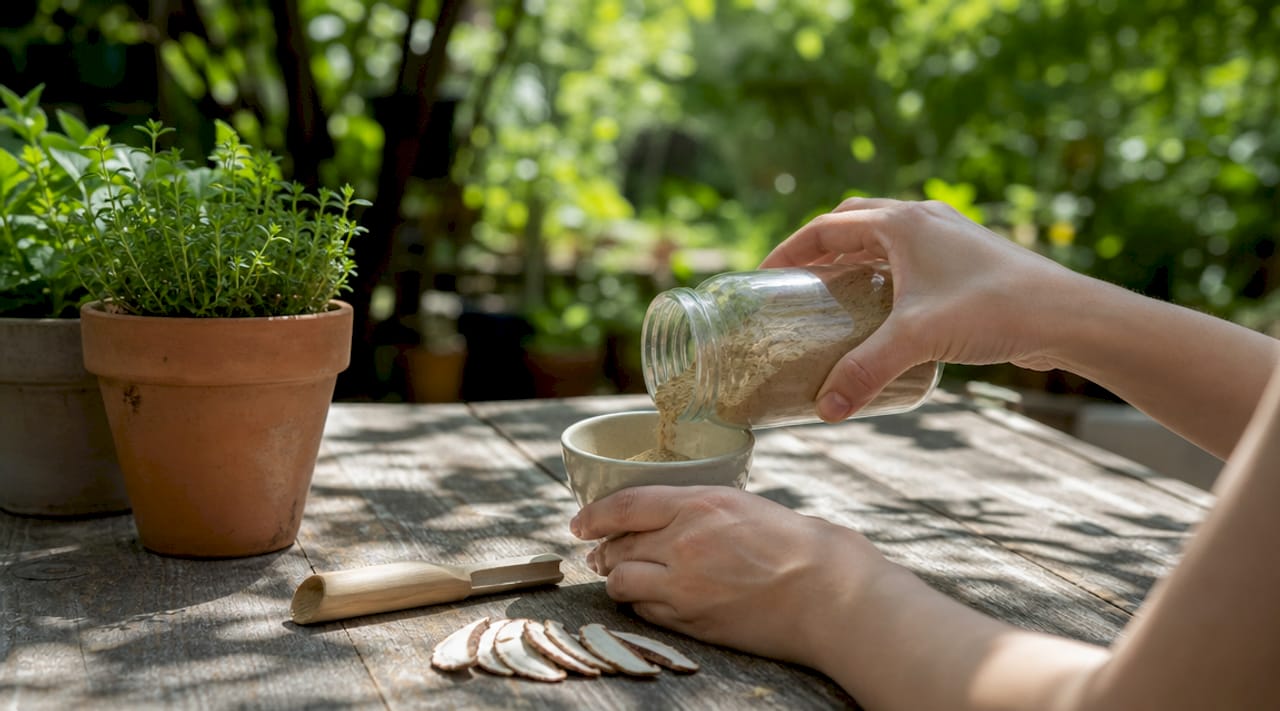
For culinary applications, preparation before blending is non-negotiable. Roasting or sautéing mushrooms before blending reduces moisture content and concentrates flavor. Raw mushrooms hold too much water, which turns a blended sauce watery and flat. A quick roast at 400°F for 15 minutes transforms the same mushrooms into a rich, umami-dense base.
The mechanics of blending matter more than most people realize. Over-processing mushrooms causes mushy texture and heat buildup that degrades delicate flavor compounds. Short pulse sequences, rather than continuous blending, preserve both texture and taste. For soups and sauces, high-powered blenders like Vitamix produce the smoothest results, but they require gradual liquid addition and controlled pulse intervals to avoid turning the blend into a flavorless paste.
Key culinary blending practices to follow:
- Roast or sauté mushrooms first to remove excess moisture and develop flavor
- Use a 30/70 mushroom-to-meat ratio in savory recipes to maintain structural integrity without losing the meat’s texture
- Add aromatics like garlic, onion, and fresh thyme before blending to round out earthy notes
- Blend with warm broth rather than cold water to keep flavors cohesive
- Pulse in 3 to 5 second bursts and check consistency between each round
Pro Tip: Add a small amount of miso paste or soy sauce to your mushroom blend before processing. Both amplify umami without overpowering the mushroom’s natural flavor, and they help the blend emulsify more smoothly into soups and sauces.
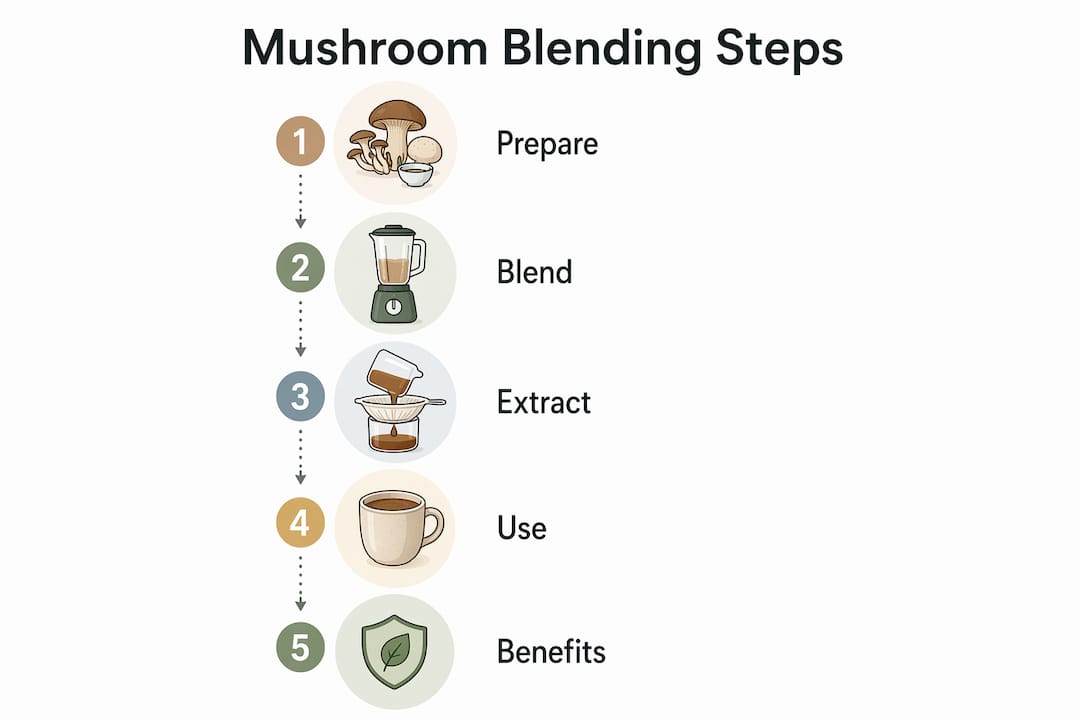
For supplement blending, the process shifts entirely to extraction. Raw mushroom powders are largely indigestible because chitin cell walls block absorption of the active compounds. Dual extraction using hot water and alcohol breaks through those walls, unlocking beta-glucans and triterpenes for actual bioavailability. This is the step most commercial powders skip, and it is why two products with identical species lists can produce completely different results.
Why do mushroom blends outperform single-species supplements?
The core argument for blending mushrooms medicinally comes down to receptor diversity. Different mushroom species carry unique beta-glucan structures that activate multiple immune receptor sites simultaneously, including Dectin-1 and Toll-like receptors, producing a broader immune response than any single species can trigger. Think of it as the difference between pressing one key on a piano versus playing a chord.
Here is how the synergy works in practice:
- Cordyceps increases ATP production and oxygen utilization, making it the stimulatory driver in most blends targeting energy and athletic performance.
- Lion’s Mane stimulates Nerve Growth Factor (NGF) synthesis, supporting neuroplasticity and cognitive function over time.
- Reishi acts as the adaptogenic anchor, modulating the HPA axis to reduce cortisol output and support restorative sleep.
- Chaga contributes antioxidant density through melanin and superoxide dismutase, protecting cells from oxidative stress.
- Turkey Tail adds a concentrated dose of PSK and PSP polysaccharides, two of the most studied immune-modulating compounds in functional mushroom research.
When these species are combined in a well-formulated blend, they activate multiple immune pathways simultaneously, producing an effect that exceeds what any single ingredient achieves alone. This is not a marketing claim. It reflects how the immune system actually works: through layered, redundant signaling networks that respond to structural variety.
“Blending different mushroom extracts creates a broader activation of immune receptor sites, supporting a comprehensive immune response.” — Naturealm functional nutrition research
Adaptogenic blends containing Reishi also modulate the HPA axis to lower stress hormones and stabilize endocrine function, which supports both hormonal health and sleep quality. This is a physiological effect, not a placebo, and it only emerges when the adaptogenic species are present in sufficient quantity alongside the stimulatory ones.
How to choose the right mushroom blend for your goals
Choosing a mushroom blend requires matching the species profile to a specific health goal, then verifying that the product actually delivers what it promises. Most people skip the second step, which is where the real quality gap lives.
| Goal | Recommended species | Key compounds to verify |
|---|---|---|
| Cognitive focus | Lion’s Mane, Cordyceps | NGF stimulants, beta-glucans |
| Immune support | Turkey Tail, Chaga, Reishi | PSK, PSP, antioxidants |
| Energy and endurance | Cordyceps, Lion’s Mane | Adenosine, cordycepin |
| Stress and sleep | Reishi, Ashwagandha pairing | Triterpenes, ganoderic acids |
| Psychoactive exploration | Psilocybin mushrooms | Psilocybin content, dose clarity |
Not all mushroom blends disclose exact quantities or extraction methods, which creates real inconsistency in efficacy and leaves consumers guessing. A product listing “mushroom blend” without specifying fruiting body versus mycelium content, extraction method, and per-species dosage is not worth buying. Mycelium grown on grain contains significant starch filler and far fewer active compounds than a fruiting body extract.
What to look for on any supplement label:
- Confirmation that the product uses 100% fruiting bodies, not mycelium on grain
- Dual extraction method specified (hot water plus alcohol)
- Per-species dosage listed in milligrams, not just a proprietary blend total
- Third-party testing certificate available on request
For culinary blending, the selection logic is simpler. Shiitake and Maitake blend well for umami-forward sauces. Oyster mushrooms add a lighter, more delicate flavor that works in cream-based preparations. Portobello provides the bulk and meatiness needed in plant-based burgers and grain bowls. Mixing two or three varieties with complementary textures produces more depth than any single mushroom achieves on its own.
If you are exploring curated mushroom blends for wellness, combining mushroom supplements with CBD is a growing practice. CBD’s interaction with the endocannabinoid system complements the adaptogenic effects of Reishi and the neuroprotective properties of Lion’s Mane, though the research on combined protocols is still developing.
What are the best practical applications and recipes for mushroom blends?
Mushroom blending for health and cooking converges most clearly in a few high-impact applications that are worth knowing in detail.
In the kitchen, the most practical starting point is a blended mushroom base for soups and sauces. Combining mushrooms with aromatics and warm broth before blending produces a smooth, deeply flavored liquid that works as a soup foundation or a sauce reduction. Roast equal parts Shiitake, Cremini, and Portobello with garlic and olive oil, then blend with vegetable broth and a splash of tamari. The result is a versatile base that stores well and works across multiple dishes.
For plant-based burgers, the 30/70 ratio applies directly. Blend 30% finely chopped Shiitake or Portobello with 70% ground beef, turkey, or a legume base. The mushrooms add moisture, umami, and a meaty density without dominating the flavor. This technique is used in professional kitchens to reduce meat costs while improving flavor complexity.
For medicinal use at home, making a dual-extract tincture is more accessible than most people assume. Simmer dried Reishi, Turkey Tail, and Chaga in water for two to four hours, strain the liquid, then soak the remaining mushroom material in high-proof alcohol for four to six weeks. Combine both extracts. This captures both the water-soluble beta-glucans and the alcohol-soluble triterpenes, giving you a full-spectrum product.
For psychoactive applications, blending approaches center on microdosing protocols and stacking. A common stack pairs psilocybin mushrooms with Lion’s Mane and niacin, a combination sometimes called the Stamets Stack, designed to support neurogenesis alongside the psychoactive effect. Dosage precision matters more here than in any other context. If you are new to magic mushroom blends, starting with capsule formats gives you consistent, measurable doses without the variability of whole dried mushrooms. FLOAT Mushroom Lollipops from Coastal Hemp Co represent another format worth noting, combining cannabinoid and mushroom compounds in a clearly labeled, consumer-friendly delivery system.
Key takeaways
Mushroom blending works because different species activate distinct biological pathways, and combining them produces effects that no single mushroom can replicate alone.
| Point | Details |
|---|---|
| Prepare before blending | Roast or sauté mushrooms first to remove moisture and develop flavor before any culinary blend. |
| Dual extraction is non-negotiable | Hot water plus alcohol extraction is required to make medicinal mushroom compounds bioavailable. |
| Match species to goals | Cordyceps for energy, Lion’s Mane for focus, Reishi for stress, Turkey Tail for immune support. |
| Demand label transparency | Only buy supplements that list fruiting body content, extraction method, and per-species dosage. |
| Pulse, do not process | Short blending bursts preserve texture and flavor; continuous blending degrades both. |
Why most people are blending mushrooms wrong
Most people who get into mushroom blending, whether for cooking or supplements, make the same mistake: they treat blending as a shortcut rather than a technique. They throw raw mushrooms into a blender, hit the button, and wonder why the result is watery, bitter, or ineffective.
The preparation step is where most of the value lives. In cooking, roasting concentrates flavor compounds that raw blending destroys. In supplement production, dual extraction unlocks compounds that raw powder simply cannot deliver. Skipping either step does not just reduce quality. It changes the product entirely.
I have also seen a lot of confusion around commercial blends. Consumers assume that a product listing five or six species is automatically superior to a single-species tincture. That is not always true. A poorly extracted blend of six species can underperform a well-extracted single-species product. The species list is the starting point, not the finish line. What matters is how those species were grown, extracted, and dosed.
For beginners, my honest advice is to start with one or two species, understand what each one does in your body, and then build from there. Lion’s Mane and Reishi is a strong starting pair because their effects are complementary and well-documented. Add Cordyceps when you want to introduce an energy component. Add Turkey Tail when immune support becomes a priority.
The future of mushroom blending in wellness is moving toward personalization. Generic blends will give way to goal-specific formulations with transparent dosing, third-party testing, and clear extraction documentation. The brands that survive that shift will be the ones that treat their customers as informed adults rather than passive consumers.
— Juiced
Explore quality mushroom blends at Theelevatedremedies
Theelevatedremedies carries a curated selection of mushroom capsules formulated with ingredient transparency at the center. Every product specifies what is inside, how it was extracted, and what dose you are actually getting. No proprietary blend mysteries. No mycelium-on-grain filler. If you are exploring psilocybin for microdosing or wellness, the team at Theelevatedremedies at 1123 Broadway St in Ann Arbor, Michigan, can walk you through the options, including dried mushrooms, capsule formats, and mushroom chocolate bars for those who prefer an edible format. Start with what fits your goals, and build from there.
FAQ
What is mushroom blending?
Mushroom blending is the practice of combining two or more mushroom species or preparations to enhance flavor, nutritional value, or therapeutic effects. The technique applies across culinary, medicinal, and psychoactive contexts.
Why are mushroom blends better than single-species supplements?
Different mushroom species carry unique beta-glucan structures that activate distinct immune receptor sites. Combining them produces broader immune modulation and synergistic health effects that a single species cannot replicate.
What does dual extraction mean for mushroom supplements?
Dual extraction uses hot water to capture beta-glucans and alcohol to capture triterpenes, making both compound classes bioavailable. Raw mushroom powders skip this step and deliver far fewer active compounds due to chitin cell walls blocking absorption.
How do I know if a mushroom blend is high quality?
Look for products that specify 100% fruiting body content, list per-species dosages in milligrams, confirm dual extraction, and provide third-party testing. Avoid any product that lists only a proprietary blend total without species-level detail.
What is the Stamets Stack in psychoactive mushroom blending?
The Stamets Stack combines psilocybin mushrooms with Lion’s Mane and niacin, designed to support neurogenesis alongside the psychoactive effect. It is a structured microdosing protocol, not a casual combination, and dosage precision is critical.