
Yes. Kratom is still legal to buy, sell, and possess in Michigan right now. That answer comes with an asterisk worth reading closely: the Michigan House passed a bill that would ban it, and it’s currently sitting in the Senate.
- House Bill 5537 cleared the House in March 2026 but hasn’t passed the Senate or been signed into law.
- The DEA has moved to temporarily schedule 7‑hydroxymitragynine (7‑OH), a potent kratom-derived compound, at the federal level.
- Until the Senate acts and the governor signs something, Michigan’s controlled substances statutes don’t touch kratom.
Quick fact: The bill passed the House by a wide margin in March 2026, but as of the most recent reporting, the Senate hadn’t taken it up.
Table of Contents
- Where Michigan Kratom Law Stands Right Now
- What HB 5537 Would Actually Ban and Penalize
- Why the DEA and FDA Matter Even If Michigan Doesn’t Act
- What This Means for Michigan Buyers and Sellers Today
- How Elevated Remedies Approaches Kratom Locally
- Where This Goes Next
- Primary Sources to Track for Updates
- Sources
Where Michigan Kratom Law Stands Right Now
The Michigan House voted to pass House Bill 5537 on March 18 and 19, 2026. The bill would prohibit growing, synthesizing, selling, offering to sell, giving away, importing, or distributing kratom or what it defines as a “synthetic variant,” and it would create misdemeanor penalties for violations, according to the engrossed bill text. That’s the House’s job done. It isn’t law yet.
Three things have to happen before kratom actually becomes illegal in Michigan:
- The Senate has to take up HB 5537, debate it, and pass it (possibly with amendments, which would send it back to the House).
- The governor has to sign it.
- The bill’s own language says it would take effect 90 days after enactment, so even a signature this year wouldn’t flip the switch overnight.
If the Senate passed the bill and the governor signed it, say, in the fall of 2026, the 90-day clock would push actual enforcement into early 2027. Nobody can predict the Senate’s timeline. Bills die in committee every session, and this one hasn’t even gotten a hearing date as of the latest coverage.
Pro Tip: Don’t confuse “the House passed it” with “it’s the law.” Michigan requires both chambers plus a governor’s signature, and a lot of bills that clear the House never make it out of the Senate at all.
Until that full process wraps up, Michigan’s existing controlled substances framework governs kratom the same way it always has, meaning it isn’t scheduled and isn’t restricted at the state level. No Michigan municipality has documented a local kratom ban that would override this, so state status is what actually controls retail legality on the ground, whether you’re browsing shelves in Ann Arbor or ordering kratom online for delivery anywhere in the state.
What HB 5537 Would Actually Ban and Penalize
The bill’s definitions matter more than most people realize, because they’re written to close loopholes, not just ban a plant. “Kratom” under HB 5537 covers the Mitragyna speciosa plant itself along with its parts, extracts, resins, and derivatives, according to the House Fiscal Agency’s analysis. That’s a deliberately wide net.
Separately, the bill defines a “synthetic variant,” which specifically includes 7‑hydroxymitragynine, the concentrated compound driving most of the current legislative urgency. Lawmakers targeted this language because raw leaf kratom and lab-concentrated 7‑OH products carry very different risk profiles, and sponsors have said publicly they were aiming at high-potency gas station products rather than traditional kratom.
Penalties, per the House Fiscal Agency’s summary:
- First offense: misdemeanor, with fines and jail time specified in the bill analysis.
- Repeat offenses: escalated penalties beyond the first-offense tier.
- Sales to anyone under 18: enhanced penalties layered on top of the standard misdemeanor structure.
There’s an exemption clause for kratom products that get formal FDA approval, but it’s narrower than it sounds. It explicitly excludes synthetic variants like 7‑OH from that exemption, and since no kratom product currently holds FDA drug approval, the exemption is largely theoretical for now, according to analysis of the bill’s language.
Why the DEA and FDA Matter Even If Michigan Doesn’t Act
State law is only half the picture. In July 2026, the DEA announced steps to temporarily schedule 7‑hydroxymitragynine and related substances, citing public health concerns. Temporary scheduling lets the DEA restrict a substance quickly, without waiting for the full rulemaking process, and it typically applies nationwide regardless of what individual states decide.
Separately, the FDA has warned for years that kratom products can’t be lawfully marketed as dietary supplements or approved drugs, and it has flagged adulteration and contamination risks in unregulated kratom supply chains.
Federal scheduling of 7‑OH would narrow the legal market for high‑potency kratom derivatives even if Michigan never enacts its own ban, because interstate shipping, manufacturing, and sale of a federally scheduled substance carries its own separate criminal exposure.
- DEA scheduling can restrict manufacturing and interstate shipping of 7‑OH regardless of Michigan’s statutes.
- FDA guidance already limits how any kratom seller can legally market health claims.
- Retailers who source concentrated 7‑OH products face federal risk on a completely different track than state risk.
What This Means for Michigan Buyers and Sellers Today
Sales and possession remain lawful under Michigan law right now. That could change fast if the Senate moves, so treat the current window as a “for now” situation rather than a permanent green light.
For retailers:
- Audit inventory and flag any product that’s heavily concentrated in 7‑OH rather than traditional leaf kratom.
- Ask suppliers for lab documentation showing exactly what’s in each batch.
- Tighten age verification at checkout and in-store, since HB 5537 singles out sales to minors for harsher penalties.
- Talk to a Michigan attorney before making major inventory or sourcing commitments this year.
For consumers, stick with sellers who show lab results and clear sourcing, skip unlabeled high-potency concentrates, and watch for FDA recall notices. If you’re using kratom to manage pain or opioid withdrawal, Michigan Medicine’s reporting notes clinicians are increasingly seeing dependence cases tied specifically to synthetic 7‑OH products, not traditional leaf kratom, so loop in a medical provider rather than self-managing a switch.
Pro Tip: If a kratom product doesn’t list its mitragynine and 7‑OH content on a lab report, that’s your signal to walk away, not your signal to ask more questions in the store.
Clinicians who see adverse reactions tied to kratom or 7‑OH products can report them directly to the FDA’s MedWatch system, which feeds real data into future regulatory decisions.
How Elevated Remedies Approaches Kratom Locally
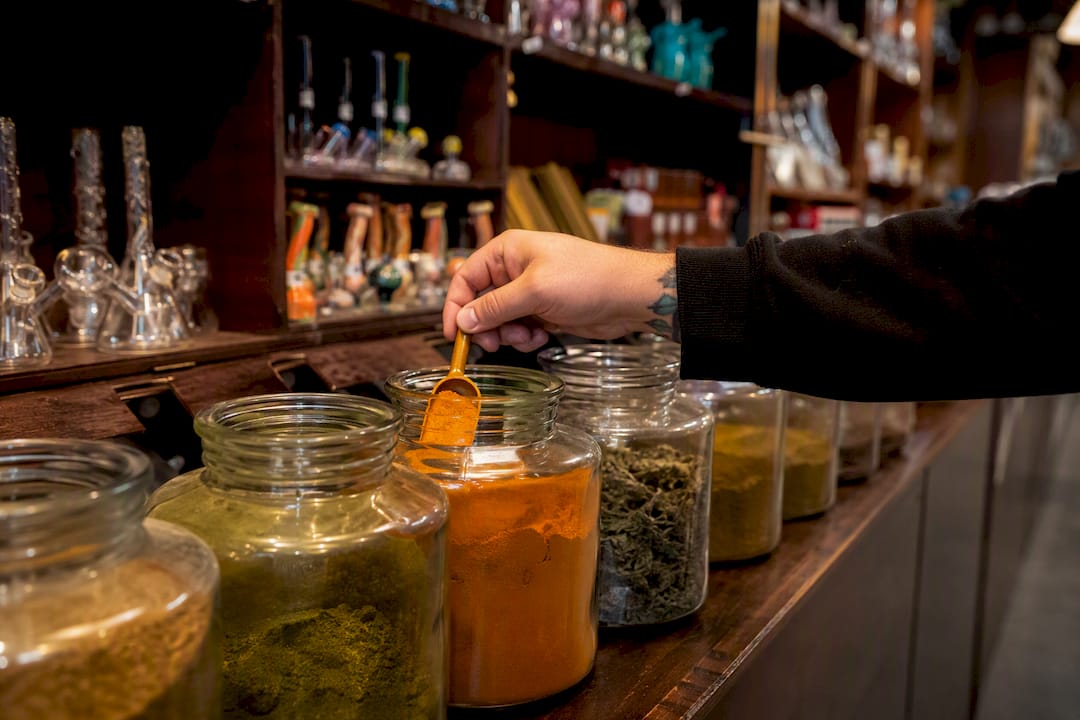
Elevated Remedies has operated as Ann Arbor’s smoke shop and mushroom dispensary at 1123 Broadway St since before this legislative fight started, and kratom has always been one product line we handle carefully. That means checking supplier documentation before anything hits the shelf and pulling products the moment sourcing gets murky.
- We favor suppliers who provide lab results over ones who don’t.
- Our team stays current on Michigan-specific kratom guidance so customers get straight answers, not guesses.
- For customers comparing options, our breakdown of CBD versus kratom under Michigan law covers the practical differences.
Where This Goes Next
My read: the Senate isn’t likely to move fast unless federal 7‑OH scheduling creates political pressure to act. Businesses should assume tighter rules are coming and phase out high-potency synthetic products now rather than waiting for a signature.
Consumers should do the same. Check the legislature’s bill page yourself before making any long-term purchasing decisions, and talk to an attorney if you’re running a retail operation.
— Juiced
Kratom stays legal to buy and sell in Michigan only until the Senate passes HB 5537 and the governor signs it, at which point a 90 day countdown to enforcement begins.
| Point | Details |
|---|---|
| Current status | Kratom remains legal statewide because HB 5537 passed the House but hasn’t cleared the Senate. |
| Bill scope | HB 5537 bans kratom and “synthetic variants” like 7‑OH, with misdemeanor penalties and enhanced fines for sales to minors. |
| Federal pressure | The DEA’s temporary scheduling of 7‑OH adds nationwide restrictions independent of Michigan’s outcome. |
| Effective timing | If signed, the bill would take effect 90 days after enactment, not immediately. |
| Practical step | Retailers should audit 7‑OH content now; consumers should demand lab documentation before buying. |
If you want to explore legal, quality-checked alternatives while kratom’s status stays in flux, Elevated Remedies also carries amanita muscaria mushroom products sourced with the same supplier transparency standards, available online and in-store in Ann Arbor.
Primary Sources to Track for Updates
Check these directly rather than relying on secondhand summaries, since bill status can change within days:
- HB-5537 bill text, as passed by the House
- House Fiscal Agency’s analysis for exact penalty figures
- Michigan Legislature’s bill page for Senate committee status
- DEA’s press release on 7‑OH scheduling
- FDA’s kratom public health page for safety notices
This article is general information, not a substitute for advice from a qualified lawyer. Consult a qualified legal professional about your own circumstances before acting on anything here.
Sources
- HB-5537, As Passed House, March 18, 2026
- House Fiscal Agency HB 5537 analysis (Summary as Passed by the House)
- DEA: Temporarily schedule 7‑OH and related substances
- FDA and kratom — public health information
- What’s the latest on 7‑OH and kratom availability and addiction care?
Recommended
- Kratom for relaxation: Effects, risks, and Michigan’s landscape – Elevated Remedies
- CBD vs kratom: Benefits, risks, and Michigan law – Elevated Remedies
- Psilocybin Dosage Guide for Michigan Wellness in 2026 – Elevated Remedies
- How to purchase psychedelic mushrooms safely in Michigan – Elevated Remedies