
Coffee microdosing delivers predictable alertness through small, spaced caffeine doses, while psilocybin microdosing is pursued for mood and creativity with far weaker clinical backing and a heavier dose of placebo effect. Combining the two raises real risk: overlapping effects on dopamine and serotonin can push anxiety and heart rate higher than either substance alone. If you need reliable focus today, controlled caffeine intake is the safer bet. If you’re exploring psilocybin, cut your caffeine and log everything.
TL;DR:
- Combining caffeine and psilocybin microdosing raises risks of amplifying anxiety and heart rate due to overlapping effects on dopamine and serotonin systems, especially above 100-200 milligrams.
- Controlled caffeine intake shows measurable improvements in attention at doses below 60 milligrams, while psilocybin’s effects often fade under placebo and small-sample studies.
- Microdosing caffeine typically involves 20-50 milligrams spaced 90 to 120 minutes apart, paired with L-theanine, and spaced with tolerance breaks to prevent overstimulation.
- Psilocybin microdosing should be low-frequency, with regular breaks and no caffeine on dosing days to avoid masking subtle effects and overstimulating the nervous system.
- Safety thresholds suggest avoiding more than 200-400 milligrams of caffeine daily or combining over 100-200 milligrams of caffeine with microdoses to prevent cardiovascular and anxiety-related issues.
Table of Contents
- What Does the Research Say About Microdosing and Coffee?
- How Do Caffeine and Psilocybin Work at Low Doses?
- Is It Safe to Combine Coffee and Microdosing?
- How Do You Microdose Caffeine and Psilocybin Safely?
- Where Elevated Remedies Fits Into Cautious Microdosing
- Coffee or Psilocybin: Which One Actually Fits Your Goal?
- Explore Elevated Remedies’ Microdosing Options
- Sources
- FAQ
What Does the Research Say About Microdosing and Coffee?
The evidence gap between these two practices is wide, and it’s worth being honest about it upfront. Caffeine has decades of controlled trials behind it. Psilocybin microdosing has a handful of small studies, most published in the last several years, and a lot of internet enthusiasm filling in the gaps.
Clinical trials on psilocybin microdosing consistently run into the same wall: small sample sizes and strong expectancy effects. When researchers run blinded, placebo-controlled versions of these studies, the reported mood and cognitive benefits often shrink dramatically or disappear, according to a review of clinical trials on microdosing. Participants who believe they’re taking an active substance tend to report improvements whether or not they actually received one. Some recent trial comparisons have even found microdosing effects landing in a similar range to what people get from a standard cup of coffee, which raises an uncomfortable question for anyone paying a premium for the psychedelic experience: how much of the benefit is the mushroom, and how much is the ritual and belief around it?
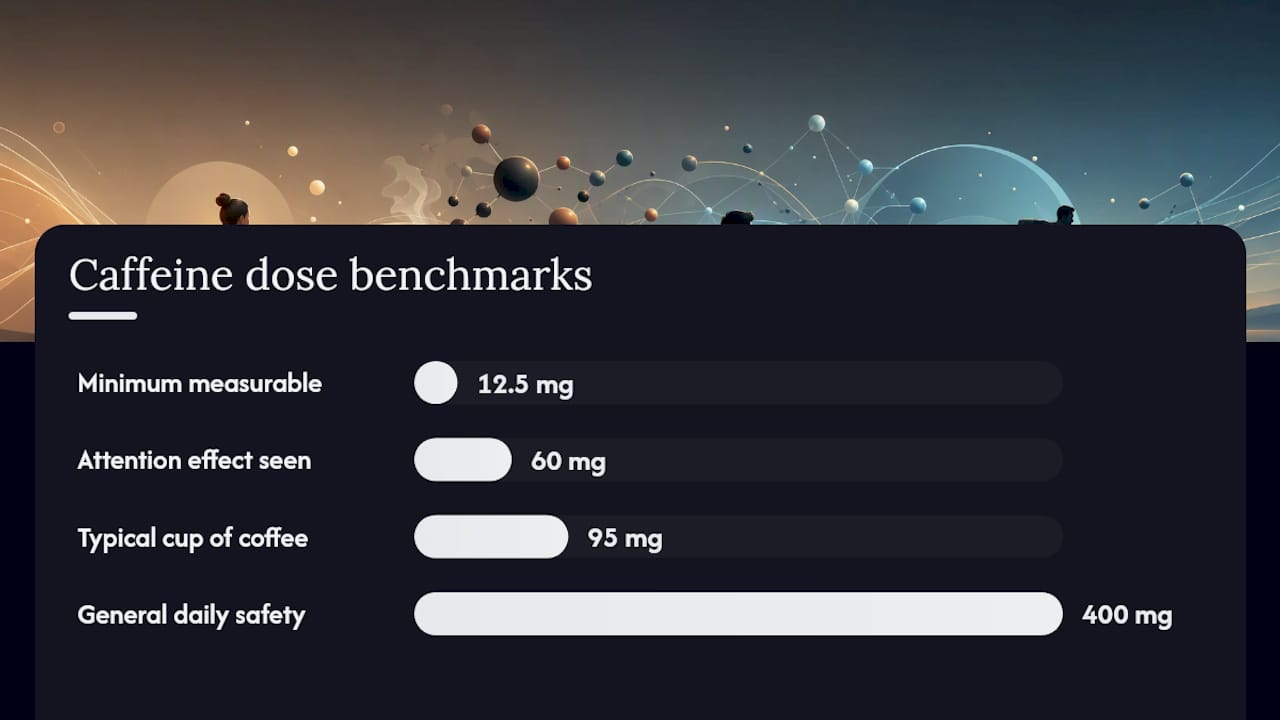
Caffeine’s track record looks different. Controlled studies show measurable improvements in sustained attention and reaction time at doses as low as 12.5 to 60 milligrams, well below a typical 95 milligram cup of coffee. The Mayo Clinic sets 400 milligrams a day as a general safety benchmark for most healthy adults, though individual sensitivity varies widely based on genetics, body weight, and tolerance.
Here’s how the two stack up on evidence quality:
- Caffeine: Large sample sizes, decades of pharmacokinetic data, dose-response curves well mapped, effects reproducible across labs.
- Psilocybin microdosing: Small samples (often under 100 participants), high placebo response, effects that shrink under blinded conditions, and few long-term safety studies.
- Combined use: Almost no formal research exists on stacking the two, which means most guidance (including this article’s) is extrapolated from single-substance pharmacology, not direct trials.
Statistic to remember: Studies show caffeine can measurably sharpen attention at doses under 60 milligrams, roughly two-thirds of a standard cup, while psilocybin microdosing benefits in controlled trials often track close to placebo. That gap matters if you’re deciding where to put your trust and your money.
None of this means psilocybin microdosing does nothing. It means the confidence level should match the evidence: cautious optimism for caffeine, cautious curiosity for psilocybin.
How Do Caffeine and Psilocybin Work at Low Doses?
Caffeine and psilocybin take completely different routes to their effects, and understanding the mechanism explains why mixing them gets complicated.
Caffeine works by blocking adenosine receptors in the brain. Adenosine builds up throughout the day and makes you feel drowsy; caffeine sits in those receptor sites and prevents adenosine from doing its job, which is why you feel more alert rather than more energized in some magical sense. The effect is dose-dependent and fairly linear at low ranges, with a half-life of roughly 3 to 7 hours depending on the person, according to research on caffeine pharmacokinetics. That half-life variability is why some people can drink espresso at 4 p.m. and sleep fine, while others lie awake at midnight from a lunchtime latte.
Psilocybin works through serotonin receptors, primarily the 5-HT2A subtype, and at full doses produces the perceptual and emotional shifts associated with psychedelic experiences. At microdose levels, the working theory isn’t that it produces a scaled-down version of those effects. It’s closer to what researchers call nonspecific amplification: subtle nudges to mood, creativity, or perception that are easy to misread, easy to attribute to something else entirely, and easy to talk yourself into noticing.
That subtlety is exactly the problem when caffeine enters the picture. Serotonin and dopamine systems interact more than most people realize, and Monash University research on these pathway interactions points to overlapping effects that can amplify anxiety when both systems are activated at once.
- Caffeine and psilocybin can independently raise heart rate and alertness.
- Combined, the effects don’t simply add. They can compound in ways that mask whether a subtle psilocybin effect is even happening.
- A jittery, caffeinated nervous system makes it nearly impossible to notice the quiet signal a microdose is supposed to produce.
Is It Safe to Combine Coffee and Microdosing?
The honest answer is: proceed carefully, and know your limits before you experiment. The two substances share overlapping neurochemical territory, and that overlap is where the risk lives.
Doses above roughly 200 to 400 milligrams of caffeine per day, or a single dose above 100 to 200 milligrams taken alongside a psilocybin microdose, are widely flagged as a threshold where anxiety and cardiovascular tension become more likely, per the Monash research on serotonin and dopamine interaction. That’s not a hard line where danger suddenly appears. It’s a zone where your margin for error shrinks.
Warning signs that mean stop, not push through:
- Heart palpitations or a racing pulse that doesn’t settle within 30 to 60 minutes.
- A sudden spike in anxiety or panic that feels disproportionate to your circumstances.
- Insomnia severe enough that you’re still wide awake six or more hours after your last dose.
- Nausea, tremors, or a sense of being “wired and fried” at the same time.
If any of these show up, stop both substances for the day and check in with a healthcare provider if symptoms persist or worsen.
Certain groups should be especially cautious. People with existing cardiac conditions face added strain from caffeine’s stimulant effects layered onto any psilocybin-related activation. People with anxiety disorders often find that stacking two activating substances turns a manageable baseline into a spiral. And anyone taking SSRIs or other serotonergic medications should treat psilocybin, even at microdose levels, as a genuine interaction risk, not a formality, given the shared serotonin pathway involved.
Pro Tip: Keep a simple symptom checklist on your phone before you start experimenting. If you hit two or more warning signs in the same session, that’s your stop signal, no debate needed.
None of this is medical advice, and nothing here replaces a conversation with a clinician who knows your health history, especially if you’re on medication or managing a cardiac or anxiety condition.
How Do You Microdose Caffeine and Psilocybin Safely?
Structure beats improvisation here. Both substances respond well to a planned protocol, and combining them without one is how people end up confused about what’s actually causing what.
Caffeine microdosing protocol:
- Start with 20 to 50 milligrams per dose, roughly a quarter to half a standard cup of coffee.
- Space doses 90 to 120 minutes apart rather than taking one large dose.
- Pair each dose with 100 to 200 milligrams of L-theanine to soften jitters, a combination many users find reduces the edge without killing the alertness.
- Cycle off caffeine periodically, taking a few days or a full week off every month or so, to prevent tolerance from creeping up.
- Stay hydrated and eat protein alongside your doses. Food slows absorption and reduces the spike-and-crash pattern that undermines the point of microdosing in the first place.
Cold brew concentrate measured in tablespoons is one of the easier ways to hit these small, consistent numbers without guessing.
Psilocybin microdosing protocol:
- Stick to conservative dose ranges and a low-frequency schedule, such as every third day, rather than daily use.
- Build in tapering periods and full breaks between cycles rather than running indefinitely.
- Avoid caffeine on dosing days if possible, since coaches working in this space often recommend minimizing stimulants during the window you’re trying to observe subtle effects. High-energy stimulation can drown out the quiet signal you’re actually tracking.
- If you must have coffee, keep the 2-hour spacing rule in mind. Waiting roughly two hours between caffeine and your microdose reduces cumulative nervous-system activation and lowers the odds of feeling overstimulated.
Testing the combination without fooling yourself:
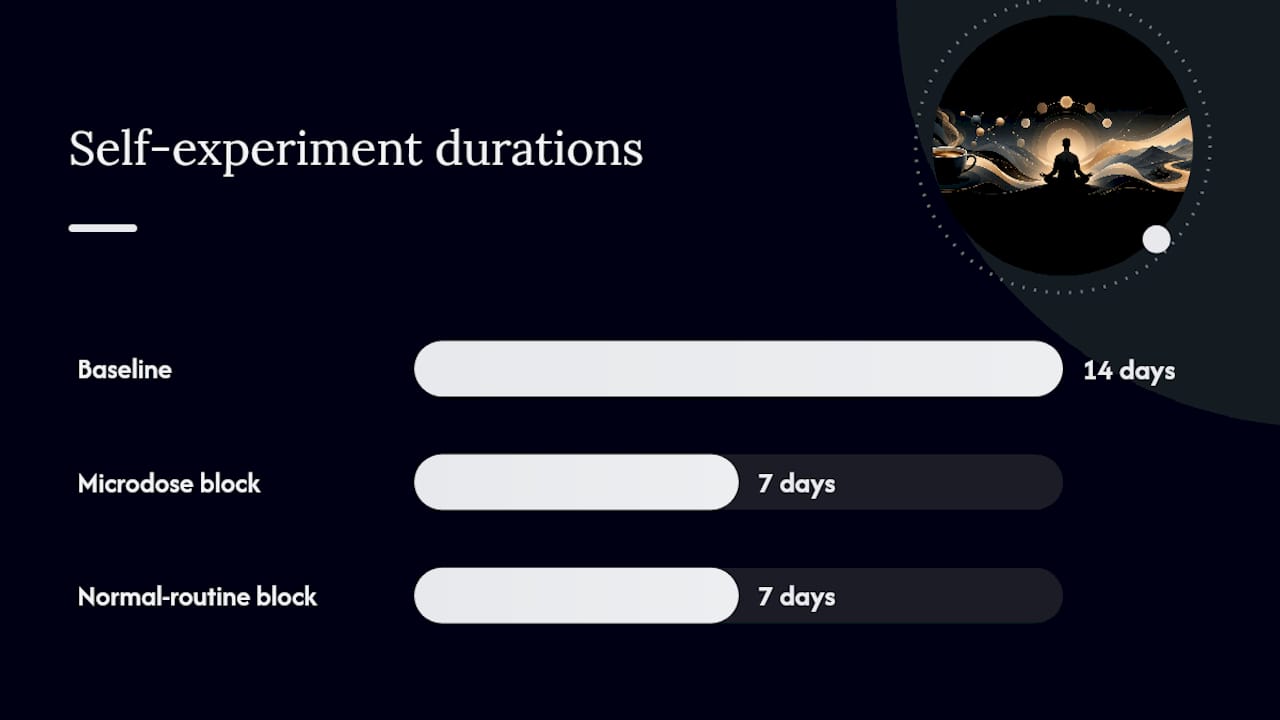
Self-experimentation has a well-known trap: without controls, it’s easy to credit or blame the wrong substance for how you feel. A more reliable structure looks like this: run a two-week baseline tracking your usual caffeine intake, mood, and sleep. Then alternate one-week blocks between microdose and normal routine, keeping everything else identical. Log a short mood and focus scale daily, along with sleep quality, using the Monash pathway research as a rationale for why isolating variables matters this much when two substances share overlapping brain chemistry.
Track outcomes on a simple 1 to 10 scale for mood, focus, and anxiety, plus hours of sleep. If a full block shows no consistent difference from baseline, that’s useful data, not a failure. Stop the experiment early if you notice escalating anxiety, sleep disruption, or physical symptoms that don’t resolve within a day.
Where Elevated Remedies Fits Into Cautious Microdosing
Some shops carry dried magic mushrooms, microdose capsules, and microdose chocolates for people who’ve decided psilocybin is worth exploring carefully. None of these products are a substitute for the protocols above. They’re tools for people who already understand the dosing ranges, spacing, and monitoring habits that make self-experimentation useful instead of chaotic.
If you’re building out a routine, a few resources go deeper than this article can:
- Microdosing vs. psychedelic experiences breaks down how a true microdose differs from a full psychedelic dose.
- The psilocybin dosage guide for Michigan wellness walks through conservative dosing and clinical caution in more depth.
- A productivity-oriented microdosing workflow covers scheduling for people balancing work demands with cautious experimentation.
Staff at some smoke shops and dispensaries may be available to talk through product options in person, though nothing replaces a conversation with your own doctor, especially if you take medication or manage a heart or anxiety condition.
Coffee or Psilocybin: Which One Actually Fits Your Goal?
Match the tool to the goal, not the hype. If you need dependable output today, a deadline, a long shift, an exam, caffeine microdosing wins because it’s predictable and the evidence behind it is solid. If what you’re chasing is a shift in mood or creative perspective over weeks, psilocybin microdosing might be worth a cautious, well-logged trial, with the honest caveat that much of the reported benefit in trials tracks close to placebo.
The trade-off comes down to predictability versus possibility. Caffeine gives you a known curve. Psilocybin gives you an open question wrapped in legal gray areas and thin clinical data, and treating it otherwise does readers a disservice. My take: run one variable at a time, keep caffeine low while you evaluate psilocybin, and don’t confuse ritual for result. Conservative experimentation beats enthusiasm every time it’s tested against a blind protocol.
— Juiced
Explore Elevated Remedies’ Microdosing Options
Some shops offer microdose products intended as an alternative to piecing together sourcing on your own. These may include dried magic mushrooms, microdose capsules designed for consistent measured amounts, and microdose chocolates for people who prefer an edible format over capsules or raw fungi. Product consistency matters if you’re running structured, week-by-week self-experiments like those described above.
If you’re weighing psilocybin against Amanita muscaria or other options, the Amanita muscaria product page breaks down what that mushroom actually is and how it differs from psilocybin species. Staff at some stores may walk you through capsule strengths and chocolate dosing in person if you’d rather ask questions before buying. Visit a local smoke shop or dispensary, or browse microdosing product lineups online to see what fits your protocol before you start logging your first baseline week.
Sources
The comparisons in this article draw on a mix of clinical and pharmacology sources, each covering a different piece of the puzzle:
- Separate or inseparable: serotonin and dopamine system interaction — Monash research
- Clinical perspectives and trials on microdosing — PMC article
- Caffeine: how much is too much? — Mayo Clinic
- Caffeine timing: how to use it for energy without the crash — News-Medical
When evidence is thin, as it is for psilocybin microdosing, treat strong claims skeptically and weight anecdote below controlled data.
This article is general information, not a substitute for advice from a qualified doctor. Consult a qualified healthcare professional about your own circumstances before acting on anything here.
FAQ
What Is the 2-Hour Coffee Rule?
Spacing caffeine intake by about two hours reduces cumulative nervous-system activation, which lowers the chance of feeling overstimulated when caffeine is combined with another psychoactive substance like a psilocybin microdose.
Does Coffee Interfere With Drug Absorption?
Coffee itself doesn’t block absorption directly, but caffeine’s stimulant effects can compound with other substances’ effects on the nervous system, and pairing caffeine with food or protein slows its own absorption and softens the resulting spike.
Can Coffee Be Psychedelic?
No. Coffee is a stimulant that works through adenosine receptor blockage, not a psychedelic. Some recent trial comparisons have found reported psilocybin microdosing benefits landing close to what people experience from caffeine, which says more about weak microdosing evidence than about coffee having psychedelic properties.
Does Mushroom Coffee Spike Cortisol?
There’s no strong clinical data confirming a cortisol spike specific to mushroom coffee blends. General caffeine intake can raise cortisol modestly in some people, particularly at higher doses, but this varies by individual and isn’t unique to mushroom-infused coffee products.
Is Psilocybin Microdosing Legal?
Psilocybin’s legal status varies significantly by location and changes over time, so check current regulations where you live before purchasing or using any psilocybin product, and treat this article as educational rather than legal guidance.