
TL;DR:
- A mushroom trip sitter is a sober guide who provides safety, emotional support, and environment management during psilocybin use. Their presence reduces risks, stabilizes emotions, and enhances the experience’s therapeutic potential. Post-trip support and preparation are also essential for safe and meaningful journeys.
A mushroom trip sitter is a sober individual who stays present throughout a psilocybin experience to provide physical safety, emotional support, and environmental stability. The mushroom trip sitter benefits extend well beyond simple supervision. Research with 298 participants found that professional facilitators influenced 13.6% of treatment outcomes in clinical psychedelic sessions. That number confirms what experienced psychonauts already know: who is in the room matters. Harm reduction standards consistently recommend a sitter for doses of 2 grams or more, and the reasons are specific, practical, and worth understanding before your next session.
1. How does a trip sitter enhance physical safety?
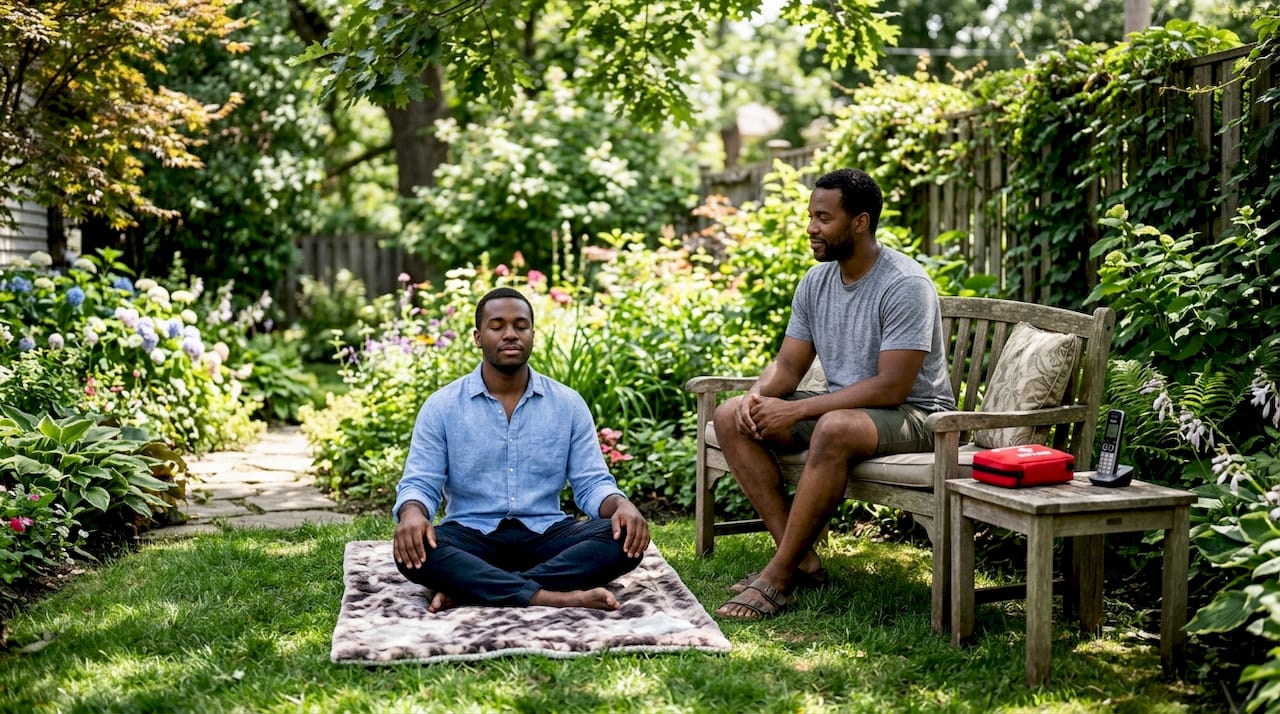
Physical safety is the most immediate mushroom trip sitter benefit. Psilocybin alters perception, coordination, and judgment, which creates real risks when no one is watching.
A sitter’s first job is preventing dangerous activities. Trip sitters supervise to stop people from driving, wandering outside, or navigating stairs without awareness. These are not hypothetical risks. Impaired spatial judgment during a moderate dose makes ordinary environments genuinely hazardous.
Before the session starts, a good sitter removes or secures hazards in the space. Sharp objects, open flames, and cluttered walkways all get addressed. Hydration, warmth, and physical comfort are monitored throughout.
Emergency readiness is non-negotiable. Emergency protocols for trip sitters include keeping a written list of all substances consumed, knowing the nearest emergency room, and calling 911 immediately for seizures, chest pain, or uncontrollable harmful behavior. A sitter who has this plan ready before the trip begins is the difference between a manageable situation and a crisis.
Pro Tip: Write the emergency protocol on paper and tape it somewhere visible in the room before the session starts. Do not rely on memory during a high-stress moment.
Key physical safety tasks a sitter handles:
- Locking or blocking access to car keys and exits to the street
- Monitoring breathing and skin color during peak intensity
- Keeping water and light snacks within easy reach
- Checking in verbally every 20–30 minutes without being intrusive
- Knowing when to call for professional help versus when to wait
2. How do trip sitters provide emotional and psychological support?
Emotional support is where a skilled sitter earns their role. Psilocybin surfaces buried emotions, unresolved memories, and intense psychological states. A sitter who stays calm under that pressure provides something no playlist or candle can replace.
A sitter’s emotional regulation acts as a “room nervous system,” calming the person in the experience and reducing panic during difficult moments. This is not a metaphor. Co-regulation is a documented psychological process where one person’s calm nervous system helps stabilize another’s. A sitter who is anxious, distracted, or emotionally reactive makes the experience harder, not easier.
“The sitter’s job is not to fix the experience. It is to hold the space so the experience can do its work. Presence without interference is the most powerful tool available.”
Grounding techniques a sitter uses include slow, audible breathing, gentle verbal reminders that the experience is temporary, and light physical contact like a hand on the shoulder if the person has consented to touch beforehand. The goal is reassurance, not redirection.
Difficult emotional experiences during a trip are not necessarily bad. Experienced sitters recognize the difference between emotional processing and a medical emergency. Crying, shaking, or expressing fear can all be part of a therapeutic breakthrough when supported correctly. Intervening too quickly or trying to “fix” the emotion cuts the process short.
A sober sitter’s presence also reduces pre-trip anxiety. A sober guide’s presence often reduces anxiety before the experience begins and fosters greater emotional surrender once it does. That surrender is where the most meaningful experiences happen.
3. What environmental management strategies do trip sitters use?
The setting of a psilocybin experience shapes its quality as much as the dose does. A skilled sitter manages the environment actively, not passively.
Reducing environmental friction is one of the most effective tools available. Disabling phone notifications, dimming lights, and preparing a calm corner in the room often prevents difficult moments from escalating more effectively than any verbal reassurance. The environment either works for the experience or against it.
Pro Tip: Prepare the space at least two hours before the session. Rushing setup right before the trip creates nervous energy that carries into the experience.
A well-prepared environment includes:
- Soft, adjustable lighting (lamps over overhead lights)
- A comfortable surface for lying down, such as a mattress or thick blankets on the floor
- Water, herbal tea, and light snacks within arm’s reach
- An eye mask and headphones for inward-focused phases
- A curated music playlist without jarring transitions or lyrics that might distract
- A designated “calm corner” with extra blankets if the main space feels overwhelming
| Setup Element | Purpose |
|---|---|
| Dimmed lighting | Reduces sensory overload during peak intensity |
| Calm corner | Provides a retreat space if the main area feels too stimulating |
| Silenced devices | Eliminates unexpected interruptions that can trigger anxiety |
| Prepared playlist | Guides emotional tone without requiring active management |
| Water and snacks | Supports physical comfort and grounding during afterglow |
Music deserves specific attention. A sitter who prepares a playlist with slow, instrumental tracks and avoids sudden tempo changes gives the experience a reliable emotional anchor. Silence is also valid, but having music ready as an option gives both the sitter and the person more control over the room’s emotional temperature.
4. What are the benefits for first-time or high-dose mushroom journeys?
First-time users and anyone taking a moderate to high dose benefit most from having a sitter present. The unpredictability of psilocybin at doses of 2–3.5 grams or more makes an attentive presence a genuine safety requirement, not a preference.
For first-timers, the biggest benefit is reduced anxiety before and during the experience. Not knowing what to expect is the primary source of pre-trip fear. A sitter who has experience, answers questions calmly, and stays physically present removes a significant portion of that fear. A sober guide’s presence reduces pre-trip anxiety and helps people surrender to the experience rather than resist it.
Harm reduction guidelines specifically recommend sitters for moderate to high doses because the margin for error shrinks as intensity increases. At higher doses, a person may lose the ability to communicate clearly, assess their own physical state, or remember that the experience is temporary. A sitter holds that awareness for them.
Key benefits for first-timers and high-dose sessions:
- Builds trust before the session through honest pre-trip conversation
- Provides a familiar, calm face during disorienting peak moments
- Monitors physical and emotional state when self-assessment becomes unreliable
- Prevents impulsive decisions made under the influence of altered perception
- Contributes to better outcomes in both clinical and personal settings
Professional facilitators influenced 13.6% of treatment outcomes in clinical psilocybin trials. That variance is significant in a clinical population where every other variable is controlled. In a home setting with fewer controls, the sitter’s impact is likely even larger. For more on psilocybin strain effects and how they interact with dose, Theelevatedremedies has a detailed breakdown worth reading before choosing your approach.
5. How does a trip sitter’s role extend beyond the immediate trip?
The trip sitter’s value does not end when the psilocybin wears off. The afterglow phase, which typically lasts several hours after peak intensity, still requires support. Judgment is still altered, emotions are close to the surface, and the person needs a calm, familiar presence nearby.
Providing a supportive after-trip space helps people process insights and stabilize after intense experiences. A sitter who stays through this phase and creates space for quiet reflection gives the experience a proper landing. Rushing someone back into normal life immediately after a high-dose session wastes much of the therapeutic potential.
Post-trip support a sitter can offer:
- Sitting quietly while the person integrates without forcing conversation
- Asking open-ended questions like “What are you noticing?” rather than “How do you feel?”
- Offering food, water, and a warm blanket as grounding tools
- Noting any themes or insights the person mentions for later reflection
- Checking in by phone or message the following day
Scheduled wellness check-ins or remote support can serve as a safety net that decreases pre-trip anxiety and enhances feelings of connection. The Fireside Project has documented this effect in their work on remote psychedelic support. Even a brief check-in call the next morning signals that the person is not alone in processing what they experienced. For a broader look at harm reduction in psychedelics, Theelevatedremedies covers the full framework in depth.
Key Takeaways
A trip sitter is the single most effective harm reduction tool available for moderate to high-dose psilocybin experiences, providing physical safety, emotional regulation, and post-trip integration support.
| Point | Details |
|---|---|
| Physical safety is primary | Sitters prevent dangerous activities and hold emergency protocols before the session begins. |
| Emotional regulation shapes outcomes | A calm sitter co-regulates the nervous system, reducing panic during difficult moments. |
| Environment matters as much as words | Reducing sensory friction through room setup often prevents escalation more effectively than verbal reassurance. |
| First-timers and high doses need sitters most | Research shows facilitator presence influences outcomes significantly at moderate to high doses. |
| Post-trip support extends the benefit | Afterglow companionship and next-day check-ins help people integrate insights safely. |
Why presence beats performance in trip sitting
The most common mistake new sitters make is believing their job is to do something. They prepare speeches, rehearse grounding scripts, and worry about what to say when things get intense. After spending time around psychedelic harm reduction communities and talking with experienced guides, the lesson is always the same: the sitter who does the least often helps the most.
The best trip sitters prioritize presence with minimal intervention, letting the experience unfold without distraction. That is genuinely hard to practice. Watching someone cry, shake, or express fear without jumping in to fix it requires real emotional discipline. But not all difficult moments require intervention. Many are intense emotional processing phases that lead directly to the breakthroughs people are seeking.
What I have found consistently is that environmental preparation does more work than most sitters expect. A well-arranged room, a good playlist, and a calm body language from the sitter create conditions where the experience can move freely. Verbal reassurance is a backup tool, not the primary one. New sitters who understand this stop trying to manage the experience and start trusting it. That shift makes them dramatically more effective. If you want to maintain your own calm as a sitter, some people find that CBD for stress relief before a session helps them stay grounded without impairing their ability to respond.
— Juiced
Mushroom products and resources at Theelevatedremedies
Theelevatedremedies supports safe, informed psilocybin use from the first question to the last check-in. Whether you are preparing for your first experience or refining your approach to higher doses, having quality products and reliable information makes a real difference.
At Theelevatedremedies, located at 1123 Broadway St in Ann Arbor, Michigan, you will find dried magic mushrooms, microdosing capsules, and mushroom chocolates sourced for consistency and quality. The team is available to answer questions about dosing, preparation, and safe use. For a deeper look at what psilocybin products are available and how they support a well-prepared experience, visit the mushroom product guide on the Theelevatedremedies website. Responsible preparation starts with knowing what you are working with.
FAQ
What does a mushroom trip sitter actually do?
A trip sitter stays sober, monitors physical and emotional wellbeing, manages the environment, and responds to emergencies during a psilocybin experience. Their presence reduces anxiety and prevents dangerous behavior without interfering with the experience itself.
When is a trip sitter most necessary?
A sitter is most necessary for first-time users and anyone taking a moderate to high dose of 2 grams or more. Research shows that facilitator presence significantly influences outcomes at these dose levels.
Does a trip sitter need to talk during the experience?
Minimal verbal interaction is usually better. The best sitters prioritize presence over performance, speaking only when reassurance is genuinely needed or when a physical safety issue arises.
Can a trip sitter help after the experience ends?
Yes. Post-trip support during the afterglow phase and follow-up check-ins the next day help people process insights and stabilize emotionally after intense sessions.
What qualifies someone to be a trip sitter?
A trip sitter does not need clinical training for personal use contexts, but they must be fully sober, emotionally stable, familiar with emergency protocols, and trusted by the person having the experience. Prior personal experience with psilocybin is helpful but not required.
Recommended
- Michigan mushrooms for wellness: Laws, benefits, and safe use – Elevated Remedies
- Top magic mushroom wellness tips for safe, effective use – Elevated Remedies
- Magic mushroom dosage guide: safe & effective use in Michigan – Elevated Remedies
- How to Place a Mushroom Order Safely in 2026 – Elevated Remedies