
TL;DR:
- The emotional effects of psilocybin depend more on dose, mindset, and setting than on strain genetics. Disrupting brain circuits with psilocybin allows for emotional breakthroughs and lasting changes in self-perception. Proper preparation, sourcing quality mushrooms, and integrating experiences enhance therapeutic outcomes and safety.
Psilocybin’s emotional effects are defined by the compound’s ability to disrupt rigid thought patterns and open new pathways for feeling, processing, and understanding. The emotional effects psilocybin strain breakdown you need starts here: strain genetics matter less than dose, mindset, and setting, but strain choice still shapes the intensity and tone of your experience. A 25mg psilocybin dose increases brain entropy and predicts higher emotional insight the following day, with improved well-being lasting up to a month. Understanding how different strains like Golden Teacher, Penis Envy, and Mazatapec interact with those core variables gives you a real advantage when planning a therapeutic or growth-oriented session.
How does psilocybin biologically affect emotions?
Psilocybin converts to psilocin in the body, which then binds to serotonin 5-HT2A receptors and disrupts the Default Mode Network. The Default Mode Network is the brain circuit responsible for self-referential thinking, rumination, and rigid emotional patterns. When it goes quiet, the brain gains flexibility to form new emotional connections and perspectives.

That flexibility is measurable. A UCSF study found that participants who received a single psilocybin dose performed better on cognitive flexibility tests a full month after dosing. That result tells you the emotional shift is not just a temporary high. It reflects a genuine reorganization of how the brain processes feeling and self-perception.
Clinical trials back this up with hard outcomes. A randomized trial with 35 participants found that psilocybin-assisted therapy reduced depressive symptoms by day 2, with significant improvements lasting beyond three months. The same trial reported that 6% of participants experienced persistent anxiety. That number is a reminder that psilocybin’s emotional power cuts both ways.
Pro Tip: A controlled setting with a trusted guide or sitter is not optional for therapeutic work. The biology is powerful, and the environment determines whether that power moves toward healing or distress.
The core takeaway from the neuroscience is this: primary emotional breakthroughs arise from disrupting rigid neural circuits, not from strain genetics alone. Strain selection refines the experience. It does not create the breakthrough by itself.
What are the emotional profiles of common psilocybin strains?
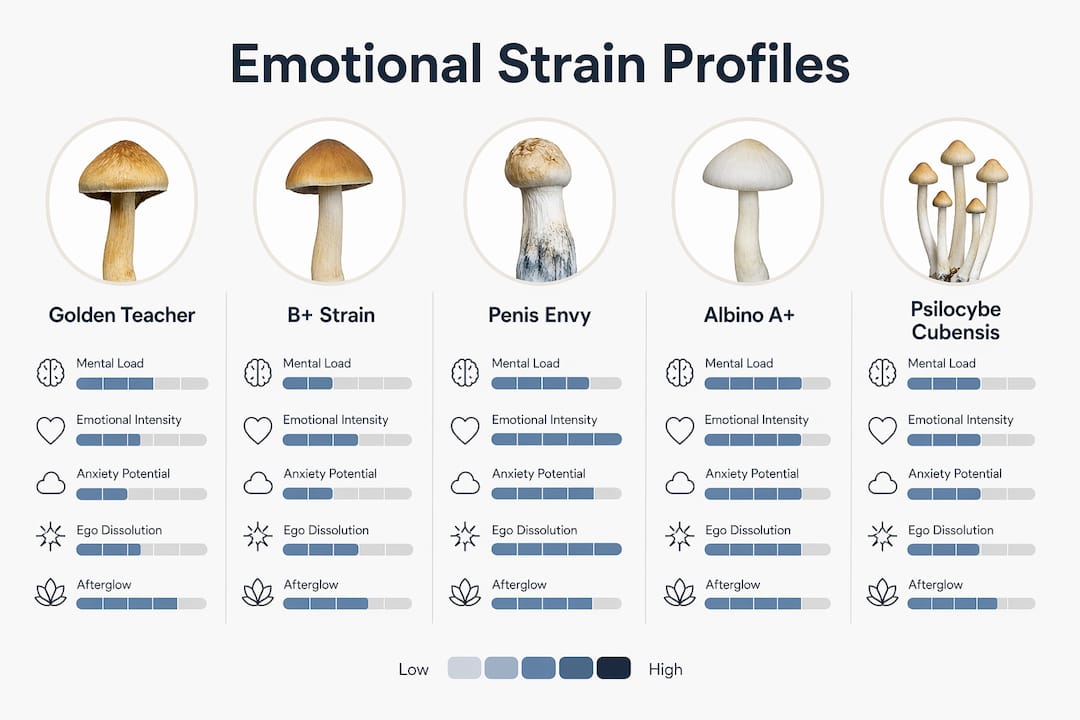
Psilocybin strain comparison starts with understanding that all common strains belong to the Psilocybe cubensis species and share the same core alkaloids: psilocybin and psilocin. What differs between strains is alkaloid concentration, which affects potency and, by extension, emotional intensity. Anecdotal reports from experienced users and growers add texture to those differences.
Here is how the most widely discussed strains break down by emotional character:
- Golden Teacher: Moderate potency. Widely regarded as the most consistent strain for introspective work. Experienced growers note that Golden Teacher’s moderate alkaloid concentration produces a lucid, teachable experience. Emotional effects lean toward clarity, gratitude, and gentle self-examination. This is the strain most favored in clinical and therapeutic contexts.
- Penis Envy: High potency. Emotional effects are more intense and less predictable. Users report deep ego dissolution, confrontational emotional processing, and profound empathy. Not recommended for first-time or low-tolerance users.
- Mazatapec: Low to moderate potency. Originates from Mexican ceremonial traditions. Emotional effects tend toward warmth, connection, and spiritual openness rather than intensity. A good fit for social or ceremonial settings.
- Amazonian: Moderate to high potency. Emotional effects include heightened sensory awareness and strong visual components alongside emotional amplification. Can feel overwhelming at higher doses.
- B+: Moderate potency. Known for producing positive, uplifting emotional states with less anxiety than higher-potency strains. Often described as forgiving for newer users.
| Strain | Potency level | Typical emotional tone | Best suited for |
|---|---|---|---|
| Golden Teacher | Moderate | Clarity, introspection, gratitude | Therapeutic work, beginners |
| Penis Envy | High | Intense, ego-dissolving, empathic | Experienced users, deep processing |
| Mazatapec | Low to moderate | Warmth, spiritual openness | Ceremonial, social settings |
| Amazonian | Moderate to high | Amplified emotion, sensory intensity | Experienced users |
| B+ | Moderate | Uplifting, positive, low anxiety | Newer users, lighter sessions |
One critical variable sits beneath all of this: growing conditions and batch variability produce substantial potency differences even within the same strain. A Golden Teacher grown in suboptimal conditions may deliver a fraction of the emotional depth of a well-cultivated batch. This means you cannot rely on strain name alone to predict your experience.
Pro Tip: When sourcing mushrooms, ask about cultivation practices and batch consistency. A reputable source will have this information. If they do not, that tells you something important.
For a deeper look at how psilocybin species compare in terms of effect and potency beyond strain-level differences, that context is worth reviewing before you make a selection.
How to prepare for an emotional psilocybin experience
Preparation is the single biggest variable you control before a session. The emotional experience psilocybin produces is shaped more by what you bring to it than by which strain you choose. A clear intention, a safe physical space, and a trusted support person form the foundation of any responsible session.
Follow this stepwise approach:
- Set a clear intention. Write it down. “I want to understand why I feel disconnected from people I love” is a useful intention. “I want to feel good” is not. Specific intentions give the experience direction when emotions get intense.
- Choose your setting deliberately. A private, comfortable space with minimal interruptions is non-negotiable. Familiar environments reduce the risk of anxiety escalating into panic.
- Select your dose conservatively. For Golden Teacher or B+, a starting dose of 1–2 grams of dried mushroom is appropriate for newer users. Penis Envy warrants a lower starting point due to higher potency per gram.
- Arrange a sitter or guide. This person does not need to take anything. Their job is to stay calm, offer reassurance, and call for help if needed.
- Plan your integration time. Block out the day after your session for rest and reflection. Journaling immediately after the experience captures insights before they fade.
“Set and setting are the most powerful predictors of whether a psilocybin experience produces lasting emotional benefit or lasting distress.” This principle, established in psychedelic research since the 1960s, holds up in every modern clinical trial.
Adjunct psychotherapy significantly enhances the interpretation and integration of psilocybin’s emotional effects, particularly for trauma recovery. The U.S. Department of Veterans Affairs has documented cases where combined treatment helped patients recover dissociated memories and build trauma tolerance. If you are working through significant emotional material, professional support is not a luxury.
Pro Tip: Avoid cannabis, alcohol, or other substances for at least 24 hours before a session. They alter baseline emotional state in ways that complicate the psilocybin experience.
Common emotional challenges during psilocybin experiences
Difficult emotional states during psilocybin sessions are normal and expected. They are not signs that something has gone wrong. The challenge is having the tools to move through them rather than resist them.
The most common emotional challenges include:
- Anxiety and paranoia: Often triggered by unfamiliar sensations or loss of control. The instinct to fight the experience makes it worse. Surrendering to the feeling, rather than resisting it, typically reduces intensity within minutes.
- Emotional overwhelm: Grief, shame, or fear can surface with unexpected force. This is often the therapeutic mechanism at work. Breathing slowly and reminding yourself that the feeling is temporary creates space to process rather than panic.
- Transient psychosis: Rare but documented. Medical experts caution that anxiety, paranoia, and persistent perceptual distortions can occur regardless of strain. A sitter who knows when to seek medical help is your safeguard.
- Persistent perceptual changes: A small percentage of people experience visual disturbances after the session ends. This is a known risk and a reason to approach dosing conservatively.
Grounding techniques work when emotions spike. Placing your feet flat on the floor, holding a cold object, or focusing on slow nasal breathing all activate the parasympathetic nervous system and reduce the intensity of emotional flooding.
Integration is where the real work happens. The emotional insights from a session need time and structure to become lasting change. Psychedelic integration practices give you a framework for processing what surfaced and translating it into behavioral shifts. Without integration, even a profound session fades into a memory rather than a turning point.
Pro Tip: Schedule a conversation with a therapist or integration coach within 72 hours of your session. That window is when emotional material is most accessible and most ready to be worked with.
For readers who want a thorough safety framework before any session, harm reduction in psychedelics covers the full spectrum of risk management practices.
Key takeaways
Strain genetics influence the tone of a psilocybin experience, but dose, mindset, and setting remain the primary drivers of emotional outcome.
| Point | Details |
|---|---|
| Biology drives breakthroughs | Psilocin disrupts the Default Mode Network, creating the window for emotional insight regardless of strain. |
| Strain affects tone, not outcome | Golden Teacher favors clarity and introspection; Penis Envy delivers intensity; B+ suits newer users seeking positive states. |
| Batch variability is real | Growing conditions shift potency within the same strain, making source quality as important as strain selection. |
| Preparation determines experience | Clear intention, safe setting, conservative dosing, and a sitter reduce risk and improve emotional outcomes. |
| Integration sustains the benefit | Emotional insights from psilocybin fade without structured reflection, journaling, or professional support afterward. |
What I’ve learned from watching people choose strains for emotional work
Most people walk in asking which strain will give them the emotional experience they want. That is the wrong question, and I say that with respect. After years of watching people approach psilocybin for personal growth and therapeutic purposes, the pattern is clear: the people who get the most from their sessions are the ones who spent the most time preparing, not the ones who sourced the most potent strain.
Golden Teacher earns its reputation for a reason. Its consistency makes it genuinely useful for emotional work, especially for people new to this territory. But I have seen people have profound, life-changing experiences on B+ and frustrating, anxiety-filled ones on Golden Teacher, simply because the set and setting were off. The strain did not save them or sink them. The preparation did.
Penis Envy is worth treating with real caution. The intensity it delivers is not inherently therapeutic. For someone processing grief or trauma, that level of emotional force without adequate support can be destabilizing rather than healing. High potency is not the same as high value.
The research from UCSF and the VA confirms what experienced practitioners have observed for decades. The emotional window psilocybin opens is real and measurable. What you do with that window, before, during, and after, is entirely up to you. Choose your strain thoughtfully. Prepare seriously. And do not skip integration.
— Juiced
Theelevatedremedies: your resource for psilocybin knowledge in Ann Arbor
Theelevatedremedies is Ann Arbor’s go-to destination for psilocybin products and honest guidance on how to use them well. Whether you are curious about dried mushrooms, microdosing capsules, or psilocybin chocolates for mental wellness, the team at Theelevatedremedies can point you toward the right product and the right information.
Theelevatedremedies carries a curated selection of psilocybin products sourced for quality and consistency, along with educational resources to help you approach each experience with intention. If you want to understand more about the full range of psychoactive mushroom varieties available, that is a good place to start. Stop by 1123 Broadway St in Ann Arbor or browse online to find what fits your goals.
FAQ
What is the most emotionally gentle psilocybin strain for beginners?
Golden Teacher is widely regarded as the most consistent strain for emotional work due to its moderate, predictable alkaloid concentration. B+ is another low-risk option that tends to produce positive, uplifting emotional states with less anxiety.
Does the strain determine the emotional outcome of a psilocybin session?
Strain influences emotional tone and intensity, but dose, mindset, and setting are the primary drivers of outcome. Research confirms that emotional breakthroughs arise from disrupting rigid neural circuits, a process that occurs across all Psilocybe cubensis strains.
How long do the emotional benefits of psilocybin last?
A single 25mg dose has been shown to improve well-being for 2–4 weeks post-session, with cognitive flexibility gains measurable a full month later. Structured integration practices extend those benefits further.
What should I do if I experience anxiety during a psilocybin session?
Focus on slow nasal breathing, place your feet flat on the floor, and remind yourself the feeling is temporary. Having a sitter present is the most reliable safeguard against anxiety escalating into a crisis.
Is professional support necessary for emotional psilocybin work?
Professional support is strongly recommended for anyone processing trauma or significant mental health challenges. Adjunct psychotherapy has been documented to improve interpretation and integration of psilocybin’s emotional effects, particularly for trauma recovery.