
TL;DR:
- Not all psychedelic mushroom strains have the same potency, chemistry, or effects, which significantly impacts user experience. Michigan users should distinguish between species and strains, focusing on alkaloid content rather than appearance or reputation to ensure safe dosing and legal awareness. Carefully sourcing, consistent testing, and following structured protocols are essential for safe microdosing and therapeutic use in areas with decriminalized cities.
Not all magic mushrooms hit the same. That’s the single most important truth behind psychedelic strains classification, and ignoring it leads to genuinely bad experiences. Whether you’re exploring microdosing for the first time or you’ve already run through a handful of strains, the difference between a Golden Teacher and a Penis Envy is not just a name. It’s potency, it’s chemistry, and it’s the gap between a gentle afternoon shift in perspective and something that rearranges your entire evening. Michigan users especially need this clarity, because navigating strain choices here means layering in both practical and legal awareness from the start.
Table of Contents
- Understanding psychedelic mushroom species and strains
- Classifying psychedelic strains by potency
- Legal landscape and safety considerations for psychedelic strains in Michigan
- Practical guide to choosing and using psychedelic strains in Michigan
- Why strain classification matters more than you think
- Explore trusted mushroom capsules and guides at Elevated Remedies
- Frequently asked questions
Key Takeaways
| Point | Details |
|---|---|
| Strain vs species | Strains are cultivated lineages within Psilocybe cubensis, not separate species. |
| Potency matters most | Psychoactive alkaloid concentration defines strain strength and affects dosing. |
| Michigan legal nuances | Local decriminalization exists but state law still prohibits possession. |
| Start with moderate strains | Beginners should use strains like Golden Teacher at low doses to safely build tolerance. |
| Track your experience | Journaling effects helps personalize safe and effective dosing protocols. |
Understanding psychedelic mushroom species and strains
Before anything else, you need to know that “species” and “strain” are not the same thing, and mixing them up creates real confusion when you’re trying to make informed choices.
A species is a biological classification. Psilocybe cubensis is the species. It’s a specific fungus with a distinct genetic profile, found across multiple continents and the backbone of nearly every cultivated magic mushroom you’ll encounter in Michigan. There are other psilocybin-containing species like Psilocybe semilanceata (liberty caps) or Psilocybe azurescens, but cubensis dominates the cultivation world because it’s forgiving to grow and responds well to controlled environments.
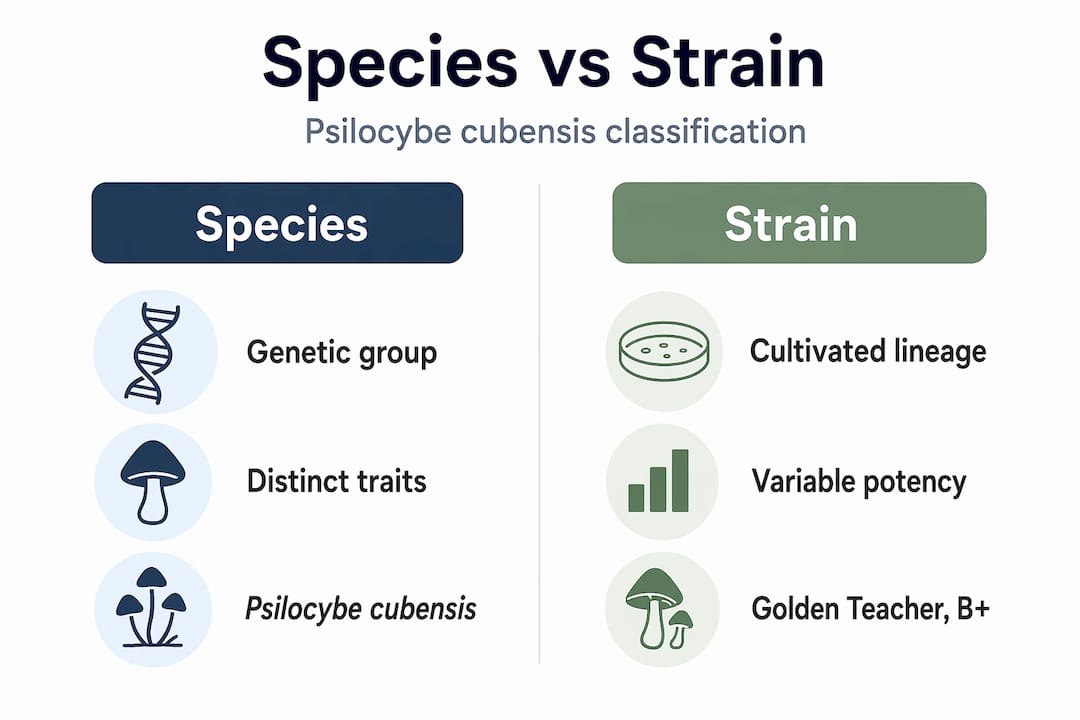
A strain is a different category entirely. As cultivated lineages within Psilocybe cubensis selected for growth traits, strains are not formal scientific categories. They’re lines passed down by growers who selected for specific traits: cap shape, colonization speed, resistance to contamination, and yes, potency. Think of strains like tomato varieties. A Roma and a beefsteak are both tomatoes. But they taste different, grow differently, and serve different purposes.
Here’s what strains typically vary by:
- Appearance: cap color, size, stem thickness, and bruising patterns (blue bruising indicates psilocybin oxidation)
- Growth behavior: how fast they colonize, how many flushes they produce
- Reported effects: some users describe strains as more visual, more body-heavy, or more cerebral
- Potency: the actual psilocybin and psilocin alkaloid content, which is where science draws the clearest line
That last point matters most. Potency depends on chemistry, not looks. A massive, impressive-looking mushroom can have lower alkaloid content than a smaller, scrawnily dense one from a high-potency strain. Understanding Michigan mushrooms wellness laws before you even start exploring strains is equally important, so let’s move into the chemistry side of this.
Classifying psychedelic strains by potency
This is the most useful classification framework available right now. Forget organizing strains by name or appearance alone. Potency is what actually tells you how much to take and what to expect.
The potency classifications for Psilocybe cubensis are based on total alkaloid content (psilocybin plus psilocin combined):
| Potency class | Total alkaloids | Example strains |
|---|---|---|
| Weak | Less than 0.5% | Some early Golden Teacher samples |
| Below average | 0.5 to 0.7% | B+ (typical batches) |
| Average | 0.7 to 1.0% | Golden Teacher, Amazonian |
| Above average | 1.0 to 1.25% | Albino A+, Blue Meanie |
| Very potent | Greater than 1.25% | Penis Envy, Tidal Wave |
What does this mean in practice? A dose of 1.5 grams of Golden Teacher at 0.8% total alkaloids delivers a very different experience than 1.5 grams of Penis Envy sitting at 1.5% or higher. The math adds up to nearly double the active content. Beginners microdosing with Golden Teacher or B+ strains at 0.5 to 1.2% potency start at 0.1 to 0.3 grams dried every three days, while experienced users choosing high-potency Penis Envy variants should use approximately half that weight.
Key things to keep in mind when using potency to guide your choices:
- Batch variation is real. Even the same strain from different grows can vary in potency by 20 to 30%.
- Drying method affects concentration. Properly dried mushrooms are 10x more potent by weight than fresh ones.
- Total alkaloids matter more than psilocybin alone, because psilocin converts more readily in the body.
- Visual cues like blue bruising confirm the presence of psilocybin but do not reliably indicate exact concentration.
Pro Tip: If you’re new to microdosing, start with a strain labeled average potency, take 0.1 grams, and wait a full week before adjusting. Patience at this stage saves you from calibrating under stress. Use our psilocybin dosage guide to anchor your protocol before your first dose.
Legal landscape and safety considerations for psychedelic strains in Michigan
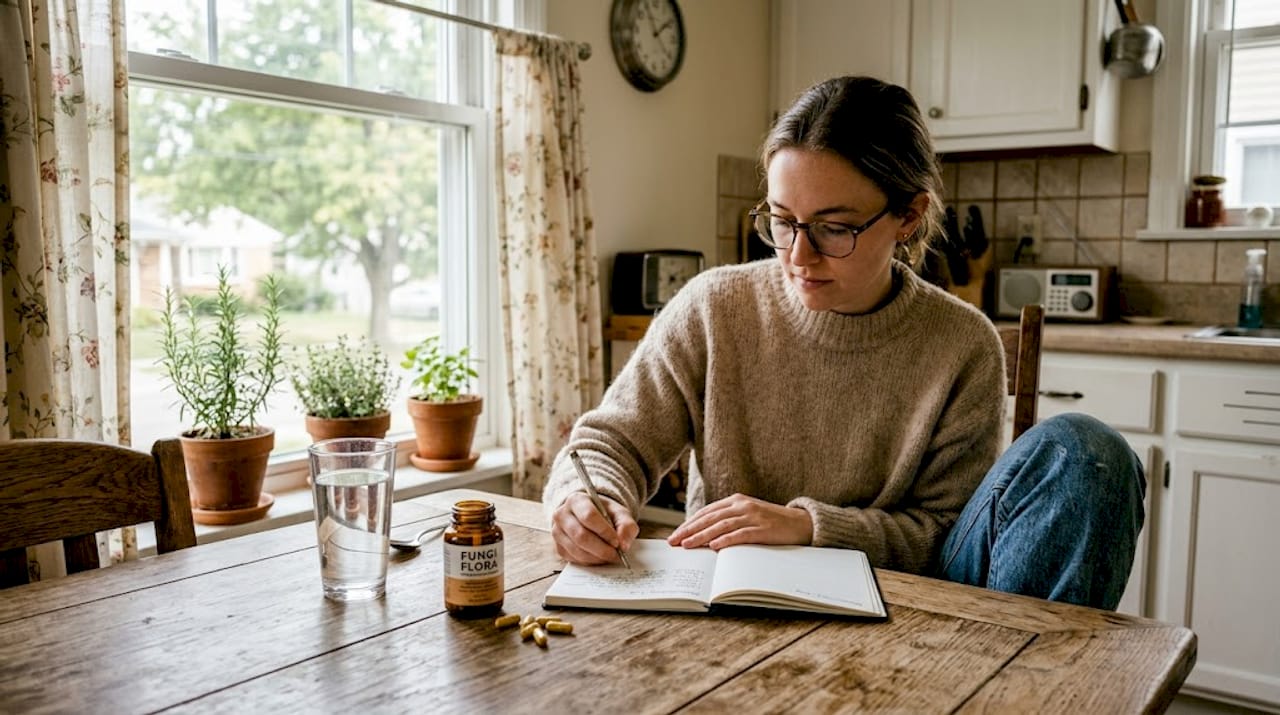
Knowing your strains means nothing if you’re not clear on the legal ground you’re standing on. Michigan’s situation is genuinely nuanced, and it rewards people who pay attention.
At the state level, psilocybin is still a Schedule I controlled substance under Michigan law. Possession, sale, and cultivation are technically illegal statewide. But the local picture is different: Ann Arbor, Detroit, Hazel Park, Jackson, and Grand Rapids have all decriminalized psilocybin mushrooms, designating enforcement as the lowest law enforcement priority. That’s meaningful. Arrests in these cities are rare. But it’s not the same as legal.
City decriminalization is not blanket protection. State police operate independently of city ordinances. If you’re traveling between cities in Michigan, what’s functionally tolerated in Ann Arbor may not apply elsewhere on that same drive.
That distinction shapes how smart users approach strain selection and sourcing. Here’s a practical safety checklist for Michigan microdosers:
- Know your city. Ann Arbor is the most established decriminalized zone in the state, with a long cultural history of tolerance.
- Source from trusted suppliers. Unknown sourcing means unknown potency, which makes safe dosing nearly impossible.
- Start low. Regardless of what a strain is labeled, treat every new batch as if it might be stronger than expected.
- Use a structured protocol. The Fadiman protocol, which involves dosing every three days and taking two days off, is the most widely referenced microdosing structure.
- Journal everything. Microdosers using protocols like Fadiman combined with mood journaling over four weeks see far cleaner data about their own sensitivity before they move up in dose or potency class.
For guidance on navigating psilocybin product safe use and on how to purchase psychedelic mushrooms safely in Michigan specifically, those resources are worth reviewing before you buy anything.
Practical guide to choosing and using psychedelic strains in Michigan
You now have the framework. Here’s how to actually apply it as a Michigan user, whether you’re microdosing for focus and mood support or exploring higher-dose experiences intentionally.
- Identify your experience level. First-time or early-stage users should default to moderate-potency strains. Golden Teacher and B+ are the most consistent entry points.
- Match strain to intention. Microdosing for productivity or mood? Stick to average potency (0.7 to 1%). Planning a full experience? You can consider above-average strains once you’ve established your baseline sensitivity.
- Calculate conservatively. Golden Teacher or B+ beginners start at 0.1 to 0.3 grams dried every three days. Experienced users exploring Penis Envy should cut their usual moderate-strain dose roughly in half.
- Use the Fadiman protocol as your starting framework. Dose on day one, skip days two and three, dose again on day four. Track mood, sleep, focus, and any side effects in a dedicated journal.
- Wait before escalating. Give any new strain or dose at least four cycles before drawing conclusions about its effects on you specifically.
- Reassess regularly. Sensitivity changes over time. What worked three months ago may feel different today.
Pro Tip: Keep your journal granular. “Felt good” tells you nothing useful. “Focused for three hours after dosing, slight visual distortion at 2 hours, back to baseline by hour five” gives you real data. Review our mushroom effects workflow for a structured tracking template that makes this easier. You can also cross-reference your experience against our psilocybin dosage guide as you adjust.
Why strain classification matters more than you think
Here’s the uncomfortable truth: most people choose mushroom strains the same way they pick avocados. They squeeze, look at the color, and guess. And then they’re surprised when the experience is nothing like the last time.
The psychedelic community has spent years building rich, detailed lore around strain names. “Penis Envy is the strongest.” “Golden Teacher is mellow and spiritual.” “B+ is a great all-rounder.” Some of that reputation is earned. A lot of it is repeated so often it’s become assumed fact. But strain potency, not appearance, determines effects, and the only thing that reliably guides safe dosing is alkaloid content measured in consistent, sourced batches.
This is where Michigan users have a real advantage if they choose to use it. Ann Arbor’s culture around psilocybin is unusually thoughtful. There’s genuine community knowledge here. But that culture only protects you if you’re making decisions based on chemistry rather than reputation. A Penis Envy mushroom from a humidity-stressed, undertended grow might test at 0.9%. A well-cultivated Tidal Wave batch might hit 2.2%. The names are the same. The experiences are not even close.
Batch-consistent, quality-verified sourcing is not a luxury. For anyone using psilocybin therapeutically or as part of a serious wellness practice, it’s the baseline requirement. The alternative is re-calibrating from scratch every time, which defeats the entire point of a structured protocol. Our psilocybin product guide walks through what quality sourcing looks like in practice and what questions to ask before you buy.
The broader classification conversation, whether you’re thinking about psychedelic strain types, psychedelic strain comparisons, or even how psychedelic cannabis classification compares in structure, all points to the same truth: the label on the bag is the starting point, not the finish line.
Explore trusted mushroom capsules and guides at Elevated Remedies
If you’ve worked through this guide and want to put the knowledge into practice, we’re here to help you take that next step with confidence. At Elevated Remedies, located at 1123 Broadway St in Ann Arbor, we carry mushroom capsules designed specifically for consistent, measurable microdosing. Every product we stock is selected for quality and consistency, which matters enormously when you’re trying to calibrate your dose against a specific strain’s potency.
Our team understands both the science and the practical reality of being a Michigan user in 2026. We carry educational resources alongside our products, including access to our psilocybin dosage guide and our safe use guide, so you’re never left guessing. Whether you’re a first-time microdosers or a seasoned user looking for reliable sourcing, come in and talk to us. Getting this right starts with knowing what you’re working with.
Frequently asked questions
What is the difference between a psychedelic mushroom species and a strain?
A species is a distinct biological group like Psilocybe cubensis, while a strain is a cultivated lineage within that species, selected and passed down by growers for specific growth traits and potency characteristics.
Are psychedelic mushrooms legal in Michigan?
Psilocybin mushrooms remain Schedule I under Michigan state law, but cities including Ann Arbor and Detroit have decriminalized them to lowest enforcement priority, which significantly reduces local arrest risk.
Which mushroom strains are best for beginners microdosing?
Golden Teacher and B+ are the top choices for beginners, offering moderate potency and predictable effects. Beginners start with 0.1 to 0.3 grams dried every three days using the Fadiman protocol.
How does strain potency affect dosing?
Higher-potency strains like Penis Envy contain roughly 1.5 to 2x the alkaloid content of moderate strains, meaning you need significantly less by weight to reach the same effect level.
What safety practices are important for Michigan microdosers?
Follow a structured low-dose protocol, journal mood and effects consistently over four weeks, understand your city’s decriminalization status, and always start with moderate-potency strains before moving higher.
Recommended
- Magic mushroom dosage guide: safe & effective use in Michigan – Elevated Remedies
- Magic mushroom strains: Effects, potency & top picks – Elevated Remedies
- Magic mushroom terms explained: Michigan guide 2026 – Elevated Remedies
- How to purchase psychedelic mushrooms safely in Michigan – Elevated Remedies