
TL;DR:
- Infused pre-rolls combine ground cannabis flower with concentrates, often testing at higher THC levels than regular joints. They are designed for experienced users seeking concentrate-level effects without additional equipment and vary in potency, flavor, and price depending on the concentrate type. Careful dosing, checking lab reports, and proper storage are essential for safe and effective consumption.
An infused pre-roll is a cannabis joint that combines ground flower with one or more added concentrates, either blended inside, coated on the outside, or both. The result is a product that typically tests at higher total THC than standard flower-only joints. That gap matters. Infused pre-rolls are built for experienced, high-tolerance consumers who want concentrate-level effects without a dab rig. If you’re new to cannabis or have a low tolerance, start with a regular pre-roll first and always check the lab Certificate of Analysis (COA) for exact THC percentages before you buy.
Table of Contents
- What are infused pre-rolls, and what concentrates go inside?
- How are infused pre-rolls made?
- What types of infused pre-rolls can you buy, and what should you expect?
- How do you dose an infused pre-roll safely?
- How do you choose a quality infused pre-roll?
- Are infused pre-rolls worth it? Pros, cons, and who should buy them
- How fast is the infused pre-roll market growing?
- Key Takeaways
- A note from Theelevatedremedies on getting the most from infused pre-rolls
- Useful sources
What are infused pre-rolls, and what concentrates go inside?
The concentrate is what separates an infused pre-roll from everything else on the shelf. Producers choose from a range of extracts, and each one changes the experience in a distinct way. Here’s a breakdown of the major types:
| Concentrate | How It’s Applied | Potency Contribution | Terpene Retention | Burn Behavior |
|---|---|---|---|---|
| Kief | Dusted on exterior | Moderate uplift | Low–moderate | Even, smooth |
| Hash | Mixed into ground flower | Moderate–high | Moderate | Slightly slower |
| Distillate | Painted on paper or inside | High | Very low | Can run hot |
| Live Resin | Inside or outside coating | High | Very high | Smooth |
| Rosin | Inside or outside coating | High | Very high | Smooth |
| THCa/THC Diamonds | Mixed inside or dusted on | Very high | Low (pure crystal) | Burns hot |
| Sauce/Wax/Crumble | Outside coating or inside | High | Moderate–high | Can be uneven |
| Moon Rocks | Whole nug coated in oil, then kief | Extremely high | Moderate | Slow, dense |
Kief is the most accessible option. It’s the powdery trichome residue sifted from dried flower, and dusting it on the outside of a joint is one of the simplest ways to add potency without dramatically changing the flavor. Hash, which is compressed kief or extracted resin, mixes better inside the ground flower where it distributes evenly without tearing the paper.
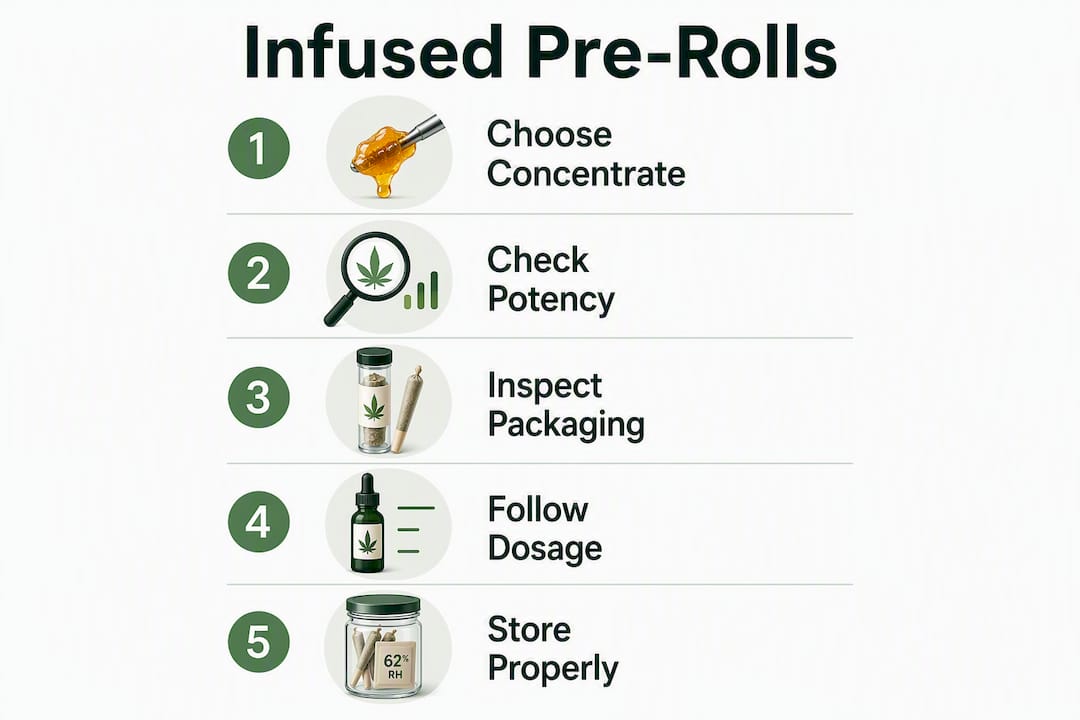
Distillate is a highly refined oil that’s nearly odorless and tasteless on its own. Producers use it because it’s cheap, shelf-stable, and easy to apply at scale. The tradeoff is terpene loss: distillate strips out most of the aromatic compounds that give a strain its character. Live resin and rosin preserve a much broader terpene spectrum, which is why enthusiasts who care about flavor and strain accuracy pay more for them.
THCa diamonds are nearly pure crystalline THCa, the acidic precursor to THC that converts on combustion. They add serious potency with minimal flavor contribution. Moon rocks take a different approach entirely: a whole cannabis nug gets dipped in oil and then rolled in kief, producing something closer to a concentrated flower bomb than a standard joint.
How are infused pre-rolls made?
Infusion methods fall into three categories: internal, external, and hybrid. Internal infusion means the concentrate is blended directly with the ground flower before rolling, or piped into the center of an already-rolled joint. External infusion means the paper is painted with oil and the outside is dusted with kief or another dry concentrate. Hybrid does both.

The method isn’t just a production detail. It directly affects how the joint burns and how the effects build. An externally coated joint tends to deliver a front-loaded hit as the coating combusts first. An internally infused joint burns more gradually, with effects that build through the session.
Here’s how a commercial producer typically assembles one:
- Flower selection. High-quality, properly cured flower is ground to a consistent texture. Trim or shake is common in budget products; whole-flower grind is the mark of a premium product.
- Concentrate dosing. The chosen extract is weighed precisely. At scale, this requires temperature-controlled dosing equipment to prevent concentrate from seeping through the paper or pooling unevenly.
- Rolling or lining. For internal infusion, concentrate is layered with the ground flower or injected into the center. For external, the paper is coated first, then the joint is rolled.
- Exterior coating. If kief or diamond dust is used on the outside, the freshly rolled joint is rolled across the coating material while the oil is still tacky.
- Quality control and packaging. Each joint is weighed, inspected for consistency, and sealed in airtight packaging with a COA lot number.
Pro Tip: Softer extracts like live resin sauce or wax adhere evenly to the outside of a joint. Harder concentrates like hash or THCa diamonds mix better inside the ground flower — they won’t clump or tear the paper the way a sticky wax would.
Consistent dosing at scale is genuinely difficult. Temperature fluctuations cause concentrates to thin out or seize up, which throws off the THC per joint. That production cost is a real reason why well-made infused pre-rolls cost more than their flower-only counterparts.
What types of infused pre-rolls can you buy, and what should you expect?
The market has settled into a few recognizable product categories, each with its own potency range, flavor profile, and price point.
| Product Type | Typical Total THC | Flavor Profile | Burn Quality | Price Range | Best For |
|---|---|---|---|---|---|
| Regular pre-roll | 15–30% | Strain-dependent | Even | $8–$15 | Beginners, casual users |
| Kief-dusted | 30–50%+ | Mild enhancement | Smooth | $15–$22 | Moderate–experienced users |
| Oil-infused (distillate) | 30–50%+ | Neutral/flat | Can run hot | $15–$25 | Potency-focused users |
| Live resin / rosin infused | 30–50%+ | Rich, strain-accurate | Smooth | $20–$35+ | Flavor-focused enthusiasts |
| Diamond-dusted | — | Clean, intense | Burns hot | $25–$35+ | High-tolerance users |
| Moon rocks | 50%+ | Complex, dense | Slow, heavy | $25–$40+ | Very experienced users |
Market note: Infused pre-rolls have grown significantly as a share of total U.S. pre-roll sales over recent years, making them one of the fastest-growing segments in the cannabis market.
Premium infusion choices like live resin and rosin justify higher prices through terpene preservation. Distillate-infused products are cheaper to produce and often cheaper at retail, but the flavor is noticeably flatter. If you’re spending $25 on a single joint, the terpene panel on the COA should show you what you’re actually paying for.
Price-per-mg THC math: A $20 infused pre-roll at 40% THC in a 1g joint contains roughly 400mg of total THC. A $12 regular pre-roll at 20% THC contains roughly 200mg. The infused option costs 67% more but delivers twice the cannabinoid density, which works out to a better cost-per-mg for heavy consumers who would otherwise smoke two standard joints to reach the same effect.
How do you dose an infused pre-roll safely?
The single biggest mistake with infused pre-rolls is treating them like a regular joint. They’re not. The effects can arrive faster and hit harder, and overconsumption is easy when you’re used to standard flower.
Signs of overconsumption include rapid heart rate, anxiety or paranoia, dizziness, nausea, and feeling disconnected or disoriented. These effects are temporary and not life-threatening for most healthy adults, but they’re genuinely unpleasant. If they happen, move to a calm space, stay hydrated, and wait it out.
Dosing note: Research on high-potency cannabis products consistently links elevated THC concentrations to increased risk of adverse effects, particularly anxiety and acute psychosis in susceptible individuals. Yale Medicine notes that rising THC concentrations in modern cannabis products pose real health risks that weren’t present with lower-potency products of earlier decades.
Follow these steps when trying an infused pre-roll for the first time:
- Read the COA first. Know the total THC percentage before you light up. A 50% THC joint is not the same experience as a 20% one.
- Take one or two puffs, then stop. Wait at least 10–15 minutes before deciding whether to continue. Concentrate effects can take longer to peak than you expect.
- Use a smaller portion. Split the joint with a friend or smoke half and save the rest. Infused pre-rolls don’t need to be finished in one session.
- Slow your draw. A slow, steady pull prevents the joint from burning too hot and reduces harshness from the concentrate.
- Choose the right setting. High-potency products are best in a comfortable, familiar environment, especially if it’s your first time with a particular product.
New users, people with low THC tolerance, pregnant individuals, and anyone on medications that interact with cannabis should avoid infused pre-rolls entirely or consult a healthcare provider first. Cannabis laws and product regulations vary significantly by U.S. state; always verify what’s legal and available in your jurisdiction before purchasing.
This article is general information, not medical or legal advice. Confirm current rules with your state’s cannabis authority or a qualified professional.
How do you choose a quality infused pre-roll?
Most of the work happens before you buy. A well-labeled, properly tested infused pre-roll tells you everything you need to know on the packaging and COA. Here’s what to check:
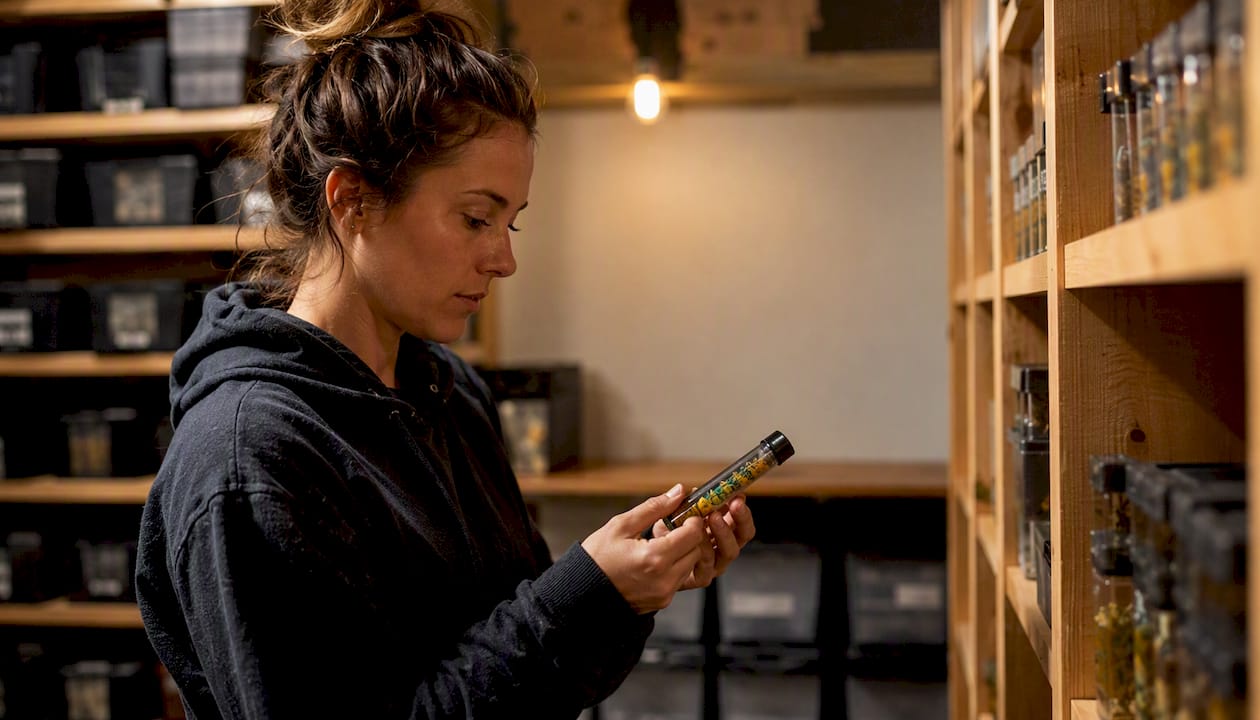
Lab COA checks Look for total THC percentage, a full cannabinoid panel (CBD, CBG, CBN), a terpene report, and residual solvent results if the concentrate is solvent-extracted (distillate, live resin, wax). A missing terpene panel on a “live resin infused” product is a red flag.
Packaging cues Sealed, airtight packaging with a manufacturing date and lot number is the baseline. Strain name, concentrate type, and dose per joint should all be printed clearly. If the label just says “infused” with no specifics on the concentrate, that’s a sign the producer isn’t proud of what’s inside.
Price-per-mg THC Use the math from the section above. A higher sticker price doesn’t always mean better value. A $35 diamond-dusted joint at 55% THC in 1g delivers roughly 550mg of THC. A $20 live resin joint at 40% delivers 400mg. Whether the extra 150mg justifies $15 depends on your tolerance and how much you value terpene complexity.
Practical checks Look for storage instructions on the label (cool, dark, and dry is standard). Multi-packs from the same lot number are more reliable for consistency than single-pack purchases from different batches. If you’re buying online, check for product listings that include full cannabinoid and terpene data before adding to cart.
Pro Tip: Store infused pre-rolls in an airtight container away from heat and light. Concentrates degrade faster than flower when exposed to air and UV, and a poorly stored infused pre-roll loses both potency and flavor faster than a standard joint.
Are infused pre-rolls worth it? Pros, cons, and who should buy them
The honest answer is: it depends entirely on your tolerance and what you’re trying to accomplish.
Pros:
- Concentrate-level potency without needing a dab rig or any extra equipment
- Better cost-per-mg THC for heavy consumers compared to smoking multiple standard joints
- Premium infusion types (live resin, rosin) deliver richer, more strain-accurate flavor than flower alone
- Convenient, pre-dosed, and portable
Cons:
- Higher upfront cost per joint ($15–$35+ vs $8–$15 for regular)
- Stronger effects mean a higher risk of overconsumption for anyone not accustomed to concentrate-level THC
- Some infusion types (distillate, diamonds) can burn unevenly or run hot if the joint is packed poorly
- Quality varies widely across brands; a cheap infused pre-roll with low-grade trim and flavorless distillate is not a good product at any price
For beginners, a standard pre-roll is the right starting point. For occasional users who want something special for a specific occasion, a kief-dusted or live resin option at the lower end of the potency range is a reasonable step up. Regular and heavy users get the most value here, particularly from multi-packs where the per-joint price drops and consistency across the batch is easier to verify. Medical users should consult their provider before moving to infused products, given the significant potency increase.
The best buying scenario for infused pre-rolls is when you can pair a specific strain with a terpene-rich extract like live resin or rosin. That combination gives you the full entourage effect: the flower’s cannabinoid profile amplified by a concentrate that actually preserves the plant’s aromatic character.
How fast is the infused pre-roll market growing?
The numbers tell a clear story. Infused pre-rolls grew from under 5% to over 25% of total U.S. pre-roll sales between 2020 and 2024, a shift that has pushed every major dispensary to stock multiple infusion types at different price points.
Market share: Infused pre-rolls went from a niche product to roughly one in four pre-rolls sold in the U.S. in under five years.
That growth has driven retail segmentation. Entry-level kief-dusted joints now sit at the $15–$22 range, while premium diamond-dusted or multi-extract products push $35 and above. The middle tier, live resin and rosin infused, has become the most competitive segment because it balances flavor and potency at a price point most experienced consumers will pay.
Consistent quality at scale remains the production challenge. Dosing equipment and temperature control are non-negotiable for brands producing thousands of joints per run. That infrastructure cost is baked into the retail price of every well-made infused pre-roll you buy.
Key Takeaways
Infused pre-rolls combine ground flower with one or more concentrates to deliver 30–50%+ THC, roughly double the potency of standard pre-rolls, making COA verification and careful dosing non-negotiable before you light one up.
| Point | Details |
|---|---|
| Definition and potency | Flower plus concentrate; typically 30–50%+ THC vs 15–30% for standard pre-rolls. |
| Concentrate type matters | Live resin and rosin preserve terpenes; distillate adds potency with minimal flavor. |
| Dose carefully | Take 1–2 puffs, wait 15 minutes, and never treat an infused pre-roll like a standard joint. |
| Check the COA | Verify total THC, cannabinoid panel, terpene report, and residual solvents before buying. |
| Store correctly | Airtight, cool, and dark storage preserves both potency and terpene quality. |
A note from Theelevatedremedies on getting the most from infused pre-rolls
The conversation around infused pre-rolls has shifted fast. A few years ago, they were a novelty. Now they’re a significant part of what experienced consumers reach for when they want something more than a standard joint can deliver. What hasn’t changed is how often people underestimate them.
The concentrate type is the detail most buyers overlook. A distillate-infused pre-roll and a live resin-infused pre-roll can sit at similar price points and similar THC percentages, but the experience is genuinely different. Distillate is clean and potent; live resin is potent and flavorful in a way that actually reflects the strain. If you’re spending real money on an infused pre-roll, the terpene panel on the COA is the one number worth reading before the THC percentage.
One accessory worth adding to your routine: a glass-tipped pre-roll holder or a small airtight storage tube. Infused joints are denser and burn differently than standard ones. A glass tip keeps the draw consistent and prevents the concentrate-heavy end from collapsing. A storage tube with a humidity pack keeps a half-smoked joint fresh without the concentrate drying out or the paper going stale. At Theelevatedremedies, we stock both alongside our full range of smoke shop accessories for exactly this reason. Small details, real difference.
Useful sources
The facts in this article draw from the following sources. When evaluating any infused pre-roll, the COA is your primary document: look for it on the dispensary menu, the brand’s website, or printed on the product packaging as a QR code or lot number.
- Weedmaps: Infused Pre-Rolls Guide — covers infusion methods and concentrate types
- Custom Cones USA: 2026 State of the Pre-Roll Market Report — market share and sales growth data
- Aventus8: How Many mg of THC Are in a Pre-Roll? — THC percentage ranges for flower and infused products
- Vape-Jet: Pre-Roll Infusion Technology — manufacturing equipment and dosing consistency
- Yale Medicine: Rising THC Concentrations in Cannabis — health risks associated with high-potency cannabis
- CannabisGlossary.org: Infused Pre-Roll — concise definition and market context
- Jungle Kingdom Flower: What Are Infused Pre-Rolls and Are They Worth It? — retail pricing and premium infusion value
Recommended
- The Role of Potency in Microdosing: What You Need to Know – Elevated Remedies
- Smoke shop accessories that actually improve your wellness – Elevated Remedies
- Preparing for a High Potency Mushroom Experience – Elevated Remedies
- Why Compare Mushroom Strains? Potency, Safety & Results – Elevated Remedies