
Yes, investing in artist-signed functional glass is worth it for most smokers and collectors, though the reasons differ depending on how you plan to use the piece.
- Performance: Artist-made borosilicate rigs and bongs are engineered for smoother draws, better filtration, and longer daily-use life than mass-market imports.
- Provenance and collectibility: A signed piece with documented provenance can hold or grow in value as the artist’s reputation builds, especially limited-run or drop-series work.
- Where to start: Inspect pieces in person at a vetted shop like Theelevatedremedies in Ann Arbor, or request provenance documentation and a drag-test video before buying online.
If you’re a daily user, the engineering case alone justifies the price. If you’re a collector, provenance is what separates a display piece from a depreciating purchase.
Key Takeaways
Artist-signed functional glass is worth buying when you prioritize engineering quality first and treat provenance as the foundation of any collectibility claim.
| Point | Details |
|---|---|
| Engineering over aesthetics | Thickness, annealing, and weld quality predict daily satisfaction better than visual complexity alone. |
| Provenance is non-negotiable | A signature without documentation is unverifiable; always request a certificate or provenance paperwork. |
| Price reflects rarity and reputation | Entry-level signed pieces run $150–$400; limited-run artist work starts around $1,500 and up. |
| Maintenance protects value | Regular isopropyl cleaning and proper storage preserve both function and resale condition. |
| Theelevatedremedies | Ann Arbor’s vetted source for signed pieces with in-store inspection, provenance checks, and accessory matching. |
Table of Contents
- What “signature glass” actually means in this guide
- Why smokers and collectors buy artist-signed pieces
- How to evaluate a signature glass piece before you buy
- Price ranges, what drives them, and realistic resale expectations
- How to clean and store signature glass to protect its value
- Where to buy and what to ask before you commit
- A note from the team at Theelevatedremedies
- Theelevatedremedies carries signed glass you can inspect before you buy
- Sources
What “signature glass” actually means in this guide
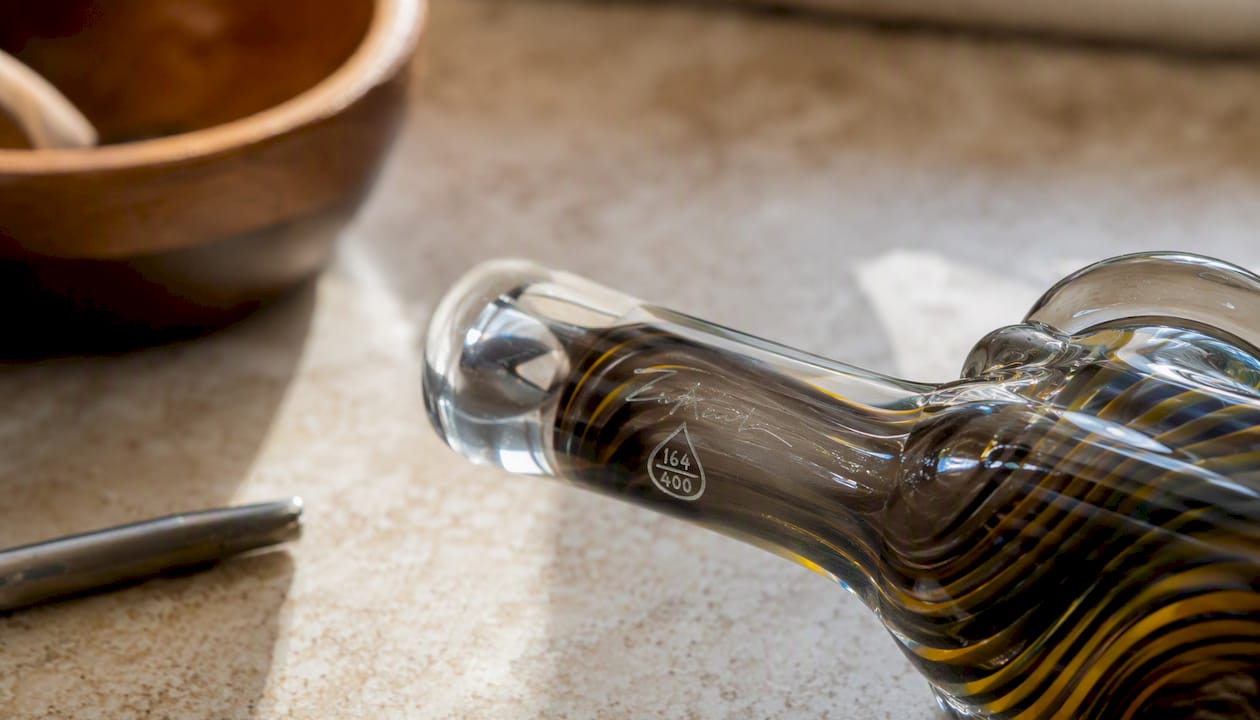
Not all signed glass is the same thing. Here, “signature glass” means artist-signed, hand-worked functional smoking glass: bongs, dab rigs, and water pipes made to be used, not just displayed. These pieces are sold with the artist’s signature etched, sandblasted, or engraved directly into the glass, often alongside a year stamp, a drop-series label, or a certificate of authenticity.
This guide does not cover Murano decorative glass, nonfunctional studio art glass, or generic soft-glass imports with a printed logo. That’s a different market with different buyers. The cultural shift toward treating functional glass as fine art is specifically about American borosilicate pieces made by named artists whose work can be traced and verified.
Common maker signals to look for: a sandblasted or acid-etched signature on the base or neck, a numbered drop (e.g., “3/20”), a year stamp, and paperwork from the shop or artist confirming origin.
Why smokers and collectors buy artist-signed pieces
-
Superior engineering and airflow. Artist-made pieces are built around function. Percolator designs on quality rigs balance drag and filtration through precise weld spacing and multi-slit or showerhead geometries. The result is a noticeably smoother draw compared to mass-produced alternatives. Engineering metrics like wall thickness, kiln annealing, and reinforced welds are the real reason to pay more for daily use.
-
Durable American borosilicate. Borosilicate glass handles thermal shock far better than soft glass. A well-annealed piece won’t crack from a cold rinse after a hot session. For daily users, that durability translates directly into years of reliable use.
-
Unique aesthetics you won’t find twice. Hand-worked glass means no two pieces are identical. Fuming, color work, sculpted accents, and custom percolator shapes give each piece a visual identity that mass production can’t replicate.
-
Provenance and artist recognition. Limited-edition or artist-made American pieces tend to hold or appreciate in value when the artist’s reputation grows. The signature and provenance paperwork are what make that appreciation traceable and verifiable.
-
Scarcity from limited drops. Many respected glass artists release work in numbered series. Once a drop sells out, secondary-market demand is driven by the artist’s story and reputation as much as the visual complexity of the piece.
-
Social and experiential value. Among collectors, a signed piece is a conversation starter and a statement of taste. The experience of using a well-made rig is genuinely different from a $40 import.
Pro Tip: If you plan to use the piece daily, weight your decision toward engineering metrics first: thickness, annealing, and weld quality. If you’re buying primarily to collect or display, shift your focus to provenance, artist reputation, and drop scarcity.
How to evaluate a signature glass piece before you buy
In-store checklist
- Material: Confirm American borosilicate, not soft glass. Ask the seller directly.
- Wall thickness: Thicker walls (typically 5mm or more on quality pieces) resist breakage and feel substantial in hand.
- Kiln annealing: Ask whether the piece was properly annealed. Unannealed glass holds internal stress that causes cracking over time.
- Weld quality: Look at every joint and connection point. Clean, smooth welds with no visible bubbling or stress lines indicate skilled work.
- Joint sizes: Confirm 14mm or 18mm joint compatibility with your existing accessories.
- Percolator drag test: Cover the carb or joint and draw gently. Resistance should feel smooth and consistent, not labored.
- Symmetry and mouthpiece comfort: Asymmetry in the neck or base often signals rushed work. The mouthpiece should feel natural.
Online verification flow
Request a photo package before committing: a close-up of the signature, weld shots at every joint, a clear percolator view, and base/underside images. For pieces over $300, ask for a short video demonstrating a water-level draw test. Understanding how artwork is applied matters too: real 3D clay sculpting has physical depth you can see in angled photos; printed decals lie flat and peel.
Red flags to walk away from: sloppy or bubbled welds, visible stress lines or micro-cracks, a signature that looks painted on rather than etched, no provenance paperwork, and any sign of aftermarket repairs (mismatched glass color at a joint, uneven thickness near a break point).
Pro Tip: Ask for serial-numbered photos — a seller who photographs a specific piece with your name on a card next to it is confirming you’re seeing the actual item, not a stock image.
For a deeper look at evaluation techniques, Theelevatedremedies’s glass pipe artistry guide covers techniques and quality markers in detail.
Price ranges, what drives them, and realistic resale expectations
Top glass artists can command prices from a few thousand dollars to much higher amounts, and many collectors actively use even their most expensive pieces. The price tiers above reflect the realistic range for most buyers at vetted smoke shops.
What drives price upward:
- Artist reputation and demand in the collector community
- Technique complexity (worked color, sculpted elements, multi-chamber percolation)
- Material and engineering quality (thick borosilicate, precision joints)
- Rarity: numbered drops or one-of-a-kind commissions
- Condition and completeness of provenance documentation
Resale reality: Mid-tier and high-end pieces from artists with growing reputations tend to hold value or appreciate slowly over several years. Entry-level signed pieces are less likely to appreciate significantly. Market demand for any individual artist is niche, so liquidity is limited. Buy a piece you’d be happy to keep and use; treat any appreciation as a bonus, not a guarantee.
How to clean and store signature glass to protect its value
Cleaning steps
- Rinse with warm water after every session to prevent resin buildup.
- For deeper cleaning, soak in isopropyl alcohol (91% or higher) with coarse salt; shake gently and rinse thoroughly.
- Avoid abrasive scrubbers on fumed or sculpted surfaces. A soft bottle brush handles the interior.
- Ultrasonic cleaners work well for plain borosilicate but can loosen clay-applied 3D elements or delicate surface treatments. Check with the artist or seller before using one.
- Always air-dry completely before storage. Trapped moisture accelerates residue buildup.
Follow the full procedure in Theelevatedremedies’s step-by-step bong cleaning guide to keep both function and finish intact.
Storage and documentation
- Store in a padded case or on a stable, padded surface away from table edges and heat sources.
- For high-value pieces, photograph the piece from multiple angles at the time of purchase and keep those images with your receipt and any certificate of authenticity.
- Maintain a provenance file: purchase receipt, artist certificate, any email correspondence confirming origin, and photos showing the signature clearly.
- For pieces over $1,000, consider adding them to a renters’ or homeowners’ insurance rider.
Pro Tip: Never use acetone or bleach on artist-applied surface treatments. Isopropyl alcohol is the safe standard. If the piece has fumed color work or applied clay elements, rinse with warm water first and limit alcohol contact to the interior.
Where to buy and what to ask before you commit
Recommended channels: Vetted brick-and-mortar smoke shops with knowledgeable staff are the most reliable option because you can inspect the piece in hand. Curated online shops that provide full provenance documentation and video verification are a solid second. Artist drops through verified artist accounts can yield exceptional pieces, but require careful vetting since there’s no shop intermediary.
Questions to ask any seller:
- Can you provide a certificate of authenticity or provenance documentation?
- Was this piece kiln-annealed after fabrication?
- What is the wall thickness and joint size?
- Is there a return or repair policy if the piece arrives damaged?
- Does shipping include insurance for the full purchase value?
- Can I see a close-up of the signature and a draw-test video?
In-person steps: Ask to hold the piece, perform a draw test with water, check that your slide fits the joint cleanly, and review any paperwork before paying. Matching the right slide and percolator setup to a signed piece also affects the daily experience, so ask the staff about accessory compatibility. If you’re pairing a dab rig with concentrates, understanding how concentrate processing affects your setup helps you choose the right piece for your use case.
Theelevatedremedies at 1123 Broadway St in Ann Arbor carries signed pieces across multiple price tiers and can walk you through provenance documentation, in-store inspection, and accessory matching on the spot.
A note from the team at Theelevatedremedies
We’ve handled a lot of glass, and the pieces that hold up, in daily use and in collector value, are the ones where the artist put the engineering first and the artistry second. A beautiful piece that draws poorly is a disappointment every time you use it. We stock signed work specifically because we’ve seen what well-made functional glass does for the experience over months and years of use. When you come in, we’ll show you the signature, walk you through the provenance, and make sure the accessories match. If you’re buying remotely, reach out and we’ll put together a full photo and video package before you commit.
Theelevatedremedies carries signed glass you can inspect before you buy
Buying a signed piece without seeing it is a real risk. Theelevatedremedies gives you a better option: come into the Ann Arbor shop at 1123 Broadway St and inspect pieces in hand, perform a draw test, and review provenance documentation before spending a dollar. For online buyers, the team provides high-resolution photo packages, signature close-ups, and draw-test videos on request. Accessory matching, cleaning advice, and shipping insurance guidance are part of the service.
Visit Theelevatedremedies to browse current inventory, or stop in to see what’s on the floor. The team is there to help you find a piece that performs as well as it looks.
Sources
- Are Expensive Bongs Worth It? Engineering vs Artistry (2026)
- Smoking Glass as an Investment - Is a Quality Bong Worth It? – GiggleGlass
- 3D Painted Glass Bong Guide: Design, Quality & Buying Tips
- Would you buy a bong that costs $30K? - by Jackie Bryant
Recommended
- Glass Pipe Artistry Explained: Techniques, History & How to Evaluate – Elevated Remedies
- How different bong slides shape your smoking experience – Elevated Remedies
- Smoke shop accessories that actually improve your wellness – Elevated Remedies
- Shrooms Buying Guide: What You Need to Know – Elevated Remedies