
Yes, for most smokers an ice catcher delivers noticeably cooler, smoother hits. It’s most worth having if you’re prone to coughing, chase flavor, or want bigger rips without the throat burn. The catch: you need decent borosilicate glass and a cleaning routine that keeps up with the meltwater, or the upgrade backfires.
TL;DR:
- Using an ice catcher allows for cooler, smoother hits that reduce throat irritation and coughing, especially during larger inhalations.
- Ice catchers prevent dilution of filtration, minimize splashback, and preserve flavor by keeping ice separate from water.
- The benefits of cooling do not lower carcinogens or long-term respiratory risks, which are unaffected by smoke temperature.
- To ensure safety, buy borosilicate glass, inspect for cracks, and let ice sit in the catcher before inhaling to avoid shards and glass damage.
- Alternatives like glycerin coils offer consistent cooling without meltwater management but require pre-freezing and are less immediate.
Table of Contents
- What a Bong Ice Catcher Benefits Discussion Is Really About
- The Real Benefits of an Ice Catcher Bong
- What Ice Catchers Don’t Fix, and How to Stay Safe
- How to Use an Ice Catcher Bong Step by Step
- Keeping an Ice Catcher Bong Clean Between Sessions
- Ice Catchers vs. Glycerin Coils and Other Cooling Options
- Why the Ice Catcher Debate Gets Oversimplified
- Where to Find Quality Ice Catcher Glass in Ann Arbor
- Sources
What a Bong Ice Catcher Benefits Discussion Is Really About
An ice catcher is a set of small glass notches, sometimes called pinches, built into the neck of a bong above the water chamber. They’re shaped to hold three or four ice cubes in place without letting them drop into the water below. Smoke has to pass through that ice bridge on its way to your mouth, and that single design detail is where most of the benefits of using ice in a bong actually come from.
Here’s the sequence: smoke bubbles up through the water first, which is standard bong filtration and cools it somewhat while knocking out some particulate matter. Then, instead of traveling straight up a warm glass tube, it passes across the ice sitting in the catcher. That second cooling stage is what separates an ice catcher bong from a standard piece. The smoke drops in temperature again right before it reaches your lungs, which is the point in the hit where heat does the most damage to your throat.
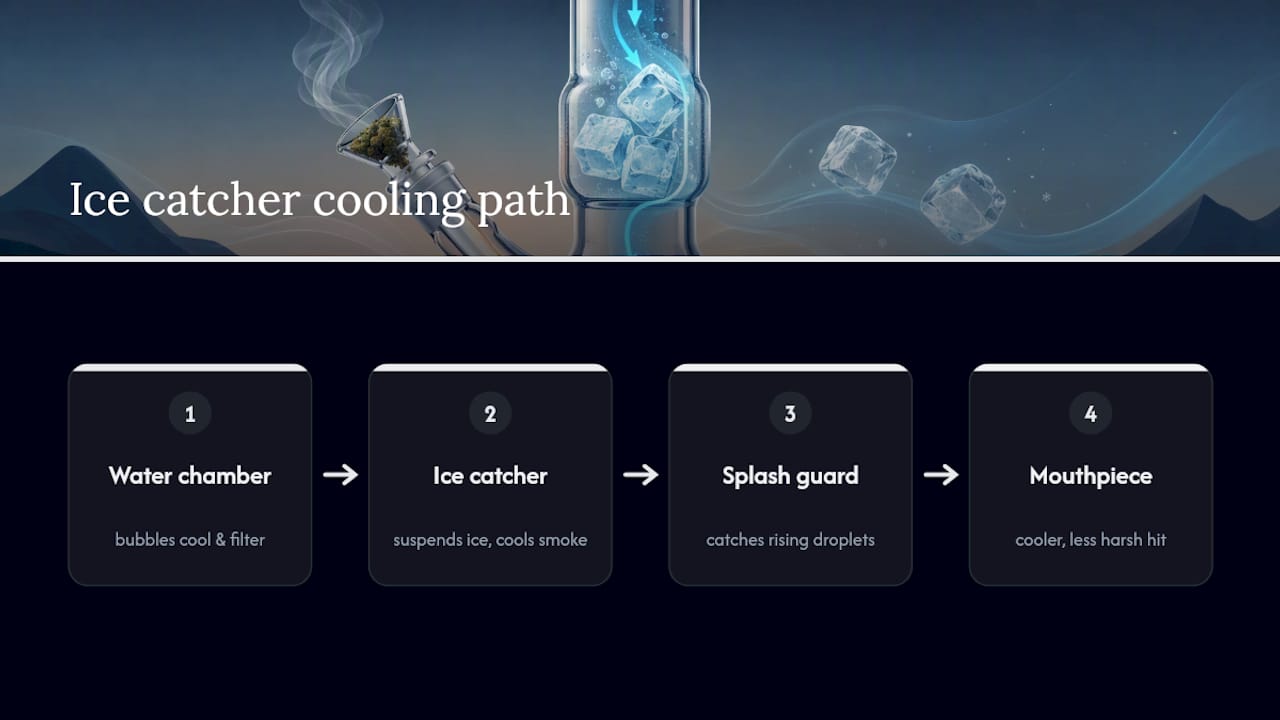
Nobody’s measured this down to the degree in a lab setting, but the qualitative shift is obvious the first time you try it. Smoke that would normally feel hot and sharp comes out closer to room temperature or cooler, and the harshness that makes you cough drops off noticeably. Compare that to the older trick of just dropping ice straight into the water chamber. That method cools things too, but it dilutes your water volume, changes your drag, and creates way more splashback risk once the cubes start bobbing near the mouthpiece. An ice catcher keeps the ice suspended and separate from the water, so you get the cooling benefit without watering down your filtration or risking a mouthful of cold water mid hit.
This is also why ice catchers work as a splash guard as much as a cooling tool. The notches create a physical barrier that slows down water and vapor moving up the tube, catching droplets that would otherwise reach your lips.
The Real Benefits of an Ice Catcher Bong
The cooling effect is the headline, but it triggers a chain of smaller benefits that add up to a genuinely different smoking experience.
- Smoother, cooler hits with less coughing. Cooling the smoke before inhalation reduces the throat irritation and burning sensation that trigger reflexive coughing, especially on bigger pulls.
- Bigger rips without the punishment. Because the smoke isn’t scorching your throat on the way down, many people find they can pull larger hits comfortably. Worth flagging: a bigger rip still means more smoke in your lungs, so the effects hit harder, not just smoother.
- Better flavor retention. High heat dulls delicate terpene notes before you ever taste them. Cooler smoke preserves more of those flavor compounds, which is why flavor chasers treat ice catchers as close to mandatory. If you’re new to why flavor varies so much by strain, a primer on terpenes and how they shape flavor is worth reading.
- Cleaner sessions overall. The splash guard function means less water creeping up the neck and less risk of an unpleasant surprise on your first pull.
- A better shared experience. Passing a piece that hits cool and tastes clean just makes group sessions more enjoyable. It’s a small thing, but it’s one of the reasons ice catcher pieces are so common at head shops.
One thing worth noting before you get too excited: cooling changes comfort, not chemistry. It doesn’t neutralize anything in the smoke itself, which brings us to the part most sellers skip over.
What Ice Catchers Don’t Fix, and How to Stay Safe
Cooling smoke changes how it feels, not what’s in it. Combustion produces the same tar and particulate load whether the smoke is hot or cold by the time it hits your lungs. Research on smoke inhalation consistently finds no evidence that cooling alone removes carcinogens or lowers long-term respiratory risk in any meaningful way, according to a review published on PubMed Central. Comfort and health protection are two different things, and it’s easy to conflate them once a hit stops burning.
You’ll also see anecdotal claims online tying ice bong use to lung infections. There’s no controlled research establishing that link. Pneumonia and similar infections have well documented causes, and the Mayo Clinic’s overview of pneumonia lists bacteria, viruses, and fungi as the drivers, not smoking accessories. That doesn’t mean ice bongs are risk-free. It means the anecdotes floating around forums are weaker evidence than people treat them as.
The real physical risk with ice catchers is the glass itself.
Thin, low-quality glass can develop hairline cracks or shatter outright when it goes from warm to freezing cold too fast. Borosilicate glass handles that swing far better than cheap soda-lime glass, which is why it’s the standard for any piece you plan to use with ice regularly.
Practical safety steps worth building into your routine:
- Buy borosilicate glass specifically if you plan to use ice, and inspect the neck and catcher notches for hairline cracks before every session.
- Let ice sit in the catcher for a minute before your first hit rather than lighting up the second you drop cubes in.
- Keep your water level low enough that melting ice won’t push water up into splashback range.
- If you have asthma, COPD, or another respiratory condition, talk to a doctor before making any changes to how you smoke, since cooler smoke can change how deeply people inhale.
How to Use an Ice Catcher Bong Step by Step
Getting the technique right matters more than people expect. Here’s the sequence that avoids the common mistakes.
- Check the piece first. Confirm the catcher notches are intact and look for stress cracks anywhere near the neck, particularly if the glass has been used with ice before.
- Fill the water chamber below the ice catcher line. Less water than usual is fine since melting ice will add volume as you go.
- Add several ice cubes into the catcher, positioned below the mouthpiece but resting on the notches, not touching the water.
- Light and draw slower than usual. Cooler smoke feels different in the lungs, so a steady, controlled pull works better than a rushed one.
- Watch the ice level as you smoke. Once cubes shrink enough to slip past the notches, stop and add fresh ice rather than risking a shard in your mouth.
- Empty and refill if water rises too high from meltwater, keeping enough clearance to avoid splashback on your next hit.
Pro Tip: Start with slightly less water than you’d normally use and stack your ice a little higher in the catcher. That buys you extra time before meltwater raises the level into splash territory, which matters most in longer sessions.
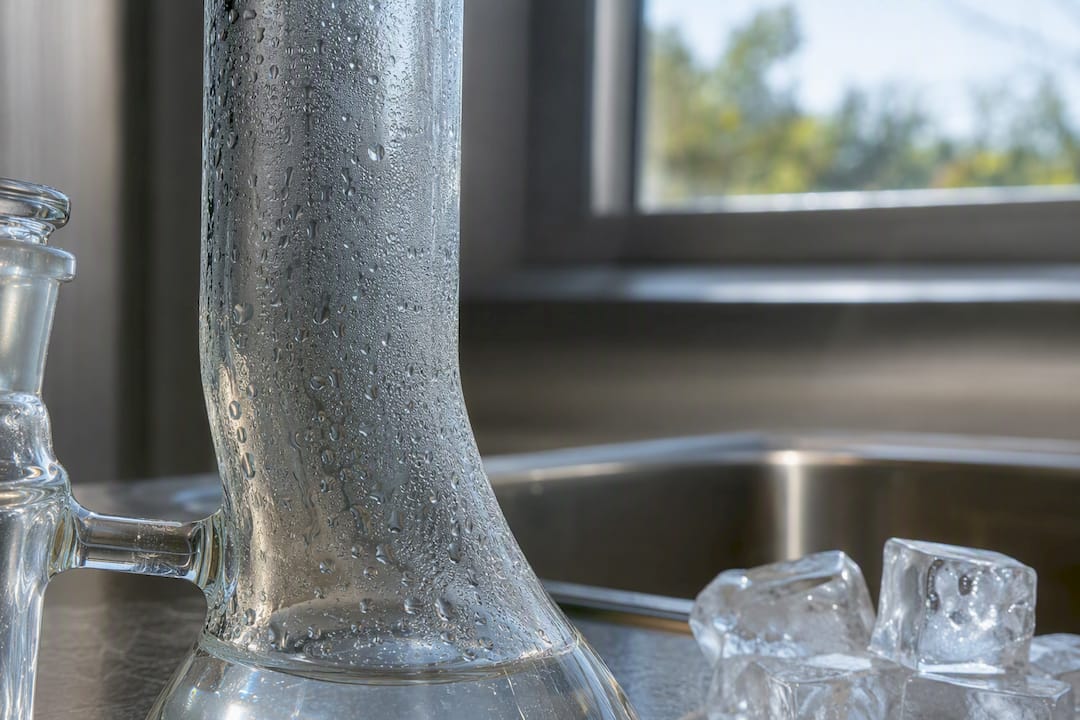
If you notice fogging on the outside of the glass, that’s just condensation from the temperature difference, harmless, but a sign your piece is working as intended.
Keeping an Ice Catcher Bong Clean Between Sessions
Ice changes your cleaning schedule, not just your hits. Meltwater mixes with resin residue faster than plain bong water does, and that combination speeds up buildup inside the tube and around the catcher notches. Pieces used with ice regularly need more frequent cleaning than pieces that never see a cube.
A simple routine keeps things manageable:
- Rinse with warm water immediately after each session, before residue has a chance to set.
- Soak in isopropyl alcohol with coarse salt for a deeper clean, shaking gently to scrub the interior. Our step by step bong cleaning guide walks through the full process if you want more detail.
- Rinse thoroughly afterward. Alcohol residue left behind will affect flavor on your next hit.
- If you notice cloudy or filmy glass from repeated ice use, a vinegar soak or a commercial glass cleaner usually clears mineral buildup that salt and alcohol miss.
- Store the piece dry and upright, since leftover moisture sitting in the catcher notches is what accelerates grime buildup between sessions.
Ice Catchers vs. Glycerin Coils and Other Cooling Options
An ice catcher isn’t the only way to cool your hits, and it’s not automatically the right choice for everyone. Glycerin coils, sometimes sold as freeze bongs, use a gel-filled coil you freeze ahead of time. They deliver consistent cold with zero meltwater management, which appeals to people who hate refilling ice mid-session.
The trade-off is prep time. You need a freezer window of a few hours before you can use it, while ice catchers work the moment you have cubes on hand. Pre-chilled or ice-cold water in the base chamber is another low-effort option, though it dilutes filtration the same way dropping cubes straight into the water does.
If you’re shopping for a piece built around ice, look for a sturdy, thick neck near the catcher notches and pinches sized for standard cube dimensions, not oversized crushed ice. A piece with a well-designed recycler function can add another layer of cooling and flavor retention if you want to combine features rather than choose just one.
Why the Ice Catcher Debate Gets Oversimplified
Most write-ups on ice catchers either oversell them as a health upgrade or dismiss them as a gimmick, and both takes miss the point. The honest framing is that ice catchers solve a comfort problem, not a safety problem. Smoke that doesn’t burn your throat lets you notice flavor, take a fuller hit, and actually enjoy the session instead of fighting through it. That’s a real improvement in how smoking feels, and it’s not nothing.
Where people get it wrong is assuming smoother automatically means safer. It doesn’t, and no accessory changes what combustion puts into your lungs. The smarter way to think about an ice catcher is closer to how you’d think about a good pair of running shoes: it changes your experience of the activity, not the underlying physical reality of what you’re doing. Buy for comfort, not for a health halo that doesn’t exist.
Experience with borosilicate quality and catcher design shapes the recommendations here.
— Juiced
Where to Find Quality Ice Catcher Glass in Ann Arbor
If you’re ready to upgrade, consider ice catcher bongs built with borosilicate glass thick enough to handle regular temperature swings without the crack risk cheaper pieces carry. That’s the detail most online retailers gloss over, and it’s the one that determines whether your new piece lasts a season or a year.

Whether you’re picking your first ice catcher piece or replacing one that finally gave out, knowledgeable staff can walk you through glass thickness, catcher notch sizing, and cleaning gear in person. Microdosing and mushroom edible options are also available for those curious about what makes amanita muscaria different from psilocybin, for anyone looking to expand beyond the smoke shop counter. Stop in or check the current glass selection online before your next session, and get a piece that’s actually built for ice.
Sources
- Ice catchers and using ice in bongs – Mood
- National Library of Medicine (relevant respiratory/smoke research) – NCBI
- Mayo Clinic — pneumonia overview
- VeriWell / VireoHealth coverage of ice vs freeze/glycerin bongs