
Choose CBD isolate if you need zero or near-zero THC and simple, predictable dosing. Choose full-spectrum if you want the whole-plant compound profile and can accept trace THC along with a possible entourage effect. The catch is human evidence for that entourage boost is still thin, so check a lab’s Certificate of Analysis before buying either one.
TL;DR:
- For drug testing concerns, only verified isolate or broad-spectrum products labeled as THC-free pose minimal risk of a positive result.
- Full-spectrum CBD contains up to 0.3% THC, which may trigger a drug test result if used frequently or with sensitive testing methods.
- Isolates are flavorless, odorless, and contain only CBD, making them ideal for precise dosing and neutral taste needs.
- Consumers should scrutinize Certificates of Analysis to verify cannabinoid profiles, THC levels, and testing lab details before purchasing.
- The entourage effect remains a theory with limited conclusive evidence, so full-spectrum may benefit some users but isn’t guaranteed to outperform isolate clinically.
Table of Contents
- CBD Isolate vs Full Spectrum: What’s Actually in the Bottle
- What Full-Spectrum CBD Actually Contains
- What Is Broad-Spectrum CBD?
- The Entourage Effect: Theory vs. What’s Actually Proven
- Will CBD Show Up on a Drug Test?
- How to Choose: A Practical Buying Checklist
- Side Effects and Allergic Reactions: Isolate vs. Full-Spectrum
- Reading the Label: Beyond the THC Number
- When to Choose Isolate, Full-Spectrum, or Broad-Spectrum
- Legal Considerations: Where Things Get Regional
- Why We Take Lab Testing Seriously
- Explore Lab-Tested Products at Elevated Remedies
- Sources
- FAQ
CBD Isolate vs Full Spectrum: What’s Actually in the Bottle
Isolate and full-spectrum CBD start from the same hemp plant but end up as almost opposite products. Getting there takes an extra round of purification after the initial extract is pulled, which is why isolate tends to cost less per milligram at scale but requires more processing steps to produce.
That purity translates into a few practical perks. Isolate is flavorless and odorless, so it disappears into coffee, smoothies, or a topical cream without announcing itself. It’s also the easiest format for precise, consistent dosing, since every gram is CBD and nothing else, and many people who need a neutral taste specifically seek it out for recipes and skincare.
- Forms: powders, unflavored tinctures, gummies, capsules, topicals
- Best for: zero-THC requirements, neutral taste, straightforward dosing
- Tradeoff: no minor cannabinoids or terpenes, so you lose any potential synergy between compounds
What Full-Spectrum CBD Actually Contains
Full-spectrum CBD keeps the whole cast of characters from the hemp plant: CBD alongside minor cannabinoids like CBG and CBN, plus terpenes and flavonoids. Retail hemp products in this category typically contain up to 0.3% Δ9-THC by dry weight, the federal threshold that separates legal hemp from marijuana. That trace THC is nowhere near enough to produce a high, but it’s enough to matter for anyone facing a drug screen.
Because nothing gets filtered out, full-spectrum products carry the natural taste and smell of hemp, earthy, sometimes bitter, and that flavor profile can shift from batch to batch depending on the plant source and extraction run. Some people find that variability part of the appeal; others find it a reason to reach for a flavored tincture or a capsule instead.
- Forms: oils, tinctures, capsules, gummies, topicals
- Best for: whole-plant preference, those chasing a possible entourage effect
- Tradeoff: trace THC, batch-to-batch flavor variation, higher drug-test risk
What Is Broad-Spectrum CBD?
Broad-spectrum sits between the two. Manufacturers start with a full-spectrum extract, then run an additional process to strip out the THC while keeping the other cannabinoids and terpenes intact. It’s a reasonable pick for someone who wants more than bare CBD but still needs to avoid THC for a drug test or personal preference, and it can serve as a middle ground between the two extremes.
The catch is labeling consistency. “Broad-spectrum” and “THC-free” aren’t standardized terms across every brand, so the description on the front of the bottle doesn’t guarantee what’s actually inside. The COA is what tells you the truth.
The Entourage Effect: Theory vs. What’s Actually Proven
The entourage effect is the idea that cannabinoids, terpenes, and flavonoids work better together than any single compound does alone, essentially a synergy argument for keeping the plant’s full profile intact. It’s a compelling theory, and it’s the main reason full-spectrum products get marketed as more potent or more well-rounded than isolate.
The evidence is real but limited. Some preclinical and small human studies suggest full-spectrum extracts outperformed isolate for pain outcomes, but sample sizes are small and results aren’t consistent enough to call it settled science.
What the research actually shows: Reviews of cannabinoid interactions note that combining hemp compounds may enhance CBD’s effects in some contexts, but large-scale human trials directly comparing isolate against whole-plant extracts remain limited. Healthline and Medical News Today both note that full-spectrum and broad-spectrum products may produce stronger or broader effects for some users than isolate, while stressing that more research is needed before anyone can call it proven.
The practical takeaway: full-spectrum might work better for you, especially for pain or anxiety, but that’s a “might,” not a guarantee backed by strong clinical data. If you’re chasing whole-plant effects, our piece on why full-spectrum extracts support natural wellness digs into the compound profile in more detail, and how terpenes shape effects covers the aromatic side of that synergy argument.
Will CBD Show Up on a Drug Test?
Standard drug tests screen for THC metabolites, not CBD itself, so pure isolate essentially carries no drug-test risk. The exposure comes entirely from trace THC in full-spectrum products, and that trace amount can trigger a positive result in some circumstances, particularly with frequent, high-dose use or a low-threshold testing panel.
Side effects for both formats tend to be mild: dry mouth, drowsiness, or changes in appetite. Anyone taking prescription medication should talk to a doctor first, since CBD can interact with certain drugs metabolized through the same liver pathways.
To cut drug-test risk to close to zero:
- Choose a pure isolate or a verified THC-free broad-spectrum product.
- Pull the COA before you buy, not after.
- Confirm the THC line reads “non-detectable” and check the lab’s detection limit, since “non-detectable” means below that threshold, not necessarily zero.
- Avoid full-spectrum entirely if you have an upcoming test with zero tolerance for any THC exposure.
Pro Tip: A COA showing “ND” for THC is only as good as the lab’s detection limit. If the report doesn’t list that limit, ask the seller for it before you buy, especially if a drug test is on the calendar.
How to Choose: A Practical Buying Checklist
Picking between isolate, full-spectrum, and broad-spectrum comes down to answering a few concrete questions before you add anything to your cart.
- Ask for the COA. A legitimate one lists cannabinoid concentrations (CBD, Δ9-THC, CBN, CBG), the testing lab’s name and date, and results for pesticides, heavy metals, and residual solvents.
- Match the cannabinoid profile to your goal. Isolate for zero THC, full-spectrum for the whole-plant profile, broad-spectrum for something in between.
- Check the extraction method. CO2 extraction is the industry standard for a clean, solvent-free result.
- Confirm the hemp source. U.S.-grown hemp from a state-regulated farm is generally easier to trace than an unlisted origin.
- Note the potency per serving, not just the total milligrams on the label.
Red flags: no COA available, a THC number with no detection limit listed, or a lab report that’s more than a year old.
For dosing, start low, somewhere in the 10 to 25 mg range for most tinctures, and track how you feel over a week before increasing. Everyone’s tolerance is different, and there’s no universal “right” dose.
Side Effects and Allergic Reactions: Isolate vs. Full-Spectrum
Both formats share the same core side-effect profile: mild drowsiness, dry mouth, occasional digestive upset, and changes in appetite. Isolate’s stripped-down composition means fewer plant compounds that could trigger a sensitivity, which makes it the safer starting point for anyone with known plant allergies or a history of reacting to terpene-heavy products like essential oils.
Full-spectrum carries a slightly higher chance of an allergic-type reaction simply because it contains more plant material. Someone sensitive to specific terpenes (many of which also show up in citrus peels, pine, or lavender) may notice skin irritation from a full-spectrum topical that an isolate version wouldn’t cause. That doesn’t mean full-spectrum is riskier across the board. It means the extra compounds create more variables.
Anyone starting either product for the first time should patch-test a topical on a small area of skin and start with a low oral dose to watch for reactions before scaling up. If you’re on prescription medication, particularly blood thinners or anything metabolized by the liver, a conversation with your doctor matters more than the isolate-versus-full-spectrum decision itself. CBD can affect how your body processes other drugs regardless of which format you choose.
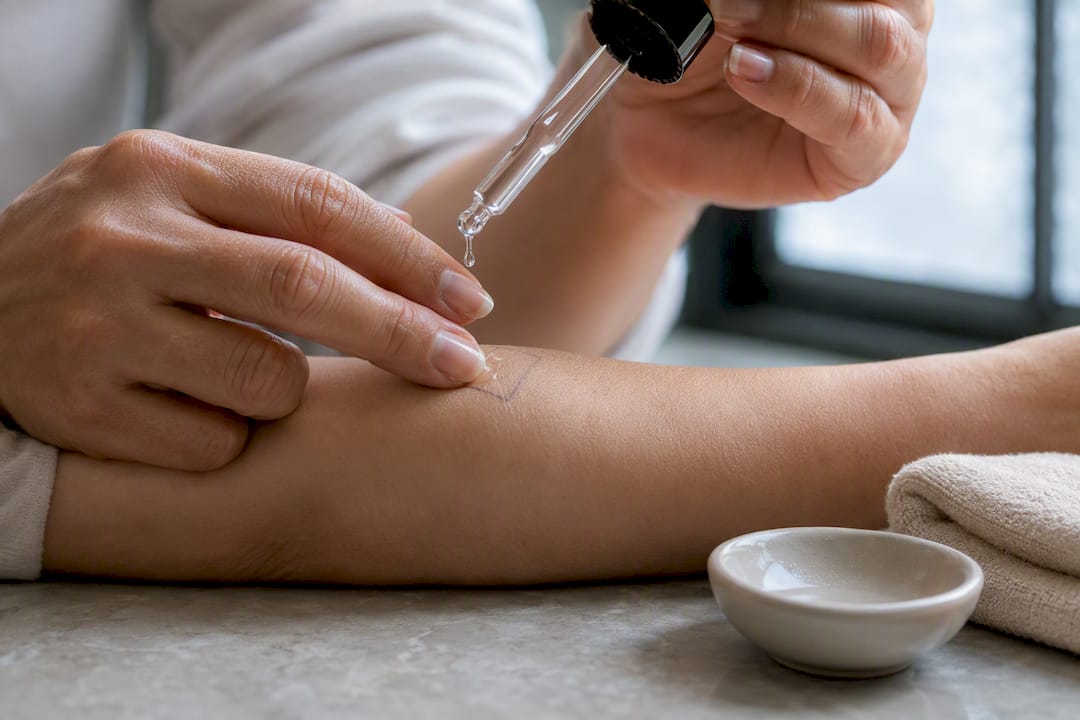
People with no known cannabis or hemp sensitivities generally tolerate both formats well. The bigger practical risk with full-spectrum isn’t allergy, it’s the trace THC showing up somewhere you didn’t expect it, like a workplace screening.
Reading the Label: Beyond the THC Number
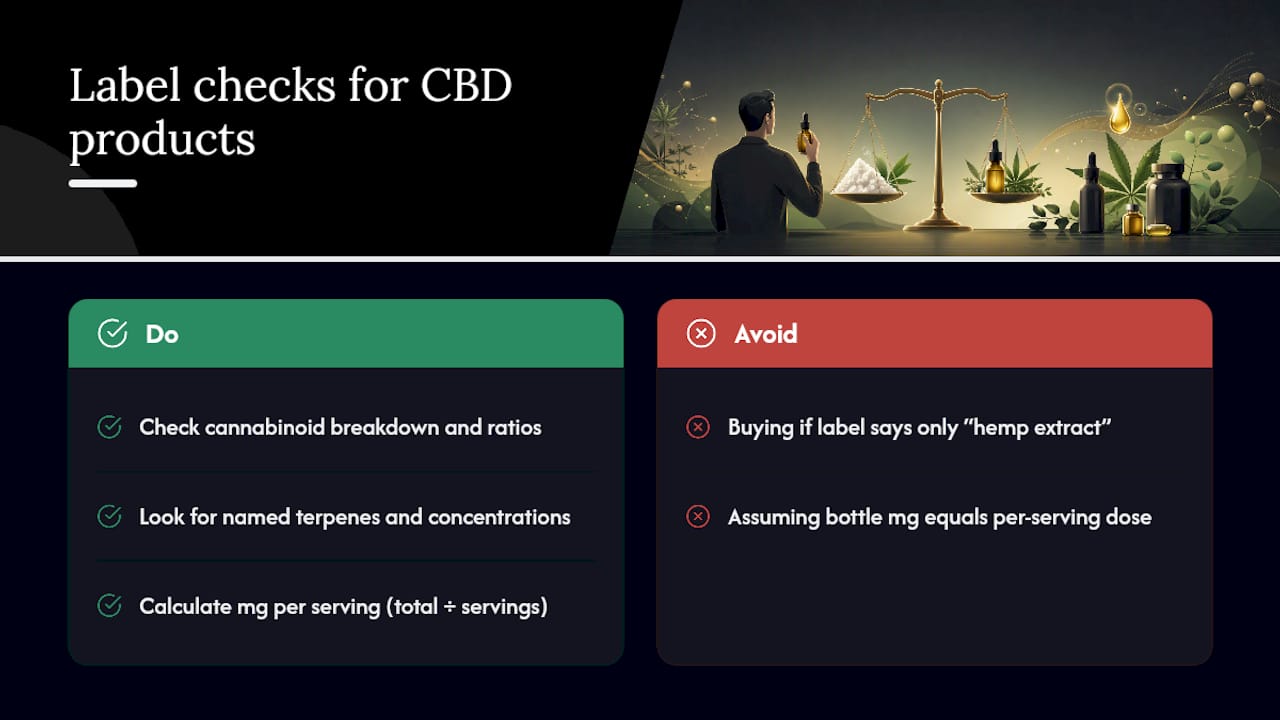
Most shoppers scan a CBD label for one number, milligrams of CBD, and stop there. That’s a mistake. The THC percentage matters, but so does the cannabinoid ratio and the terpene content, and both tell you more about what you’re actually buying.
A full or broad-spectrum label should list a cannabinoid breakdown: CBD alongside CBG, CBN, or CBC, and in what ratio. A product heavy in CBN, for instance, tends to skew toward sedating effects, while one built around CBG leans more energizing for some users. If the label only says “hemp extract” with no breakdown, that’s a sign to ask for the COA rather than guess.
Terpene content is the other overlooked detail. A label that lists specific terpenes by name and concentration is more transparent than one that just says “full-spectrum” and leaves it there.
Finally, check the serving size math. A bottle boasting “1,000 mg CBD” sounds strong until you realize that’s the total bottle content, not the per-serving dose. Divide total milligrams by the number of servings listed to get the number that actually matters for dosing.
When to Choose Isolate, Full-Spectrum, or Broad-Spectrum
The right pick depends on what you’re solving for, not on which one sounds more premium.
Choose isolate if: you’re subject to drug testing of any kind, you want a completely neutral flavor for cooking or a topical, or you prefer knowing exactly one compound is in the bottle with nothing else to account for.
Choose full-spectrum if: you’re not worried about a THC drug screen, you’re interested in the entourage effect for something like chronic discomfort or general anxiety support, and you don’t mind the earthier taste.
Choose broad-spectrum if: you want the wider cannabinoid and terpene profile without the drug-test exposure, understanding that “THC-free” claims still need COA verification.
For sleep, some users lean toward full-spectrum or broad-spectrum options that include CBN, since that minor cannabinoid is associated with sedation more than CBD alone. For anxiety, the picture is less clear-cut. Isolate can work fine at a higher dose for people who are THC-sensitive or prone to jittery reactions from trace cannabinoids, while others report better results from full-spectrum’s combined compound profile. Neither is definitively “best” for anxiety, and the honest answer is that it depends on individual response, which is exactly why starting low and tracking effects matters more than which format you pick first.
Legal Considerations: Where Things Get Regional
Federal law sets the baseline: hemp-derived CBD products, including full-spectrum ones, are legal at the federal level as long as they stay at or under 0.3% Δ9-THC by dry weight. Isolate, with no detectable THC at all, clears that bar automatically.
State and local rules can be stricter, though, and they change often enough that “legal everywhere” isn’t a safe assumption. Some states restrict hemp-derived products more tightly than federal law does, and workplace drug policies operate independently of any of this, meaning an employer can prohibit any THC exposure regardless of what’s legal to buy. If you’re traveling with CBD products, full-spectrum is the riskier one to carry across state lines simply because it contains THC, however small the amount.
If you’re in Michigan, the practical legal landscape for hemp-derived CBD is generally permissive, but it’s worth understanding how CBD compares to other regulated botanicals available locally. Our breakdown of CBD versus kratom under Michigan law covers that regional context in more depth. Wherever you live, the safest move is checking your specific state’s current hemp regulations rather than assuming national rules apply uniformly, since this is an area that shifts from one legislative session to the next.
Why We Take Lab Testing Seriously
Retail transparency starts with the COA, not the marketing copy on the label. A store that won’t produce third-party lab results for a batch isn’t one worth trusting with something you’re putting in your body. That’s the standard Elevated Remedies holds its own product sourcing to: verify before you shelve it, not after a customer asks.
— Juiced
Explore Lab-Tested Products at Elevated Remedies
Some shops apply rigorous testing philosophies across their product lines, including mushroom products, checking for quality and consistency before items reach the shelf.
If you’re already comfortable checking a COA before buying CBD, that same instinct for verified, transparent sourcing applies to our mushroom gummies and mushroom capsules, both built around precise dosing and sourcing from vetted foragers and labs. Browse the current lineup and see what fits your routine, whether that’s a gummy for an evening wind-down or capsules for consistent microdosing.
This article is general information, not a substitute for advice from a qualified doctor. Consult a qualified healthcare professional about your own circumstances before acting on anything here.
Sources
- Review / analysis on cannabis compounds and interactions (NCBI PMC)
- FDA — Regulation, research and drug approval process for cannabis and CBD
- Types of CBD — Healthline
FAQ
Is CBD Isolate Best for Anxiety?
It can work well for anxiety, especially for people sensitive to THC or other cannabinoids, but full-spectrum and broad-spectrum options may offer added benefit for some users through the entourage effect. There’s no single “best” format for anxiety since individual response varies.
What Is CBD Isolate?
CBD isolate is cannabidiol purified to more than 99%, with no other cannabinoids, terpenes, or flavonoids left in the product. It’s typically sold as a flavorless, odorless powder, tincture, or capsule.
Will CBD Isolate Show Up on a Drug Test?
No. Standard drug tests screen for THC metabolites, and pure isolate contains no detectable THC, so it carries essentially no drug-test risk when verified by a COA.
Can Full-Spectrum CBD Make You Fail a Drug Test?
Yes, it’s possible. Full-spectrum products can contain up to 0.3% Δ9-THC, and that trace amount can trigger a positive result with frequent use or a sensitive testing panel.
Is Broad-Spectrum CBD THC-Free?
It’s designed to be, since manufacturers remove THC after starting from a full-spectrum extract, but “THC-free” claims aren’t standardized across brands. Always check the COA to confirm the actual THC level before assuming it’s zero.