
TL;DR:
- Terpenes significantly influence cannabis effects by enhancing absorption, mood, and clarity beyond THC content.
- In psilocybin mushrooms, terpenes are minimal; alkaloids and beta-carbolines mainly drive synergy and experience.
- Focusing on terpene profiles and whole-spectrum products allows for more intentional, customized wellness experiences.
Most people assume the number on the label tells the whole story. High THC percentage means a powerful high. High psilocybin content means an intense trip. But that thinking leaves out one of the most influential factors shaping what you actually feel: terpenes. These aromatic compounds are responsible for why two cannabis strains with identical THC levels can feel completely different, and why a whole mushroom extract hits differently than a purified isolate. If you’re serious about understanding and optimizing your cannabis or psilocybin experiences in Michigan, terpenes deserve a lot more of your attention.
Table of Contents
- What are terpenes and why do they matter?
- How terpenes influence cannabis potency and effects
- Terpenes in psilocybin mushrooms: More than meets the eye
- Debates and nuances: Are terpenes the key to the entourage effect?
- Practical tips: Maximizing your experience with terpenes
- A new mindset: Stop chasing numbers, start seeking synergy
- Explore potent, terpene-rich wellness with Elevated Remedies
- Frequently asked questions
Key Takeaways
| Point | Details |
|---|---|
| Terpenes are game changers | By working with cannabinoids, terpenes can shape potency and effects far beyond THC or psilocybin content alone. |
| Cannabis synergy is proven | Myrcene, pinene, and limonene each amplify or moderate specific cannabis experiences through distinct pathways. |
| Mushroom entourage is unique | For psilocybin fungi, compounds beyond terpenes drive the most meaningful synergy and wellness outcomes. |
| Product choice matters | Reading terpene and compound profiles helps you personalize psychoactive and wellness effects for your needs. |
What are terpenes and why do they matter?
Terpenes are organic compounds produced by a wide variety of plants and some fungi. They’re the reason lavender smells calming, pine trees smell crisp, and a freshly peeled mango smells tropical. In cannabis, terpenes are produced in the same resin glands that make cannabinoids like THC and CBD. They give each strain its distinct scent and flavor, but their job goes far beyond just smelling good.
Here’s a quick breakdown of the most common terpenes you’ll encounter in cannabis:
- Myrcene: Earthy, musky, found in mangoes. Associated with relaxation and sedation.
- Limonene: Citrusy, bright. Often linked to mood elevation and reduced anxiety.
- Pinene: Sharp, piney. May support mental clarity and alertness.
- Linalool: Floral, lavender-like. Known for calming, anti-anxiety properties.
- Caryophyllene: Spicy, peppery. Unique because it also interacts directly with CB2 receptors.
What makes terpenes scientifically interesting isn’t just their smell. Research confirms that terpenes synergize with cannabinoids like THC, enhancing both therapeutic and psychoactive effects through mechanisms like increased cell membrane permeability and modulation of unwanted side effects. This is the foundation of what’s called the entourage effect, the idea that cannabis compounds work better together than any single compound works alone.
Pro Tip: Smell your cannabis before you smoke it. A rich, complex aroma usually signals a broader terpene profile, which often translates to a more layered, interesting experience.
Now, what about psilocybin mushrooms? Terpenes exist in mushrooms, but they play a more limited role compared to cannabis. The more important compounds in mushroom synergy are alkaloids and beta-carbolines. We’ll get into that in detail shortly. For now, understanding that terpenes are bioactive, not just aromatic, is the key shift in perspective. If you’re curious about how terpene science connects to wellness applications, the CBD for wellness deep-dive is worth reading as a companion piece to this topic.
How terpenes influence cannabis potency and effects
Understanding what terpenes are is one thing. Understanding what they actually do to your experience is where things get genuinely useful.
Let’s break down the mechanisms:
-
Myrcene increases THC absorption. Myrcene is one of the most prevalent terpenes in cannabis, and it has a measurable impact on how your body processes THC. Specifically, it increases blood-brain barrier permeability, allowing THC to enter the brain faster and in higher concentrations. A 2026 human study showed 22% higher plasma THC peaks with myrcene present, along with greater sedation and longer-lasting effects.
-
Pinene counteracts memory fog. One of the most common complaints about high-THC cannabis is short-term memory impairment. Pinene may actually work against this. Research suggests pinene counteracts THC-induced memory impairment through acetylcholinesterase inhibition, essentially helping maintain clearer cognitive function while you’re still getting the psychoactive benefit.
-
Limonene softens anxiety spikes. THC can trigger anxiety in some users, especially at higher doses. Limonene appears to modulate this response. Strains or products high in limonene tend to produce a more uplifted, social feeling rather than paranoid or jittery effects.
-
Caryophyllene acts on CB2 receptors. This is unique among terpenes. Caryophyllene binds directly to CB2 receptors, which are primarily associated with immune function and inflammation reduction. It gives cannabis products an additional layer of therapeutic value that goes beyond the standard cannabinoid pathways.
Here’s a quick reference table to help you match terpenes to your intended experience:
| Terpene | Common scent | Primary effect | Best for |
|---|---|---|---|
| Myrcene | Earthy, mango | Sedation, absorption boost | Deep relaxation, sleep |
| Limonene | Citrus | Mood lift, anxiety reduction | Social settings, daytime use |
| Pinene | Pine, fresh | Mental clarity, memory support | Creative work, functional highs |
| Linalool | Floral, lavender | Calm, anti-anxiety | Stress relief, winding down |
| Caryophyllene | Pepper, spice | Anti-inflammatory, CB2 activation | Pain, physical wellness |
“Terpenes don’t just add flavor. They functionally alter how your body and brain respond to cannabinoids, shaping the duration, intensity, and character of your experience.”
Understanding the CBD versus THC synergy in combination with terpene profiles gives you a much more complete picture of how to select cannabis products intentionally, rather than just grabbing whatever has the highest THC number.

Terpenes in psilocybin mushrooms: More than meets the eye
Terpenes aren’t exclusive to cannabis. Fungi produce a wide range of volatile organic compounds, including some terpenes. But here’s where the story diverges significantly from the cannabis world.
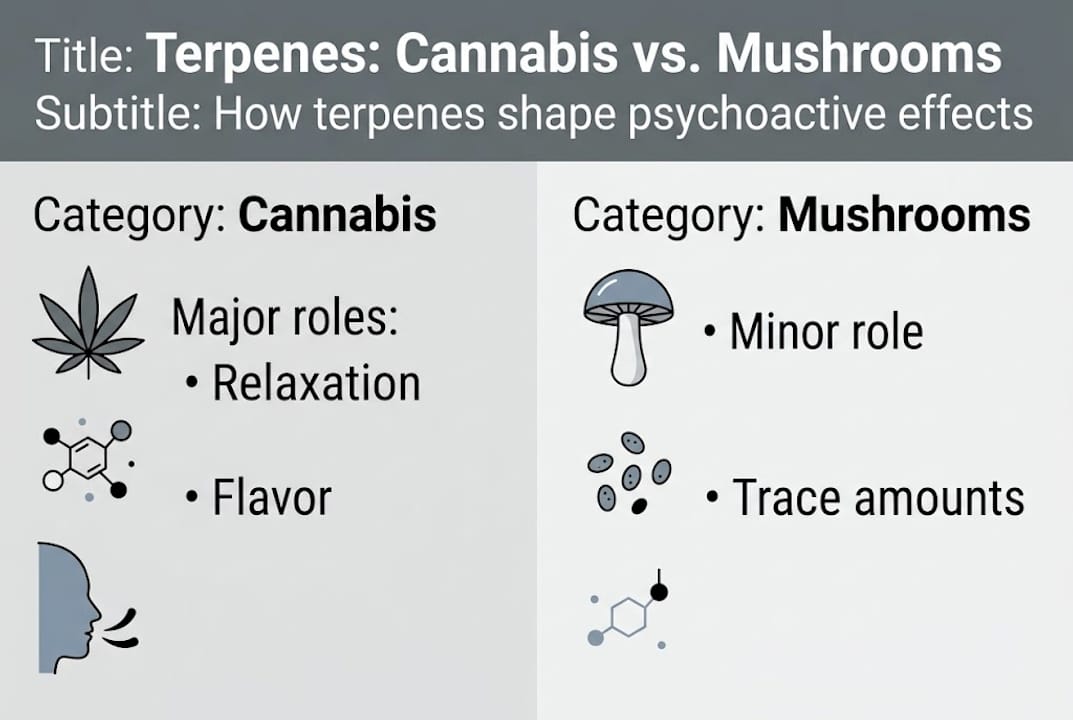
In psilocybin mushrooms, terpenes are present only in trace amounts. They don’t play the same starring role they do in cannabis. The compounds that appear to drive synergistic effects in magic mushrooms are different altogether. Research shows that entourage effects in psilocybin mushrooms are primarily attributed to compounds like baeocystin, norbaeocystin, and beta-carbolines rather than terpenes, with whole mushroom extracts potentially showing broader efficacy than isolated psilocybin.
Here’s a side-by-side comparison of entourage drivers in cannabis versus psilocybin mushrooms:
| Compound type | Cannabis | Psilocybin mushrooms |
|---|---|---|
| Primary psychoactive | THC | Psilocybin (converted to psilocin) |
| Supporting compounds | Terpenes, CBD, CBG | Baeocystin, norbaeocystin |
| Synergy drivers | Entourage effect via terpenes | Beta-carbolines, alkaloid interplay |
| Terpene relevance | High | Low to trace |
This distinction matters a lot when you’re choosing mushroom products. The key takeaways for psilocybin consumers:
- Whole mushroom products retain baeocystin, norbaeocystin, and other alkaloids that contribute to synergistic effects.
- Isolated psilocybin removes the supporting cast that may shape the depth and character of the experience.
- Beta-carbolines found in mushrooms may act as mild MAO inhibitors, potentially extending or modifying the psilocybin experience.
- Strain selection still matters because different mushroom varieties carry different alkaloid ratios, not terpene ratios.
Pro Tip: When choosing mushroom products for wellness or microdosing, opt for whole fruiting body preparations over isolated extracts when possible. You’re getting more of the natural compound matrix that may contribute to a richer experience.
For a deeper look at how these variables interact, the guide on understanding mushroom potency covers the strength and quality factors in detail. And if you’re deciding between varieties, comparing mushroom strains breaks down the differences in a practical way.
Debates and nuances: Are terpenes the key to the entourage effect?
The entourage effect is one of the most talked-about concepts in cannabis science. It’s also one of the most misunderstood. The popular narrative says terpenes directly boost THC’s effect on cannabinoid receptors. The actual science is more complicated.
“The entourage effect is real, but the exact mechanism is still being worked out. Terpenes may be contributing via pharmacokinetics and non-cannabinoid pathways rather than direct CB1 or CB2 receptor action.”
Some studies have challenged the receptor-based explanation directly. Research in PLOS ONE and Scientific Reports found no direct modulation of CB1 or CB2 receptors by terpenes at physiological concentrations. In other words, the terpenes themselves may not be docking onto the same receptors as THC. Instead, the effects may come through:
- Pharmacokinetic changes: Terpenes altering how quickly THC is absorbed, metabolized, or crosses into the brain.
- Serotonin and dopamine pathways: Some terpenes interact with non-cannabinoid neurotransmitter systems.
- Anti-inflammatory actions: Reducing baseline neuroinflammation, which changes how you experience psychoactive compounds.
- Psychological priming: The scent and flavor of terpenes may actually influence mood and expectation before the cannabinoids even take full effect.
This doesn’t mean terpenes are irrelevant. It means the mechanism is more subtle and indirect than the marketing often suggests. The truth is probably a combination of all these pathways working together. What we know for certain is that whole-plant cannabis consistently delivers a different subjective experience than THC isolate, and terpenes are a significant part of that difference even if the exact biology is still being mapped out.
For you as a consumer, the practical implication is this: don’t dismiss terpenes because receptor studies are inconclusive. The evidence for terpene-driven experience differences is strong even if the exact molecular explanation isn’t fully settled yet.
Practical tips: Maximizing your experience with terpenes
Now that you understand what terpenes do and where the science stands, let’s get practical. Here’s how to actually use this knowledge when you’re selecting and using cannabis or mushroom products.
-
Read the terpene label, not just the THC number. If your dispensary or smoke shop provides lab results, look for the terpene breakdown. A strain with 22% THC and a rich myrcene-limonene profile will hit very differently than one with 22% THC and almost no terpene presence.
-
Match terpenes to your desired experience. Going for a chill evening at home? Look for myrcene-heavy products. Need something that keeps you functional? Find pinene-dominant strains. Planning a social night? Limonene is your friend.
-
Consider your own biology. Research shows that sex differences affect myrcene sensitivity, with female mice showing higher sensitivity, and similar variation is likely in humans. Your genetics, body weight, metabolism, and even gut microbiome can affect how you respond to specific terpenes. What works perfectly for your friend may need adjustment for you.
-
Choose full-spectrum and whole-extract products. Whether it’s cannabis or mushrooms, products that preserve the full range of natural compounds give you access to the most complete synergistic experience. Distillates stripped of terpenes, or isolated psilocybin, remove the supporting compounds that shape the character of the experience.
-
Use storage wisely. Terpenes are volatile. They evaporate and degrade with heat, light, and air exposure. Store your flower in airtight, dark containers at room temperature to preserve terpene integrity and, by extension, the quality of your experience.
Pro Tip: The cannabis industry’s fixation on THC percentage has pushed many producers to boost THC at the expense of terpene diversity. A 18% THC strain with an abundant, varied terpene profile will often outperform a 28% THC product that’s been selectively bred for numbers alone. Seek out producers and shops that publish terpene data alongside cannabinoid content.
A new mindset: Stop chasing numbers, start seeking synergy
Here’s our honest take: the percentage-first mentality is holding a lot of cannabis and mushroom enthusiasts back from the best experiences they could be having.
The industry trained consumers to equate high numbers with quality. It’s a simple sales message, and it works. But it consistently overlooks what actually shapes a meaningful, enjoyable, or therapeutic experience. That’s synergy. The interplay between cannabinoids, terpenes, alkaloids, and your own unique biology.
We’ve seen it firsthand at Elevated Remedies. Customers who start exploring products based on terpene profiles and compound synergy consistently report more satisfying, more predictable, and more purposeful experiences. They stop chasing a vague “strongest possible high” and start seeking the right experience for the right moment.
For mushroom users especially, this mindset shift is important. Potency in psilocybin isn’t just about milligram count. It’s about which alkaloids are present, how they interact, and whether you’re working with a whole fruiting body or a stripped isolate. The resource on why compare mushroom strains is a great place to start thinking about selection from a synergy perspective rather than a numbers game.
The bottom line: trust your experience, read your labels fully, and explore with intention.
Explore potent, terpene-rich wellness with Elevated Remedies
If this article sparked your curiosity about synergy-driven products, we’ve got options worth exploring right here in Ann Arbor.
At Elevated Remedies, we stock mushroom products selected with quality and whole-compound integrity in mind. The Elevated Mushroom Chocolate Bar is a great entry point for a consistent, enjoyable experience. If you’re drawn to something with Amanita varieties, our 3000mg Mushroom Gummies deliver a unique compound profile worth exploring. Curious about the Amanita difference? The About Amanita Muscaria page gives you the full picture. Stop by 1123 Broadway St and let our team help you find exactly what fits your goals.
Frequently asked questions
Do terpenes increase the potency of cannabis?
Yes, certain terpenes like myrcene can meaningfully enhance your cannabis experience. Research shows 22% higher plasma THC peaks when myrcene is present, resulting in stronger and longer-lasting effects.
Are terpenes responsible for the entourage effect?
Terpenes are a significant part of the entourage effect, but they may not work through direct cannabinoid receptor activation. Studies found no CB1/CB2 modulation by terpenes at normal concentrations, suggesting the synergy happens through other biological pathways.
Do terpenes play a significant role in mushroom potency?
No, terpenes are only present in trace amounts in psilocybin mushrooms. The entourage effect in mushrooms is primarily driven by compounds like baeocystin, norbaeocystin, and beta-carbolines rather than terpenes.
How can I choose products to maximize terpene benefits?
Look for lab-tested products that publish full terpene profiles alongside cannabinoid content. Prioritize full-spectrum, whole-extract, or whole fruiting body options, as these retain more of the natural compound matrix that drives synergistic effects.