
TL;DR:
- Psychedelic mushrooms have diverse origins, including evolutionary, environmental, and cultural roots.
- Psilocybe species evolved psilocybin independently over millions of years, with global and indigenous significance.
- Understanding mushroom origins enhances informed and respectful use within modern wellness practices.
Psychedelic mushrooms don’t share a single backstory, and that’s what makes them fascinating. For anyone in Michigan exploring psilocybin for wellness or personal growth, knowing where these fungi came from, whether genetically, geographically, or culturally, adds real depth to your practice. The assumption that all magic mushrooms are basically the same is one of the most common misconceptions out there. They evolved separately, traveled different routes across the globe, and carry distinct cultural histories that still shape how people use them today. Understanding those origins helps you make more informed, more intentional choices on your wellness path.
Table of Contents
- How scientists trace psychedelic mushroom origins
- Psilocybe cubensis: From ancient dung to global traveler
- Psilocybe semilanceata: Ancient roots in Northern grasslands
- Entheogenic traditions: Mesoamerican origin stories
- Comparing origins: Evolution, species, and cultural impact
- Our take: Origins you won’t see on the label
- Explore safe and authentic mushroom experiences
- Frequently asked questions
Key Takeaways
| Point | Details |
|---|---|
| Multiple evolutionary origins | Not all psychedelic mushrooms come from the same ancestor—some evolved psilocybin independently. |
| Ancient cultural use | Indigenous peoples have used psychedelic mushrooms for thousands of years, shaping modern wellness trends. |
| Species spread by humans | Psilocybe cubensis owes much of its worldwide range to animal migration and human activity. |
| Origins impact wellness practices | Understanding both scientific and cultural origins can help you make safer and more meaningful choices. |
How scientists trace psychedelic mushroom origins
When scientists talk about mushroom “origins,” they mean several things at once. There’s evolutionary origin, meaning when and how a species first appeared. There’s environmental origin, meaning the specific ecosystems that shaped the organism. And there’s cultural origin, meaning the human traditions that first recognized and used the mushroom intentionally. Each of these layers adds something different to the full picture.
One of the most surprising discoveries in recent mycology is how old this all goes. The Psilocybe genus originated approximately 65 million years ago, around the time of the dinosaur extinction, with psilocybin biosynthesis evolving through a conserved gene cluster. That means these fungi were producing psychoactive compounds long before humans existed to experience them.
Even stranger: psilocybin didn’t evolve just once. Multiple evolutionary origins exist for psilocybin production, including convergent evolution in Inocybe corydalina using a distinct gene cluster different from the psi cluster found in Psilocybe. Convergent evolution means two unrelated species developed the same trait independently, like wings appearing in both birds and bats.
Scientists use a combination of four main criteria to trace these origins:
- Age: Fossil records and molecular clocks estimate when a lineage first appeared
- Genetics: Gene cluster mapping reveals how psilocybin-producing pathways are structured
- Biochemistry: The specific enzymes involved help distinguish independent evolutionary lines
- Regional history: Where a species grows today, and where its closest relatives live, tells the story of migration
“The history of psilocybin is written in DNA, not just in ceremony or experience.”
Pro Tip: If you want to go deeper into how these discoveries connect to modern use, the history of magic mushrooms is a great place to start building your knowledge base.
Psilocybe cubensis: From ancient dung to global traveler
Psilocybe cubensis is the species most people picture when they hear “magic mushroom.” It’s the workhorse of the modern psychedelic world, widely available, relatively consistent in potency, and the basis for hundreds of named strains. But its origin story is surprisingly humble and geographically complex.
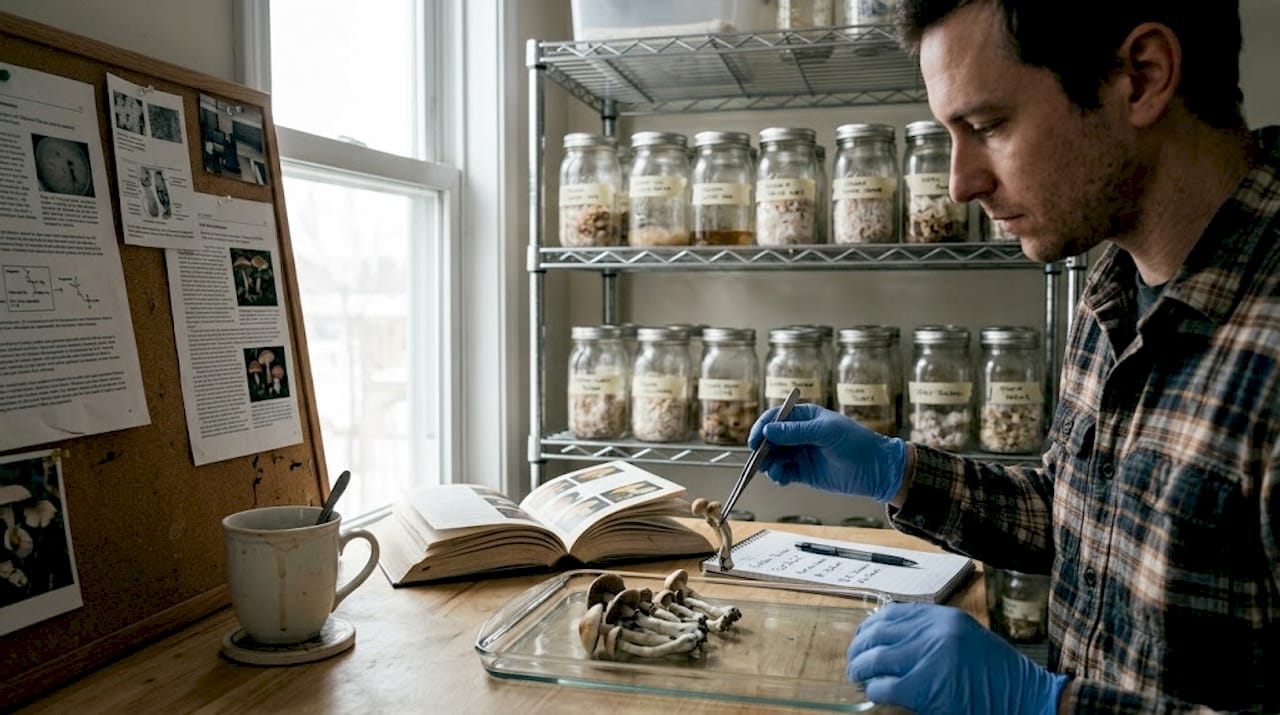
The species was first described in 1906 from Cuba under the name Stropharia cubensis, then reclassified into Psilocybe in 1949. Its pan-tropical spread is largely attributed to cattle. As livestock moved across continents, their dung became the perfect growing medium for this species. It hitched a ride through Africa, Southeast Asia, Central and South America, and eventually became one of the most globally distributed psychedelic fungi on the planet.
This agricultural spread is why cubensis feels familiar and accessible. It wasn’t originally native to most of the places it grows today. It followed human civilization wherever cattle went.
Here’s how cubensis compares to other major species at a glance:
| Feature | P. cubensis | P. semilanceata | P. zapotecorum |
|---|---|---|---|
| Origin region | Africa (likely) | Northern Europe | Mesoamerica |
| Habitat | Cattle dung, tropical | Grassland roots | Forest/humid zones |
| Earliest record | 1906 (Cuba) | 1838 | Pre-1000 BCE |
| Modern availability | Very high | Moderate | Rare/regional |
For Michigan wellness explorers, cubensis matters because it’s the foundation for most of what you’ll find in dispensaries and product lines. Understanding why comparing mushroom strains matters can help you choose with more intention and less guesswork.
Pro Tip: Not all cubensis strains are genetically identical. Strain names like Golden Teacher or B+ refer to cultivated variants, not separate species. Potency and effect profiles can vary meaningfully between them.
Psilocybe semilanceata: Ancient roots in Northern grasslands
If cubensis is the global traveler, Psilocybe semilanceata, commonly known as the liberty cap, is the quiet local that’s been around far longer than most people realize. This is a cold-climate species with deep roots in Northern European grasslands, and it operates by completely different ecological rules.
The liberty cap doesn’t grow on dung. It grows from decomposing grass roots in nutrient-poor, undisturbed pastures. It’s saprobic, meaning it feeds on dead organic material rather than living hosts. This makes it uniquely tied to traditional agricultural landscapes across Europe and parts of the Northern Hemisphere, including regions that climatically resemble the upper Midwest.
The Psilocybe semilanceata was first formally described in 1838, and the earliest documented case of accidental intoxication goes back to 1799 in London. That’s a two-century-old written record, making it the best-documented wild psychedelic mushroom in European history. Psilocybin content was first confirmed scientifically in the 1960s.
Key differences that matter when comparing it to cubensis:
- Grows wild in temperate grasslands, not farmed or widely cultivated
- Much smaller fruiting body, but often higher psilocybin concentration per gram
- No dung dependency, making its habitat completely different from tropical species
- Historically European, though naturalized in parts of North America including the Pacific Northwest
- Not a cultivated strain, so you won’t find it in most dispensary product lines
Understanding how species like the liberty cap differ in their ecology and potency is essential if you want to explore magic mushroom strains and effects with any real depth.
Entheogenic traditions: Mesoamerican origin stories
Some origin stories aren’t written in DNA. They’re carved in stone. The Mesoamerican traditions surrounding psychedelic mushrooms represent the oldest and most thoroughly documented cultural use of psilocybin in the world.
Indigenous Mesoamerican use by the Mazatec, Zapotec, Aztec, and Maya dates back at least 1,000 to 3,000 BCE, confirmed by mushroom stones and codices recovered across southern Mexico and Guatemala. These weren’t recreational rituals. They were considered sacred technologies for healing, divination, and communication with the spiritual world.
Here’s how these traditions developed and survived:
- Pre-colonial use: Ritual mushroom ceremonies were integrated into healing systems and religious practice across multiple civilizations
- Colonial suppression: Spanish colonizers classified indigenous ceremonies as heretical and actively suppressed them throughout the 16th and 17th centuries
- Underground survival: Mazatec and Zapotec communities maintained the traditions in secret, passing knowledge through oral lineages
- 20th-century rediscovery: Ethnomycologist R. Gordon Wasson documented Mazatec ceremonies in 1957, introducing them to Western audiences
- Modern revival: Elements of these traditions now influence mindfulness-based psychedelic wellness practices globally
“The velada ceremony isn’t just about the mushroom. It’s about the relationship between the healer, the plant, and the person seeking guidance.”
Today, traditional Zapotec use of Psilocybe zapotecorum, known locally as Hongo Santo, continues for healing and divination, though it faces pressure from climate change and an influx of wellness tourism that commodifies the experience without honoring its roots.
If you’re exploring ancient mushroom history or connecting it to mushroom wellness rituals, this cultural layer is impossible to separate from responsible modern practice.
Comparing origins: Evolution, species, and cultural impact
Now that we’ve covered each major lineage, it helps to see them side by side. The differences between these species aren’t just academic. They affect how each is used, what it means culturally, and what risks or benefits you can expect.
| Species | Evolutionary age | Gene mechanism | Environment | Cultural role |
|---|---|---|---|---|
| P. cubensis | ~1.5M years | psi cluster | Tropical dung | Modern wellness/strains |
| P. semilanceata | Ancient (Europe) | psi cluster | Grassland roots | European folk tradition |
| P. zapotecorum | Pre-Columbian | psi cluster | Forest/humid | Zapotec sacred ritual |
| Inocybe corydalina | Independent | ips cluster | Woodland | None known |
The key scientific insight here is that horizontal gene transfer and convergent evolution both contributed to psilocybin appearing across unrelated fungal lineages, possibly as a chemical defense mechanism against insects or bacteria.
For Michigan users, here’s what actually matters from all of this:
- Source transparency: Knowing which species your product comes from helps you set realistic expectations
- Cultural context: Ignoring indigenous origins reduces a meaningful wellness tool to a novelty
- Ecology signals quality: Wild species with specific habitat needs can’t be faked or standardized the way cultivated cubensis strains can
If you’re choosing between consumption formats, exploring safer psilocybin options and reviewing a Michigan psilocybin product guide are smart next steps.
Our take: Origins you won’t see on the label
Most product labels tell you the strain name, maybe the species, and sometimes the potency. What they rarely tell you is the full origin story. And that’s exactly where we think the most important information lives.
When you buy a cubensis chocolate or a microdose capsule, you’re inheriting 65 million years of evolutionary history, centuries of indigenous knowledge, and decades of modern cultivation decisions. None of that fits on a label. But it still affects your experience, your intention, and your safety.
We’ve seen the psychedelic wellness space grow fast in Michigan, and with that speed comes a tendency to flatten origin stories into marketing copy. A mushroom’s roots get reduced to a strain name or a trending hashtag. That kind of simplification doesn’t serve you.
The most grounded wellness journeys we’ve witnessed honor both the science and the tradition behind what they’re working with. Knowing where a mushroom comes from, how it evolved, and what cultures honored it changes how you approach the experience. It replaces hype with respect. For practical wellness tips that reflect this mindset, start there before you start anywhere else.
Explore safe and authentic mushroom experiences
If diving into mushroom origins has sparked your curiosity about what’s actually available in Michigan, you’re in the right place. At Elevated Remedies, we carry quality-sourced dried magic mushrooms, microdose capsules, and magic mushroom chocolates for those ready to explore responsibly.
We also stock Amanita muscaria products for those curious about non-psilocybin mushroom experiences, including Amanita mushroom gummies that are legal and approachable. Whether you’re just starting out or deepening an existing practice, the team at Elevated Remedies is here to help you navigate your options with honesty and care. Visit us at 1123 Broadway St in Ann Arbor and let’s talk.
Frequently asked questions
What is the oldest evidence of psychedelic mushroom use?
Mesoamerican cultures including the Mazatec and Zapotec used psychedelic mushrooms as far back as 1,000 to 3,000 BCE, supported by mushroom stones and ceremonial codices recovered across Mexico and Guatemala.
Did all psychedelic mushrooms come from the same ancestor?
No. Psilocybin evolved independently in separate fungal lineages through both convergent evolution and horizontal gene transfer, meaning different species developed the same compound through entirely different genetic pathways.
How did Psilocybe cubensis become so widespread?
It spread via cattle and livestock dung from its likely African origins into tropical regions across Asia, the Americas, and beyond, becoming the most globally distributed cultivated psychedelic species.
Are there legal or safe options for exploring mushroom origins in Michigan?
Yes. Legal options including Amanita muscaria products and informational resources are available, and reviewing a Michigan-specific product and wellness guide before purchasing anything is always a smart first move.