
The fastest, most reliable way to clean a glass pipe is a soak in high-strength isopropyl alcohol with coarse salt, followed by a good shake and a hot-water rinse. Soak times vary depending on resin buildup, with longer soaks needed for heavier residue. Boiling water, denture tablets, and commercial cleaners all work too. Just skip bleach and never shock cold glass with boiling water straight from the kettle.
TL;DR:
- Use isopropyl alcohol of 90% or higher concentration combined with coarse salt for effective deep cleaning, especially on heavy resin buildup.
- A quick clean with hot water and salt shake suffices for light residue, while a full alcohol soak is recommended every one to two weeks for heavy users.
- Tools like pipe cleaners, cotton swabs, and ultrasonic cleaners improve cleaning in percolators and tight spots, but avoid using bleach, dish soap, or putting glass directly into a dishwasher.
- Boiling water should be introduced gradually to prevent glass cracking, and commercial cleaners may be more suitable for delicate or complex pieces.
- Rinsing after each session significantly maintains airflow and flavor, with deep cleaning scheduled based on signs like restricted draw, bad taste, or visible resin.
Table of Contents
- What You Need Before You Start Cleaning a Glass Pipe
- When Can a Quick Clean Replace a Full Soak?
- How Do You Deep Clean a Glass Pipe With Alcohol and Salt?
- Are There Alternatives to the Alcohol and Salt Method?
- What Tools Handle Percolators and Stubborn Resin?
- What Should You Never Use to Clean Glass?
- How Often Should You Actually Clean a Glass Pipe?
- Quick Checklist: Cleaning a Glass Pipe Step by Step
- What Elevated Remedies Has Learned From Selling Glass Every Day
- Where to Find Cleaning Supplies and Replacement Parts
- Sources
What You Need Before You Start Cleaning a Glass Pipe
Gather everything first, because a half-finished cleaning job usually ends with alcohol on the counter and salt in the sink. Here’s what actually earns a spot on the list:
- Isopropyl alcohol, 90% to 99% concentration (the higher the percentage, the faster it cuts through resin)
- Coarse salt, kosher or sea salt, not fine table salt
- A resealable plastic bag or airtight container big enough to submerge the piece
- Pipe cleaners, cotton swabs, and a small brush for tight spots
- Rubber cleaning plugs or stoppers if you’re working on a bong or rig with multiple openings
- Optional: denture tablets, an ultrasonic cleaner, or a magnetic Buddy Scrubber-style tool
- Gloves, an old towel, and a trash receptacle for spent salt and ash
Skip the dish soap and steel wool. Neither belongs anywhere near this process.
When Can a Quick Clean Replace a Full Soak?
Not every session ends with a deep clean, and it shouldn’t. Reach for a quick method when the piece looks a little cloudy but still pulls clean air.
- Hot water rinse. Let the pipe cool completely first, then run hot tap water through the bowl and stem. Pouring hot water onto a piece that’s still warm from a session is fine; pouring it onto glass that’s gone cold in the freezer or a chilly car is asking for a crack.
- Salt and hot water shake. Drop a pinch of coarse salt into the bowl, add hot water, cap the openings with your fingers or plugs, and shake for 30 seconds. This lifts light film without a full alcohol soak.
- Lemon or vinegar flush. Run diluted lemon juice or white vinegar through the piece to knock down lingering odor, then rinse thoroughly.
A quick clean is enough when there’s no visible resin buildup, the draw feels normal, and the taste is just slightly off rather than genuinely harsh.
How Do You Deep Clean a Glass Pipe With Alcohol and Salt?
This is the method most experienced smokers default to, and for good reason. It’s cheap, it’s fast, and it handles resin that hot water alone won’t touch.
Prep. Tap out loose ash, pull apart any removable pieces like bowls or downstems, and give everything a quick pre-rinse under warm water.
Load the bag. Place the piece in a resealable bag or container. Pour in isopropyl alcohol at 90% or higher, enough to fully submerge it, then add coarse salt at roughly one teaspoon per four inches of pipe length. For bongs or rigs, seal the openings with rubber plugs or a folded towel so alcohol doesn’t leak out during agitation.
- Shake the sealed container gently for a few minutes to work the salt against resin walls
- For light buildup, a soak after shaking is usually sufficient
- For heavy or older resin, longer soaking is recommended with repeated agitation
- Repeat the soak once if the water still runs cloudy or tinted after rinsing
Finish up. Once the alcohol looks murky and the resin has lifted, dump the mixture, hit stubborn corners with a cotton swab or pipe cleaner, then rinse under hot water until it runs clear. Air-dry upright on a towel.
Pro Tip: Keep a dedicated “cleaning bag” instead of a fresh one every time. Reused salt residue actually helps break down new resin faster on the second and third use.
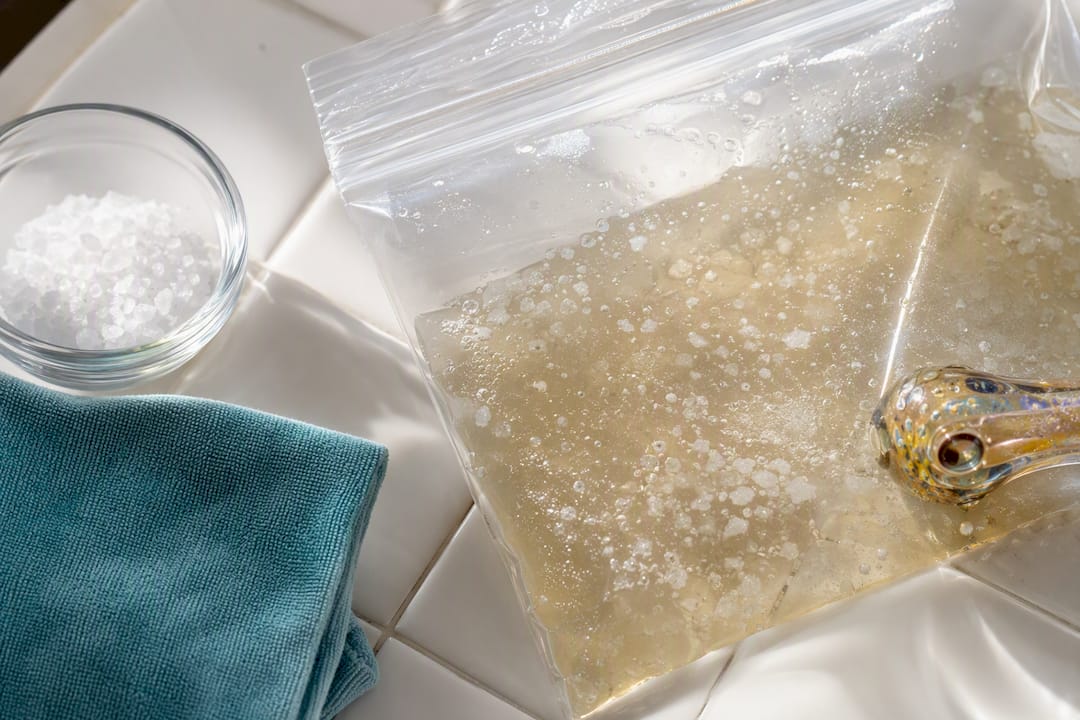
If a piece still looks dingy after two rounds of this, it’s time to try a commercial cleaner built for the job rather than fighting it with more alcohol.
Are There Alternatives to the Alcohol and Salt Method?
Alcohol and salt isn’t the only route, and for some pieces it isn’t even the best one.
- Boiling water. Place the piece in a pot starting with cold water, then bring it to a gentle simmer rather than dropping glass into water that’s already boiling. This avoids the thermal shock that cracks glass, and the heat softens resin so it wipes away easier. It won’t fully strip heavy buildup on its own.
- Denture tablets. Drop one or two into water, submerge the piece, and let it soak for an hour or more with no scrubbing required. Denture tablets and purpose-made cleaning solutions work well on surface staining and are the easiest hands-off option.
- Commercial cleaners. These are formulated specifically for resin and skip the mess of loose salt. Check the label for alcohol content, since stronger formulas cut buildup faster but demand the same fumed-glass caution as straight isopropyl.
- Ultrasonic cleaners. For anyone who cleans multiple pieces regularly, an ultrasonic bath removes resin from crevices without any chemical soak at all. It’s a real investment, but it’s the most thorough option for solid glass and metal parts.
What Tools Handle Percolators and Stubborn Resin?
Nooks, percolators, and diffuser holes are where most cleaning jobs stall out. A shake alone won’t reach a clogged percolator arm buried inside a multi-chamber rig.
- Pipe cleaners and cotton swabs still handle detail work better than anything else for reaching narrow stems
- A magnetic Buddy Scrubber-style tool lets you scrub inside a chamber without the violent “shake and break” risk of tossing a full bong around
- Freezing a piece for 20 to 30 minutes briefly hardens resin, making it easier to flake off with a pick before it gets sticky again at room temperature
- Disassemble every removable part, bowl, downstem, ash catcher, and clean each separately rather than trying to force alcohol through an assembled piece
For complex percolators, seal off just the chamber you’re working on with a cleaning plug rather than filling the entire rig at once. It’s easier to agitate safely and easier to see when that section is actually clean.
What Should You Never Use to Clean Glass?
A few habits ruin more pieces than dirty resin ever does.
- Skip bleach and strong acids. They leave chemical residue behind and can pit glass over time.
- Never pour boiling water directly onto cold glass. Start cold, warm it gradually, and let temperature rise with the water.
- Go easy on internally fumed or color-changing glass. High-alcohol soaks can dull the fuming layer over repeated use, so a gentler commercial cleaner is the safer long-term choice for artistic pieces.
- Silicone pieces do best with warm water and dish soap, not alcohol. Wood pieces should never sit in a long soak at all, since the material absorbs liquid and warps.
- Skip the dishwasher entirely. Heat cycles and detergent residue are a bad combination for any glass piece, fumed or not.
How Often Should You Actually Clean a Glass Pipe?
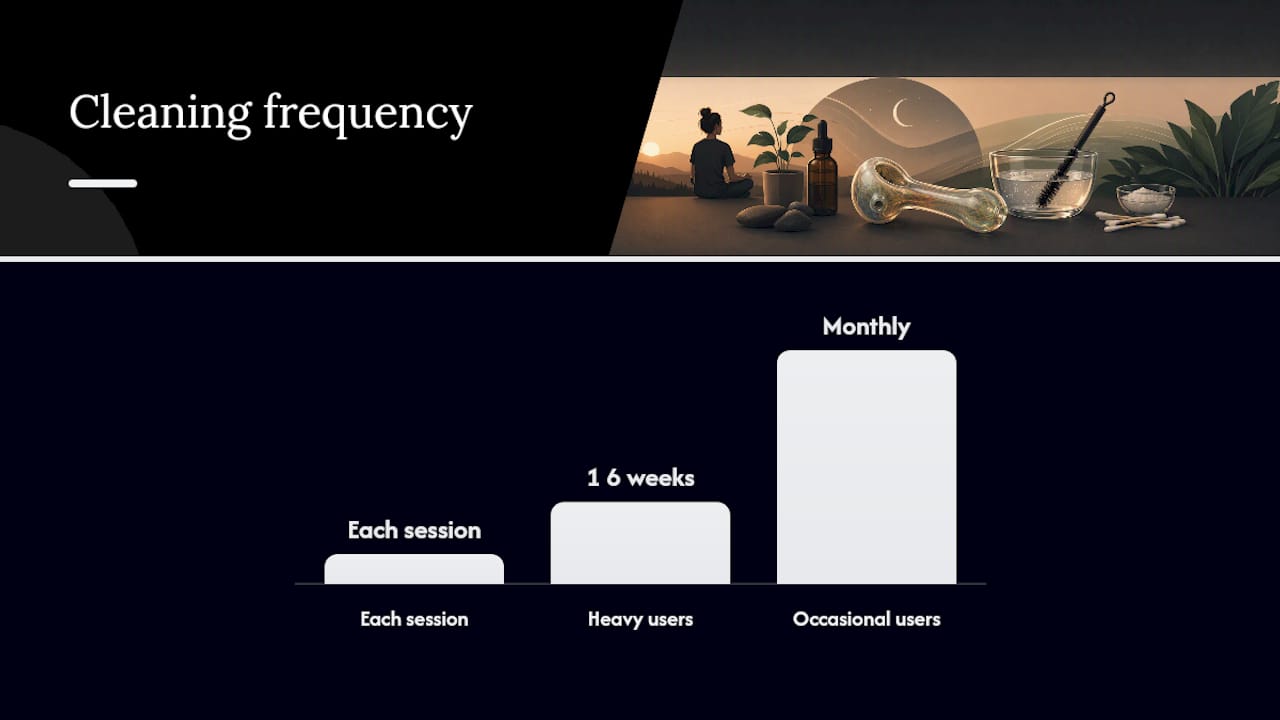
Rinse after every session if you can manage it. That one habit does more to keep flavor and airflow intact than any deep clean ever will. Beyond that, heavy users should plan on a full alcohol soak every one to two weeks, while occasional smokers can usually stretch to once a month.
Watch for the signs regardless of schedule: airflow feels restricted, hits taste burnt or bitter instead of clean, resin is visibly coating the inside, or the piece smells musty even after a rinse. Any one of those means it’s overdue.
Quick Checklist: Cleaning a Glass Pipe Step by Step
- Tap out ash, gather your alcohol and salt, and disassemble removable parts
- Submerge the piece, seal it, and shake for one to three minutes
- Soak for 30 minutes if it’s lightly used, or overnight for heavy resin
- Dump the solution and hit tight spots with a cotton swab or pipe cleaner
- Rinse under hot water until it runs completely clear
- Air-dry upright and check airflow before your next session
What Elevated Remedies Has Learned From Selling Glass Every Day
Running a smoke shop floor means fielding cleaning questions constantly, especially from customers protecting fumed or color-changing pieces they’ve spent real money on. We’ve watched enough customers ruin beautiful glass with the wrong product to know that gentler, purpose-built cleaners often beat a harsh alcohol soak. For a deeper walkthrough on multi-chamber pieces, our step-by-step bong cleaning guide covers the parts this article only touches on.
— Juiced
Where to Find Cleaning Supplies and Replacement Parts
Salt and isopropyl alcohol handle most jobs fine, but not every piece is a DIY candidate. Fumed glass, complex percolators, and pieces you’d rather not risk in a plastic bag full of salt water deserve a purpose-made kit instead. Cleaning solutions, pipe cleaners, and replacement bowls and stems are available in some smoke shops and online, so you’re never stuck improvising with whatever’s under the sink.

None of this is required to get your piece clean. It’s just a faster option if you’d rather skip the shopping trip for salt and grab something formulated for resin instead. Browse the current product catalog to see what’s in stock, or stop by the shop on Broadway Street in Ann Arbor if you’d rather see the options in person before you buy.
Sources
- How to clean a glass pipe properly (Business Insider)
- How to Clean a Glass Pipe (WikiHow)
- Best glass pipe cleaning methods of 2026 (Tahoe Grinder Co.)