
Plastic and acrylic grinders skip the alcohol entirely and get warm soapy water instead. Wood grinders never touch liquid at all, just a dry brush or a barely damp cloth. Electric grinders get wiped down, never submerged, because the motor housing doesn’t forgive water.
Safety note: isopropyl alcohol is flammable, so clean in a ventilated space, away from open flames, and let every part dry fully before you use the grinder again.
- Metal grinder: freeze, tap for kief, soak in 91%+ IPA, scrub, rinse, dry
- Plastic/acrylic: warm soapy water, soft brush, no alcohol
- Wood: dry brush or damp cloth only
- Electric: wipe housing, never submerge
Key Takeaways
A clean herb grinder depends on matching your method to your material, harvesting kief before any wet cleaning, and drying every part completely before reassembly.
| Point | Details |
|---|---|
| Freeze before you tap | Cold makes kief brittle, recovering far more material than tapping at room temperature. |
| Match alcohol to metal type | Use 91%+ isopropyl freely on stainless steel; keep soaks short on anodized aluminum and skip salt. |
| Never use metal picks | Metal scrapers create micro-scratches that trap more resin over time; use wooden picks instead. |
| Dry fully before reassembly | Trapped moisture causes metal oxidation, plastic swelling, and mold risk. |
| Shop the right grinder for your habits | Elevated Remedies stocks metal, acrylic, and wood grinders suited to different cleaning routines and usage levels. |
Table of Contents
- What Is the Best Way to Clean a Herb Grinder?
- How Do You Deep Clean a Metal Herb Grinder?
- Do Cleaning Methods Change by Grinder Material?
- How Do You Save the Kief Before You Clean?
- Why Does Drying Matter as Much as the Wash?
- How Often Should You Clean a Grinder?
- Our Take on Grinder Care
- Keep Your Gear in Shape With Elevated Remedies
- Sources
What Is the Best Way to Clean a Herb Grinder?
The best way to clean an herb grinder depends almost entirely on what it’s made of, but the underlying logic is the same across materials: get the loose stuff out first, then dissolve or scrub off what’s stuck. Most people skip straight to soaking their grinder in alcohol the moment it feels sticky, which works, but it also means they’ve usually already lost a good chunk of kief they could have harvested first.
A quick clean takes less than 10 minutes and prevents the buildup that eventually forces a deep clean, according to grinder maintenance guides like the one from Green Blazer. Do this every few uses if you grind daily.
- Disassemble the grinder completely, separating the lid, grinding chamber, screen, and kief catcher.
- Tap each piece firmly over a piece of paper or a small tray to knock loose herb and kief free.
- Brush the teeth, threads, and screen with a stiff toothbrush, focusing on where resin tends to collect around the grinding pins.
- Use a wooden toothpick or a cotton swab to clear crevices and screen holes that the brush can’t reach.
- Reassemble once everything looks clear of loose plant matter.
Never use a metal pick, paperclip, or knife to scrape at the teeth or screen. It feels satisfying in the moment, but metal picks create micro-abrasions that give future resin even more surface area to grip, which speeds up how fast the grinder gunks up again.
If your grinder feels sluggish but isn’t visibly caked, try the freezer trick before reaching for alcohol. Fifteen minutes in a sealed bag in the freezer makes resin brittle enough that a firm tap knocks most of it loose, no scrubbing required.
Pro Tip: Keep a dedicated soft toothbrush next to your stash. A 30 second brush after each session does more for long-term performance than any deep clean, because it stops resin from hardening in the first place.
How Do You Deep Clean a Metal Herb Grinder?
A deep clean is what you reach for when the grinding action has gone stiff, the screen is clogged solid, or it’s been more than a month since the last real cleaning. This is where isopropyl alcohol earns its reputation as the single most effective tool in your kit.
Step 1: Harvest the kief first. Freeze the disassembled grinder for 20 to 60 minutes. Cold makes resin and kief brittle instead of gummy, so freezing before tapping recovers noticeably more kief than tapping at room temperature. Skip this step and you’re rinsing usable material straight down the drain.
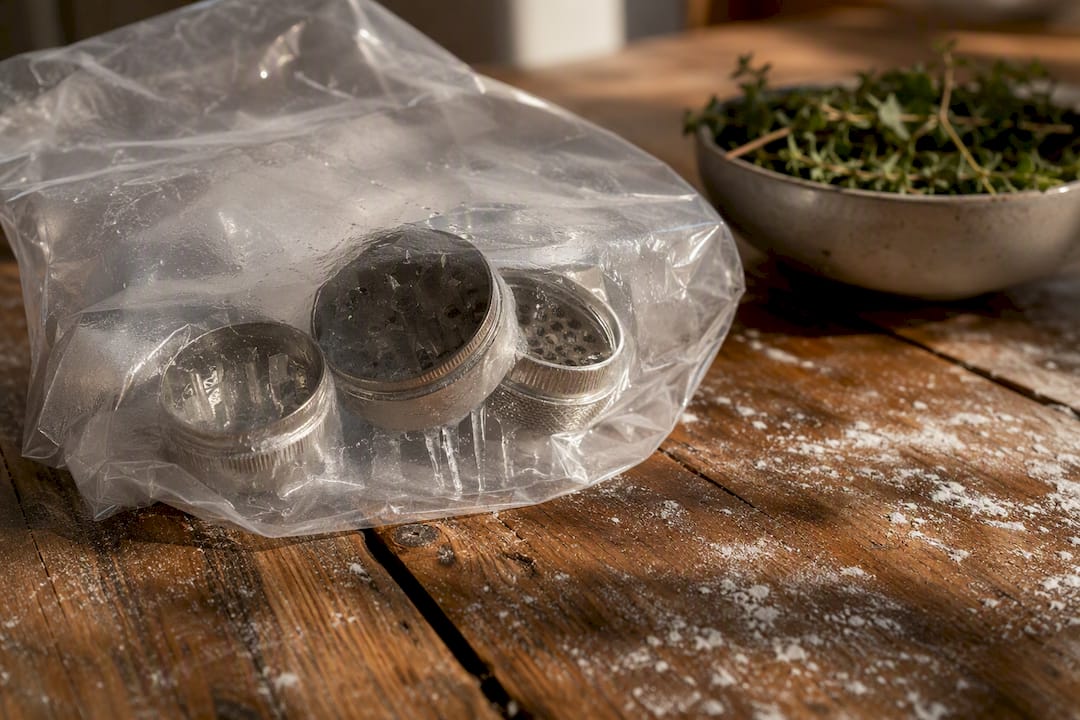
That concentration matters. Lower-proof rubbing alcohol carries more water, which dilutes its solvent power and leaves parts wetter for longer. Higher-proof alcohol dissolves resin faster and evaporates more completely, which is why 420Blazin recommends 91%+ IPA as the standard for cannabis resin removal.
Step 3: Add salt, selectively. A tablespoon of coarse salt turns the soak into a mild abrasive scrub when you shake the bag. This works well on uncoated stainless steel, but skip it on anodized or painted aluminum grinders, since salt crystals can scratch through colored anodized finishes and leave you with a dull, patchy surface.
Step 4: Soak and agitate.
- Light buildup: 20 to 30 minutes, shake once or twice
- Moderate to heavy caking: 45 to 60 minutes, agitate every 10 to 15 minutes
- Extremely stubborn resin: dump the alcohol, refill with fresh alcohol, and repeat
Step 5: Scrub, rinse, dry. Pull the pieces out and go over the teeth, threads, and screen with a soft brush, using wooden picks for tight spots. Rinse thoroughly with warm water. This rinse step matters more than people assume. It carries away the dissolved resin still suspended in the alcohol, which is what actually causes the residue people worry about, not the alcohol itself. Isopropyl residue isn’t a meaningful long-term concern once parts are rinsed and dried properly.
Skip the myths floating around forums, too. Boiling a grinder risks warping metal or melting plastic components, and rice does nothing for dissolved resin, it just risks jamming the mechanism, according to Futurola’s cleaning guide.
Do Cleaning Methods Change by Grinder Material?
Yes, and this is where a lot of people damage a grinder they were only trying to clean. The same alcohol soak that works beautifully on stainless steel can strip color off an anodized aluminum piece or crack a wooden one.
Aluminum and anodized grinders. Short alcohol soaks, under 20 to 30 minutes, are generally fine. Skip the coarse salt scrub, since it’s abrasive enough to wear through the thin anodized coating that gives these grinders their color. Long soaks push your luck too. If you own a colored or engraved piece and care about its finish, our guide to collectible grinders covers why anodized coatings are more fragile than they look.
Stainless steel and titanium. These are the most forgiving materials you can own. Full alcohol soaks, salt agitation, and firm brushing are all safe, since there’s no coating to strip and the metal itself resists corrosion.
Acrylic and plastic grinders. No alcohol, no boiling water. Alcohol can cloud or craze plastic over time, and heat can warp it outright. Warm water with a drop of dish soap and a soft brush is the safer combination. Rinse well since soap residue affects flavor just as much as resin does.
Wood grinders. Never soak wood in anything. Alcohol dries it out and encourages cracking, and water swells the grain. Dry brushing or a barely damp cloth, wiped and immediately dried, is the only method that won’t ruin the piece over time.
Electric grinders. The motor housing is the one part you can never submerge or soak, full stop. Wipe the exterior and the grinding chamber (if removable) with a damp cloth, and check the manufacturer’s instructions before using any alcohol on internal components. When in doubt, less liquid is always the safer bet with anything that has a motor inside it.
- Aluminum/anodized: short soaks only, no coarse salt
- Stainless/titanium: full soak and scrub, most durable option
- Acrylic/plastic: soapy water only, no alcohol or boiling
- Wood: dry brush or barely damp cloth, never soaked
- Electric: wipe exterior only, never submerge
How Do You Save the Kief Before You Clean?
Kief is the most valuable thing sitting in your grinder, and it’s also the easiest thing to accidentally wash away. Harvesting it before you soak anything in alcohol should be automatic, not an afterthought.
- Freeze the fully disassembled grinder for 20 to 60 minutes. Cold turns sticky, clingy resin brittle.
- Tap each piece firmly, upside down, over a sheet of paper or a small tray, focusing on the screen and kief catcher.
- Use a soft brush to sweep any remaining kief off the screen’s underside.
- Transfer the collected kief into a small airtight container, ideally silicone or glass, and label it with the date.
- Store it somewhere dry and dark until you’re ready to use it.
If you want to reclaim resin that’s already dissolved in your used cleaning alcohol, some people evaporate the alcohol off to leave a resin concentrate behind, such as those described in Concentrates Archives - Honest CBD Co. This is where flammability becomes a real concern, since food-grade ethanol like Everclear carries higher flammability and state-level sale restrictions, which is why 91% IPA remains the more practical and legal choice for most people in the U.S. Never attempt to evaporate alcohol indoors near any flame source.
Pro Tip: Our guide to kief collection covers how to press or use harvested kief once it’s dry, freeze it, sprinkle it, or press it into hash.
Why Does Drying Matter as Much as the Wash?
Rushing the drying step undoes most of the good a proper wash does. Alcohol evaporates fast, but water from a rinse lingers in threads and crevices far longer than people expect, and that trapped moisture is where real problems start.
91%+ IPA is preferred over lower concentrations specifically because it evaporates more completely and carries less water into the mix to begin with. The rinse afterward exists to physically flush out dissolved resin, not to add a cleaning step for its own sake, so don’t skip it thinking the alcohol alone finished the job.
- Clean in a ventilated area, away from flames, stovetops, or pilot lights. IPA and high-proof ethanol are both flammable at room temperature.
- Towel dry every piece immediately after rinsing to remove surface water.
- Let parts air dry for 30 to 60 minutes on a paper towel or rack, since full air-drying prevents residual moisture from causing problems down the line.
- A cool (not hot) setting on a hair dryer speeds this along if you’re impatient.
- Trapped moisture on metal parts causes oxidation and rust on threads. On plastic parts, it can cause slight swelling that makes the grinder harder to twist.
- Any leftover dampness inside a sealed container invites mold, especially if you reassemble before parts are bone-dry.
How Often Should You Clean a Grinder?
Cleaning frequency comes down to how often you use the grinder, not a fixed calendar date. Experts generally agree that a weekly quick clean, with monthly deep cleaning as the bare minimum, keeps most grinders running smoothly.
- Daily users: Quick clean every 2 to 3 days, deep clean once a month.
- Regular users (a few times a week): Quick clean weekly, deep clean every 6 to 8 weeks.
- Light or occasional users: Quick clean whenever you notice sluggish grinding, deep clean every 2 to 3 months.
Certain symptoms tell you exactly what’s wrong before you even open the grinder up.
- Stiff or hard-to-twist action usually means resin buildup between the grinding chamber and lid. A quick clean or short alcohol soak on metal usually fixes it.
- Clogged screen with no kief coming through means the holes are packed with resin. Soak and brush the screen specifically, using a wooden pick to clear individual holes.
- Off flavor or harsh smoke often traces back to old, oxidized resin sitting in the chamber. This calls for a full deep clean, not just a wipe down.
Some parts are worth replacing rather than fighting to save. A screen with stretched or torn mesh should be swapped out rather than aggressively cleaned, since stretched mesh lets kief pass straight through instead of collecting it. Stripped threads on the lid, where it no longer twists smoothly no matter how clean it is, usually mean it’s time for a new grinder rather than another cleaning session.
Why Trust This Guide on Herb Grinder Care
This guide comes from Juiced, who covers grinder care and kief collection for Elevated Remedies, drawing on the shop’s day-to-day experience helping customers pick and maintain smoking accessories.
Most grinder damage we see doesn’t come from heavy use. It comes from someone using a metal pick to scrape a screen clean, or soaking an anodized piece in salt and alcohol for an hour because they assumed longer meant cleaner. The material matters as much as the method.
- Elevated Remedies stocks grinders across metal, acrylic, and wood, and staff routinely field questions about care for each.
- Related reading: how grinders affect burn and flavor and what to know about collectible grinder finishes.
- These cleaning steps reflect the same material-specific reasoning used when recommending grinders in-store.
Our Take on Grinder Care
Most advice online treats grinder cleaning as one universal recipe: soak it in alcohol, scrub, done. That’s fine advice for a stainless steel piece and genuinely bad advice for anodized aluminum or wood. The real skill here isn’t memorizing a soak time, it’s matching the method to the material in front of you.
The bigger blind spot is kief. Plenty of guides jump straight to the alcohol soak and treat the kief tumbling into the sink as an acceptable loss. It isn’t. A 20 minute freezer stop before you tap out the chamber recovers material that took weeks to accumulate, and it costs you nothing but a little patience.
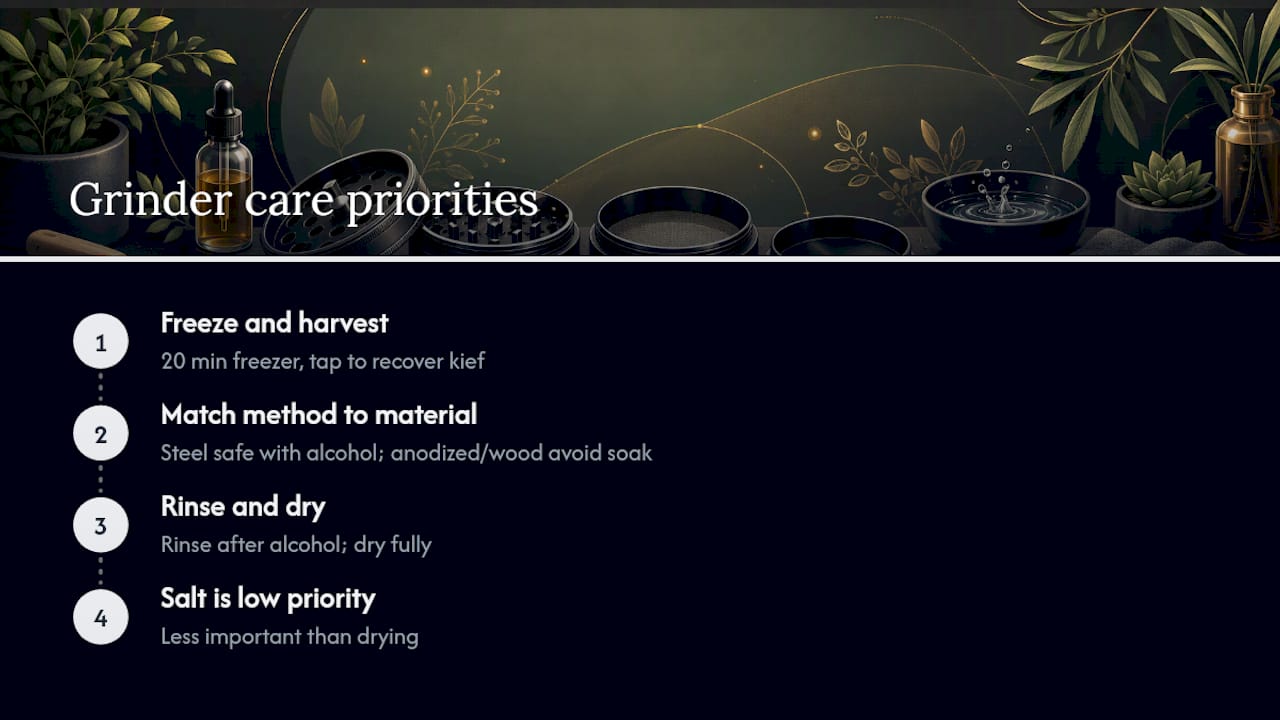
If we had to rank priorities for a grinder owner: freeze and harvest first, match your method to your material second, and never let alcohol residue worry you into skipping the rinse. Drying fully matters more than most people think, and salt matters far less than most forum threads suggest.
— Juiced
Keep Your Gear in Shape With Elevated Remedies
A clean grinder gets you better flavor and a smoother grind, but the gear itself matters too, and that’s where Elevated Remedies fits into the picture. As Ann Arbor’s smoke shop and mushroom dispensary, we stock metal, acrylic, and wood grinders across price points, so if yours has finally worn past saving (stripped threads, a screen that won’t hold kief anymore), you’re not stuck ordering blind online.

Beyond grinders, our shelves cover the accessories that go with them: bongs, pipes, dab rigs, rolling papers, and vapes, plus CBD and kratom for anyone branching out. If you’re curious about magic mushroom products alongside your smoke shop essentials, our page on amanita muscaria breaks down what it is and how people use it for microdosing. Stop by 1123 Broadway St in Ann Arbor, or browse the shop online, to find a grinder built to outlast a few years of regular cleaning instead of one that’s stiff and stripped after six months.
Sources
These sources shaped the material-specific and safety guidance throughout this guide.
- How to Clean Your Grinder: A Step-by-Step Guide
- 420blazin
- Grinder Cleaning Tips: Deep-Clean Hacks For Herb & Coffee – Green Blazer
The Elevated Remedies blog also covers kief collection and grinder performance in more depth for anyone looking to go further.