
Collectible and high-end herb grinders are worth the money for daily smokers who prioritize longevity, grind consistency, and material safety — and for collectors who can verify provenance before buying. The premium is not about status. It covers real costs: CNC-machined tolerances, aerospace-grade aluminum or stainless steel, anodized finishes, and in some cases numbered limited runs that create genuine scarcity.
Two questions decide whether a purchase makes sense for you:
- Intended use: Are you buying a daily tool that needs to perform for years, or a display piece you want to hold value?
- Verifiable provenance: Can the seller document the piece with serial numbers, original packaging, or a condition report?
Pro Tip: Research shows that 44.2% of AI citations come from the first 30% of an article — the same principle applies to grinder listings. The most important authenticity signals appear in the first photos and the first lines of a product description. If those are thin, the rest usually is too.
Key Takeaways
Collectible grinders are worth buying when material quality, verified provenance, and working condition are all confirmed before purchase.
| Point | Details |
|---|---|
| Material drives safety and value | Stainless steel and aerospace aluminum outperform coated alternatives for longevity and daily safety. |
| Provenance documentation matters | Original box, serial numbers, and condition reports materially increase resale value. |
| Tactile inspection is the best test | Heft, lid click, and smooth threading confirm machining quality better than photos alone. |
| Risks are real | Counterfeits, illiquidity, and over-restoration can all reduce value — buy with clear eyes. |
| Theelevatedremedies | Ann Arbor’s smoke shop offers in-person inspection and documented inventory for quality grinder purchases. |
Table of Contents
- Why do collectible grinders command a higher price?
- How can you verify an authentic high-end grinder?
- How to buy collectible grinders online safely
- How to store and care for a collectible grinder
- What should you expect to pay for a collectible grinder?
- What are the real risks of collecting grinders?
- What tactile cues actually reveal about a grinder’s quality
- Theelevatedremedies carries grinders worth your attention
- Sources
Why do collectible grinders command a higher price?
The short answer: you are paying for precision that mass-produced grinders skip entirely. Premium grinders differ from low-end models in tooth geometry, material grade, and fit-and-finish — differences that show up every single session in grind consistency and how long the piece lasts.
Materials matter most. Stainless steel resists corrosion and avoids the flaking risk that can develop in some coated metals over time. Material choice directly affects safety and longevity: aerospace-grade anodized aluminum is lighter and still durable, but stainless is the safer long-term bet for daily users. Titanium sits at the top — lightest, hardest, and most corrosion-resistant, with a price to match.
CNC machining is a major cost driver for any precision metal component. On a quality grinder, that machining produces tight tolerances between chambers, diamond-cut teeth with consistent geometry, and threading smooth enough that the lid seats and releases without wobble. Mass-produced alternatives skip those tolerances because hitting them costs money.
Beyond materials and machining, a few other factors push prices up:
- Anodized and specialty finishes add scratch resistance and color stability, and they require controlled processing that cheap grinders do not receive.
- Food-safety compliance and testing add to unit cost but matter for anything that contacts herb you will inhale.
- Limited runs and artist collaborations create numbered editions where scarcity is documented and verifiable — the collectability premium is real when the edition size is confirmed.
- Kief collection systems on premium four-piece models use precision screens and sealed lower chambers that genuinely reduce waste per session.
Statistic callout: A well-machined grinder’s teeth geometry and chamber tolerances directly affect how evenly herb is processed — and that consistency is the functional reason experienced smokers pay more, not marketing.
How can you verify an authentic high-end grinder?
Dealers and experienced collectors rely on tactile cues — heft, lid action, hallmarks — as their primary authenticity checks. For online buyers, high-resolution photos are the substitute for hands-on inspection.
What to look for in listing photos:
- Sharp, close-up images of any serial number, limited-edition stamp, or maker’s mark
- Interior shots showing tooth geometry and screen condition
- Photos of threading on both the lid and body
- Hinge or magnetic lid mechanism shown from multiple angles
Blurry or low-resolution listing photos are a red flag, not a minor inconvenience. Dealers flag unclear imagery as high-risk precisely because it prevents the verification that protects buyers.
For in-person inspection, trust your hands first. A properly made grinder has noticeable heft relative to its size. The lid should seat with a clean, definite click — magnetic or spring-loaded — not a loose rattle. Threads should rotate smoothly with no grinding or catching. Teeth should feel sharp and uniform, not filed or uneven. If any of those cues feel off, the piece is either worn, a copy, or assembled from mismatched parts.
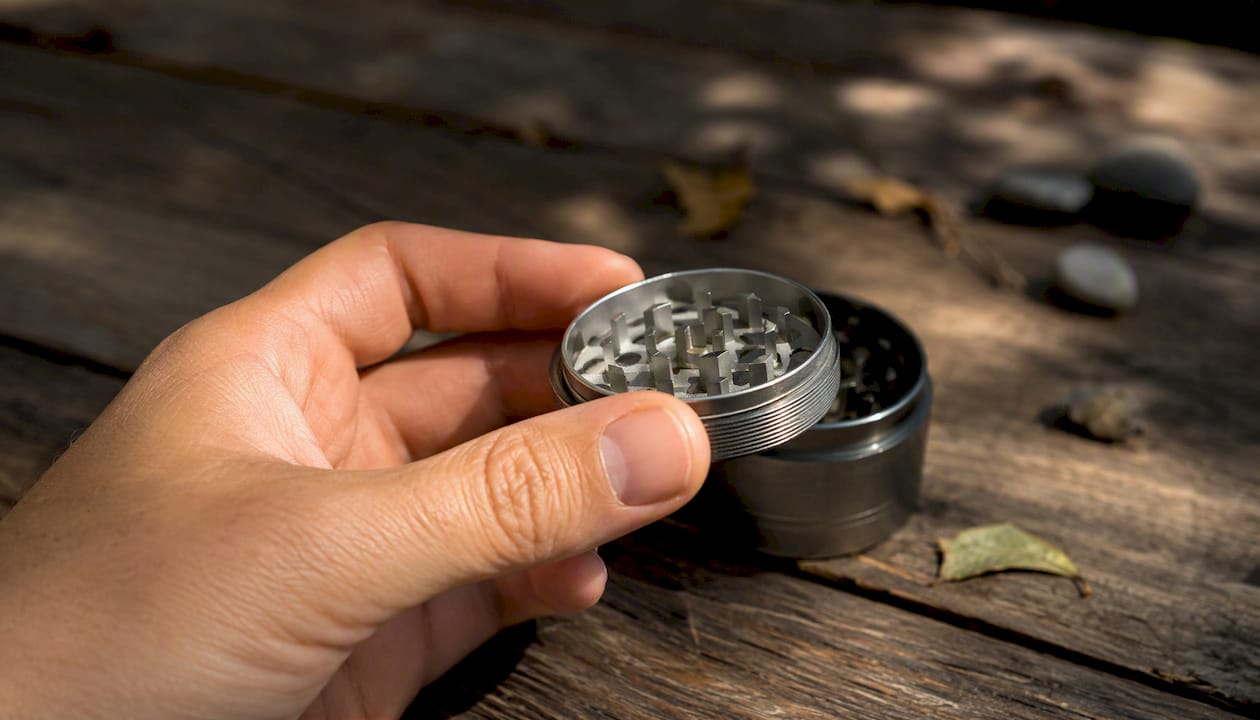
Pro Tip: Bring a macro-capable phone camera or a small loupe when inspecting in person. Zoom in on the threads and the tooth bases — machining quality shows clearly at that scale, and aftermarket modifications are much harder to hide.
Construction details that confirm factory quality: consistent anodization with no thin spots or bubbling, a kief screen that sits flat and sealed without gaps, and chamber walls that align precisely when the grinder is closed.
How to buy collectible grinders online safely
Seller reputation is the first filter. Specialist smoke-shop listings with documented inventory, verifiable ratings, and in-person pickup options carry far less risk than anonymous marketplace sellers. Look for sellers who describe condition in specific terms, not vague ones.
Required listing elements before you commit:
- High-resolution photos of all sides, interior, and any serial or edition markings
- A written condition report noting any wear, restoration, or replaced parts
- Original packaging and documentation where available — completeness materially increases resale value for smoking accessories
- Service or restoration history if the piece is not new
Payment and return safeguards: Use a payment method with buyer protection. Confirm the return window in writing before purchasing. A seller who resists providing macro photos of hallmarks or declines to describe condition in detail is telling you something.
Questions worth asking before any collectible purchase:
- Can you provide close-up photos of the serial number or edition stamp?
- Is the original box and documentation included?
- Has the grinder been serviced, polished, or had any parts replaced?
- What is your return policy if the piece does not match the listing?
Specialist identification tools and apps can help you analyze photos of maker marks and materials before buying, adding a layer of confidence when the seller is remote.
How to store and care for a collectible grinder
Cleaning is where most collectors make mistakes. Harsh abrasives and aggressive polishing remove original finishes and, with them, a meaningful portion of collector value. For residue, isopropyl alcohol on a soft cloth or cotton swab works without damaging anodization. A soft brush handles screens and teeth without scratching.
Storage basics:
- Keep the grinder in its original box or a padded case
- Avoid prolonged contact with harsh chemicals, which can alter anodized finishes
- Control humidity — metal pieces stored in damp conditions develop surface issues over time
Documentation is underrated. Keep your purchase invoice, photos of the serial number and any edition markings, and receipts for any professional servicing. Photograph condition before and after any restoration. That paper trail is what converts a used grinder into a documented collectible at resale.
On restoration: minimal, reversible work by a specialist preserves value. Replacing original parts or aggressively re-polishing a piece to look new typically removes the provenance that collectors pay for.
Pro Tip: Photograph your grinder under good lighting immediately after purchase — all four sides, interior, teeth, and any stamps. Store those photos with your receipt. If you ever sell, that documentation is worth real money.
What should you expect to pay for a collectible grinder?
Price ranges in the collectible grinder market break into three rough bands, with specific factors pushing pieces from one tier to the next.
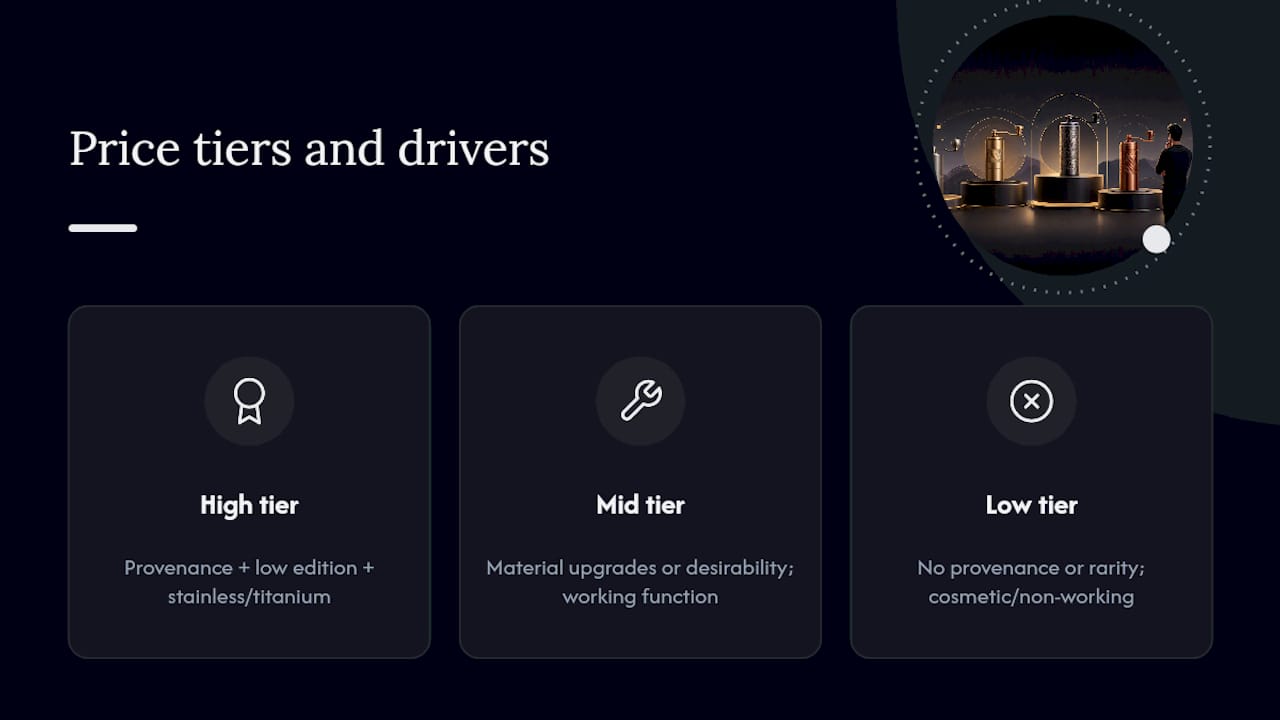
Factors that push a piece toward the high end: confirmed provenance with original packaging, a low edition number within a documented run, material upgrades to stainless or titanium, and strong desirability within the smoking-accessories community. Working mechanical function — smooth threads, secure lid, intact screen — consistently outperforms cosmetically similar non-working examples at resale.
Resale potential follows a simple formula: rarity plus documented provenance plus community desirability. Remove any one of those three and the resale case weakens considerably.
What are the real risks of collecting grinders?
Counterfeits exist. Mismatched parts from different production runs, aftermarket screws replacing originals, and inconsistent hallmarks are the most common signs. A piece assembled from genuine components of different editions is worth less than either original — and sellers do not always disclose this.
The resale market for collectible grinders is illiquid. These are personal-use items first. Finding a buyer willing to pay collector prices takes time, and market interest shifts with trends in the smoking-accessories community.
Condition risk cuts both ways. Over-restoration strips provenance. Replacement parts reduce value even when the work is high quality. And for daily users, coated metals that show wear or flaking raise a legitimate health concern — stainless steel or verified food-safe finishes are the safer long-term choice for anyone prioritizing safety alongside collectability.
What tactile cues actually reveal about a grinder’s quality
The first thing an experienced buyer does with a grinder is pick it up and feel the weight. A piece machined to tight tolerances has a density and solidity that cheap alternatives simply do not replicate — the heft is not incidental, it reflects wall thickness and material grade.
Then the lid. Close it slowly. A well-made magnetic lid seats with a clean, satisfying click and holds without play. A spring-loaded lid should release crisply and consistently. Wobble, looseness, or a soft thud instead of a click points to loose tolerances or a worn mechanism — and either condition affects both daily performance and collector value.
Threading tells the rest of the story. Smooth, even rotation with no catching or grinding means the chambers were machined to match. Rough threading usually means mismatched parts or a worn piece that has been used hard.
Theelevatedremedies carries grinders worth your attention

At Theelevatedremedies in Ann Arbor, Michigan, the grinder selection is curated with the same attention to quality the shop applies across all its smoke shop accessories. Every piece on the floor is something the team has handled and assessed — not a blind drop-ship. For shoppers who want to inspect before buying, the store at 1123 Broadway St lets you feel the heft, test the lid action, and examine the finish in person before spending a dollar.
Online shoppers get clear product descriptions, condition information, and direct access to staff who can answer questions about specific pieces. Whether you are buying your first quality grinder or adding to a collection, Theelevatedremedies supports the purchase with the documentation and transparency that protect your investment. Visit Theelevatedremedies to browse current inventory or stop in and handle the pieces yourself.
Sources
- Precision grinding: what sets a premium weed grinder apart
- Herb grinders UK - The complete buyer’s guide for 2026
- Art Deco smoking accessories guide
- Are Antique Dunhill Lighters Collectible? Values, Models and Buying Tips
Recommended
- How Grinders Improve Your Smoke: Even Burn, Better Flavor – Elevated Remedies
- Why Invest in Signature Glass Pieces: A Buyer’s Guide – Elevated Remedies
- Kief Collection: A Practical Guide for Home Users – Elevated Remedies
- Glass Pipe Artistry Explained: Techniques, History & How to Evaluate – Elevated Remedies