
A grinder’s job is simple: break your herb into a uniform particle size so heat distributes evenly, airflow stays consistent, and you get a cleaner, more flavorful smoke every time. That single mechanical step separates a smooth, efficient session from a canoeing joint and wasted product.
Here’s what that means in practice:
- Even burn. Uniform pieces mean no hot spots, no unburned chunks, no lopsided joint.
- Easier rolling and packing. Consistent texture fills cones and bowls predictably, without gaps or air pockets.
- Free kief. A four-piece grinder collects concentrated trichome material in a bottom chamber you can harvest and use.
For most regular smokers, a four-piece metal grinder is the single most useful tool you can add to your setup.
Table of Contents
- What does grinding actually do for your smoke?
- Which type of grinder is right for you?
- How to use a grinder correctly
- What experts say about trichomes and terpene preservation
- How kief collection works and what to do with it
- How to clean and maintain your grinder
- What to do when you don’t have a grinder
- Key Takeaways
- The grinder advice most people get wrong
- Theelevatedremedies has the grinders worth buying
- Useful sources and further reading
What does grinding actually do for your smoke?
The role of grinders in smoking comes down to physics. When you break herb into uniform pieces, air moves through the packed material at a consistent rate. Inconsistent chunks create dead zones where heat concentrates on one side while the other barely combusts. That’s canoeing, and it wastes product fast.
Surface area is the other half of the equation. Grinding creates dozens of small particles instead of a few large ones, so heat contacts more plant material simultaneously. More contact means more efficient extraction of cannabinoids and terpenes with every draw. Hand-torn flower, by contrast, mixes large chunks with fine dust, which disrupts airflow and transfers trichomes to your fingers before the material ever reaches a flame.
Terpenes and trichomes deserve a specific note. Terpenes are the volatile aromatic compounds responsible for flavor and much of the nuanced effect profile you notice between strains. They degrade quickly under heat and friction. Controlled mechanical shearing in a quality grinder does less damage to trichome heads than aggressive hand-crushing, which means more of those compounds survive to the point of combustion. The role of terpenes in your experience is significant enough that how you prepare your flower genuinely changes what you taste.
Practical benefits beyond burn quality:
- Cleaner hands, no sticky resin loss before you even light up
- Odor containment while grinding (a closed grinder keeps smell localized)
- More predictable dosing when you can see and measure consistent volume
Pro Tip: Match grind texture to your method. Coarse (5–8 turns) works best for convection vapes and loose bowls. Medium (10–15 turns, resembling coarse coffee grounds) is the standard for joints and pre-rolled cones. Fine (20+ turns) suits tightly packed vaporizers only. Over-grinding to dust restricts airflow and makes joints nearly impossible to draw through.
The trade-off is real: too coarse and you get an uneven burn; too fine and you choke the airflow. Medium is the default for a reason.
Which type of grinder is right for you?
Grinders come in four main configurations, and the differences matter more than most buyers expect.
Two-piece grinders are the simplest option: a lid with teeth and a base that catches ground material. They’re compact, easy to clean, and good for travel. The downside is that everything lands in one chamber, so you’re scooping ground herb directly from the grinding surface. No kief collection, no separation.
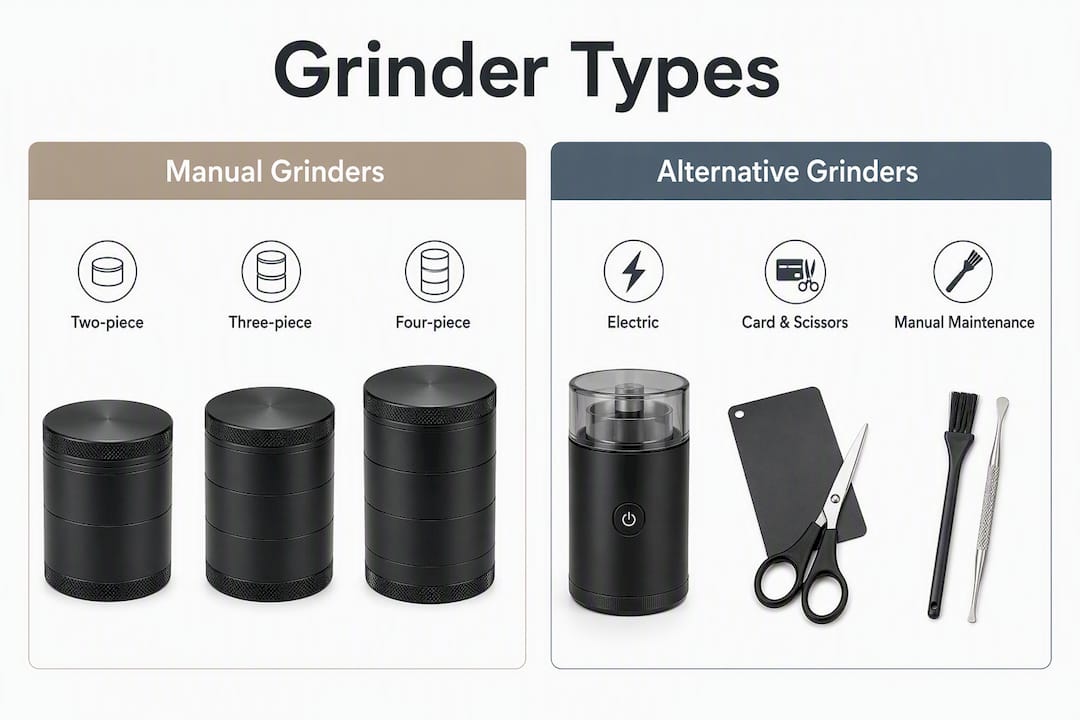
Three-piece grinders add a second chamber below the grinding plate. Ground material falls through holes into a clean storage compartment, keeping it separate from the teeth. Better for portability than a four-piece, still no kief capture.
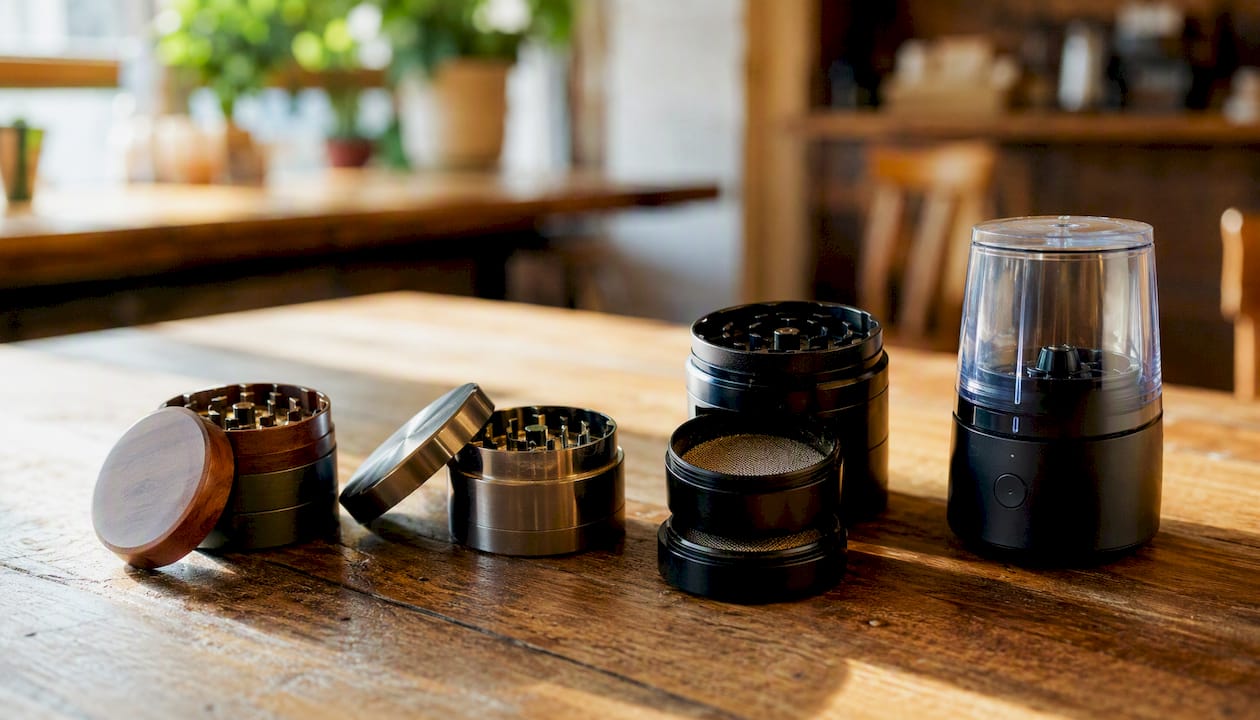
Four-piece grinders are the workhorse choice for regular smokers. A fine mesh screen sits between the storage chamber and a bottom kief catcher. As you grind over time, trichome heads sift through the screen and accumulate below. That collected kief is potent concentrated material you can use to top bowls or press into hash. If you smoke regularly, the kief alone justifies the upgrade.
Electric grinders trade manual control for speed, which makes them useful for high-volume grinding or for users with limited hand mobility. The catch is that electric models can over-process flower and reduce your control over texture. They also tend to cost more and require charging or batteries.
Card and scissors alternatives exist but belong in the alternatives section below.
Material comparison
| Feature | Aluminum/Anodized Metal | Plastic | Wood |
|---|---|---|---|
| Particle control | High | Moderate | Low |
| Kief capture | Yes (4-piece) | Rarely | No |
| Durability | High | Low | Moderate |
| Contamination risk | Low | Moderate (teeth break) | Low |
| Cleaning difficulty | Easy | Easy | Difficult |
| Price range | $15–$60 | $5–$15 | $10–$30 |
Aluminum and anodized steel grinders dominate for good reason: the teeth stay sharp, the tolerances stay tight, and they don’t shed plastic fragments into your herb. Plastic grinders lose teeth over time, and those fragments end up in your material. Wooden grinders look attractive but absorb resin, resist thorough cleaning, and rarely include a kief screen.
Buying checklist: Look for diamond-cut or sharp-edged teeth, a magnetic lid that closes securely, tight chamber tolerances (no wobble between pieces), a 100-micron or finer kief screen, and a build that doesn’t flex when you twist. A pocket-sized metal herb grinder hits all those marks without bulk.
How to use a grinder correctly
Most people load too much and twist too hard. Here’s the right way:
- Break stems off first. Load only the flower, not large stems. Stems dull teeth and don’t grind evenly.
- Load loosely. Fill the grinding chamber to about two-thirds capacity. Overpacking creates resistance and uneven results.
- Place the lid on firmly. The magnetic closure should snap shut without forcing it.
- Rotate in alternating directions. Turn clockwise 3–4 times, then counter-clockwise 3–4 times. This prevents material from packing into one side of the teeth.
- Check resistance. When the grinder turns with almost no resistance, the material is done. That drop in friction is your signal.
- Tap the grinder. Before opening, tap the side a few times to knock ground material through the holes into the storage chamber.
- Open and check texture. If pieces are still chunky, close and repeat. If it looks like fine powder, you’ve gone too far.
For joints and cones, aim for 10–15 total turns. The result should look like coarse coffee grounds. For bowls, 5–8 turns gives you a slightly chunkier texture that sits well and burns evenly. For vaporizers, follow the manufacturer’s recommendation, but most convection models prefer coarse to medium.
Dos and don’ts:
- Do remove wet or freshly harvested flower before grinding. Moisture clogs teeth and creates a paste.
- Don’t press down on the lid while twisting. Let the teeth do the work.
- Do clear the holes between the grinding and storage chambers if they clog. A toothpick works.
- Don’t force a stuck grinder. If it won’t turn, the chamber is overpacked or there’s a stem caught in the teeth.
If your grinder feels sticky and hard to turn, that’s resin buildup. The fix is in the cleaning section below.
What experts say about trichomes and terpene preservation
The conventional wisdom used to be that any grinding method was fine as long as the herb was broken up. Experts have since pushed back on that. Controlled mechanical shearing in a quality grinder preserves volatile terpenes better than hand-crushing, because abrasive hand-tearing generates more friction and heat at the point of contact, degrading aromatic compounds before combustion.
The balance is specific: you want enough mechanical action to free cannabinoids and expose surface area, but not so much that you pulverize trichome heads into dust. Trichome heads contain the highest concentration of cannabinoids and terpenes. Once they’re ground into powder and exposed to air, oxidation begins immediately.
Practical recommendations from that evidence:
- Use a grinder with sharp metal teeth, not dull plastic ones that crush rather than cut
- Stop grinding when resistance drops, not after a fixed number of turns
- If you’re collecting kief, use a four-piece with a properly sized mesh screen rather than a coin trick (more on that below)
- Grind immediately before use when possible. Pre-ground material stored for hours loses terpene content to evaporation
The terpene profile of your herb is one of the primary drivers of flavor and effect. Protecting it starts at the grinding stage, not after.
How kief collection works and what to do with it
Kief is the concentrated trichome material that separates from ground flower and collects in the bottom chamber of a four-piece grinder. It looks like a fine, golden-green powder because it’s mostly trichome heads rather than plant matter and is significantly more potent than the flower it came from.
As you grind routinely, trichome heads fall through the mesh screen into the kief catcher below. The screen’s mesh size determines what passes through: finer mesh (around 100 microns) collects purer kief with less plant material mixed in.
How to harvest kief:
- Check the kief chamber after every few sessions. You’ll see it accumulating as a fine layer.
- Use a small scraper tool (most four-piece grinders include one) to gently push kief toward the center.
- For larger amounts, place the entire grinder in the freezer for 20–30 minutes first. Cold makes trichomes more brittle and easier to separate cleanly.
Ways to use kief:
- Top a packed bowl with a pinch for a noticeably stronger session
- Layer it into a joint before rolling
- Press it between parchment paper with gentle heat to make basic hash
- Add small amounts to edibles or concentrates
Storage and safety: Keep kief in a small, airtight glass container in a cool, dry place away from direct light. Label it clearly, especially if others have access to your space. Kief is considerably more potent than flower, and the difference catches people off guard. Start with a small amount if you’re new to using it.
How to clean and maintain your grinder
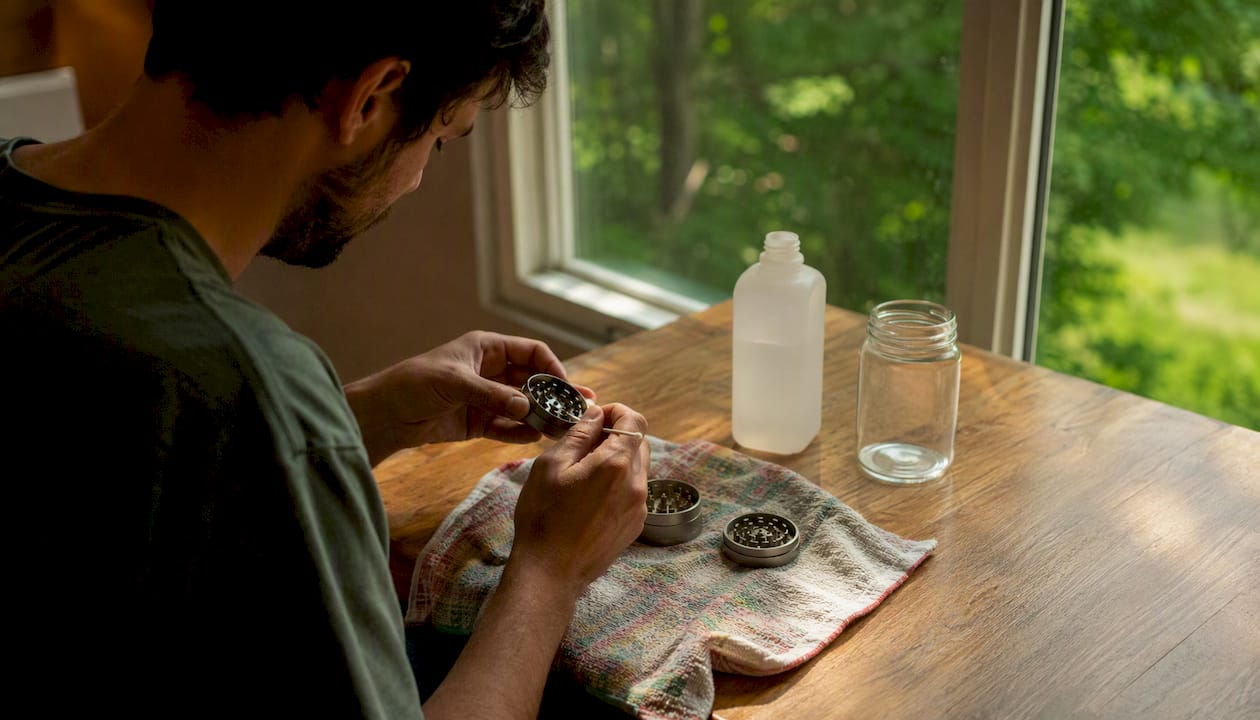
A grinder that isn’t cleaned regularly loses performance fast. Resin builds up on the teeth, clogs the screen, and makes the chambers hard to turn. Here’s a routine that keeps it working properly:
- Disassemble completely. Separate all chambers and the screen.
- Brush out dry material first. Use a small, stiff brush (a clean toothbrush works) to clear loose herb and kief from every surface. Do this over a clean piece of paper so you can recover any kief.
- Tap the screen gently. Hold the kief screen over your collection container and tap it lightly to release any material caught in the mesh. Never scrub the screen with a brush.
- Soak metal parts in isopropyl alcohol. For a thorough clean, submerge metal chambers in 91% or higher isopropyl alcohol for 20–30 minutes. The resin dissolves without damaging the metal.
- Rinse and dry completely. Rinse with warm water, then let all parts air-dry fully before reassembling. Residual alcohol in the grinding chamber will contaminate your next grind.
Isopropyl alcohol is effective for metal grinders, but wooden or painted grinders need gentler care. Alcohol strips finishes from painted surfaces and absorbs into porous wood, leaving behind solvent residue you don’t want near your herb.
Frequency guide: Light users (a few times a week) can do a full clean monthly. Daily users should brush out chambers weekly and do a full isopropyl soak every two to three weeks. If the lid is hard to twist, that’s a sign the threads need attention.
Stuck grinder fix: Put the entire grinder in the freezer for 15–20 minutes. Cold contracts the resin and makes it brittle, which usually frees the threads immediately. For persistent stickiness, soak the metal pieces in isopropyl alcohol. Avoid re-lubricating threads with anything food-unsafe; a tiny amount of food-grade wax applied to the threads is the only safe option if needed.
For the same approach applied to other smoking equipment, the step-by-step bong cleaning guide from Theelevatedremedies covers the same principles in more depth.
What to do when you don’t have a grinder
Safe alternatives exist, but some popular hacks carry real risks.
Safe options:
- Small scissors and a shot glass. Place flower in a shot glass and snip repeatedly with small scissors. This gives you reasonable control over texture and keeps material contained.
- Sharp blade and cutting board. A clean chef’s knife on a cutting board works for coarse breaking. Not ideal for fine texture, but functional.
- Hand crumbling. Acceptable when no other option exists. The downside is resin transfer to your fingers and inconsistent sizing.
The penny myth: Placing a coin in the storage chamber of a grinder to knock loose extra kief is a widely shared trick. The problem is that a coin can introduce dirt, metal debris, and accelerated wear on the chamber walls. A coin that’s been in your pocket carries bacteria, residue, and surface contamination you don’t want mixed into concentrated trichome material. A quality four-piece grinder with a proper screen collects kief reliably without that risk.
Heat-based methods: Rubbing flower aggressively between your palms generates friction heat that degrades terpenes before you’ve even loaded a bowl. Applying any external heat source to break down material destroys the volatile compounds you’re trying to preserve.
Wet flower: Don’t try to grind or cut freshly harvested or improperly dried flower. It clogs any tool you use and produces an uneven, pasty result. If your flower feels damp, let it dry in an open container for a few hours before processing.
Card scrapers and purpose-built herb cards exist as pocket alternatives, but they produce inconsistent texture and work best only for very small amounts.
Key Takeaways
A quality grinder is the single preparation tool that most directly affects burn quality, flavor, and efficiency in every smoking method.
| Point | Details |
|---|---|
| Uniform grind = even burn | Consistent particle size prevents canoeing and wasted product in every session. |
| Match grind to method | Coarse for bowls and convection vapes; medium (10–15 turns) for joints and cones. |
| Four-piece for kief capture | A mesh screen separates trichome heads into a bottom chamber you can harvest over time. |
| Clean regularly | Brush weekly and soak metal parts in isopropyl alcohol every few weeks to maintain performance. |
| Theelevatedremedies carries grinders | Shop in-store at 1123 Broadway St, Ann Arbor, or browse online for metal four-piece and compact travel options. |
The grinder advice most people get wrong
Most first-time buyers focus entirely on price and size, which is the wrong frame. A $10 plastic grinder and a $35 anodized aluminum four-piece are not the same tool with different aesthetics. The plastic one loses teeth within a few months, and those fragments end up in your herb. The aluminum one shears cleanly for years.
What I see consistently is that people underestimate how much the grinding stage affects flavor. They’ll spend real money on quality flower and then hand-tear it into uneven chunks, losing resin to their fingers and degrading terpenes before the material ever reaches heat. The grinder isn’t a luxury accessory. It’s the step that determines whether the quality you paid for actually reaches you.
The other overlooked point: kief collection is essentially a slow-build bonus that most casual smokers ignore. If you grind regularly with a four-piece, you accumulate concentrated material over weeks without any extra effort. That’s a meaningful return on a one-time purchase.
For new buyers, the practical shortlist is short: get a four-piece aluminum grinder with a magnetic lid and a 100-micron screen. Mid-size (about 2.5 inches) fits most hands and pockets. Skip the electric option unless you have a specific reason for it. And clean it before it gets sticky, not after.
Theelevatedremedies has the grinders worth buying
If you’ve been grinding by hand or using a two-piece that’s seen better days, the upgrade pays for itself fast. Theelevatedremedies carries a selection of metal grinders at the Ann Arbor shop, including four-piece options with kief catchers and compact two-piece travel grinders for smokers who want something pocket-ready.

Every grinder on the shelf is chosen for build quality: sharp teeth, tight tolerances, and screens that actually collect kief instead of clogging after a week. The staff at 1123 Broadway St can walk you through the options based on how you smoke and what you’re looking for. If you prefer to browse first, the smoke shop accessories page covers the full range of what’s available. Stop in or shop online and pick up the tool that makes every session better from the first grind.
Useful sources and further reading
These sources informed this guide and are worth bookmarking for deeper research:
- How a Weed Grinder Works: Why Grinding Improves Burn and Airflow (Weedmaps) — Covers the mechanics of airflow, even combustion, and why uniform particle size matters.
- What Is a Weed Grinder? Uses, Types, And How To Use One (Green Blazer) — Practical breakdown of grinder types, rotation counts for different textures, and surface area effects.
- Cannabis Grinder Guide (The Social Cannabis) — Explains kief collection, hand-breaking trade-offs, and the penny myth with clear reasoning.
- What Is a Grinder? Understanding Its Role in Cannabis Use (Avondale Apothecary) — Expert perspective on trichome preservation and terpene protection during mechanical grinding.
- Cannabis 101: Why Grinders Are Useful Before Smoking Weed (NJ.com) — Covers electric grinder trade-offs and isopropyl alcohol cleaning safety for different materials.
- Coin in Grinder (Airways Postal) — Detailed look at the penny trick, contamination risks, and why a quality screen is the better solution.
This article is general information about smoking preparation tools, not medical or legal advice. Cannabis laws vary by state and locality. Confirm current regulations with your state’s official resources or a qualified professional before purchasing or using cannabis products.
Recommended
- How different bong slides shape your smoking experience – Elevated Remedies
- Smoke shop accessories that actually improve your wellness – Elevated Remedies
- Adaptogens in Smoke Shops: Benefits and Wellness Guide – Elevated Remedies
- Explaining Mushroom Blending: Techniques, Benefits and Uses – Elevated Remedies