TL;DR:
- Searching mush involves researching psilocybin mushrooms’ types, effects, safe use, and therapeutic potential to promote informed experiences. Psilocybin, especially in therapeutic doses, shows strong clinical evidence for treating depression, PTSD, and addiction, with effects lasting 3 to 6 hours. Safety relies on proper identification, quality sources, appropriate dosing, mindset, and environment to minimize psychological risks.
Searching mush is the practice of identifying, understanding, and sourcing psilocybin mushrooms, covering everything from species recognition to safe use and mental health applications. Psilocybin mushrooms, most commonly Psilocybe cubensis, have moved from counterculture curiosity to the center of serious clinical research. Whether you are new to the topic or deepening your knowledge, this guide covers the types you will encounter, what to expect from the experience, how to use them safely, and what the latest science says about their therapeutic potential.
What is search mush and why does it matter?
“Search mush” is the informal phrase people use when they are actively looking up information about psilocybin mushrooms, also called magic mushrooms. The recognized scientific term for the active compound is psilocybin, which the body converts to psilocin once ingested. Understanding that distinction matters because most clinical research, legal discussions, and harm reduction resources use “psilocybin” as the standard term. Knowing both terms makes your research sharper and your sources more reliable.
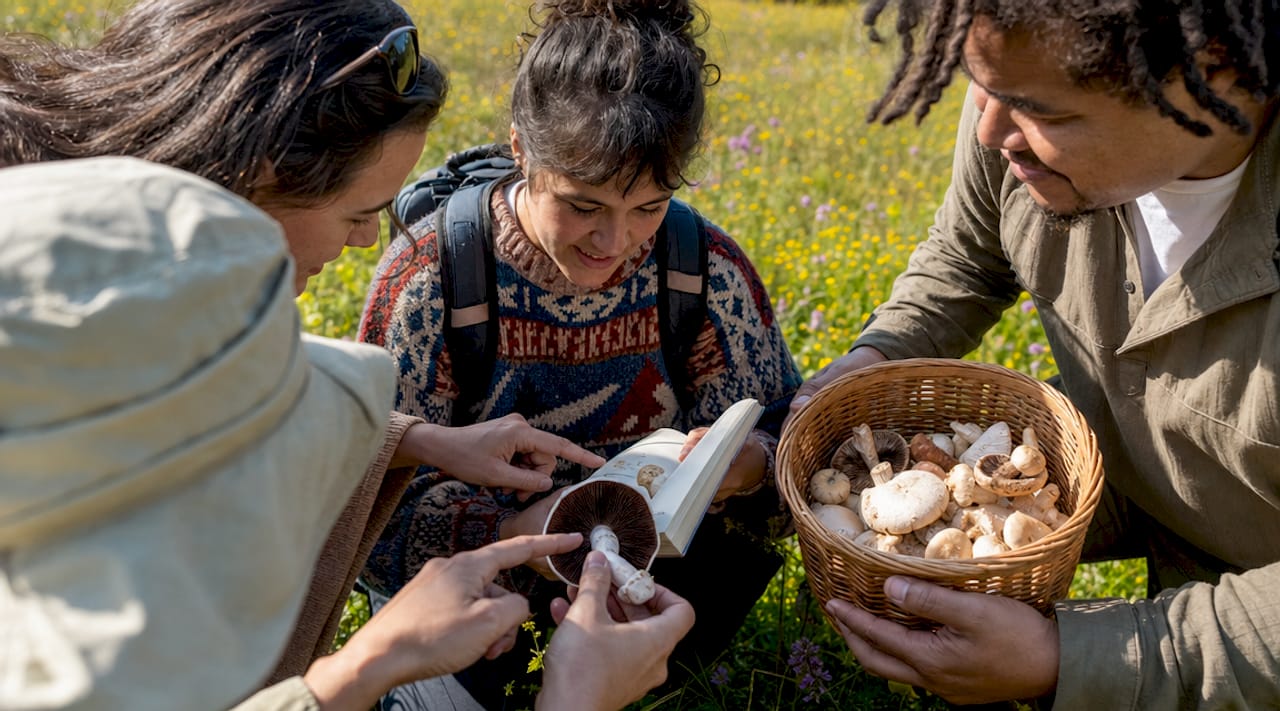
The interest is not casual. Clinical trials, decriminalization efforts in cities like Ann Arbor and Denver, and a growing wellness community have pushed psilocybin into mainstream conversation. When you search mush with intention, you are not just satisfying curiosity. You are building the knowledge base that separates a safe, meaningful experience from a preventable bad one.
What are the main types of psilocybin mushrooms and how do you identify them?
Psilocybin mushrooms span hundreds of species, but a handful appear most frequently in both the wild and in product form.
Common species at a glance:
- Psilocybe cubensis: The most widely cultivated species. Golden to tan caps, often 2 to 8 cm wide. Grows in tropical and subtropical regions, frequently on cattle dung. Potency is moderate and consistent, making it the go-to for beginners.
- Psilocybe semilanceata (Liberty Cap): Small, conical, with a distinctive nipple-shaped tip. Found in grassy, damp meadows across Europe and the Pacific Northwest. Higher potency per gram than P. cubensis.
- Psilocybe azurescens: One of the most potent wild species, native to the Pacific Coast. Wavy, caramel-colored caps. Not recommended for beginners.
- Psilocybe cyanescens (Wavy Caps): Found on wood chips in urban and suburban settings. Recognized by its wavy cap edge and strong bluing reaction when bruised.
The bluing reaction, a blue or green discoloration when the flesh is cut or bruised, is caused by psilocin oxidizing. It is a useful indicator but not a definitive proof of psilocybin content. Some toxic species also bruise blue.
Species comparison by key traits:
| Species | Potency | Habitat | Beginner-friendly |
|---|---|---|---|
| Psilocybe cubensis | Moderate | Tropical, subtropical | Yes |
| Psilocybe semilanceata | High | Temperate grasslands | No |
| Psilocybe azurescens | Very high | Pacific Coast wood | No |
| Psilocybe cyanescens | High | Urban wood chips | No |
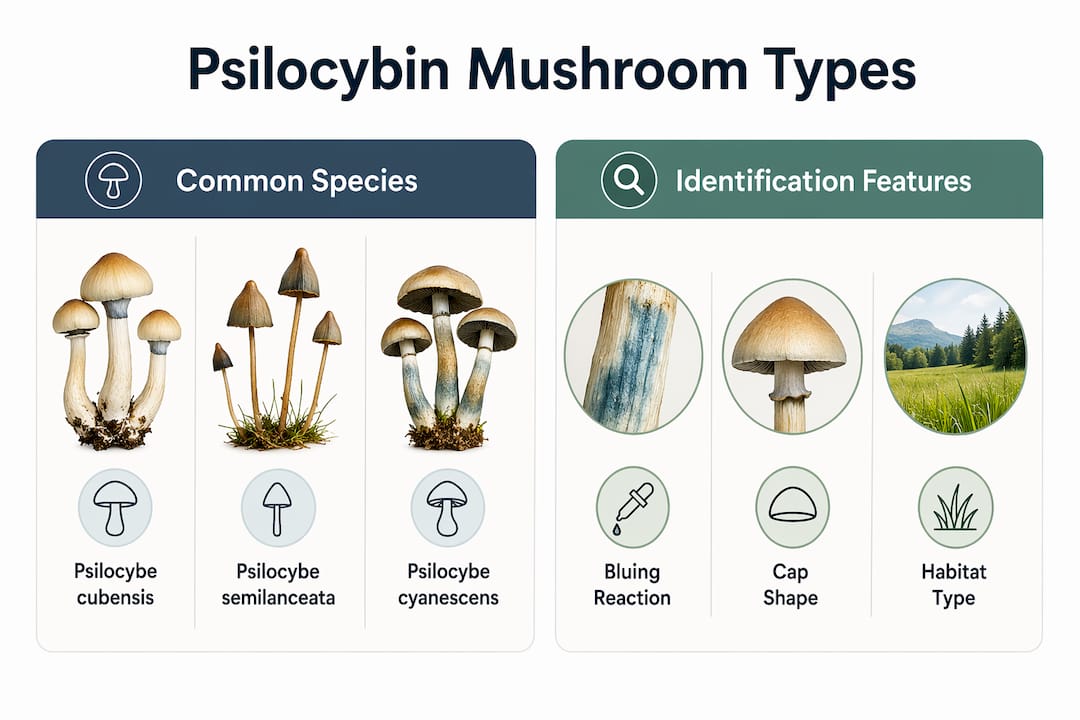
Misidentification is the most serious risk in wild foraging. The Galerina marginata, which is deadly toxic, shares habitat and appearance with several psilocybin species. Expert verification from a trained mycologist or a spore print analysis is not optional. It is the minimum standard before consuming anything foraged. For a deeper look at how different mushroom varieties compare, the mushroom type breakdown at Theelevatedremedies covers additional species context.
What effects do psilocybin mushrooms produce and how long do they last?
Psilocybin converts to psilocin in the body, where it binds primarily to serotonin receptors, particularly the 5-HT2A receptor, in the brain. This binding disrupts the Default Mode Network, the brain’s “autopilot” system associated with self-referential thinking and rumination. The result is a temporary but profound shift in perception, emotion, and cognition.
Typical subjective effects include:
- Visual distortions: patterns, color enhancement, and geometric hallucinations at higher doses
- Emotional amplification: euphoria, awe, or, less commonly, anxiety and fear
- Cognitive shifts: altered sense of time, increased introspection, and ego dissolution at high doses
- Physical sensations: yawning, mild nausea during onset, and body warmth
Effects onset within 20 to 60 minutes of ingestion, with peak effects arriving 1 to 2 hours in and total duration lasting 3 to 6 hours. Individual metabolism, body weight, stomach contents, and the specific mushroom strain all influence timing. This variability is why patience before redosing is non-negotiable.
Dose determines intensity more than any other single factor. A 1g dose of P. cubensis produces mild perceptual shifts. A 3.5g dose produces a full psychedelic experience. Anything above 5g is considered a high dose and is appropriate only for experienced users in controlled settings. How terpenes influence the experience adds another layer of variability worth understanding before you dose.
Pro Tip: Eat a light meal 3 to 4 hours before dosing. A full stomach slows onset and can cause nausea. An empty stomach speeds onset but may intensify early discomfort.
How can you use psilocybin mushrooms safely?
Safe psilocybin use rests on three pillars: set, setting, and substance quality. “Set” refers to your mindset going in. “Setting” refers to your physical and social environment. Substance quality refers to knowing exactly what you are taking and at what dose.
Follow these steps before and during any session:
- Assess your mental state. Psilocybin amplifies your current emotional state. If you are in acute crisis, grieving, or experiencing psychosis symptoms, postpone. A history of schizophrenia or bipolar disorder with psychotic features is a hard contraindication.
- Choose your environment carefully. A private, hazard-free space with comfortable seating, familiar music, and access to water is the standard. Avoid public spaces, unfamiliar locations, or anywhere you cannot control your surroundings.
- Start with a low dose. For first-time users, 1 to 1.5g of dried P. cubensis is the standard starting point. This produces noticeable effects without overwhelming intensity.
- Bring a trip sitter. A sober, trusted companion is recommended for any dose above 2g. Their role is not to intervene in the experience but to provide grounding if anxiety spikes.
- Wait before redosing. The minimum wait time before taking more is 2 hours. Redosing too early is the most common cause of unexpectedly intense experiences.
- Review your medications. SSRI antidepressants blunt psilocybin effects, and combining psilocybin with stimulants or cannabis raises the risk of anxiety and cardiovascular strain. Consult a physician if you take any prescription medication.
“The goal of harm reduction is not to eliminate risk entirely but to make informed decisions that minimize it. Knowing your dose, your source, and your state of mind is the foundation.” — Rave Wellness
Psilocybin has a high therapeutic index of approximately 1000:1, meaning the gap between a typical dose and a physically dangerous dose is enormous. Physical toxicity at normal doses is negligible. The real risks are psychological: panic, paranoia, and accidents caused by impaired judgment in unsafe environments.
Product quality is the variable most people underestimate. Lab-tested psilocybin products deliver dosage accuracy within ±10% and screen for contaminants. Wild mushrooms vary in potency from 0.2% to 2% psilocybin by dry weight, a tenfold range that makes consistent dosing nearly impossible. For practical guidance on dosing in Michigan specifically, the Michigan psilocybin dosage guide at Theelevatedremedies is a useful reference.
Pro Tip: If you are using capsules or chocolates from a dispensary, ask for the Certificate of Analysis. Any reputable source will have one. It confirms psilocybin content and screens for heavy metals and mold.
What mental health benefits does psilocybin research show in 2026?
Psilocybin is now one of the most studied psychedelic compounds in clinical psychiatry, with active trials targeting depression, PTSD, OCD, and addiction. The results are not preliminary anymore.
Key findings from recent clinical research:
- Phase 3 trials in 2025 demonstrated statistically significant superiority of psilocybin over placebo for treatment-resistant depression, with the COMP360 trial meeting its primary endpoint at p less than 0.001.
- 70% of participants with chronic suicidal ideation and major depressive disorder showed significant reduction in symptoms 12 weeks after a single 25mg synthetic psilocybin dose. That figure represents a meaningful shift in how psychiatry approaches treatment-resistant cases.
- The neurobiological mechanism centers on the Default Mode Network. Psilocybin temporarily disrupts this network, which is overactive in depression and PTSD, allowing new cognitive patterns to form during and after the session.
Therapeutic dosing vs. microdosing: a critical distinction
| Approach | Dose range | Clinical evidence | Use case |
|---|---|---|---|
| Therapeutic session | 25 to 40mg psilocybin | Strong (Phase 2 and 3 trials) | Depression, PTSD, addiction |
| Microdosing | 0.1 to 0.3g dried mushroom | Limited, largely anecdotal | Mood, focus, creativity |
Microdosing lacks rigorous clinical trial support compared to full-dose therapeutic use. The distinction matters because many people searching mush alternatives or mush search tips are drawn to microdosing as a low-risk entry point. It may offer benefits, but it should not be treated as a substitute for evidence-based therapeutic protocols. For a broader look at how psilocybin products support mental wellness, the psilocybin chocolate and mental wellness resource from Theelevatedremedies covers product-specific applications.
The regulatory picture is shifting. The FDA has granted psilocybin Breakthrough Therapy designation for treatment-resistant depression. Several U.S. states are developing supervised therapeutic frameworks. Ann Arbor decriminalized psilocybin possession in 2020, making it one of the most permissive cities in the country for personal use.
Key takeaways
Safe, informed psilocybin use requires knowing your species, your dose, your source, and your mental state before you ever take a single gram.
| Point | Details |
|---|---|
| Species identification matters | Misidentification of wild mushrooms can be fatal; use lab-tested products or expert verification. |
| Effects last 3 to 6 hours | Onset takes 20 to 60 minutes; never redose before the 2-hour mark to avoid overwhelming intensity. |
| Lab-tested products are safer | Wild mushroom potency varies tenfold; tested products deliver ±10% dosage accuracy. |
| Therapeutic use has strong evidence | Phase 3 trials confirm psilocybin outperforms placebo for treatment-resistant depression. |
| Microdosing is not medical treatment | Anecdotal benefits exist, but microdosing lacks the clinical backing of full therapeutic sessions. |
What I have learned from watching people search mush the wrong way
Most people who come into Theelevatedremedies asking about psilocybin have done some research. The problem is the research they have done is scattered: a Reddit thread here, a YouTube video there, and maybe a news article about a clinical trial. The result is a patchwork understanding that gets the exciting parts right and misses the parts that actually keep you safe.
The single most common mistake I see is treating microdosing and therapeutic use as interchangeable. They are not. Full-dose therapeutic sessions, conducted in controlled settings with clinical support, have the evidence behind them. Microdosing has enthusiasm and some promising early data. Conflating the two leads people to expect clinical-grade outcomes from a practice that has not yet earned that designation. The expert perspective on psilocybin therapy makes this distinction clearly, and it is worth reading before you form strong opinions.
The second mistake is underestimating how much product quality affects the experience. Wild-foraged mushrooms are not romantic. They are unpredictable. A tenfold variation in potency means the dose you think you are taking and the dose you are actually taking can be completely different. Lab-tested capsules and chocolates from a reputable source are not the “less authentic” option. They are the smarter one.
My honest advice: treat psilocybin with the same seriousness you would give any substance that can fundamentally alter your perception of reality. That is not a reason to avoid it. It is a reason to approach it with preparation, good information, and a source you trust.
— Juiced
Find quality psilocybin products at Theelevatedremedies
If you are ready to move from research to practice, the quality of your source matters as much as anything else in this guide.
Theelevatedremedies, located at 1123 Broadway St in Ann Arbor, Michigan, carries lab-tested mushroom capsules designed for consistent, accurate dosing. Whether you are microdosing for the first time or looking for a reliable product for a more intentional session, the team at Theelevatedremedies can walk you through potency, sourcing, and safe use practices. The dispensary also carries dried magic mushrooms and psilocybin chocolates, all sourced for quality and consistency. Ann Arbor’s decriminalization framework makes Theelevatedremedies one of the most accessible and legally clear options in Michigan for anyone exploring psilocybin responsibly. Stop in or explore the Michigan safe use guide online before your visit.
FAQ
What does “search mush” mean?
“Search mush” refers to the act of researching psilocybin mushrooms, including their types, effects, safe use practices, and therapeutic applications. It is an informal phrase that captures the growing public interest in understanding magic mushrooms before using them.
How long do psilocybin mushroom effects last?
Effects typically last 3 to 6 hours, with onset occurring within 20 to 60 minutes and peak effects arriving 1 to 2 hours after ingestion. Dose, metabolism, and the specific species all influence the exact timeline.
Is psilocybin physically dangerous?
Psilocybin carries a therapeutic index of approximately 1000:1, meaning physical toxicity at typical doses is negligible. The primary risks are psychological, including panic and impaired judgment, particularly in unsafe environments or at high doses.
What is the difference between microdosing and therapeutic dosing?
Therapeutic dosing involves 25 to 40mg of psilocybin in a supervised clinical setting and has strong Phase 2 and Phase 3 trial support. Microdosing uses sub-perceptual amounts, typically 0.1 to 0.3g of dried mushroom, and currently lacks equivalent clinical evidence.
Can psilocybin interact with my medications?
Yes. SSRIs significantly blunt psilocybin effects, and combining psilocybin with stimulants or cannabis can increase anxiety and cardiovascular strain. Always consult a physician before using psilocybin if you take any prescription medication.