
TL;DR:
- Mushroom alkaloids are diverse bioactive compounds that influence human neurotransmitter systems and have therapeutic potential. They serve ecological roles like predator deterrence and microbial competition rather than benefiting humans directly. Whole-mushroom preparations maximize effects through synergy, making them more effective than isolated compounds in medical applications.
Alkaloids are nitrogen-containing organic compounds in mushrooms that directly influence human physiology, neurochemistry, and cognition. The role of alkaloids in mushrooms extends far beyond psychedelic effects. Compounds like psilocybin, muscimol, and ergot alkaloids are now at the center of clinical research into treatment-resistant depression, addiction, neurodegenerative disease, and metabolic conditions. Understanding their biochemistry gives you a clearer picture of why mushrooms produce such powerful effects and how those effects can be directed toward real therapeutic outcomes.
What is the role of alkaloids in mushrooms?
Alkaloids are the primary bioactive drivers of mushroom pharmacology. They are secondary metabolites, meaning fungi do not need them to grow, but produce them for specific biological purposes. In the context of human health, these compounds interact with neurotransmitter receptors, cross the blood-brain barrier, and modulate immune and metabolic pathways.
The three most studied alkaloid classes in mushrooms are tryptamines, GABA-receptor agonists, and ergot alkaloids. Psilocybin is the most recognized tryptamine, found in over 200 fungal species and studied extensively for its effects on mood and perception. Muscimol, a GABA-receptor agonist from Amanita muscaria, acts through an entirely different neurological pathway. Ergot alkaloids, produced by Claviceps and Aspergillus species, have a long history in pharmaceutical development, including the synthesis of LSD and ergotamine for migraines.
Mushroom alkaloids carry broad biological activity including antimicrobial, neuroprotective, anticancer, and antibacterial effects. That range of activity explains why fungi have attracted serious attention from pharmaceutical researchers, not just psychedelic enthusiasts.
What chemical types of alkaloids are found in mushrooms?
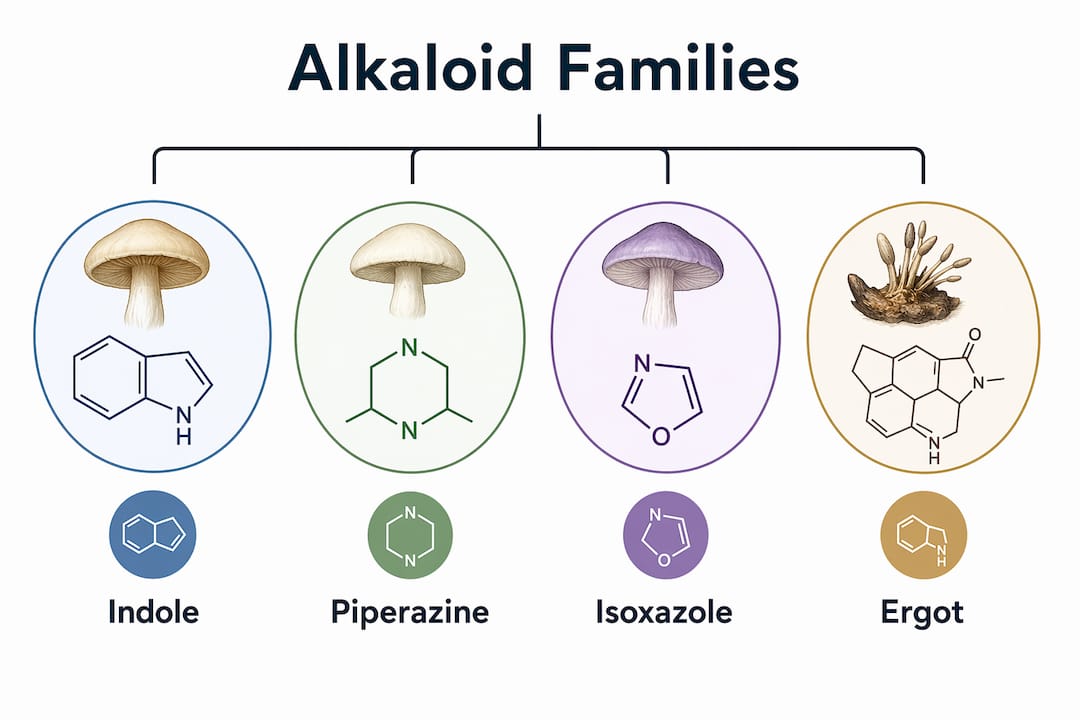
Fungal alkaloids fall into several distinct chemical families, each with different molecular structures, biosynthetic origins, and pharmacological targets.
Major alkaloid families in fungi
- Indole alkaloids (tryptamines): Psilocybin and psilocin belong here. They share a core indole ring structure with serotonin, which explains their affinity for serotonin receptors. In Aspergillus fungi, indole alkaloids comprise 34.7% of all secondary metabolites. That figure makes indoles the single largest alkaloid class in fungal chemistry.
- Piperazine alkaloids: These account for 26.5% of fungal secondary metabolites in Aspergillus species. They are structurally distinct from indoles and interact with different receptor systems, including dopamine and histamine pathways.
- Isoxazole alkaloids: Muscimol and ibotenic acid from Amanita muscaria fall into this category. Muscimol is a potent GABA-A receptor agonist. Ibotenic acid is an excitatory neurotoxin that converts to muscimol through decarboxylation.
- Ergot alkaloids: Produced by Claviceps purpurea and certain Aspergillus strains, these compounds act on dopamine and serotonin receptors. Their concentration is not uniform across fungal structures. Spores carry higher ergot alkaloid content than sclerotia, a fact with direct implications for extraction and medicinal formulation.
| Alkaloid Class | Example Compounds | Primary Receptor Target |
|---|---|---|
| Indole (tryptamines) | Psilocybin, psilocin | 5-HT2A serotonin |
| Piperazine | Various Aspergillus metabolites | Dopamine, histamine |
| Isoxazole | Muscimol, ibotenic acid | GABA-A |
| Ergot | Ergotamine, ergine | Dopamine, serotonin |
Different fungal species produce radically different alkaloid profiles. Psilocybe cubensis is rich in psilocybin. Amanita muscaria produces no psilocybin at all. This species-level variation matters enormously when you are evaluating mushroom products for specific health outcomes.
How do mushroom alkaloids affect human health and cognition?
Mushroom alkaloids affect cognition primarily by binding to serotonin receptors, especially the 5-HT2A subtype. Psilocybin converts to psilocin in the body, and psilocin’s structural similarity to serotonin allows it to activate these receptors directly. The result is altered perception, increased neural connectivity, and, at therapeutic doses, measurable reductions in depression and anxiety.
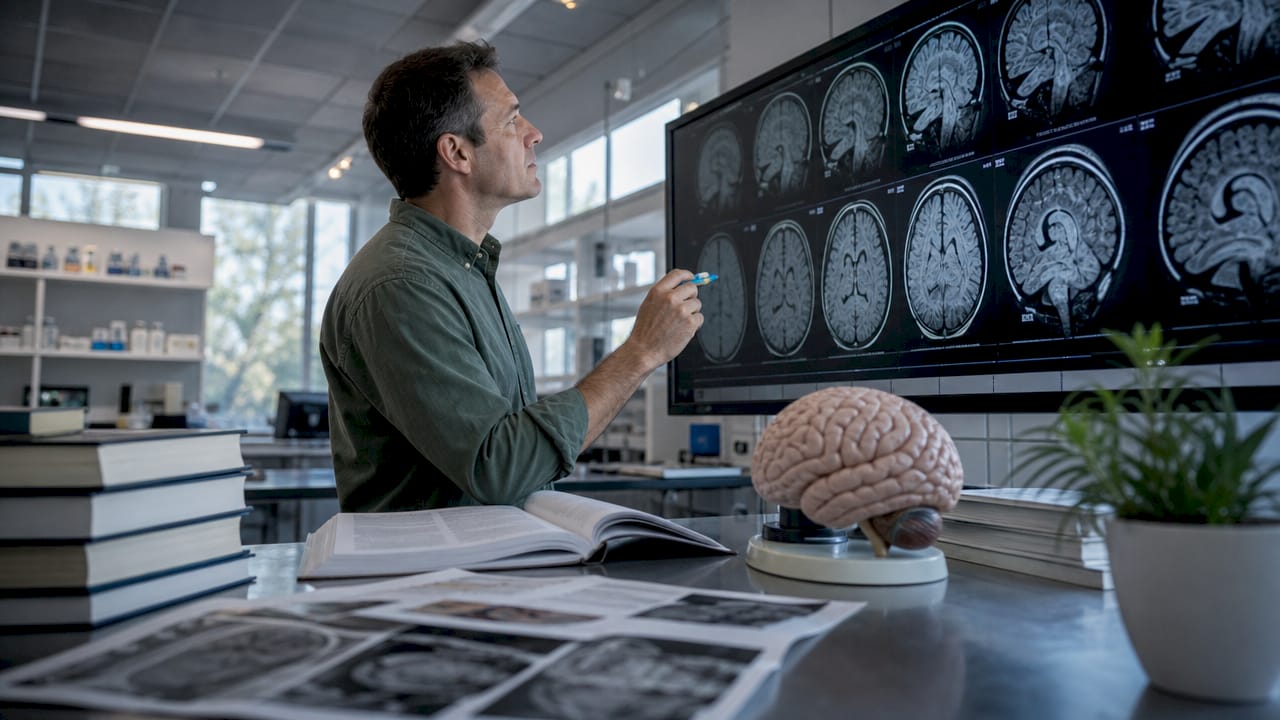
Clinical evidence for psilocybin now rivals that of established pharmaceuticals. Trials comparing psilocybin to escitalopram for depression and addiction treatment show comparable outcomes, with psilocybin producing faster onset and longer-lasting remission in some patients. That speed of effect is pharmacologically unusual. Most antidepressants require weeks of daily dosing to produce results.
The metabolic effects of these alkaloids are equally surprising. Low, non-psychedelic doses of psilocybin at 0.05 mg/kg reduce insulin resistance, obesity markers, and hepatic steatosis in animal models by targeting 5-HT2B receptors in the liver. This means the compound can produce therapeutic benefit through a completely different receptor system, one that has nothing to do with the brain’s hallucinogenic pathways.
Mushroom alkaloids also show favorable pharmacokinetics: high gastrointestinal absorption, strong blood-brain barrier permeability, and minimal interference with liver enzymes. That safety profile distinguishes them from many synthetic pharmaceuticals that carry significant hepatotoxicity risk.
Pro Tip: If you are exploring mushroom products for wellness purposes, the dose matters more than the species name on the label. The same compound produces entirely different effects at microdose versus full-dose levels, acting through different receptor systems entirely.
The entourage effect in mushrooms adds another layer of complexity. Whole mushroom preparations produce enhanced and prolonged pharmacological effects compared to isolated alkaloids. The synergy between alkaloids, terpenes, and other bioactive compounds creates a pharmacodynamic profile that no single extracted compound can replicate. You can read more about how terpenes contribute to this synergy in a dedicated breakdown.
What evolutionary roles do alkaloids serve in mushrooms?
Fungi did not evolve alkaloids for human benefit. These compounds serve specific ecological functions that explain why certain species produce them in large quantities.
-
Predator deterrence. Psilocybin modulates invertebrate behavior as a defense mechanism, reducing insect survival and development. Insects that consume psilocybin-containing tissue experience neurological disruption that discourages further feeding. This explains why alkaloid production persists across hundreds of fungal species despite its metabolic cost.
-
Antimicrobial defense. Many fungal alkaloids inhibit competing bacteria and other fungi in the soil environment. This gives alkaloid-producing species a competitive advantage in nutrient-dense substrates where microbial competition is intense.
-
Structural concentration gradients. Alkaloids are not distributed evenly throughout a mushroom’s body. Spores tend to carry higher concentrations than other tissue types. This pattern suggests alkaloids protect reproductive structures, the parts of the fungus most critical to survival and propagation.
-
Behavioral manipulation of vectors. Some researchers propose that alkaloid-induced behavioral changes in animals that consume mushrooms may actually benefit spore dispersal. An animal that experiences altered behavior after eating a mushroom may travel further, spreading spores across a wider area.
The evolutionary logic here reframes how you think about psilocybin. Its primary biological function is likely invertebrate behavior modulation, not human psychoactivity. The fact that it also produces profound effects in humans is, from the fungus’s perspective, incidental.
What are the practical applications of mushroom alkaloids?
The therapeutic potential of alkaloid compounds in mushrooms now extends well beyond psychedelic therapy. Researchers are actively investigating applications across metabolic disease, neurodegeneration, and oncology.
Clinical and medicinal applications
- Neurodegeneration: Amanita muscaria alkaloids, specifically muscimol and ibotenic acid, are under active study for Parkinson’s and Alzheimer’s disease. Muscimol’s GABA-A agonism may help regulate the excitatory-inhibitory imbalance seen in neurodegenerative conditions.
- Metabolic disease: Psilocybin’s action on hepatic 5-HT2B receptors offers a non-psychedelic pathway to treating obesity and insulin resistance. This is a significant finding because it separates therapeutic benefit from psychoactive risk.
- Oncology support: Psilocybin-assisted therapy reduces existential distress in cancer patients, with effects lasting months after a single session. This durability is unmatched by conventional anxiolytics.
- Addiction treatment: Clinical trials show psilocybin reduces alcohol and tobacco dependence, with remission rates that outperform standard pharmacotherapy in some study populations.
Formulation and safety considerations
Alkaloid concentration varies significantly by species, growing conditions, and which part of the fungus is harvested. This variability creates real challenges for product consistency. A capsule made from whole dried mushroom powder will have a different alkaloid profile than one made from an extract standardized to a specific compound.
Pro Tip: When evaluating mushroom capsules or extracts, look for products that specify the extraction method and the part of the fungus used. Spore-derived extracts and mycelial extracts have meaningfully different alkaloid profiles and potencies.
Toxicity is a real consideration with certain species. Ibotenic acid from Amanita muscaria is neurotoxic in its raw form. Proper preparation, including drying or decarboxylation, converts it to the safer muscimol. The science behind safe mushroom use covers these preparation distinctions in detail. The entourage effect also means that whole mushroom synergy produces pharmacodynamics that isolated alkaloids cannot replicate, which is why whole-mushroom formulations remain the preferred approach in clinical research settings.
Key Takeaways
Mushroom alkaloids are chemically diverse, ecologically purposeful compounds that interact with human neurotransmitter systems in ways that produce measurable therapeutic outcomes across depression, addiction, metabolic disease, and neurodegeneration.
| Point | Details |
|---|---|
| Chemical diversity is wide | Indole, piperazine, isoxazole, and ergot alkaloids each target different receptor systems. |
| Dose determines the effect | Sub-psychedelic doses of psilocybin produce metabolic benefits through hepatic receptors, not brain pathways. |
| Whole mushroom beats isolates | The entourage effect means full-spectrum preparations outperform single extracted alkaloids in potency and duration. |
| Evolutionary function shapes distribution | Alkaloids concentrate in spores and reproductive tissue, not evenly throughout the mushroom body. |
| Safety depends on species and preparation | Ibotenic acid requires decarboxylation to become the safer muscimol; species identity and processing method both matter. |
Why the biochemistry of mushrooms deserves more serious attention
Most coverage of mushroom alkaloids still defaults to the psychedelic angle. That framing misses the bigger story. The biochemical diversity of alkaloids in fungi represents one of the most underexplored areas in modern pharmacology. I find it genuinely striking that a compound like psilocybin can reduce insulin resistance in the liver at doses too low to affect perception. That finding alone should shift how researchers and consumers think about what these compounds actually do.
The entourage effect argument also tends to get dismissed as vague or unscientific. It is neither. The pharmacodynamic difference between isolated psilocybin and a whole mushroom preparation is measurable and meaningful. Reducing a complex fungal chemistry to a single active compound is the same mistake made with cannabis decades ago, and it delayed useful research by years.
The gap I see most often is between ecological research and clinical application. Scientists studying why fungi produce alkaloids and scientists studying what those alkaloids do in humans rarely talk to each other. The evolutionary data on psilocybin’s role in invertebrate deterrence, for example, raises interesting questions about dosing thresholds and receptor selectivity that clinical researchers have not fully addressed. Closing that gap would accelerate the development of safer, more targeted mushroom-based therapeutics. That is the conversation worth having right now.
— Juiced
Theelevatedremedies: quality mushroom products in Ann Arbor
Theelevatedremedies, located at 1123 Broadway St in Ann Arbor, Michigan, carries a curated selection of mushroom products for people who want to go beyond surface-level wellness claims.

The dispensary stocks dried magic mushrooms, mushroom capsules for microdosing, and mushroom chocolates, all sourced for consistency and quality. For those curious about Amanita muscaria and its unique alkaloid profile, the Amanita muscaria product page offers both educational context and product options. The team at Theelevatedremedies is knowledgeable and ready to help you match the right product to your specific interest, whether that is microdosing, therapeutic exploration, or simply understanding what you are taking.
FAQ
What are the main alkaloids found in mushrooms?
The primary alkaloids in mushrooms include psilocybin and psilocin in Psilocybe species, muscimol and ibotenic acid in Amanita muscaria, and ergot alkaloids in Claviceps and Aspergillus species. Each class targets different receptor systems and produces distinct physiological effects.
How do mushroom alkaloids affect the brain?
Psilocybin converts to psilocin in the body and binds to 5-HT2A serotonin receptors, altering neural connectivity and mood. Muscimol acts on GABA-A receptors, producing sedative and dissociative effects through a completely separate pathway.
Can mushroom alkaloids work without causing hallucinations?
Yes. Low doses of psilocybin at sub-psychedelic thresholds act on hepatic 5-HT2B receptors to reduce insulin resistance and obesity markers without engaging the brain’s hallucinogenic pathways. This is one of the most significant recent findings in mushroom pharmacology.
Why do mushrooms produce alkaloids in the first place?
Fungi produce alkaloids primarily as ecological defense tools. Psilocybin deters insect predators by disrupting their nervous systems, while other alkaloids inhibit competing bacteria and fungi in the soil. Human psychoactivity is a secondary effect, not the evolutionary purpose.
Is the whole mushroom more effective than an isolated alkaloid extract?
Whole mushroom preparations produce stronger and longer-lasting effects than isolated alkaloids due to the entourage effect, where multiple bioactive compounds interact synergistically. Clinical research consistently supports full-spectrum formulations over single-compound extracts for therapeutic applications.
Recommended
- The Role of Terpenes in Mushroom Effects Explained – Elevated Remedies
- Magic Mushrooms Explained: Science, Safety & Wellness Guide – Elevated Remedies
- Defining Adaptogens in Psychedelics: What You Need to Know – Elevated Remedies
- Michigan mushrooms for wellness: Laws, benefits, and safe use – Elevated Remedies