
TL;DR:
- Entheogenic wellness involves intentional use of psychoactive substances within structured frameworks to promote mental health and personal growth.
- It emphasizes preparation, dosing, and integration, with scientific evidence indicating lasting improvements in well-being across multiple substances.
Entheogenic wellness is defined as the intentional use of psychoactive substances in spiritual and therapeutic contexts, structured around preparation, dosing, and integration to support mental health and personal growth. The word “entheogen” comes from the Greek roots meaning “generating the divine within.” Substances like psilocybin mushrooms, ayahuasca, and peyote sit at the center of this practice. What separates entheogenic wellness from recreational use is the framework built around the experience. Preparation, intentional dosing, and post-session integration are what transform a psychedelic experience into a lasting wellness outcome.
What is entheogenic wellness and how does it work?
Entheogenic wellness is not simply about taking a substance and waiting for results. The practice depends on psychological support and structured integration just as much as the pharmacological effects of the substance itself. Think of it this way: the substance opens a door, but preparation and integration determine what you do once you walk through it.

The term “entheogenic” is the recognized framework here. You may also hear “psychedelic-assisted therapy” or “psychedelic wellness” used in clinical research settings. Both refer to overlapping territory. Entheogenic wellness tends to include a broader range of ceremonial and indigenous healing traditions alongside modern clinical models.
Three named entities define this space today: psilocybin (the active compound in magic mushrooms), ayahuasca (a plant-based brew from Amazonian traditions), and 5-MeO-DMT (a potent synthetic and natural compound studied in clinical trials). Each carries a distinct profile, but all three are used within structured wellness frameworks that prioritize intention and integration.
What structured practices define entheogenic experiences?
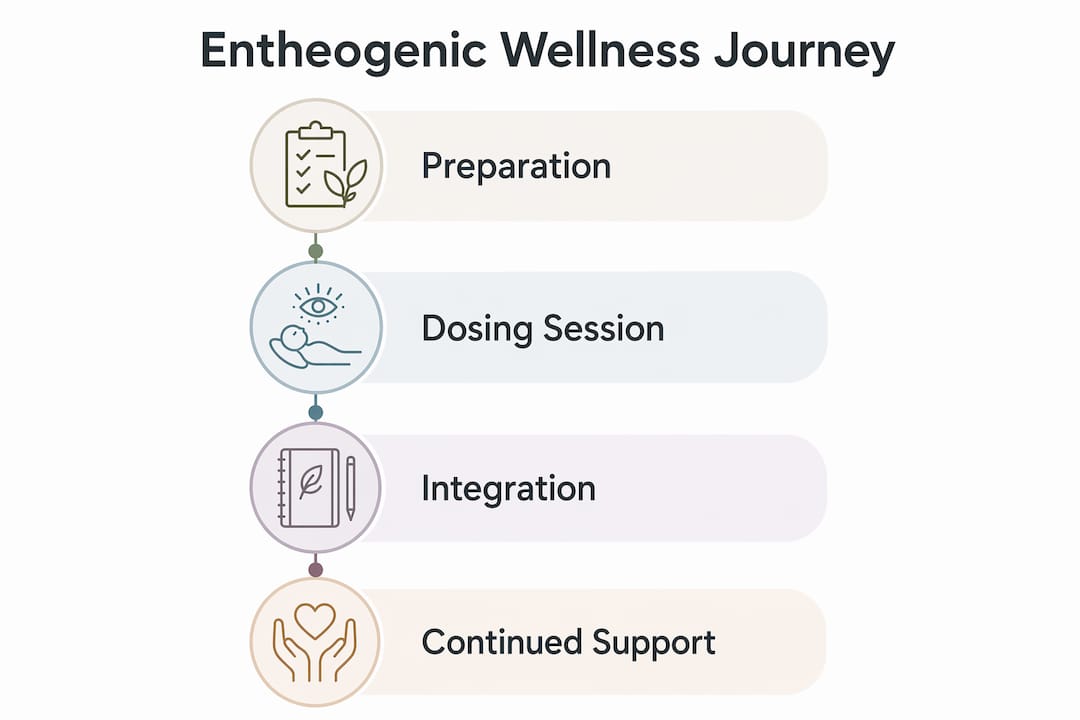
Clinical and ceremonial models follow a recognizable sequence. Preparation, dosing, and integration form the backbone of every credible entheogenic wellness program. Skipping any phase reduces both safety and effectiveness.
Here is how a typical structured entheogenic wellness process unfolds:
- Screening and intake. Psychological and cardiovascular assessments identify contraindications before any substance is introduced.
- Preparatory sessions. One or more sessions build therapeutic alliance, clarify intentions, and reduce anxiety about the upcoming experience.
- Dosing session. The substance is administered in a controlled environment with trained support. “Set and setting,” meaning mindset and physical environment, are fundamental to shaping outcomes regardless of which substance is used.
- Integration sessions. Post-experience work translates insights into behavioral and psychological change over days or weeks.
- Follow-up monitoring. Safety checks confirm no adverse effects have emerged and reinforce progress.
The manualized models combining psychotherapy and psychedelics consistently show that the substance alone produces insufficient results without integration. That finding is not a footnote. It is the central design principle of every evidence-based entheogenic wellness program.
Pro Tip: Never underestimate the integration phase. Most people spend weeks thinking about the dosing session and almost no time preparing for what comes after. Integration is where the real work happens.
What scientific evidence supports entheogenic therapy benefits?
A 2025 systematic review of 19 studies found that psychedelic use is linked to lasting improvements in well-being measured by the PERMA framework. PERMA stands for positive emotions, engagement, relationships, meaning, and accomplishment. These are the five domains Martin Seligman’s positive psychology model uses to define human flourishing, not just the absence of symptoms.
The review covered psilocybin, ayahuasca, LSD, and 5-MeO-DMT. No serious adverse effects were generally reported across the studies. That said, the review noted inconsistent adverse event reporting across studies, which means the safety picture is not yet complete.
| Substance | PERMA Domains Improved | Study Context |
|---|---|---|
| Psilocybin | Positive emotions, meaning, engagement | Clinical trials, guided sessions |
| Ayahuasca | Relationships, meaning, accomplishment | Ceremonial and clinical settings |
| LSD | Positive emotions, engagement | Controlled research environments |
| 5-MeO-DMT | Meaning, positive emotions | Structured retreat settings |
The PERMA framework in psychedelic research matters because it shifts the conversation from “does this reduce depression?” to “does this help people flourish?” That is a broader and more ambitious standard. The evidence so far is promising, but researchers are clear that study heterogeneity and variable adverse effect reporting require cautious interpretation.
Pro Tip: Approach the research with informed optimism. The evidence is real, but the field is young. Look for programs that acknowledge limitations rather than ones that promise guaranteed transformation.
How do clinical and non-clinical entheogenic uses differ?
Clinical entheogenic therapy follows strict screening, monitoring, and structured support to minimize preventable complications. Non-clinical or ceremonial settings vary widely in safety standards and facilitator training. That gap matters enormously for anyone considering entheogenic wellness.
Here is a direct comparison of the two contexts:
- Clinical settings: Manualized protocols, licensed therapists, psychological and cardiovascular screening, structured preparation and integration, safety monitoring throughout.
- Ceremonial or retreat settings: Guided by tradition or trained facilitators, variable safety standards, cultural context provides structure, integration support varies by provider.
- Unguided or informal use: No professional support, no screening, no integration framework, highest risk profile.
The entheogenic healing framework from indigenous and contemporary traditions emphasizes that healing depends on healer training, ritual preparation, and post-session integration, not just the substance. That principle aligns directly with what clinical research confirms. Both traditions agree: context is everything.
Pro Tip: When evaluating any entheogenic wellness program, ask three questions before anything else. What does the screening process look like? What integration support is provided? Who is the facilitator and what is their training?
Which entheogenic substances are used in wellness practices?
Commonly used entheogenic substances include psilocybin mushrooms, ayahuasca, peyote, morning glory seeds, and 5-MeO-DMT. Each carries a distinct origin, effect profile, and cultural history. Substance choice in wellness contexts often reflects the available setting and cultural tradition more than any pharmacological preference.
| Substance | Source | Primary Effects | Cultural Background |
|---|---|---|---|
| Psilocybin mushrooms | Fungi (Psilocybe species) | Altered perception, emotional openness, mystical states | Mesoamerican indigenous traditions |
| Ayahuasca | Plant brew (Banisteriopsis caapi + DMT plant) | Visionary states, emotional processing, purging | Amazonian shamanic traditions |
| Peyote | Lophophora williamsii cactus | Deep introspection, sensory alteration | Native American Church ceremonies |
| Morning glory seeds | Ipomoea tricolor plant | Mild psychedelic effects | Pre-Columbian Mesoamerican ritual use |
| 5-MeO-DMT | Bufo alvarius toad secretion or synthetic | Intense, brief ego dissolution | Contemporary retreat settings, some indigenous use |
Psilocybin currently leads clinical research volume. Johns Hopkins University and NYU have published multiple trials on its effects for depression, addiction, and end-of-life anxiety. Ayahuasca carries the deepest ceremonial tradition and is increasingly studied in Brazil and the United States. The psilocybin chocolate benefits for mental wellness represent one modern delivery format that makes microdosing more accessible for everyday users.
The substance matters less than the context in which it is used. A 2025 review found well-being improvements across multiple substances, suggesting the structured framework drives outcomes more than any single compound.
Key takeaways
Entheogenic wellness produces lasting mental health benefits through structured preparation, intentional dosing, and post-session integration, not through substance effects alone.
| Point | Details |
|---|---|
| Definition of entheogenic wellness | Intentional use of psychoactive substances in structured frameworks to support mental health and personal growth. |
| Integration is the core driver | Post-session integration work translates acute insights into durable behavioral and psychological change. |
| Scientific evidence is promising | A 2025 systematic review found PERMA well-being improvements across psilocybin, ayahuasca, LSD, and 5-MeO-DMT. |
| Clinical vs. non-clinical safety gap | Regulated clinical settings use screening and structured support; non-clinical settings vary widely in safety standards. |
| Set and setting shape outcomes | Mindset and environment influence results across all entheogenic substances, regardless of dose. |
What i’ve learned about entheogenic wellness after years of observation
The most common mistake people make with entheogenic wellness is treating it like a shortcut. They focus entirely on the substance and almost nothing on what surrounds it. I have seen people walk away from genuinely powerful experiences with nothing lasting to show for it, not because the experience failed them, but because they had no integration plan.
The importance of integration is the most undervalued piece of this entire field. Newcomers spend weeks researching substances and doses. They spend almost no time asking what they will do with what they discover. That imbalance is the single biggest predictor of a wasted experience.
What actually works is treating entheogenic wellness as a process, not an event. Preparation builds the container. The session fills it. Integration is how you carry it forward. Skipping any part collapses the whole structure.
My honest recommendation: choose providers and programs that talk about integration before they talk about substances. If a program leads with the experience and buries the follow-up support, that is a red flag. The terpenes and psychoactive interactions that shape your experience matter, but they matter far less than the psychological work you do before and after.
Entheogenic wellness has real potential. The research supports it. The traditions behind it are deep and serious. Treat it with the same seriousness and it will meet you there.
— Juiced
Explore natural entheogenic options at Theelevatedremedies
If you are curious about entheogenic wellness and want to start with something accessible and well-documented, Amanita muscaria is worth understanding. It is a naturally occurring mushroom with a long history of ceremonial use, distinct from psilocybin in its chemistry and effects.
Theelevatedremedies at 1123 Broadway St in Ann Arbor, Michigan carries quality-sourced entheogenic products and a team that can actually answer your questions. Whether you are new to this space or looking to deepen your practice, start by exploring the Amanita muscaria options available at Theelevatedremedies. Quality sourcing and honest education are the baseline here, not an afterthought.
FAQ
What does “entheogenic” mean?
“Entheogenic” comes from Greek roots meaning “generating the divine within.” The term describes psychoactive substances used intentionally in spiritual or therapeutic contexts to support personal transformation.
How does entheogenic therapy work?
Entheogenic therapy combines preparatory sessions, a guided dosing experience, and post-session integration to translate psychedelic insights into lasting psychological change. The substance alone is not the therapy.
What are the main benefits of entheogenic therapy?
A 2025 systematic review found improvements across all five PERMA well-being domains, including positive emotions, meaning, and relationships, following use of psilocybin, ayahuasca, LSD, and 5-MeO-DMT in structured settings.
Is entheogenic wellness safe?
Safety depends heavily on context. Clinical settings with screening, trained therapists, and integration support carry the lowest risk. Unguided or informal use without professional support carries significantly higher risk.
What is the difference between psilocybin and ayahuasca in wellness use?
Psilocybin comes from fungi and leads current clinical research for depression and addiction. Ayahuasca is a plant-based brew with deep Amazonian ceremonial roots and is increasingly studied for emotional processing and meaning-making.
Recommended
- Top magic mushroom wellness tips for safe, effective use – Elevated Remedies
- Magic Mushrooms Explained: Science, Safety & Wellness Guide – Elevated Remedies
- Mushroom psilocybin tea: Michigan wellness guide – Elevated Remedies
- Michigan mushrooms for wellness: Laws, benefits, and safe use – Elevated Remedies