
TL;DR:
- Bioavailability in mushroom products depends on extraction methods, product format, and species-specific compounds, not just milligram count. Extraction dissolves cell walls made of chitin, increasing absorption of vital compounds like beta-glucans and triterpenes. Using fruiting body-based products with proper extraction and daily consistency optimizes health benefits.
Bioavailability in mushroom products is defined as the proportion of active compounds, such as beta-glucans, hericenones, and triterpenes, that your body actually absorbs and puts to use after consumption. For anyone microdosing or using mushrooms therapeutically, this number matters more than the milligram count on the label. A product with 1,000 mg of raw mushroom powder can deliver far less benefit than a well-extracted 300 mg capsule, because extraction determines how much of those compounds survive digestion and reach your bloodstream. Understanding bioavailability in fungi is the first step toward choosing products that actually work.
What is bioavailability in mushroom products, and why does it matter?
Bioavailability is the percentage of an active compound that enters systemic circulation and produces an effect. In mushroom supplements, extraction dissolves and concentrates compounds to bypass the digestive limitations that raw powder cannot overcome. The result is that two products with identical labels can produce very different outcomes depending on how they were processed.
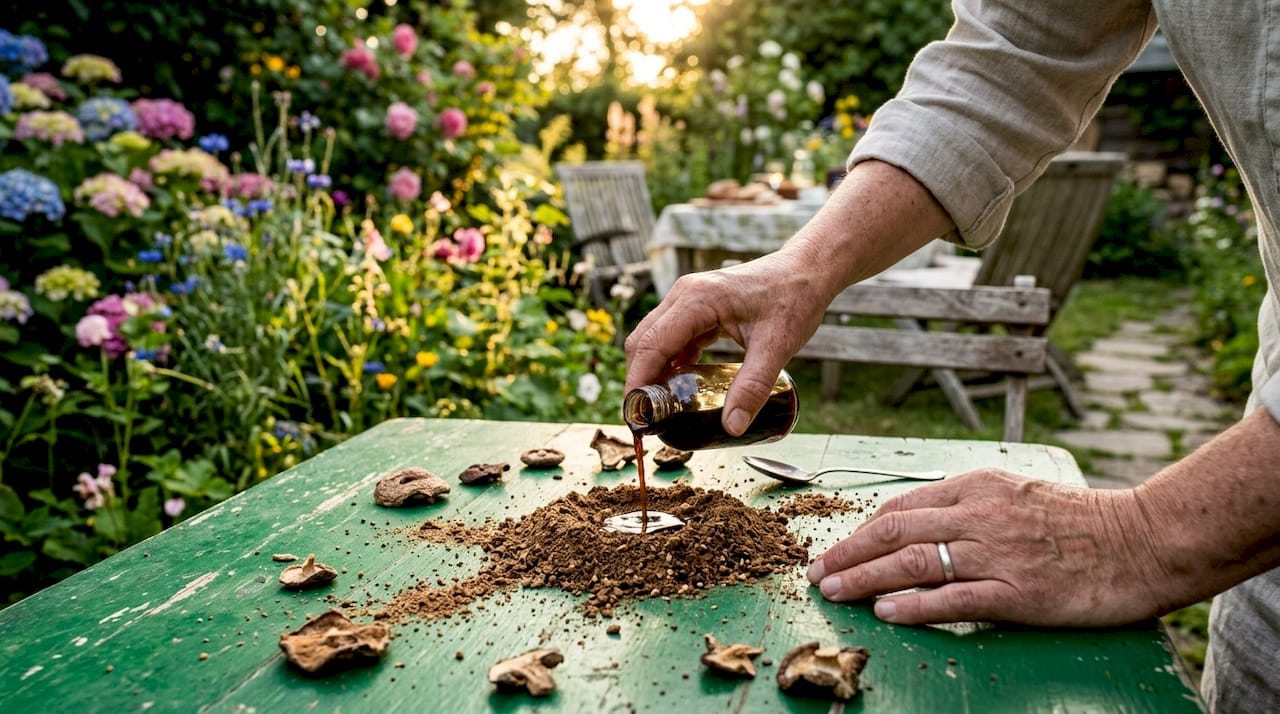
The core problem is chitin. Mushroom cell walls are made of chitin, the same tough material found in insect exoskeletons. Humans lack the chitinase enzyme needed to break it down, which means intact cell walls physically trap beta-glucans, hericenones, and other bioactives inside the mushroom. Your digestive system passes most of them through without absorbing them.
This is why the standard industry term “bioavailability” carries so much weight in mushroom supplementation. It is not a marketing claim. It is a measurable outcome that separates effective products from expensive placebo.
How do extraction methods increase mushroom product absorption?
Extraction is the primary tool for improving mushroom product absorption. The three main methods are hot water extraction, alcohol extraction, and dual extraction, which combines both.
Hot water extraction pulls out water-soluble compounds like beta-glucans and polysaccharides. Alcohol extraction targets fat-soluble compounds like triterpenes and sterols. Dual extraction captures both compound classes, making it the most complete method for species like Reishi, which contains significant amounts of both.
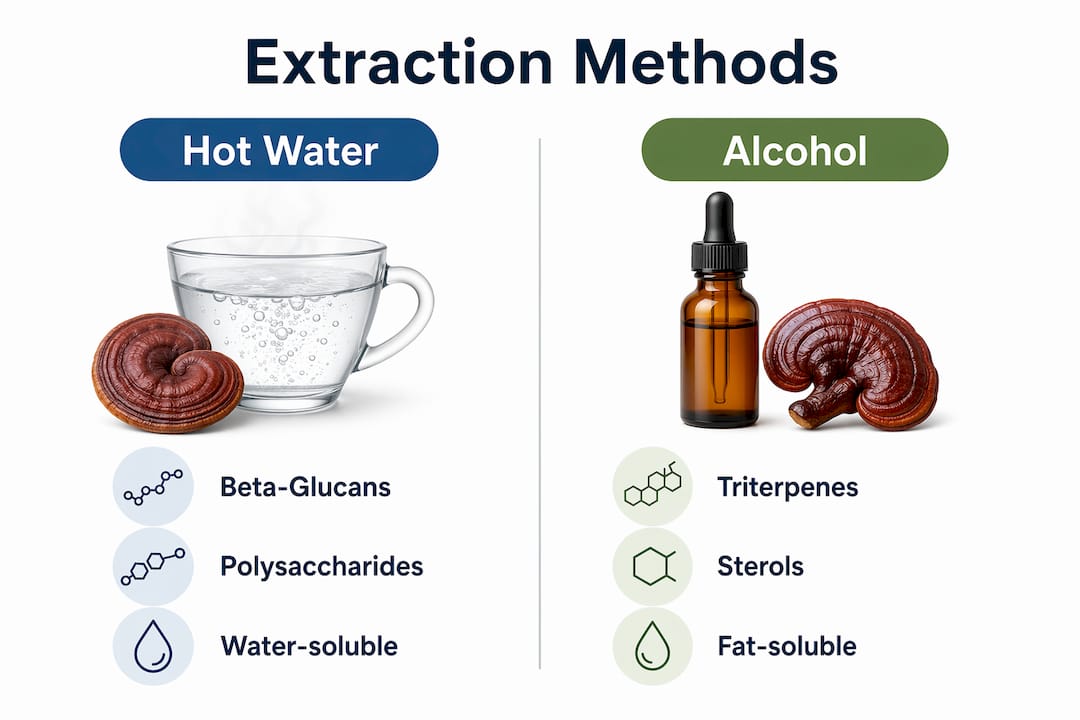
The difference in outcome is substantial. Specialized extraction can increase polysaccharide bioavailability by approximately 15 times compared to raw mushroom powder. That is not a marginal improvement. It means a well-extracted product can deliver the equivalent benefit of 15 servings of raw powder in a single dose.
What to look for on a product label
Not all extraction claims are equal. Here is what actually signals quality:
- Extraction ratio listed: A 10:1 ratio means 10 kg of raw mushroom was concentrated into 1 kg of extract. Higher ratios indicate greater concentration.
- Beta-glucan percentage stated: Reputable products list beta-glucan content directly, often 20–40% for quality extracts.
- Fruiting body specified: Products made from the mushroom fruiting body contain the actual fungal compounds. Products made from mycelium grown on grain often concentrate grain starch, not mushroom actives, which reduces true bioavailability.
- Dual extraction noted for Reishi or Chaga: Single-method extraction misses half the compound profile for these species.
Pro Tip: If a product lists a high extraction ratio but does not specify fruiting body as the starting material, the ratio may reflect concentrated grain starch rather than fungal compounds. Always check both numbers.
For a deeper look at how blending and extraction techniques interact to shape bioactive availability, Theelevatedremedies covers the topic in detail.
How does product format affect absorption speed and user experience?
The format you choose changes how quickly compounds enter your bloodstream, how much you get per dose, and whether you actually take it every day. All three factors shape your real-world results.
Sublingual liquid drops absorb the fastest because they bypass the digestive tract entirely. Drops absorb fastest by bypassing digestion, while capsules offer 500–1,000 mg per serving and gummies deliver lower doses with added sugars. Each format suits a different user profile.
| Format | Absorption speed | Typical dose | Added sugars | Best for |
|---|---|---|---|---|
| Liquid drops | Fastest (sublingual) | 100–300 mg | None | Fast onset, microdosing precision |
| Capsules | Moderate (digestive) | 500–1,000 mg | None | Highest dose, daily routine |
| Gummies | Moderate (digestive) | 100–300 mg | Yes | Taste preference, consistency |
The practical implication is clear. If you are microdosing for therapeutic effect and need precise, fast-acting doses, liquid drops give you the most control. If you want the highest mushroom dose per serving without sugar, mushroom capsules are the most efficient format. If you struggle to maintain a daily habit, gummies win because you will actually take them.
Mushroom gummies are worth considering specifically for compliance. A lower dose taken every day outperforms a higher dose taken sporadically, which leads directly to the next point about consistency.
Which compounds and species have the highest bioavailability?
Different mushroom species produce different active compounds, and those compounds vary significantly in how well the human body absorbs them. Choosing a product by species and compound profile is as important as choosing by extraction method.
- Beta-glucans (found in Lion’s mane, Reishi, Turkey tail, Chaga): Water-soluble polysaccharides that support immune function. Hot water extraction releases them effectively.
- Hericenones and erinacines (Lion’s mane only): Compounds linked to nerve growth factor stimulation. Hericenones come from the fruiting body; erinacines come from the mycelium. A complete Lion’s mane product needs both.
- Triterpenes (Reishi, Chaga): Fat-soluble compounds with anti-inflammatory properties. Require alcohol extraction to become bioavailable.
- Vitamin D2: Vitamin D2 bioavailability can be enhanced by UV exposure post-harvest. Mushrooms exposed to sunlight or UV light before drying can deliver meaningful D2 levels.
- Vitamin B12: The B12 forms found in mushrooms are often biologically inactive in humans. Vitamin B12 bioavailability remains controversial and should not be relied upon as a primary source.
Oyster mushrooms stand out for cardiovascular support. Daily oyster mushroom powder intake of 8.4 g over four weeks lowered cholesterol absorption markers significantly, particularly in females. That result came from consistent daily use of a whole powder, not an extract, which shows that species selection and consistency can compensate for lower extraction levels in some cases.
For users focused on curated mushroom blends that target specific compound profiles, matching species to your wellness goal matters more than chasing the highest extraction ratio across the board.
How to get the most out of your mushroom supplement
Maximizing mushroom product absorption comes down to four practical factors: dose, timing, co-administration, and consistency.
- Start with a lower dose and build. For extracts, a starting dose of 250–500 mg per day is common. For raw powders, 1,000–2,000 mg is a typical starting range. Give your body two to four weeks before adjusting.
- Take supplements with food, especially fats. Fat-soluble compounds like triterpenes absorb better when consumed alongside a meal that contains dietary fat. A handful of nuts or a tablespoon of olive oil is enough.
- Consider vitamin C co-administration. Vitamin C supports the absorption of certain polysaccharides and may enhance the bioavailability of water-soluble mushroom compounds. Adding a small vitamin C source to your routine costs nothing and may improve outcomes.
- Prioritize daily use over peak doses. Consistent daily use of lower-dose products often yields better wellness outcomes than sporadic high-dose intake. A 200 mg gummy taken every day for months outperforms a 1,000 mg capsule taken once a week. That finding reframes how most people think about potency.
- Account for your digestive health. Gut microbiome composition affects how well you absorb polysaccharides. People with compromised gut health may absorb less even from high-quality extracts. Prebiotic foods and fiber support the microbiome conditions that improve mushroom compound uptake.
Pro Tip: Avoid products that list a high extraction ratio without specifying fruiting body as the source material. Mycelium grown on grain can produce ratios that reflect concentrated starch, not concentrated mushroom compounds. The CBD bioavailability principle applies here too: delivery method and source quality determine how much active compound your body actually receives.
Key Takeaways
Bioavailability in mushroom products is determined by extraction method, product format, species-specific compounds, and daily consistency, not by milligram count alone.
| Point | Details |
|---|---|
| Chitin blocks absorption | Raw mushroom powder delivers far fewer bioactives because intact cell walls trap compounds your body cannot digest. |
| Extraction multiplies potency | Specialized extraction can increase polysaccharide bioavailability by approximately 15 times compared to unprocessed powder. |
| Format shapes speed and compliance | Liquid drops absorb fastest; capsules deliver the highest dose; gummies support daily consistency through taste preference. |
| Species and compounds must match your goal | Lion’s mane targets nerve support, Reishi targets triterpenes, and oyster mushroom supports cholesterol metabolism. |
| Consistency beats single high doses | Daily use of a moderate dose produces better long-term outcomes than sporadic use of a high-potency product. |
The chitin problem is bigger than most people realize
Most people shopping for mushroom supplements focus on milligrams. I get it. The number feels concrete. But after spending time with the research and talking to people who have tried product after product without results, the real issue is almost always the chitin barrier, not the dose.
Raw mushroom powder is essentially a locked box. The compounds you want are inside, but your digestive system does not have the key. Extraction is the key. What surprises me is how many products on the market still use whole powder or mycelium-on-grain extracts and market them with impressive-sounding ratios. The ratio only matters if the starting material was a quality fruiting body.
The other thing I see consistently overlooked is format matching. Someone who travels constantly and forgets capsules three days a week would do better with a gummy they actually enjoy taking. Bioavailability on paper means nothing if the product sits in a cabinet. The best product is the one you take every single day, even if its extraction ratio is not the highest on the shelf.
— Juiced
Theelevatedremedies carries mushroom products built for real results
Knowing what bioavailability means is one thing. Finding products that actually deliver it is another.
Theelevatedremedies stocks mushroom capsules, gummies, and liquid drops sourced for extraction quality and compound transparency. Every format is available so you can match your product to your lifestyle, not the other way around. The team at the Ann Arbor shop at 1123 Broadway St can walk you through species selection, extraction standards, and dosing based on your specific wellness goals. If you are ready to go deeper, start with the Amanita muscaria guide on the site for a look at one of the most discussed mushroom species in the wellness space right now.
FAQ
What is bioavailability in mushroom supplements?
Bioavailability is the proportion of active compounds, such as beta-glucans and triterpenes, that your body absorbs and uses after consuming a mushroom product. Extraction methods and product format both directly affect this number.
Why is raw mushroom powder less effective than an extract?
Humans lack the chitinase enzyme needed to break down mushroom cell walls, so raw powder passes through the digestive system with most of its compounds still trapped inside. Extraction dissolves those walls and concentrates the bioactives before you consume them.
Which mushroom product format absorbs the fastest?
Sublingual liquid drops absorb the fastest because they enter the bloodstream directly through the tissue under the tongue, bypassing the digestive tract entirely. Capsules and gummies both require digestive processing before absorption begins.
Does the extraction ratio on a label guarantee quality?
Not always. A high extraction ratio only reflects quality if the starting material was a mushroom fruiting body. Products made from mycelium grown on grain can show high ratios that concentrate grain starch rather than fungal compounds, which lowers actual bioavailability.
How often should you take mushroom supplements for best results?
Daily use produces better outcomes than sporadic high-dose intake. Consistent daily consumption allows bioactive compounds to accumulate and exert sustained effects, which is especially relevant for microdosing and long-term therapeutic goals.