
TL;DR:
- High-quality mushroom products use fruiting bodies with high beta-glucan content and are verified by third-party lab tests. Consumers should check for clear sourcing, disclosed beta-glucan percentages, named extraction methods, and accessible Certificates of Analysis before buying. Avoid products with undisclosed ingredients, proprietary blends, or high grain filler content to ensure effective and safe use.
Mushroom product quality is defined by verified bioactive content, transparent sourcing, and confirmed extraction methods backed by third-party lab testing. For consumers exploring microdosing, wellness, or recreational use, defining mushroom product quality means knowing exactly what is inside the capsule, chocolate, or dried product before you buy it. The two benchmarks that matter most are beta-glucan percentage and fruiting body use. Products that skip these disclosures are not worth your money, regardless of how bold the label looks.
What are the key indicators of high-quality mushroom products?
The single most important indicator is whether a product uses the fruiting body or mycelium-on-grain. Fruiting body extracts contain 25–40% beta-glucans, while mycelium-on-grain products typically contain only 1–5%. That gap in potency is enormous and directly affects what you actually experience.
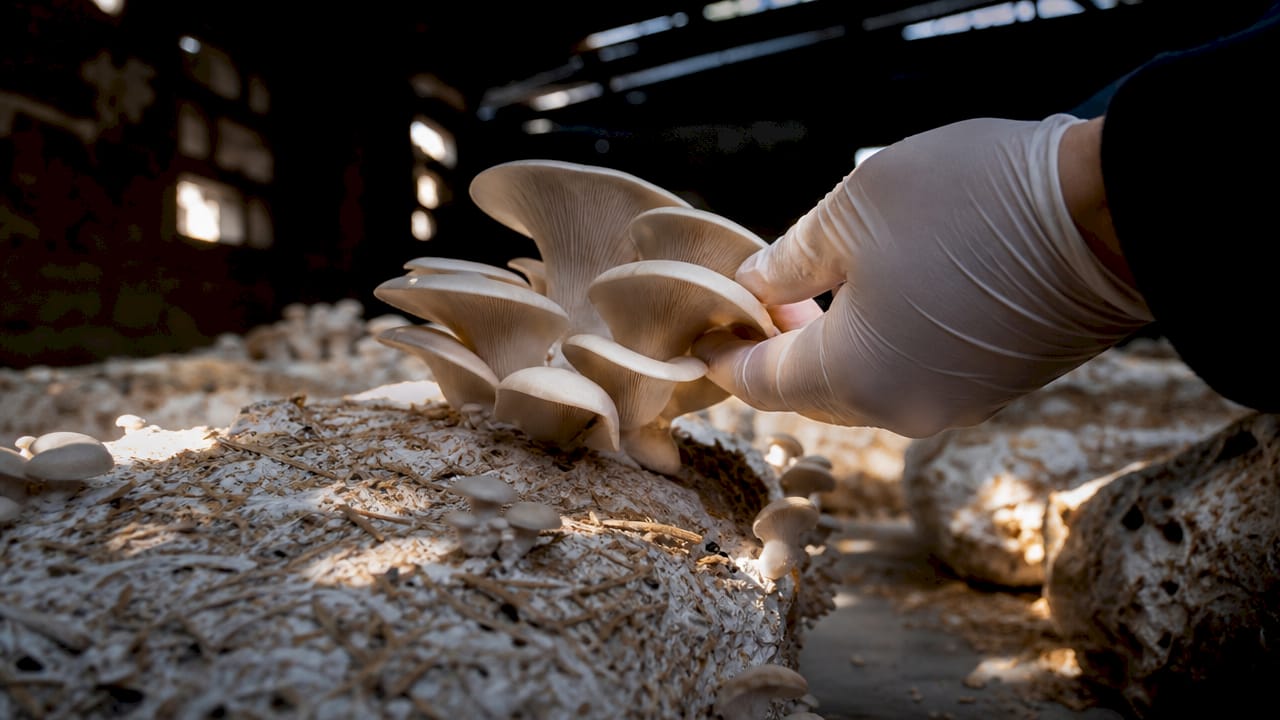
Beta-glucan percentage is the most reliable measure of mushroom extract potency. A 500mg extract at 30% beta-glucans delivers far more active compounds than a 2,000mg powder at 2% beta-glucans. The milligram number on a label tells you the weight of the capsule content, not the strength of what is inside.
Extraction method is the third pillar of mushroom quality assessment. Mushroom cell walls are made of chitin, a tough material the human body cannot break down on its own. Dual extraction uses both hot water and alcohol to break through chitin and release bioactive compounds that raw powders simply cannot deliver. Hot-water extraction alone works well for polysaccharides, but species like reishi and chaga benefit specifically from dual extraction.
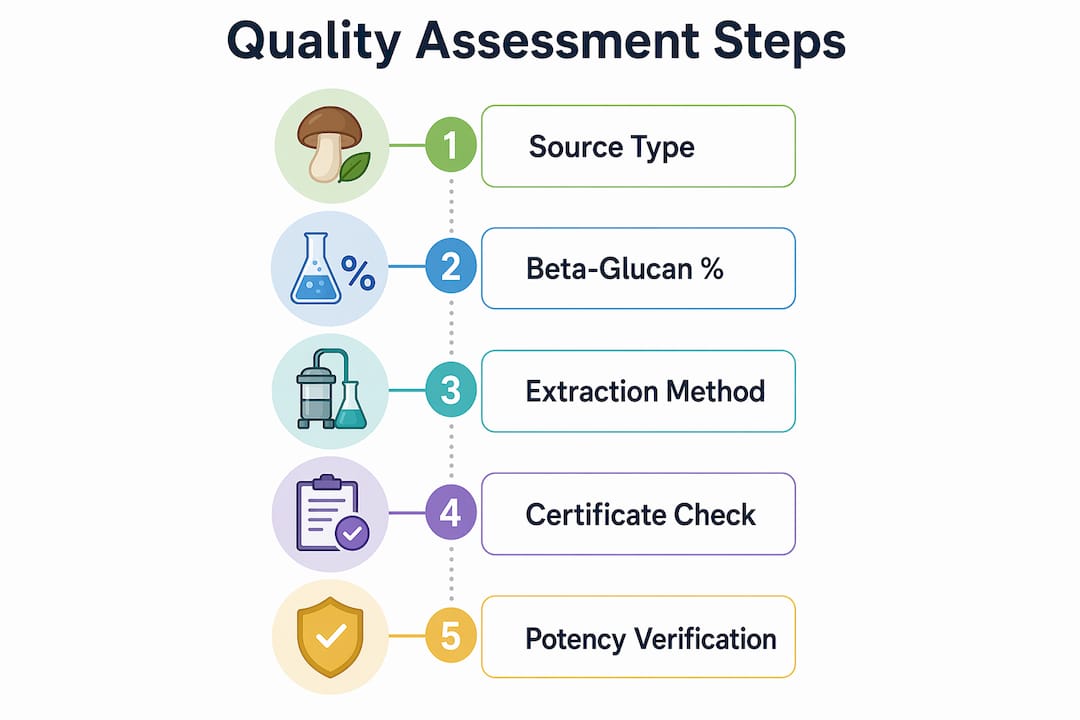
Third-party Certificates of Analysis (CoA) are the final checkpoint. Only 30% of brands make CoAs publicly accessible, and only 37% disclose beta-glucan percentages. That means the majority of products on the market ask you to trust their label without any independent verification.
Key quality indicators to check before buying:
- Fruiting body confirmed: Label must state “100% fruiting body” or “fruiting body extract.”
- Beta-glucan percentage disclosed: Look for 20% or higher on a quality extract.
- Extraction method listed: Hot-water or dual extraction should be named explicitly.
- Third-party CoA available: The CoA must come from an ISO 17025-accredited lab with a batch number and date.
- Starch content low: Quality extracts target under 5% starch. High starch signals grain filler.
Pro Tip: Ask the brand directly for their CoA before purchasing. A quality brand will send it without hesitation. If they deflect or offer only a generic certificate, walk away.
How to evaluate mushroom products using labels and test data
Reading a mushroom product label is a skill. Most labels are designed to impress, not inform. Learning to separate real data from marketing language takes about five minutes once you know what to look for.
Follow this process when evaluating any mushroom product:
-
Find the source declaration. The label must say “fruiting body” clearly. Words like “mycelium,” “full spectrum,” or “whole mushroom” are not equivalent. Consumers often mistake “full spectrum” for fruiting body quality, but clinical research favors fruiting body for its bioactive profile.
-
Locate the beta-glucan percentage. This number must appear on the label or CoA. If it is missing, the brand is hiding something. Self-reported beta-glucan values without accredited lab reports should be treated as unverified marketing claims.
-
Check the CoA details. A trustworthy CoA lists the lab name, ISO 17025 accreditation status, batch number, and test date. A CoA without these specifics is not a real verification document.
-
Look for proprietary blends. Proprietary blends hide individual ingredient amounts. If a product lists five mushroom species but gives only a total milligram weight, you cannot assess the dose of any single species.
-
Run the iodine test at home. Place a small amount of the product in water and add a drop of iodine solution. A dark blue or black color signals high starch content from grain fillers. Quality extracts produce little to no color change.
Pro Tip: Cross-reference the batch number on the CoA with the batch number printed on your product packaging. If they do not match, the CoA was not issued for the product you are holding.
Understanding the entourage effect in mushrooms also helps here. Bioactive compounds in mushrooms work together, so a product with a verified full compound profile delivers more than isolated extracts alone.
Common pitfalls and misleading marketing in mushroom products
The mushroom supplement market has a transparency problem. Only 43% of 30 popular mushroom supplements analyzed in 2026 used 100% fruiting body, and starch content reached as high as 71% in some products. That means the majority of what is sold contains more grain than mushroom.
The most common misleading tactics include:
- High milligram claims with low potency. A 3,000mg capsule sounds powerful. If it is mycelium-on-grain with 2% beta-glucans, it is mostly starch. Grain filler content in mycelium-on-grain products ranges from 25% to 71%, diluting any real mushroom benefit.
- Vague “clinically studied” claims. Brands reference studies on mushroom species without confirming their specific product matches the studied extract. The study may use a fruiting body extract; the product may use mycelium powder.
- Missing or unverifiable lab tests. Some brands post a CoA image that lacks a lab name, accreditation number, or batch reference. These documents are not verifiable and should be ignored.
- “Natural” and “organic” labels without quality data. A product can be certified organic and still contain 60% grain filler. Organic certification covers farming practices, not bioactive content.
“Marketing loudness inversely correlates with product quality. Brands that prioritize transparent education and lab verification consistently outperform those that rely on bold claims and vague language.” Source
The pattern is consistent: the louder the label, the less likely it is to include a verifiable CoA or a disclosed beta-glucan percentage.
Practical tips for choosing mushroom products based on quality
Applying mushroom quality criteria at the point of purchase protects your health and your wallet. Use this checklist before buying any mushroom product.
Pre-purchase quality checklist:
- Confirm “fruiting body” is stated on the label or product page.
- Verify beta-glucan percentage is disclosed and above 20% for extracts.
- Request or download the CoA and confirm ISO 17025 accreditation.
- Check that the extraction method is named (hot-water or dual extraction).
- Avoid products with proprietary blends that hide individual species doses.
Cost relative to verified beta-glucan content is the best value metric. A cheaper product with undisclosed beta-glucan content is not a bargain. A slightly more expensive product with a verified 30% beta-glucan fruiting body extract delivers measurable value per serving.
Sourcing transparency matters for microdosing capsules especially. Microdosing depends on consistent, low doses of active compounds. A product with variable starch content and no beta-glucan disclosure makes consistent dosing impossible.
| Quality factor | What to look for |
|---|---|
| Mushroom source | “100% fruiting body” stated explicitly |
| Beta-glucan content | 20% or higher for extracts |
| Extraction method | Hot-water or dual extraction named |
| Lab verification | ISO 17025-accredited CoA with batch number |
| Starch content | Under 5%; iodine test confirms at home |
For consumers interested in mushroom wellness benefits in Michigan, understanding these criteria also helps you ask better questions when visiting a dispensary. A knowledgeable staff member should be able to answer every item on that checklist without hesitation.
Key takeaways
Defining mushroom product quality requires confirming fruiting body sourcing, verified beta-glucan percentage, named extraction methods, and an ISO 17025-accredited third-party CoA.
| Point | Details |
|---|---|
| Fruiting body is non-negotiable | Fruiting body extracts contain 25–40% beta-glucans versus 1–5% in mycelium-on-grain. |
| Beta-glucan beats milligrams | A 500mg extract at 30% beta-glucans outperforms a 2,000mg powder at 2%. |
| CoA verification matters | Only 30% of brands publish accessible CoAs; always request one before buying. |
| Extraction method affects absorption | Dual extraction breaks chitin barriers that raw powders cannot overcome. |
| Iodine test catches fillers | A dark blue result at home confirms high starch content and poor product quality. |
What I have learned from watching consumers get burned by bad labels
The mushroom supplement space has matured fast, but consumer literacy has not kept pace. I have watched people spend real money on products that are, at their core, expensive grain powder. The frustrating part is that the information needed to avoid those products is not hidden. It is just not on the front of the label.
The biggest error I see is treating milligram weight as a proxy for potency. A 3,000mg capsule with no beta-glucan disclosure is a red flag, not a selling point. Brands that genuinely use quality fruiting body extracts want you to know the beta-glucan percentage because it justifies the price. Silence on that number almost always means the number is bad.
The industry is also shifting. More brands are publishing CoAs, more consumers are asking for them, and the gap between quality products and filler products is becoming easier to see. That shift is driven by consumers who demand specifics. The iodine test, the CoA request, the beta-glucan check: these are not complicated. They take two minutes and they work.
My honest advice is to treat any mushroom product without a publicly available, ISO 17025-accredited CoA as unverified. That standard is not extreme. It is the baseline for any product you are putting in your body. The science behind mushroom safety and wellness supports this approach. Demand the data. The good brands have it ready.
— Juiced
Quality mushroom products at Theelevatedremedies in Ann Arbor
Theelevatedremedies sources mushroom products with fruiting body extracts and third-party CoAs because that is the standard consumers deserve. Located at 1123 Broadway St in Ann Arbor, Michigan, the team can walk you through lab results, explain extraction methods, and match you with a product that fits your wellness or microdosing goals.
Theelevatedremedies carries dried magic mushrooms, microdosing capsules, and mushroom chocolates, all selected for consistency and verified content. For consumers curious about less common species, the Amanita Muscaria product page covers what makes that mushroom distinct and how quality standards apply to it specifically. Come in, ask the hard questions, and leave with a product you can trust.
FAQ
What does “fruiting body” mean on a mushroom label?
Fruiting body refers to the above-ground reproductive structure of the mushroom, which contains the highest concentration of bioactive compounds. Fruiting body extracts contain 25–40% beta-glucans, compared to 1–5% in mycelium-on-grain products.
How do I verify a mushroom product’s Certificate of Analysis?
A legitimate CoA comes from an ISO 17025-accredited lab and includes the lab name, batch number, and test date. Match the batch number on the CoA to the batch number printed on your product packaging to confirm it applies to what you purchased.
What is a good beta-glucan percentage for a mushroom extract?
Quality mushroom extracts target 20% beta-glucans or higher. Beta-glucan percentage is a more reliable potency indicator than capsule milligram weight, so always prioritize this number over the total dose listed on the label.
Can I test for grain fillers at home?
Yes. The iodine test detects starch content quickly. Add a drop of iodine solution to a small amount of the product dissolved in water. A dark blue or black result confirms high starch from grain fillers. Quality extracts produce little to no color change.
Why do some mushroom products list high milligrams but low potency?
High milligram counts often reflect grain filler weight, not active mushroom content. A product with 2,000mg of mycelium-on-grain powder delivers far less bioactive material than a 500mg fruiting body extract at 30% beta-glucans. Always check the beta-glucan percentage, not just the total weight per serving.