
TL;DR:
- Finding trustworthy sources for magic mushrooms in Ann Arbor is challenging due to the gap between local decriminalization and broader illegal status, making evaluation essential. Reputable farms and shops should be transparent about sourcing, provide lab testing results, and have strong community reputations, especially when sourcing from third-party suppliers carries higher risk. While home cultivation can be cost-effective, it requires technical skill and patience, and quality assurance relies heavily on proper techniques and lab-tested products from trusted sources.
Finding a trustworthy source for magic mushrooms in Ann Arbor is trickier than it sounds. The city decriminalized psilocybin in 2020, making personal use and cultivation the lowest law enforcement priority, but state and federal law still prohibit it. That gap between local tolerance and broader law creates real confusion for wellness seekers who want quality, safety, and peace of mind. Whether you’re curious about home cultivation, local shops, or third-party sources, this guide walks you through how to evaluate your options, understand what goes into growing magic mushrooms, and make a confident decision that fits your wellness goals.
Table of Contents
- How to evaluate a magic mushroom farm in Ann Arbor
- Popular magic mushroom cultivation methods: Ann Arbor overview
- Magic mushroom farm yields and quality: What to expect
- Side-by-side: Evaluating Ann Arbor’s magic mushroom options
- The wellness seeker’s reality: Choosing with confidence in a gray market
- Next steps: Explore Ann Arbor’s best magic mushroom resources
- Frequently asked questions
Key Takeaways
| Point | Details |
|---|---|
| Know the legal landscape | Ann Arbor’s decriminalization means personal use is possible, but laws still carry risk. |
| Choose trusted sources | Prioritize farms and shops that offer lab-tested, quality products with clear information. |
| Understand cultivation methods | PF Tek and Monotub Tek are common, with Monotub yielding more for advanced users. |
| Expect real yields and potency | First flushes bring 100-500g wet and potency varies by method and part used. |
| Comparison is key | Each sourcing option—shop, home, or third-party—offers different benefits and risks. |
How to evaluate a magic mushroom farm in Ann Arbor
With those challenges in mind, the first step is understanding what to look for when evaluating any magic mushroom farm or supplier. The legal gray area here is real. Ann Arbor’s decriminalization applies to personal use and personal cultivation, not commercial sales. That means wellness-focused shops self-regulate through lab testing and transparency rather than relying on formal regulatory oversight. No state agency is certifying these products, so your ability to evaluate a source matters more than almost anything else.
What separates a trustworthy farm or supplier from a questionable one? A few key factors stand out:
- Transparency about sourcing and strains. Any reputable supplier should be able to tell you where their mushrooms come from, what strain they carry, and how they were grown. Vague answers are a red flag.
- Lab testing. Credible local shops and farms offer lab results confirming species, psilocybin content, and the absence of contaminants. This is the single most important trust signal in an unregulated market.
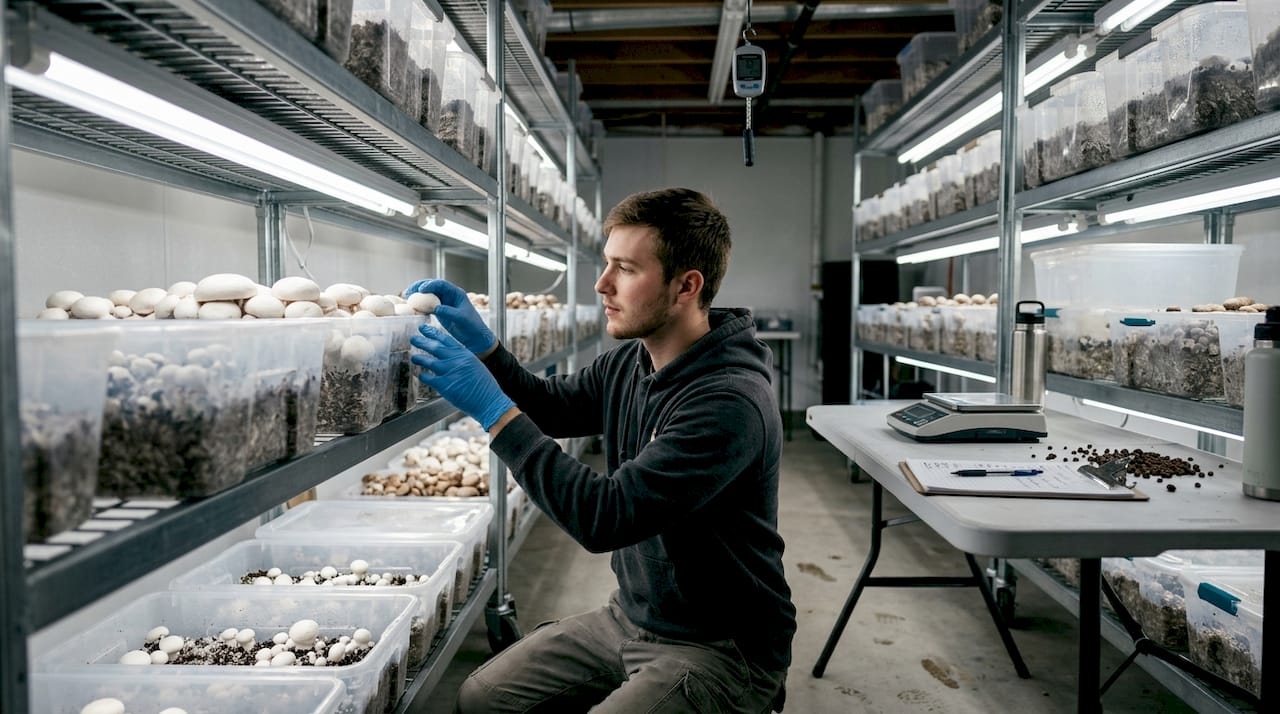
- Consistent supply and clean environment. If someone is cultivating mushrooms, their grow space should be clean and climate-controlled. Contamination is one of the biggest risks in home cultivation, and a reputable grower takes it seriously.
- Willingness to answer questions. A good source welcomes questions about dosing, effects, and safety. Anyone who brushes off basic wellness questions probably isn’t a great resource.
- Reputation in the community. Word of mouth matters in Ann Arbor. Look for shops or growers with consistent, honest reviews and a track record of putting customer safety first.
Pro Tip: Before buying from any local source, ask specifically whether they have third-party lab results. If they do, the results should show the species confirmation and psilocybin concentration per gram. If they don’t have results or can’t explain them, keep looking.
Learning about safe mushroom consumption before you make any purchase is just as important as evaluating the source itself. For a broader look at what a safe local shopping experience looks like, our dispensary safety guide covers what questions to ask and what to expect when you walk in the door.
Popular magic mushroom cultivation methods: Ann Arbor overview
Once you know what to look for in a trusted farm, it’s helpful to understand how magic mushrooms are cultivated in Ann Arbor. Most local cultivators and some small suppliers work with Psilocybe cubensis, the most common species in the psilocybin market. Understanding how it’s grown helps you assess quality and ask smarter questions.
The two most common methods are PF Tek and Monotub Tek, and they serve very different cultivators.
-
PF Tek (beginner-friendly jars). This method uses small mason jars filled with a substrate made from brown rice flour and vermiculite. It’s the classic starting point for new growers because the setup is inexpensive, the jars are easy to sterilize, and the process is forgiving enough that beginners can succeed on a first attempt. Yields are smaller, but the learning curve is manageable.
-
Monotub Tek (bulk growing). This approach uses a single large container, typically a 54-quart tub, filled with a CVG substrate: coco coir, vermiculite, and gypsum. Colonization happens at 75 to 80°F, and fruiting requires temperatures between 68 and 75°F with 90 to 95% humidity. This method produces significantly higher yields and is preferred by more experienced growers or small-scale local suppliers.
-
Spore inoculation. Both methods start with spore syringes or liquid culture injected into a sterilized substrate. The spores germinate and spread mycelium, the white, thread-like network that eventually produces mushrooms.
-
Colonization phase. After inoculation, the substrate colonizes at warm temperatures for 2 to 4 weeks. During this time, maintaining sterility is critical. Contamination from bacteria or competing molds is the most common reason a grow fails.
-
Fruiting phase. Once fully colonized, the substrate moves into fruiting conditions: lower temperature, higher humidity, and indirect light. Pins, which are tiny mushroom primordia, begin to form within a few days to a week.
“The fruiting stage is where patience pays off. Pushing humidity too high or letting fresh air exchange drop can ruin an otherwise perfect colonization. The environmental details are everything.”
The science and safety of magic mushrooms are deeply tied to how they’re cultivated. Mushrooms grown in clean, well-maintained environments with proper substrate ratios tend to be more consistent in potency and far less likely to carry harmful contaminants.
Magic mushroom farm yields and quality: What to expect
Knowing how farms grow their mushrooms leads right into understanding what you’ll get out of each method in terms of quality and quantity. Setting realistic expectations here matters, especially if you’re sourcing for microdosing or consistent wellness use where dosage precision is key.
Here’s what the numbers actually look like for home cultivators and small farms:
| Method | First Flush (wet) | First Flush (dry) | Total Flushes | Biological Efficiency |
|---|---|---|---|---|
| PF Tek | 20 to 80g | 2 to 8g | 2 to 3 | Lower (10 to 15%) |
| Monotub Tek | 100 to 500g | 10 to 50g | 2 to 4 | 15 to 30% |
| Optimized Monotub | 300 to 600g | 30 to 60g | 3 to 5 | Up to 35% |
Psilocybin content by mushroom part:
| Mushroom Part | Psilocybin Range |
|---|---|
| Caps | 0.44% to 1.35% |
| Stems | Generally lower |
| Whole dried mushroom | Varies by strain |
A few things directly affect potency. First, the psilocybin content in caps is consistently higher than in stems, which matters if you’re trying to dose precisely. Second, the strain itself plays a significant role. Golden Teacher, for example, tends toward moderate potency and predictable effects. More exotic strains can vary significantly batch to batch, which is exactly why lab testing matters so much for wellness use.
Drying method also affects potency. Mushrooms that are dried quickly at low heat (using a food dehydrator at around 95°F) preserve psilocybin better than those air-dried for extended periods or dried at high heat. For buyers, this means asking how a supplier dries their product is a legitimate and important question.
If you’re planning to microdose, where typical amounts range from 0.05 to 0.3 grams, potency consistency is non-negotiable. A batch that varies wildly from 0.5% to 1.3% psilocybin makes accurate dosing nearly impossible. Our psilocybin dosage guide covers how to navigate this for both beginners and experienced users.
Side-by-side: Evaluating Ann Arbor’s magic mushroom options
With yield and quality in mind, let’s directly compare Ann Arbor’s real-world options for sourcing.
| Factor | Local shop | Home cultivation | Third-party source |
|---|---|---|---|
| Safety | Lab-tested, consistent | Varies by grower skill | Often unknown |
| Legal exposure | Lower (decrim applies) | Personal use covered | Shipping risk |
| Potency consistency | High (when tested) | Moderate | Unpredictable |
| Cost per gram | Higher | Lower after setup | Variable |
| Wellness support | Strong (staff guidance) | None | None |
| Product variety | Dried, capsules, chocolate | Dried only | Limited |
The right option really does depend on your experience level and what you need from the product. A few things worth keeping in mind:
- Local shops are the best starting point for most people, especially beginners, because the products are already processed, dosed, and (ideally) tested. You also get human support from staff who understand the products.
- Home cultivation makes sense if you’re experienced, patient, and genuinely interested in the process. The upfront cost (jars, substrate, pressure cooker for sterilization) can be $100 to $200 before your first harvest, but ongoing costs drop significantly.
- Third-party online sources carry the most risk on every dimension: legal, quality, and safety. Without lab testing and direct accountability, you simply don’t know what you’re getting.
Research on practical cultivation techniques recommends a spawn-to-substrate ratio of 1:2 to 1:4 with field-capacity moisture, passive fresh air exchange using polyfill-stuffed holes, and 12-hour light cycles using 6500K bulbs to encourage pinning. These are the technical details that separate a quality home grow from a failed one, and they’re also the details worth asking a local supplier about to assess their knowledge.
Pro Tip: If you’re comparing local shops, ask whether their products are from a single consistent supplier or sourced from multiple growers. Single-source products are generally more consistent in potency, which matters most if you’re microdosing for specific wellness outcomes.
For practical examples of what quality products look like in the Michigan market, our Michigan psilocybin product guide gives a clear picture. And if microdosing is your goal, our safe microdosing guide walks through protocols step by step.
The wellness seeker’s reality: Choosing with confidence in a gray market
After weighing your options, here’s some honest insight from local experience. The gray market reality in Ann Arbor means you are always exercising personal judgment. There is no safety net in the form of state certification or consumer protection law for these products. That’s not a reason to avoid them. It’s a reason to be a more educated buyer.
The single biggest mistake people make is prioritizing price over transparency. A cheaper product with no lab results and no source information is not a deal. It’s a gamble with your health and your experience. Shops self-regulating through lab testing are doing the right thing in the absence of formal oversight, and that effort deserves to be recognized and rewarded by buyers who value it.
The other thing worth saying plainly: home cultivation looks attractive on paper because of cost, but the reality for most beginners is at least one failed grow, real time investment learning proper technique, and the ongoing challenge of maintaining sterile conditions in a typical home environment. None of that is insurmountable, but it is worth factoring into your decision honestly rather than assuming it will go smoothly from day one.
Trust and education matter more than any other variable. Whether you’re comparing microdosing versus full experiences or just trying to find a reliable dried mushroom product, starting from a position of self-education makes every subsequent decision easier and safer.
Next steps: Explore Ann Arbor’s best magic mushroom resources
Ready to take the next step on your wellness journey? At Elevated Remedies, located at 1123 Broadway St in Ann Arbor, we carry dried magic mushrooms, microdose capsules, and mushroom chocolate options sourced for consistency and quality. Every product is selected with your wellness goals in mind, and our staff is genuinely here to help you find the right fit.
We also carry a range of educational resources so you can shop with confidence, not just curiosity. If you’re new to psilocybin or want to understand your options beyond traditional dried mushrooms, our guide on what Amanita Muscaria is is a great place to broaden your knowledge. Whether you’re just starting out or looking to refine your approach, Elevated Remedies is your local resource for informed, elevated wellness in Ann Arbor.
Frequently asked questions
Is it legal to grow magic mushrooms for personal use in Ann Arbor?
Ann Arbor decriminalized personal cultivation in 2020, making it the lowest enforcement priority, but state and federal laws still classify psilocybin as illegal, meaning personal risk remains real.
What is the easiest magic mushroom cultivation method for beginners?
The PF Tek method using mason jars is the most beginner-friendly approach for growing Psilocybe cubensis, offering a simple and forgiving setup for first-time cultivators.
How much magic mushroom yield can I expect from a home grow?
First flush yields using Monotub Tek range from 100 to 500 grams wet and 10 to 50 grams dry, with most grows producing two to four total flushes before the substrate is spent.
Do Ann Arbor mushroom shops sell lab-tested products?
Many local shops self-regulate with lab testing to verify species, psilocybin content, and purity, since no formal state oversight currently exists for these products.