
TL;DR:
- Unexpected psilocybin effects include physical and psychological reactions that may occur unexpectedly during a trip. Managing these effects involves preparation, a calm environment, and having a trusted sober observer present. Severe symptoms require immediate medical attention and should not be ignored.
Unexpected psilocybin effects are defined as transient physical and psychological responses that occur when the body and mind react to psilocybin in ways the person did not anticipate. These reactions range from mild nausea and elevated heart rate to intense anxiety and disorienting hallucinations. Managing unexpected mushroom effects is not about suppressing the experience. It is about knowing what to expect, preparing your environment, and having a clear plan when things feel overwhelming. Psilocybin carries a low physiological toxicity profile, with no deaths directly attributed to toxicity alone in clinical studies. That context matters, because fear is often the biggest driver of a difficult trip.
How does dose, set, and setting shape your mushroom experience?
Dosage is the single most controllable variable in a psilocybin session. First-time doses of 1–2 grams of dried mushrooms produce mild perceptual shifts with a manageable risk profile. Therapeutic doses typically range from 2.5 to 3.5 grams of Psilocybe cubensis equivalent, and anything above that significantly increases the chance of unexpected reactions. Species potency also varies widely, so the same weight of different strains can produce very different effects. Understanding psilocybin strain emotional effects before choosing your dose is one of the most practical steps you can take.
“Set” refers to your mindset going into the session. An anxious or unsettled mental state directly increases the risk of a difficult experience. Psilocybin amplifies whatever emotional state you bring into the session, which means unresolved stress, grief, or fear can surface quickly and intensely. Preparing your mindset through meditation, journaling, or simply resting well the night before makes a measurable difference.
“Setting” is your physical and social environment. A chaotic, unfamiliar, or overstimulating space raises the odds of panic and confusion. A quiet, familiar room with soft lighting, comfortable seating, and trusted people nearby creates the conditions for a manageable experience.
| Dose range | Expected effects | Risk level |
|---|---|---|
| 0.1–0.5 g (microdose) | Subtle mood lift, focus | Very low |
| 1–2 g (low dose) | Mild visuals, light euphoria | Low |
| 2–3.5 g (moderate dose) | Strong visuals, emotional depth | Moderate |
| 3.5 g and above (high dose) | Intense hallucinations, ego dissolution | High |
Pro Tip: Start with 1 gram or less in a familiar space with someone you trust. You can always take more next time. You cannot take less once it is in your system.
What are the signs of a challenging mushroom reaction?
Recognizing symptoms early is the foundation of dealing with mushroom effects before they escalate. Common physical symptoms include nausea, vomiting, elevated heart rate, increased blood pressure, muscle weakness, and impaired coordination. These typically appear within the first 30–60 minutes and resolve on their own as the body adjusts. They are uncomfortable but not dangerous in most cases.

Psychological symptoms are where things get more complex. Bad trips can involve paranoia, panic, confusion, and disturbing hallucinations, especially when high doses combine with a stressed mindset or chaotic environment. The person may feel trapped, convinced something is permanently wrong, or unable to distinguish the experience from reality. These states feel terrifying in the moment but are temporary.
Certain symptoms require immediate medical attention. Do not wait to see if they pass on their own.
- Severe chest pain or pressure
- Difficulty breathing or shortness of breath
- Extremely rapid or irregular heartbeat
- Loss of consciousness or unresponsiveness
- Seizures or uncontrolled muscle spasms
- Severe confusion lasting beyond the expected 4–6 hour window
Pro Tip: Assign one person in your group to stay sober and watch for these warning signs. A calm observer notices things the person experiencing the trip cannot.
What are the best steps to manage difficult mushroom effects?
The most effective approach to mushroom effects management combines environmental changes, breathing techniques, and the presence of a calm companion. Psilocybin effects last 4–6 hours and peak between 1.5 and 2.5 hours. Knowing that the peak is finite gives you something concrete to hold onto when the experience feels overwhelming.
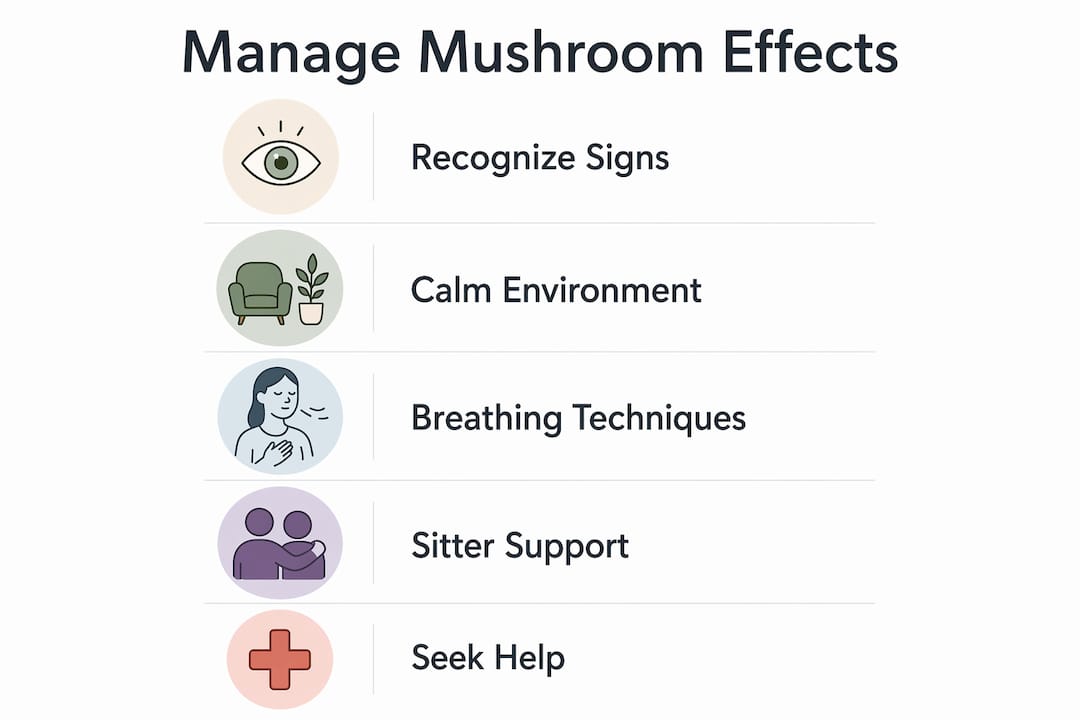
A calm, grounded companion is the most effective single intervention during a difficult trip. Their physical presence stabilizes the person far more reliably than changing the music or moving to a different room. A good trip sitter does not try to talk the person out of what they are feeling. They stay close, speak slowly, and remind the person that the effects are temporary.
Here are the steps to take when unexpected reactions hit:
- Move to a quieter, more comfortable space if the current environment feels overwhelming.
- Sit or lie down and focus on slow, deep breathing. Inhale for four counts, hold for four, exhale for four.
- Close your eyes and let the visuals come without fighting them. Resistance intensifies distress.
- Ask your trip sitter to sit beside you and speak calmly. Physical contact like a hand on the shoulder can help.
- Sip water or ginger tea. Nausea typically peaks in the first 30–60 minutes and ginger actively reduces digestive discomfort.
- Change the music to something slow and instrumental if sound is contributing to anxiety.
- Remind yourself out loud: “This is temporary. It will pass.”
The table below compares common interventions and their practical value during a difficult session.
| Intervention | Effectiveness | Notes |
|---|---|---|
| Calm trip sitter presence | Very high | Most reliable single intervention |
| Slow, controlled breathing | High | Works quickly, no tools needed |
| Ginger tea for nausea | Moderate to high | Best used within first hour |
| Moving to a quieter space | Moderate | Helpful if environment is chaotic |
| Changing music | Moderate | Effective for mild anxiety |
| Redosing to “fix” the experience | Counterproductive | Worsens panic and intensity |
Redosing during anxiety peaks intensifies the experience rather than calming it. This is one of the most common mistakes people make. If you feel the urge to take more because the current dose “isn’t working right,” that urge is a sign to stop, not to add more. Mixing psilocybin with stimulants, alcohol, or cannabis during distress compounds the unpredictability significantly. For more context on how cerebral and body effects differ, that distinction helps you understand what you are actually feeling.
When should you call for medical help?
Medical intervention is required when severe chest pain, extreme tachycardia, or difficulty breathing occurs. These symptoms fall outside the normal range of psilocybin effects and signal that something else may be happening, whether a cardiovascular response, a dangerous interaction with another substance, or an underlying condition that the experience has triggered.
Telling emergency responders that psilocybin was consumed is not incriminating. It is medically necessary. Paramedics and emergency physicians need accurate information to treat safely. Withholding that information can lead to incorrect treatment and worse outcomes. Ann Arbor, Michigan has a relatively progressive stance on psychedelics, and medical professionals are trained to treat without judgment.
Follow these steps if you need to call for help:
- Call 911 immediately if any of the emergency symptoms listed above appear.
- Stay with the person. Do not leave them alone.
- Tell the dispatcher that the person consumed psilocybin mushrooms and describe the approximate dose and time of ingestion.
- Keep the person calm and in a safe position until help arrives.
- Do not give them any other substances, including water, until emergency personnel advise.
Anxiety about calling for help is common, but hesitation costs time. The rarity of true medical emergencies with psilocybin is real, but readiness is not optional.
What are the best preventive guidelines for safer psilocybin use?
Prevention is the most effective form of mushroom effects management. The steps you take before the session determine most of what happens during it.
- Know your source. Inconsistent potency is a leading cause of unexpected reactions. Source mushrooms from a trusted, quality-focused supplier like Theelevatedremedies, where products are selected for consistency.
- Prepare your set. Do not use psilocybin during periods of high emotional stress, grief, or mental health instability. Wait for a stable, positive baseline.
- Prepare your setting. Choose a familiar, private space. Remove potential hazards. Have blankets, water, and a bucket nearby.
- Avoid substance combinations. Cannabis can dramatically amplify psilocybin effects and increase anxiety. Stimulants raise cardiovascular risk. Alcohol blunts judgment. For guidance on mixing substances, the THC and anxiety management context from Floral Beverages offers useful perspective on managing cannabis-related anxiety that applies here.
- Start low and wait. Take your dose and give it at least 90 minutes before deciding the effects are not coming. Many people redose too early and then experience a double peak.
- Educate yourself continuously. Read about psychedelic blends and safety before experimenting with combination products. Understanding what you are taking is the most basic form of harm reduction.
Key Takeaways
Effective management of unexpected psilocybin effects depends on preparation before the session, recognition of symptoms during it, and a clear response plan that prioritizes calm over control.
| Point | Details |
|---|---|
| Start with a low dose | First-time users should take 1–2 g to minimize risk of overwhelming effects. |
| Set and setting matter most | Anxious mindset and chaotic environments are the primary drivers of bad trips. |
| A trip sitter is your best tool | A calm, sober companion stabilizes difficult experiences more reliably than any other intervention. |
| Never redose during distress | Adding more psilocybin during anxiety peaks intensifies panic rather than relieving it. |
| Know when to call 911 | Severe chest pain, breathing difficulty, or loss of consciousness require immediate emergency response. |
What I have learned from years of watching people navigate difficult trips
Most people who have a hard time with mushrooms make the same mistake. They fight the experience. They tense up, try to think their way out of it, and spend the peak hours in a mental battle with something that cannot be reasoned with. The single most reliable predictor of a positive outcome is surrendering to the experience rather than resisting it. That sounds simple. It is genuinely hard to do in the moment.
The second thing I have seen consistently is that the trip sitter makes or breaks a difficult session. Not the playlist, not the lighting, not the crystals on the windowsill. The person sitting next to you. A calm, grounded presence communicates safety to a nervous system that has lost its usual anchors. If you are planning a session, choose your sitter more carefully than you choose your dose.
The third thing is timing. People panic because they think the intensity will never end. Knowing that effects peak between 1.5 and 2.5 hours and resolve within 4–6 hours gives you a mental framework to hold onto. Write it on a piece of paper and put it in your pocket before you start. When things get hard, read it.
Difficult moments in a psilocybin session are not signs that something has gone permanently wrong. They are often the most meaningful parts of the experience in retrospect. The goal is not to eliminate discomfort. The goal is to move through it safely.
— Juiced
Theelevatedremedies supports your psilocybin experience
Theelevatedremedies carries mushroom products selected for quality and consistency, which matters most when you are trying to manage dose accurately. Capsules in particular give you precise, repeatable dosing without the guesswork of eyeballing dried mushrooms.
Visit Theelevatedremedies at 1123 Broadway St in Ann Arbor, Michigan, or browse the full selection of mushroom capsules online. The team is available to answer questions about dosing, strain selection, and harm reduction so you can approach your session with real information behind you.
FAQ
What is the safest starting dose for psilocybin mushrooms?
The safest starting dose is 1–2 grams of dried mushrooms. This range produces mild effects with a low risk of overwhelming reactions.
How long do unexpected mushroom effects last?
Psilocybin effects typically last 4–6 hours, with the peak occurring between 1.5 and 2.5 hours after ingestion. Unexpected reactions generally resolve within this window.
What should I do if I feel panicked during a mushroom experience?
Move to a quiet space, breathe slowly, and ask a trusted person to sit with you. Avoid redosing, as adding more psilocybin during anxiety intensifies rather than relieves distress.
When does a bad trip become a medical emergency?
Seek emergency help immediately if severe chest pain, difficulty breathing, extremely rapid heartbeat, or loss of consciousness occurs. These symptoms fall outside the normal range of psilocybin effects.
Does telling emergency services about mushroom use cause legal problems?
Disclosing psilocybin ingestion to emergency responders is medically necessary and not incriminating. Accurate information allows paramedics to provide safe, appropriate treatment.