
Mixing psilocybin and alcohol is not a smart bet. The combination is unpredictable, and the two most common outcomes are physical (nausea, vomiting, dehydration) and behavioral (impaired judgment that leads to accidents or alcohol poisoning). Clinical trials studying psilocybin for alcohol use disorder require total abstinence during dosing, which tells you something about how seriously researchers treat this interaction.
TL;DR:
- Mixing psilocybin and alcohol significantly increases physical risks such as nausea, dehydration, and impaired coordination, with effects highly variable depending on dosage and individual tolerance.
- The combined effects do not cancel out or shorten a psychedelic trip; alcohol can mask warning signs, leading to higher chances of overconsumption and dangerous situations.
- A minimum of 48 to 72 hours is recommended to wait between drinking and using psilocybin, especially for heavy drinkers and those in recovery, to prevent harmful interactions.
- Clinical studies on psilocybin for alcohol use disorder rely on strict abstinence and supervision, unlike recreational use, where combining the substances universally raises safety concerns.
- Polysubstance use involving psilocybin, alcohol, and other drugs like cannabis or prescription medications increases unpredictable physiological and psychological risks, emphasizing caution.
Table of Contents
- What Happens When You Mix Psilocybin and Alcohol
- How Psilocybin and Alcohol Act on the Brain
- Why People Mix Psilocybin and Alcohol Anyway
- Does Alcohol Cancel or Blunt the Psilocybin Experience?
- Main Risks of Drinking on Shrooms
- What the Hangover Looks Like the Next Day
- How Long to Wait Between Alcohol and Psilocybin
- Psilocybin Research for Alcohol Use Disorder vs. Recreational Mixing
- Interactions With Other Substances and Medications
- Long-Term Consequences of Combining Psilocybin and Alcohol
- Legal Status of Psilocybin and Alcohol Together
- An Editorial Note on Reading the Research Honestly
- Finding Products You Can Actually Trust
- Sources
- FAQ
What Happens When You Mix Psilocybin and Alcohol
The two substances stack their downsides rather than canceling them out. Alcohol slows digestion and irritates the stomach; psilocybin already causes nausea in a meaningful share of users. Put them together and you get a rougher physical ride than either one alone.
What people typically notice:
- Nausea and vomiting, often worse and longer-lasting than with psilocybin by itself
- Dehydration, compounded by alcohol’s diuretic effect during a psychedelic state that already messes with thirst cues
- Dizziness and poor coordination, since alcohol’s sedation stacks on top of psilocybin’s perceptual shifts
- Behavioral risk from alcohol’s disinhibiting effect, which can turn a manageable psychedelic headspace into impulsive decision-making
How rough it gets depends on dose, mindset, environment, timing between substances, and tolerance to either one. Two people drinking the same amount on the same dose can have wildly different nights.
How Psilocybin and Alcohol Act on the Brain
Psilocybin converts to psilocin in the body, which binds to serotonin 2A receptors and drives the perceptual and emotional effects people associate with a psychedelic session. That process typically kicks in within 20 to 40 minutes and runs four to six hours.
Alcohol works through an entirely different system. It boosts GABA-A activity (the brain’s main “slow down” signal) and blocks NMDA receptors, producing sedation, slowed reflexes, and impaired judgment. The body clears it at roughly one standard drink per hour, a fixed rate no amount of coffee or willpower speeds up.
Because psilocybin and alcohol hit separate receptor systems on separate timelines, one doesn’t reliably override the other. You’re not canceling an effect. You’re layering a stimulant-like perceptual shift on top of a depressant, and the result is genuinely hard to predict.
Why People Mix Psilocybin and Alcohol Anyway
Social settings drive most of it. A party has alcohol already flowing, someone’s holding mushrooms, and the two get combined to loosen up or smooth over pre-trip anxiety. It’s a rationalization, not a strategy.
The “one drink to come down” idea is common and mostly wrong. Alcohol doesn’t reliably shorten a psilocybin experience. It just adds a second set of effects on top of the first. There is also a real difference between microdosing, where sub-perceptual amounts make co-use less acutely risky, and a full macrodose session, where judgment and coordination are already compromised before alcohol enters the picture.
Does Alcohol Cancel or Blunt the Psilocybin Experience?
No controlled research shows alcohol reliably shortens or ends a psilocybin trip. The pharmacological evidence points to unpredictable modulation rather than a clean cancellation effect, and community harm-reduction consensus generally files the combination under “blunts intensity, raises practical risk” rather than “safe workaround.”
That blunting cuts both ways. Psilocybin can mask alcohol’s usual warning signs, the slurred speech, the heavy eyelids, the sense that you’ve had enough, which makes overconsumption easier to miss until it’s already happened. Clinical protocols testing psilocybin therapeutically require abstinence before and after dosing sessions, and most harm-reduction guides tell recreational users the same thing: skip alcohol entirely on a dose day.
Main Risks of Drinking on Shrooms
The dangers split into three categories, and they compound each other fast.
- Gastrointestinal distress: repeated vomiting, dehydration, and in rare but serious cases, aspiration risk if someone vomits while their coordination or consciousness is already impaired
- Physical accidents: falls, traffic incidents, and drowning risk climb when alcohol’s coordination loss meets psilocybin’s altered perception of space and time
- Psychological harm: alcohol’s disinhibiting effect can turn manageable anxiety into a genuinely difficult or traumatic experience, sometimes called a bad trip, with poor decisions made in that state carrying real consequences
- Alcohol-specific dangers: blackouts and alcohol poisoning become harder to catch early when psilocybin is muddying the usual warning signs
Pro Tip: If you notice slowed or irregular breathing, unresponsiveness, or repeated vomiting in someone who won’t wake up, that’s an emergency, not something to wait out.
Polysubstance use amplifies overdose and acute harm risk across virtually every drug combination public health agencies track, and psilocybin plus alcohol fits that pattern.
What the Hangover Looks Like the Next Day
Alcohol’s hangover tends to dominate: dehydration, headache, disrupted sleep, and low energy. Psilocybin adds its own layer of mental fatigue and sometimes a flat or low mood as serotonin activity resets.
Recovery is straightforward. Rehydrate with water and electrolytes, eat something easy on the stomach, and give yourself real rest before you judge your mood or focus. If confusion, chest pain, or an unusually dark mood lingers beyond a day, that’s worth a call to a doctor.
How Long to Wait Between Alcohol and Psilocybin
There’s no scientifically validated safe window for combining the two, which is exactly why clinical trials require full abstinence around dosing sessions. Conservative, practical guidance looks like this:
- Wait at least 24 hours after drinking before taking psilocybin, with 48 to 72 hours being the safer target
- After a psilocybin session, give it 48 to 72 hours minimum before drinking again, and some practitioners recommend up to a full week to protect the integration period
- Heavy or regular drinkers, and anyone in recovery, should talk to a clinician before combining the two at all, given added risk around withdrawal and relapse
Pro Tip: Treat the 48 to 72 hour window after dosing as protected time. That’s when a lot of the psychological processing from a session actually happens, and alcohol can dull it.
Psilocybin Research for Alcohol Use Disorder vs. Recreational Mixing
This is the part that gets misunderstood most. Randomized clinical trials have tested psilocybin-assisted therapy for alcohol use disorder and reported reductions in heavy drinking days, but only inside tightly controlled, supervised, psychotherapy-paired protocols with screened participants.
That’s a completely different scenario from someone taking mushrooms at a party with a drink in hand. Trial participants aren’t drinking during their sessions. They’re abstinent, monitored, and working with trained facilitators before and after dosing. None of that supervised research suggests drinking while using psilocybin recreationally is safe or therapeutic. If anything, it underscores the opposite: the therapeutic benefit researchers are chasing depends on the alcohol staying out of the picture entirely.
Interactions With Other Substances and Medications
Alcohol and psilocybin rarely show up alone. Cannabis is a common third addition, and it tends to amplify anxiety and disorientation rather than smooth anything out, especially when alcohol is already lowering inhibitions.
Prescription medications matter even more. SSRIs and SNRIs can blunt psilocybin’s effects unpredictably due to overlapping serotonin activity, while MAOIs carry a genuine risk of dangerous interactions with tryptamine-based compounds like psilocybin. Benzodiazepines and other sedatives stack with alcohol’s GABA-A activity, deepening sedation and respiratory suppression in a way that’s especially dangerous if someone is also less aware of their own state because of psilocybin.
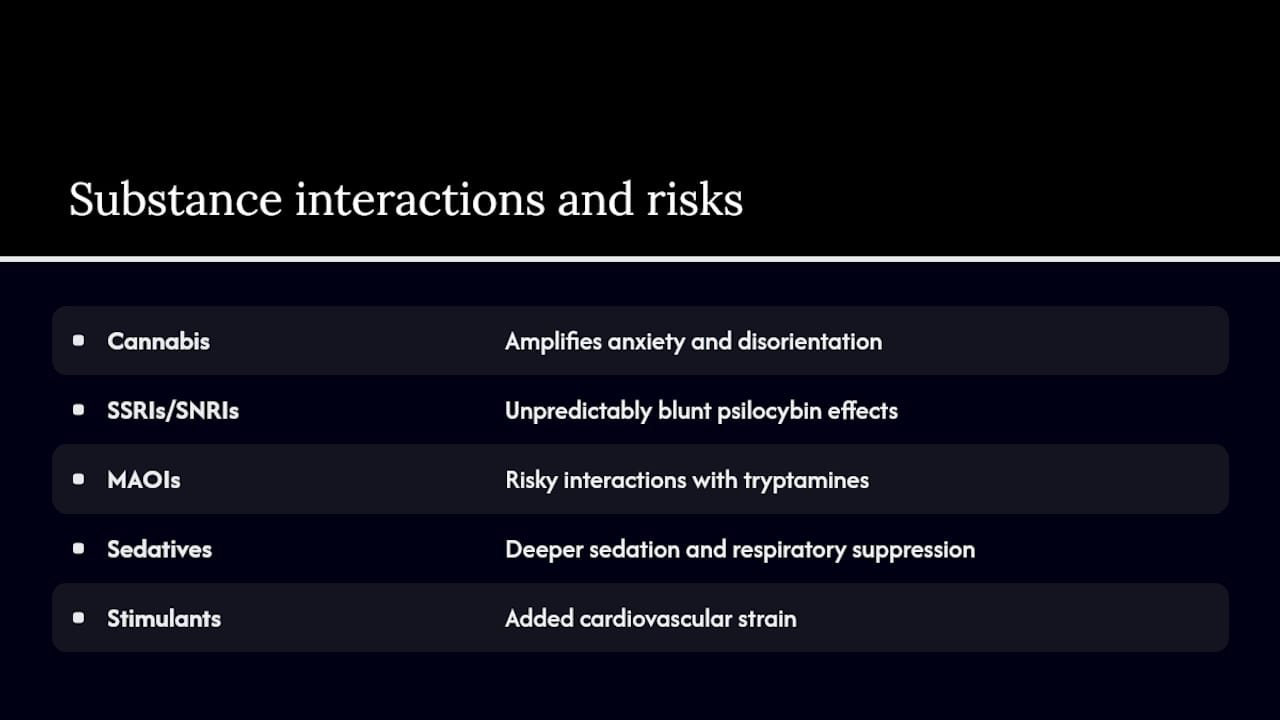
Stimulants (cocaine, prescription amphetamines) add cardiovascular strain on top of what’s already a demanding night for the heart and nervous system. Anyone on regular prescription medication, especially anything affecting serotonin, mood, or the central nervous system, should talk to a doctor before combining substances rather than guessing at how they’ll interact. This is one of the clearest cases where polysubstance guidance from public health agencies applies directly: more substances in the mix means more unpredictable physiology, not a more interesting night.
Long-Term Consequences of Combining Psilocybin and Alcohol
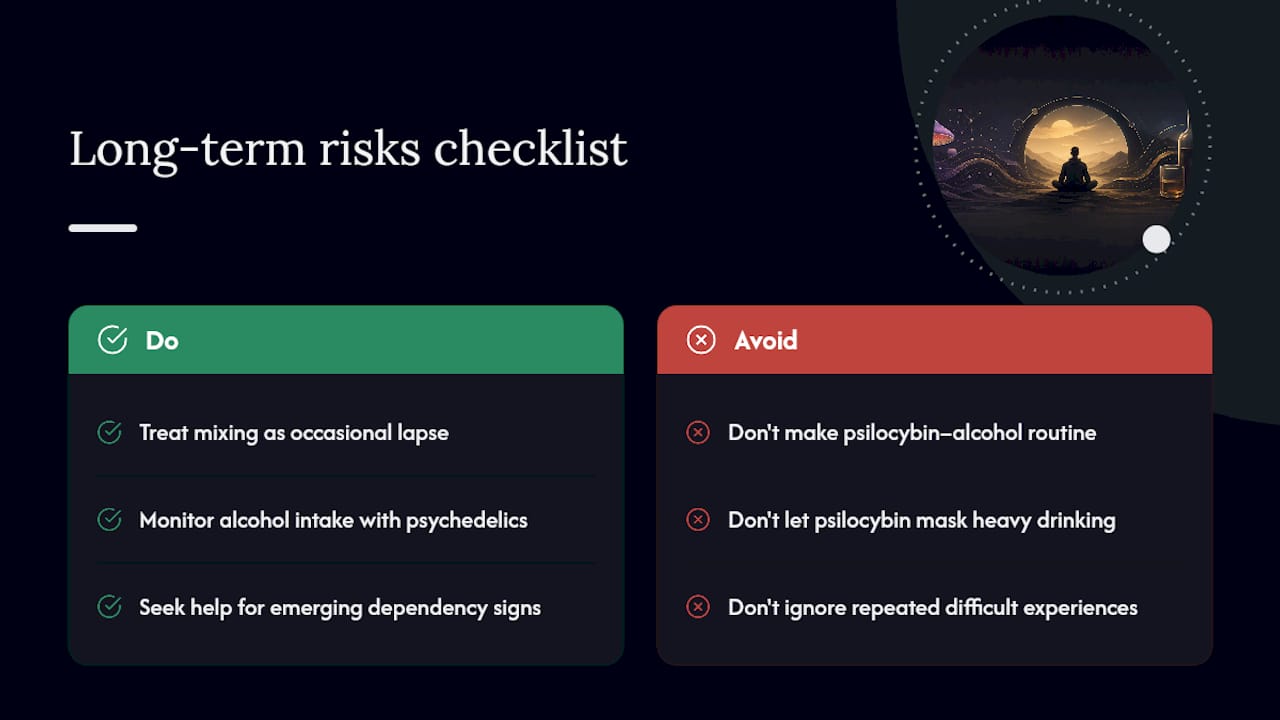
Occasional careless mixing is one thing. A pattern of it is another, and the long-term picture is where things get genuinely concerning.
Alcohol’s effects on GABA and glutamate systems can persist even after someone feels sober, and that lingering chemistry may blunt the cortical activity and emotional processing psilocybin is known for. If someone is using psilocybin partly for emotional processing or introspective work, repeated alcohol pairing can quietly undercut the very effect they’re chasing.
There’s also a dependency angle worth naming directly. Regular heavy drinking combined with frequent psychedelic use can mask developing alcohol problems, since the psilocybin experience becomes the focal point of the night while alcohol intake creeps upward unnoticed. Mental health risk compounds too: repeated difficult experiences, the kind alcohol makes more likely, have been linked anecdotally to lingering anxiety and mood disturbance in people who already carry some vulnerability to them. None of this means occasional recreational use guarantees harm. It means treating the combination as routine, rather than an occasional lapse, carries real cumulative risk that single-use guidance doesn’t capture.
Legal Status of Psilocybin and Alcohol Together
Psilocybin remains a Schedule I substance under federal law, and the DEA’s own materials confirm that classification, even as a growing number of states and cities have decriminalized possession or created narrow legal frameworks for supervised use. Alcohol is legal for adults 21 and over virtually everywhere in the country, which creates a strange asymmetry: one substance in the mix is fully legal, and the other’s legal status depends entirely on where you’re standing.
That patchwork matters practically. Decriminalization in a given city doesn’t mean sale, cultivation, or public use is legal there, and it doesn’t change federal status at all. Combining psilocybin with alcohol also raises the stakes if something goes wrong in public. Impaired driving, public intoxication, or a medical emergency involving both substances can trigger legal consequences tied to the alcohol alone, on top of whatever psilocybin-specific laws apply locally. Anyone unsure of their local rules should check their specific state and city statutes rather than assume decriminalization elsewhere applies to them.
An Editorial Note on Reading the Research Honestly
The clinical psilocybin trials for alcohol use disorder get cited constantly to suggest the two substances play well together. They don’t support that at all. Every protocol that shows promise depends on abstinence, screening, and supervision, the opposite conditions of a Friday night with a flask in one pocket. We emphasize alcohol-free sessions, suggest conversations about dosing before purchase, and highlight product consistency you can rely on. If you want to go deeper on strain-specific effects or dosing approaches, our guides on psilocybin strain effects and harm reduction fundamentals are good next stops.
— Juiced
Finding Products You Can Actually Trust
Elevated Remedies gives you a straightforward alternative to guessing what you’re getting from an unmarked bag: consistent dosing you can rely on, whether you’re exploring microdose capsules or trying an edible for the first time. 
We carry mushroom capsules and edibles built around consistency, not surprises, which matters enormously once you understand how unpredictable psilocybin gets when alcohol enters the picture. It’s important to seek advice when considering dosing, and skipping alcohol on a dose day is strongly recommended. If you’re curious about what’s in an amanita muscaria product or want to consider what fits your experience level, you can visit a local smoke shop or check relevant pages before ordering online.
Sources
- Alcohol and hallucinogens | AddictionCenter
- Alcohol’s effects on the body | NIAAA
- Polysubstance use | CDC
- Review on psychedelic pharmacology and effects | PMC
- Clinicaltrials
This article is general information, not a substitute for advice from a qualified doctor. Consult a qualified healthcare professional about your own circumstances before acting on anything here.
FAQ
What Mushroom Reacts With Alcohol?
Psilocybin mushrooms are the type most people ask about, and the reaction isn’t a dangerous chemical clash so much as stacked physical effects: nausea, dehydration, and impaired judgment layered on top of each other.
Can You Mix Shrooms and Alcohol Safely?
There’s no validated safe way to combine them. The combination raises the odds of a difficult psychological experience and physical illness rather than smoothing either substance out.
Does Drinking Alcohol Make a Psilocybin Trip Shorter?
No controlled research supports that idea. Alcohol tends to blunt or distort the experience unpredictably rather than reliably shortening it.
Is It Safe to Drink Alcohol the Day After Taking Psilocybin?
Most harm-reduction guidance recommends waiting at least 48 to 72 hours after a psilocybin session before drinking, with some practitioners suggesting up to a week to protect the integration period.
Does Psilocybin Help With Alcohol Use Disorder?
Supervised clinical trials have shown reduced heavy drinking days when psilocybin is paired with psychotherapy and full abstinence, but that result has nothing to do with drinking while using psilocybin recreationally.