
TL;DR:
- Strain selection in psilocybin microdosing provides a rough potency baseline but is less reliable than growing conditions and storage. Potency varies widely, so dosing must be adjusted carefully to prevent unintentional psychedelic effects. Consistent routines, proper storage, and self-tracking are crucial for safe and effective microdosing outcomes.
Strain selection in psilocybin microdosing is the practice of choosing a specific mushroom cultivar based on its potency profile, typical effects, and fit with your personal goals. The role of strain selection in microdosing matters more than most people realize, but not always for the reasons you’d expect. Potency varies from 0.2% to 2% dry weight depending on growing conditions and storage, which means the strain name on a label tells you far less than the conditions under which those mushrooms were grown and dried. Strains like Golden Teacher, B+, and Penis Envy each carry distinct reputations, but understanding what those reputations actually mean, and where they fall short, is what separates a safe, effective microdosing routine from a frustrating one.
What does strain selection mean in psilocybin microdosing?
Strain selection in psilocybin microdosing refers to choosing a named cultivar of Psilocybe cubensis based on expected potency, effect profile, and your own sensitivity. The word “strain” sounds scientific, but in the mushroom world it rarely carries the same weight it does in genetics or pharmacology.
Most named cultivars lack replicated chemical analysis to support distinct potency or chemotype claims. That means when a vendor calls something a “high-potency strain,” they are usually describing a cultural reputation, not a verified alkaloid profile. Strain names are often marketing labels rather than scientifically verified chemotypes, and the alkaloid content within a single named strain can swing dramatically from batch to batch.
What actually drives potency is less about genetics and more about environment. Growing substrate, humidity, temperature during cultivation, flush number, drying method, and storage conditions all shape the final psilocybin content. Potency differences attributed to strains are overshadowed by variables like flush, growing conditions, drying, and storage, making strain-based dose predictions unreliable.
Here is what that means practically for anyone building a microdosing routine:
- Strain names are starting points, not guarantees. Use them to set rough expectations, not precise doses.
- Batch matters as much as strain. Two batches of the same cultivar can differ significantly in potency.
- Storage degrades potency. Mushrooms stored in humid or warm conditions lose psilocybin content over time.
- Growing conditions are the real variable. Home-grown and commercially grown batches of the same strain will rarely match.
- Chemotype verification is rare. Without lab testing, any potency claim is an estimate.
Understanding these limits does not make strain selection useless. It makes it honest. You can still use strain reputation as a useful filter, especially when choosing between beginner-friendly and more potent options.
How does potency variability affect microdosing safety?
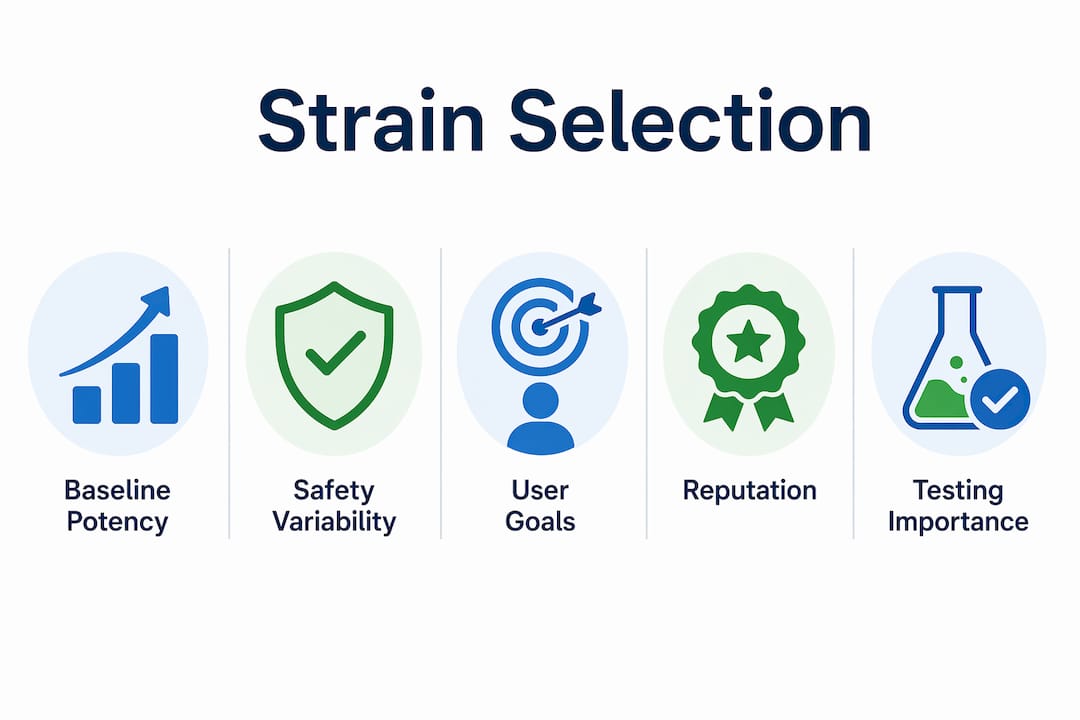
Potency variability is the single biggest practical risk in mushroom microdosing. Psilocybin content ranges from 0.2% to 2% dry weight, a tenfold difference that makes converting grams of dried mushrooms into a reliable psilocybin dose genuinely difficult.
To put that in concrete terms: a 0.1g dose of a low-potency batch delivers roughly 0.2mg of psilocybin. The same 0.1g from a high-potency batch delivers up to 2mg. That is a 10x difference in active compound from the same measured weight. This is why clinical research favors synthetic psilocybin for dosage consistency. Synthetic formulations remove the variability that dried mushrooms carry by nature.
For people microdosing with dried mushrooms, this variability creates a real risk of unintentionally crossing from a microdose into a medium or psychedelic dose. Users often inadvertently escalate dose intensity when switching to a higher-potency strain without recalibrating their dose weight. What felt like a subtle background effect on one strain can become a full perceptual shift on another.
| Potency level | Approximate psilocybin % | Practical implication |
|---|---|---|
| Low | 0.2%–0.5% | More forgiving for beginners; wider margin for error |
| Medium | 0.5%–1.0% | Standard range for most named cultivars |
| High | 1.0%–2.0% | Requires dose reduction; higher risk of overshooting |
Pro Tip: When switching to a new batch or strain, treat it as a new substance entirely. Drop your dose by 30–50% and rebuild from there over one to two weeks.
Laboratory measurement of specific mushroom material is the only reliable way to reduce dose uncertainty. Without a lab test, you are working with an estimate. That is fine if you start low and adjust slowly. It becomes a problem if you assume the label tells the whole story.
What are the most popular strains for microdosing?
Certain strains have built strong reputations within the microdosing community based on consistent reports of predictable effects and manageable potency. Golden Teacher and B+ are the most beginner-friendly options, known for gentle, mood-lifting effects and relatively predictable potency. They sit in the low-to-medium potency range, which gives new microdosers a wider margin for calibration.

Penis Envy is the most discussed high-potency cultivar. It is 1.5x–2x more potent than standard cubensis strains and is better suited to experienced users who have already established a baseline with a milder cultivar. Blue Meanies (Panaeolus cyanescens) are a different species entirely and carry significantly higher psilocybin and psilocin content than most Psilocybe cubensis strains. Mazatapec is a Mexican landrace strain with a reputation for gentle, introspective effects and is often recommended for people whose primary goal is mood support rather than cognitive enhancement.
| Strain | Relative potency | Best for | Primary reported effects |
|---|---|---|---|
| Golden Teacher | Low–medium | Beginners | Mood lift, gentle clarity |
| B+ | Low–medium | Beginners | Warmth, mild focus |
| Mazatapec | Low–medium | Mood support | Introspection, calm |
| Penis Envy | High | Experienced users | Intensity, deep focus |
| Blue Meanies | Very high | Experienced users | Strong visual, emotional depth |
For anyone exploring psilocybin species and potency differences in more depth, understanding that Blue Meanies belong to a different species than cubensis strains is a critical distinction. Treating them as interchangeable with Golden Teacher would be a significant dosing error.
The effects most people associate with microdosing, including mood enhancement, sharper focus, and mild creativity boosts, appear across all these strains at sub-perceptual doses. The difference between strains at the microdose level is subtler than marketing language suggests.
How to select and work with strains for effective microdosing
Choosing a strain is only the first step. Building a consistent, safe routine around it is where the real work happens. Follow this sequence when starting or switching strains:
- Start at the lowest effective dose. A standard starting point for new users is 0.05–0.1g of dried mushrooms. This range lets you assess your sensitivity before increasing.
- Choose a beginner-friendly strain first. Golden Teacher or B+ gives you the most predictable baseline. Establish your response there before moving to higher-potency options.
- Commit to a protocol. Effective microdosing requires 30–60 days of consistent use with a structured schedule, such as one day on and two days off. Single doses tell you almost nothing about long-term effects.
- Store mushrooms correctly. Keep dried mushrooms in an airtight container, away from light and moisture. Poor storage degrades psilocybin content and makes dosing even less predictable.
- Avoid Lemon Tek for microdosing. Lemon Tek accelerates psilocybin conversion and increases intensity. That is useful for full doses, not for the sub-perceptual range you want in microdosing.
- Track your responses. Journaling mood, focus, energy, and sleep quality gives you real data to work with. Trustworthy microdosing practice depends on ongoing self-assessment rather than relying on strain reputation alone.
- Recalibrate when switching strains. Never carry your current dose weight directly into a new strain. Treat every new batch as an unknown and rebuild your dose from scratch.
Pro Tip: If you are curious about microdosing THC alongside psilocybin, the microdosing THC framework from Floral Beverages offers a useful parallel for understanding how low-dose cannabinoid protocols work.
Controlled clinical trials have yet to definitively prove microdosing’s benefits over placebo. That finding does not mean microdosing is ineffective. It means expectancy, intention, and consistency matter enormously. The strain you choose sets the stage, but your protocol and mindset determine the outcome.
For a detailed look at structuring your routine, the 2026 microdosing guide at Theelevatedremedies covers protocols, scheduling, and dose calibration in practical terms.
Key Takeaways
Strain selection shapes your microdosing baseline, but potency variability, storage, and protocol consistency determine whether your routine actually works.
| Point | Details |
|---|---|
| Strain names are not chemotypes | Most cultivar names lack verified alkaloid profiles; treat them as rough guides, not precise dosing tools. |
| Potency varies up to tenfold | Psilocybin content ranges from 0.2% to 2% dry weight, making dose conversion from grams unreliable without lab testing. |
| Beginners should start with Golden Teacher or B+ | These strains offer predictable, low-to-medium potency with a wider margin for calibration errors. |
| Penis Envy requires dose recalibration | At 1.5x–2x standard potency, it demands a significant dose reduction when switching from milder strains. |
| Protocol matters more than strain | A consistent 30–60 day schedule, proper storage, and ongoing self-tracking outperform any single strain choice. |
What I’ve learned from watching people obsess over strain names
People walk into Theelevatedremedies asking about strain potency more than almost any other topic. The question is always some version of “which one is strongest?” I understand the impulse. Stronger sounds better. More efficient. More worth the effort.
The problem is that potency alone does not determine quality or suitability. A high-potency strain in the hands of someone who has not established their baseline sensitivity is not a better experience. It is a less controlled one. I have seen people switch from Golden Teacher to Penis Envy without adjusting their dose weight and end up far outside the sub-perceptual range they were aiming for. That is not a microdose anymore. That is a mistake.
The more useful question is not “which strain is strongest” but “which strain fits my goal right now?” Someone using psilocybin for mood support needs something different than someone chasing creative focus. And both of them need to respect that their individual sensitivity, their sleep, their stress level, and even the time of day they dose all shape the experience as much as the strain does.
Set and setting are not just concepts for full-dose ceremonies. They apply at the microdose level too. A 0.1g dose of Golden Teacher on a calm morning with clear intentions will outperform a 0.2g dose of Penis Envy taken anxiously before a stressful workday. The mushroom does not override context. It amplifies it.
Start gentle. Track everything. Move up only when you have real data from your own body. That is the actual protocol, regardless of which strain you choose.
— Juiced
Mushroom capsules and microdosing support at Theelevatedremedies
Theelevatedremedies carries mushroom capsules designed for people who want consistent, measured doses without the guesswork of weighing dried mushrooms each time. Capsules remove one major variable from the equation and make it easier to stick to a structured protocol.
For anyone still building their foundation, the Theelevatedremedies blog covers dosing guides, strain comparisons, and safety-first approaches for both new and experienced microdosers. The team at 1123 Broadway St in Ann Arbor, MI is also available in person to help you match a product to your goals. Whether you are starting with beginner-friendly options or refining an existing routine, Theelevatedremedies stocks products sourced for quality and consistency.
FAQ
What is the role of strain selection in microdosing?
Strain selection helps you set a starting potency baseline and match a cultivar’s typical effects to your goals. It does not guarantee a specific experience because growing conditions and storage affect psilocybin content more than genetics alone.
Which strains are best for microdosing beginners?
Golden Teacher and B+ are the most recommended beginner strains due to their predictable, low-to-medium potency and gentle effect profiles. Both give new microdosers a wider margin for dose calibration.
How much should you take when microdosing psilocybin?
A standard microdose ranges from 0.05–0.3g of dried mushrooms, with 0.05–0.1g recommended as a starting point for new users assessing their sensitivity.
Why is Penis Envy harder to microdose with?
Penis Envy is 1.5x–2x more potent than standard cubensis strains, meaning the same gram weight delivers significantly more psilocybin. Without dose recalibration, users risk crossing from a microdose into a perceptual or psychedelic range.
Does the strain you choose determine how well microdosing works?
Strain choice sets a rough starting point, but protocol consistency, storage quality, intention, and individual sensitivity determine actual outcomes. Clinical trials have not yet proven microdosing outperforms placebo, which suggests mindset and routine matter as much as the mushroom itself.
Recommended
- Why Choose Sourceman Mushroom Strains for Microdosing – Elevated Remedies
- The Role of Potency in Microdosing: What You Need to Know – Elevated Remedies
- Microdosing vs psychedelic experiences: 5 key differences – Elevated Remedies
- Boost productivity with a psilocybin microdosing workflow – Elevated Remedies