
TL;DR:
- Adaptogens are natural plant compounds that help regulate the body’s stress response and normalize cortisol levels. Clinical trials show that they can reduce anxiety, improve mood, and support cognitive function by working across multiple biological pathways. Using standardized products with verified active ingredients ensures safety and effectiveness for mental wellness.
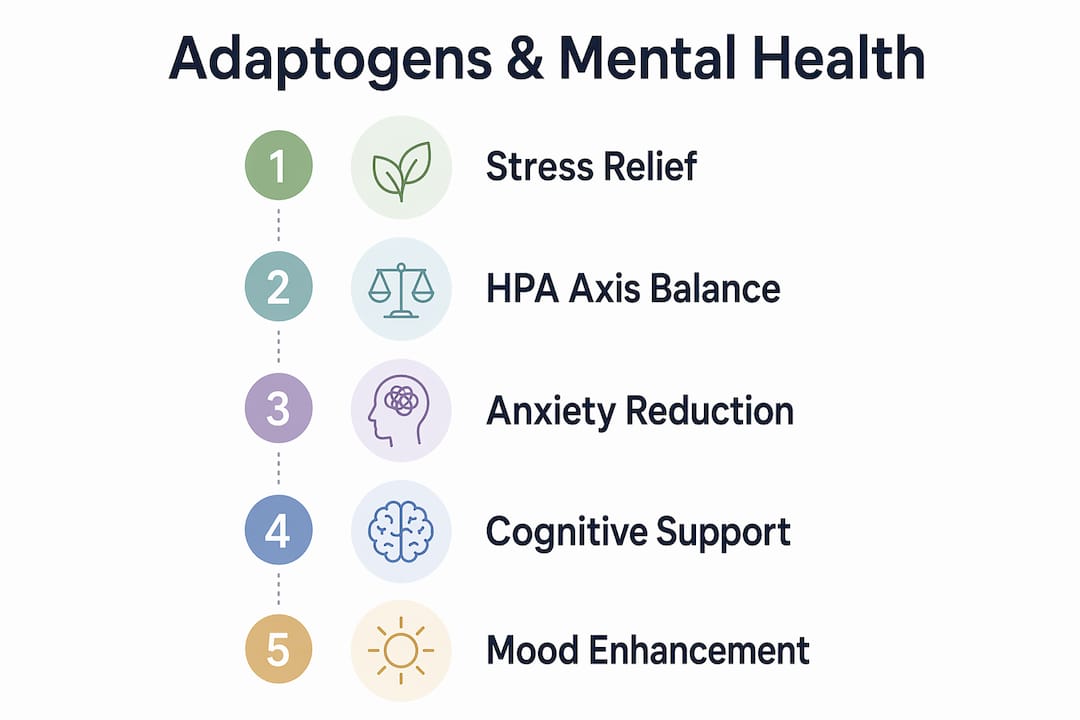
Adaptogens are natural plant compounds that strengthen the body’s resistance to physical and psychological stress by regulating the hypothalamic-pituitary-adrenal (HPA) axis and normalizing stress hormone output. The role of adaptogens in mental health is now backed by clinical trials, with standardized extracts like Ashwagandha root showing anxiolytic effects comparable to prescription medications. Research confirms that plant-derived adaptogens reduce serum cortisol by 14–30% in people experiencing chronic stress. That reduction directly lowers the physiological burden that drives anxiety, mood disruption, and cognitive fatigue. Unlike single-target pharmaceuticals, adaptogens work across multiple biological pathways simultaneously, making them a genuinely different class of natural remedy.
How do adaptogens biologically affect mental health?
Adaptogens regulate the HPA axis, the central command system that controls your cortisol response to stress. When the HPA axis stays chronically activated, cortisol floods the body and brain, damaging mood, memory, and sleep. Adaptogens interrupt this cycle by modulating the feedback signals that tell the adrenal glands to keep producing cortisol.
The molecular picture is more complex than most wellness articles admit. Adaptogens modulate multiple signaling pathways simultaneously, including PI3K/Akt, NF-κB, and AMPK/SIRT1. Each of those pathways influences a different aspect of stress biology, from neuroinflammation to mitochondrial energy production to neurotransmitter balance. That multi-pathway activity is called pleiotropic action, and it explains why adaptogens produce broad mental health effects rather than a single, narrow outcome.
Here is what that pleiotropic activity looks like in practice:
- HPA axis regulation: Reduces the frequency and intensity of cortisol spikes under stress
- Neuroprotection: Limits oxidative damage to brain cells during prolonged stress exposure
- Neurotransmitter modulation: Supports serotonin and GABA signaling, both critical for mood stability
- Anti-inflammatory action: Suppresses neuroinflammation linked to depression and cognitive decline
- Mitochondrial support: Improves cellular energy production, reducing mental fatigue
Adaptogens also differ from stimulants in a critical way. Adaptogens normalize physiology without causing energy depletion or dependence. A stimulant forces output; an adaptogen restores balance. That distinction matters if you are looking for sustainable mental wellness support rather than a short-term boost.
Pro Tip: If you are new to adaptogens, look for products that specify the active compound concentration on the label, such as “5% withanolides” for Ashwagandha. That number tells you the extract is standardized to the compound actually studied in clinical trials.
What clinical evidence supports adaptogens for anxiety and mood?
The clinical record for adaptogens is stronger than most people realize, though it is not without limitations. The most studied adaptogen for mental health is Ashwagandha (Withania somnifera), and the trial data is striking. Standardized Ashwagandha at 600 mg/day showed anxiolytic efficacy comparable to Sertraline, a widely prescribed antidepressant and anti-anxiety medication. The side effect profile told an equally important story: the Sertraline group reported a 28% nausea rate, while the Ashwagandha group reported negligible gastrointestinal effects.
Stress reduction trials add further weight. After 60 days of adaptogen supplementation, participants moved from “severe” stress scores to “moderate,” while the placebo group showed a mean score change of only 1.61. That gap between treatment and placebo is clinically meaningful, not just statistically significant.
“Adaptogens should be considered complementary tools in integrative medicine, enhancing resilience rather than replacing psychiatric care.” — Review on adaptogens in anxiety relief and cognitive enhancement
Bacopa monnieri adds a cognitive dimension to the clinical picture. Bacopa improved verbal memory and reduced anxiety symptoms by 20–55% in trials, without producing sedative effects. That combination of cognitive enhancement and anxiety reduction without sedation is rare in both pharmaceutical and natural medicine.
| Adaptogen | Primary mental health benefit | Key clinical finding |
|---|---|---|
| Ashwagandha | Anxiety and stress reduction | Comparable to Sertraline; 28% less nausea |
| Bacopa monnieri | Memory and anxiety | 20–55% improvement in verbal memory and anxiety |
| Rhodiola rosea | Fatigue and mood | Reduces burnout and mental exhaustion |
| Holy Basil | Stress and cognitive clarity | Lowers cortisol and supports focus |
| Ginseng | Energy and cognitive function | Improves working memory and reduces fatigue |
One honest caveat: clinical trial heterogeneity and placebo effects caution against treating adaptogens as standalone cures. Study designs vary widely, and long-term safety data remains limited. The evidence supports use as a complementary strategy, not a replacement for professional mental health care.
Which adaptogens are most effective for mental wellness?
Different adaptogens target different aspects of mental health. Choosing the right one depends on your primary symptoms and goals.

Ashwagandha is the most clinically validated option for anxiety and chronic stress. Standardized Ashwagandha extracts with more than 5% withanolides act as GABA mimetics, enhancing the brain’s primary inhibitory neurotransmitter without causing sedation or addiction risk. This makes it particularly useful for people who experience racing thoughts or persistent tension.
Rhodiola rosea targets fatigue-driven mood disruption. It works best when stress manifests as exhaustion, burnout, or emotional flatness rather than acute anxiety. Rhodiola’s primary mechanism involves supporting dopamine and serotonin transport, which directly affects motivation and emotional resilience.
Bacopa monnieri is the adaptogen most associated with cognitive function. It reduces anxiety while simultaneously improving memory consolidation, making it a strong choice for people whose stress shows up as brain fog or difficulty retaining information.
Holy Basil (Ocimum tenuiflorum) reduces cortisol and supports mental clarity. It is often used by people dealing with stress-related cognitive fatigue and mild mood disruption. Its anti-inflammatory properties also make it relevant for people whose stress has a physical inflammatory component.
Ginseng (both Asian and American varieties) improves working memory and reduces mental fatigue. It is best suited for people who need sustained cognitive performance under pressure rather than acute anxiety relief.
The key distinction across all five is standardization. An unstandardized herbal product may contain negligible amounts of the active compound. Quality control and standardization are non-negotiable if you want results that match what clinical trials actually tested. You can learn more about what standardization means in practice through this guide on adaptogen product quality.
How to safely integrate adaptogens into a mental wellness routine
Start with one adaptogen, not a stack. Combining multiple adaptogens before you understand how each one affects you makes it impossible to identify what is working or causing side effects. Give a single adaptogen 4–8 weeks before evaluating results, since most clinical trials measure outcomes at the 60-day mark.
Dosing matters more than most labels suggest. Clinical studies on Ashwagandha use 300–600 mg of standardized extract daily. Products that list only the raw herb weight without specifying active compound concentration are not equivalent to what researchers tested. Always check for withanolide percentage on Ashwagandha labels, and look for equivalent standardization markers on other adaptogens.
- Timing: Take Ashwagandha with food to reduce any gastrointestinal sensitivity. Rhodiola is best taken in the morning since it can be mildly stimulating.
- Interactions: Adaptogens can interact with thyroid medications, immunosuppressants, and sedatives. Consult a healthcare provider before starting if you take any prescription medication.
- Combination strategies: Adaptogens work well alongside CBD for stress relief and lifestyle practices like sleep hygiene and regular exercise. They are not a substitute for those foundations.
- Product verification: Choose suppliers who publish third-party lab results. Formulation variability in unverified products is a documented problem that directly affects clinical outcomes.
Pro Tip: Adaptogens for emotional balance work best when stress is ongoing and moderate, not during acute mental health crises. If you are experiencing severe anxiety or depression, speak with a mental health professional before relying on any supplement.
You can also explore how natural stress management through diet and adaptogens interact with cortisol biology for a deeper look at the physiological side of this approach.
Key Takeaways
Adaptogens reduce cortisol, regulate the HPA axis, and modulate multiple neurological pathways simultaneously, making them one of the most scientifically grounded natural remedies for stress and mental wellness.
| Point | Details |
|---|---|
| HPA axis regulation | Adaptogens lower cortisol by 14–30% in chronic stress, directly reducing anxiety and mood disruption. |
| Pleiotropic action | Unlike single-target drugs, adaptogens affect serotonin, GABA, inflammation, and mitochondrial function at once. |
| Ashwagandha clinical strength | At 600 mg/day with more than 5% withanolides, it matches Sertraline’s efficacy with far fewer side effects. |
| Standardization is non-negotiable | Only products specifying active compound concentration match what clinical trials actually tested. |
| Complementary, not curative | Adaptogens build resilience and reduce stress load; they do not replace professional mental health treatment. |
Adaptogens are tools, not cures. Here is what that means for you.
I have spent years watching the wellness space overclaim and underdeliver. Adaptogens are genuinely different from most supplements, and the science behind them is real. But the framing matters enormously. When someone tells you that Ashwagandha will “fix” your anxiety, they are misrepresenting what the research actually shows.
What the research shows is this: adaptogens make your stress response more efficient. They lower the ceiling on how hard cortisol hits you. They help your nervous system recover faster after a stressful event. That is not nothing. For someone dealing with chronic, low-grade stress that is grinding down their mood and focus, that kind of physiological recalibration can be genuinely life-changing.
The part I find most compelling is the pleiotropic mechanism. The multi-pathway nature of adaptogens distinguishes them from conventional single-pathway drugs in a way that actually makes biological sense for mental health. Stress is not a single-pathway problem. It hits your cortisol, your neurotransmitters, your inflammation markers, and your mitochondria all at once. A compound that addresses all of those simultaneously is a better fit for the problem than one that targets only one receptor.
My honest concern is product quality. The gap between a well-standardized Ashwagandha extract and a cheap, unverified capsule is enormous. Most people never know they bought the wrong thing because they never experienced what the right thing actually does. If you are going to experiment with adaptogens, spend your money on quality first. The dose-response relationship only works when the active compounds are actually present. Pair them with sleep, movement, and real food, and you give them the best possible environment to work in.
— Juiced
What Theelevatedremedies carries for natural mental wellness
Theelevatedremedies, located at 1123 Broadway St in Ann Arbor, Michigan, carries a curated selection of mushroom capsules designed for people who take their mental wellness seriously.
The mushroom capsules at Theelevatedremedies are sourced for consistency and quality, aligned with the standardization principles that clinical research identifies as essential for real results. Whether you are exploring adaptogenic mushrooms for stress support, mood, or cognitive clarity, the team at Theelevatedremedies can help you find the right fit. Stop in or browse the full selection online to find products that match what you are actually looking for.
FAQ
What is the role of adaptogens in mental health?
Adaptogens regulate the HPA axis and reduce cortisol levels, lowering the physiological stress load that drives anxiety, mood disruption, and cognitive fatigue. They work across multiple biological pathways simultaneously, producing broad mental health benefits rather than a single targeted effect.
How do adaptogens help with anxiety specifically?
Standardized Ashwagandha extract at 600 mg/day shows anxiolytic efficacy comparable to Sertraline, with significantly fewer side effects. It acts as a GABA mimetic, enhancing the brain’s primary calming neurotransmitter without sedation or dependence risk.
How long does it take for adaptogens to affect mood?
Most clinical trials measure outcomes at the 60-day mark, and that is a realistic timeline for noticeable mood and stress improvements. Some people notice reduced stress reactivity within 2–4 weeks, but consistent daily use over 8 weeks produces the most reliable results.
Are adaptogens safe to use with prescription medications?
Adaptogens can interact with thyroid medications, immunosuppressants, and sedatives, so professional guidance is necessary before combining them with any prescription drug. Always disclose supplement use to your healthcare provider.
What makes an adaptogen product clinically effective?
Standardized extracts with verified active compound concentrations, such as more than 5% withanolides in Ashwagandha, are the only products that match what clinical trials actually tested. Unstandardized or raw herb products lack the evidence base to predict consistent outcomes.