
TL;DR:
- Responsible psychedelic wellness emphasizes safety, preparation, and proper provider selection outside clinical settings. It requires thorough health screening, medication management, ongoing informed consent, and structured integration to ensure positive outcomes. The industry’s safety standards vary widely, making personal vetting essential for safe experiences.
Responsible psychedelic wellness is defined as the informed, safety-first approach to engaging with substances like psilocybin outside of purely clinical settings, while still honoring the evidence base that makes those substances worth taking seriously. Covering psychedelic wellness trends responsibly means understanding that clinical therapy and personal wellness use are two distinct paths, each requiring its own safety framework. Regulatory bodies in Oregon and Australia have already begun formalizing oversight, with Australia authorizing psychiatrists to administer psilocybin and MDMA with zero adverse events reported through end of 2025. That track record comes from controlled conditions, trained staff, and rigorous screening. The wellness world is catching up, but the gap between clinical rigor and retreat-style experiences remains wide.
What are the foundational safety practices for psychedelic wellness?
Safety in psychedelic wellness starts before you ever take a substance. The preparation phase is where most responsible operators separate themselves from risky ones. Skipping it is the single most common mistake people make when entering this space.
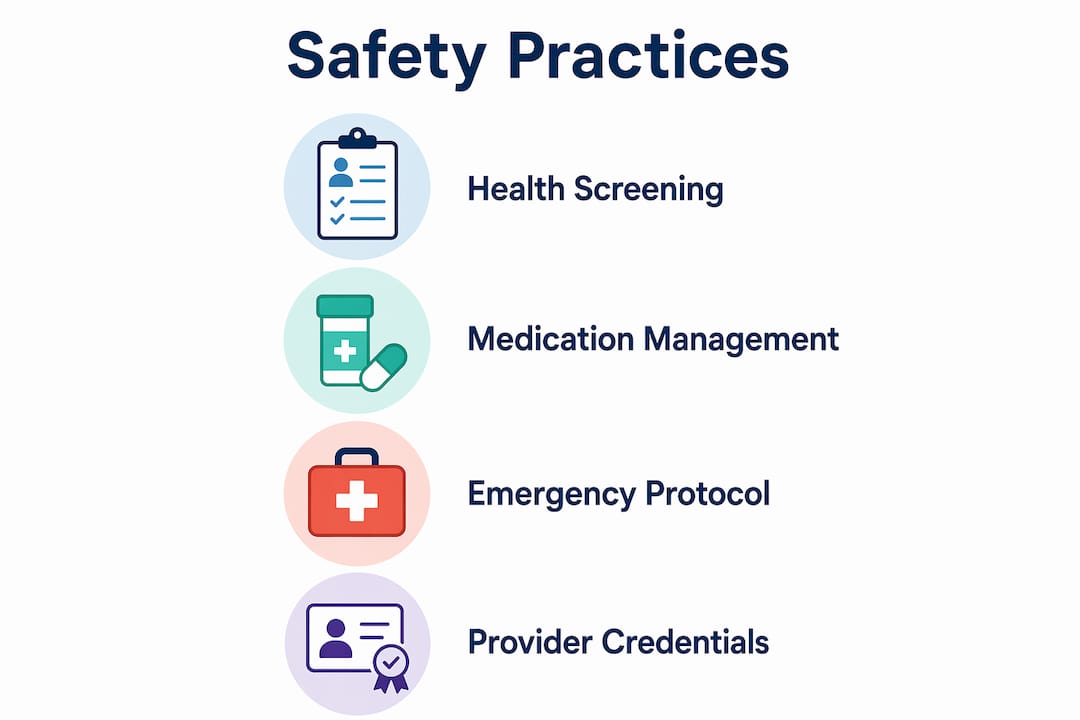
Screening for health conditions is the non-negotiable first step. Certain personal or family histories of psychosis, bipolar disorder, or cardiovascular conditions require medical clearance before any psychedelic experience. A responsible provider will ask about these directly and turn away participants who present contraindicated risk factors.
Medication management is equally critical and often underestimated. 90% of psychedelic retreats require or recommend stopping antidepressants before participation. Safe tapering from SSRIs or SNRIs typically takes 6–12 weeks under professional supervision. Stopping abruptly without a doctor’s guidance is dangerous, and any operator who pressures you to do so quickly is a red flag.
Informed consent is not a one-time signature on a waiver. Best practices in psilocybin services treat consent as a continuous, relational process that addresses power dynamics, physical boundaries, and emotional safety throughout the entire experience. You should feel empowered to ask questions and change your mind at any point.
Additional preparation practices that responsible operators build into their programs include:
- Setting clear personal intentions before the experience
- Understanding the specific risks of the substance and dose being used
- Identifying a trusted support person outside the retreat or session
- Reviewing emergency protocols with the facilitating team in advance
- Knowing how to access mental health support after the experience
Pro Tip: Ask any prospective provider for their written emergency response protocol before you commit. If they cannot produce one, walk away.
Recognizing a responsible operator is straightforward once you know what to look for. Transparent credentials, clear staff roles, pre-experience health screenings, and post-experience integration support are the baseline. Anything less is a risk you should not accept.
How do you evaluate and select safe psychedelic retreats?
The psychedelic retreat industry is growing fast, and the quality gap between operators is enormous. Many retreat centers function more as tourism products than medical facilities, with few standardized safety measures and wide variation in how they handle emergencies. Experts advise a “buyer beware” posture when evaluating any retreat.
“Positive outcomes in clinical trials rely on controlled conditions and trained therapists. Many luxury retreats lack these elements entirely, which means the therapeutic promise does not automatically transfer to a retreat setting.”
The absence of industry-wide protocols means you carry the responsibility of vetting providers yourself. Use these criteria as your evaluation checklist:
- Facilitator credentials: Are facilitators licensed mental health professionals, certified guides, or trained medical staff? Are their roles clearly defined and documented?
- Medical oversight: Is there a physician or nurse on call during sessions? What happens if a participant has a medical emergency?
- Screening process: Does the retreat conduct a thorough intake screening for mental health history, medications, and physical health before accepting you?
- Integration support: Does the program include structured sessions after the experience to help you process what happened?
- Medication policies: Are their washout requirements medically supervised, or are they driven by business incentives?
That last point deserves extra attention. Some retreat operators use washout periods to intensify the psychedelic effect rather than to protect participant safety. When business incentives drive medication decisions, participants face real harm. A responsible retreat will always refer you back to your prescribing doctor for any medication changes.
Safety concerns also include facilitator behavior during sessions. Instances where facilitators consume substances alongside participants have been documented, which eliminates any meaningful emergency response capacity. A sober, present facilitator is a minimum standard, not a luxury.
What are responsible practices for microdosing and at-home wellness?
Microdosing is defined as taking sub-perceptual doses of psilocybin, typically one-tenth to one-twentieth of a full dose, on a structured schedule to support mood, focus, or general well-being. It is not the same as responsible psychedelic therapy in a clinical sense. The distinction matters because the risk profiles, intentions, and support structures are different.
Responsible microdosing outside a clinical setting follows a few core principles:
- Start with the lowest effective amount. Most protocols begin at 0.1–0.3 grams of dried psilocybin mushrooms. Going higher without experience increases the chance of perceptual effects that interfere with daily function.
- Use a structured schedule. The Fadiman Protocol (one day on, two days off) is one of the most widely referenced microdosing schedules. Consistency matters more than frequency.
- Check for medication interactions. Psilocybin can interact with lithium, MAOIs, and certain antidepressants. Review your current medications with a doctor before starting.
- Track your responses. Keep a simple journal noting mood, sleep, focus, and any side effects. This gives you real data to evaluate whether the practice is working.
- Build in rest periods. Cycling off for several weeks after a month of microdosing helps prevent tolerance buildup and gives you a clearer baseline for comparison.
Mindfulness practices, regular sleep, and physical activity all amplify the benefits people report from microdosing. Treating psilocybin as a standalone fix without these supporting habits produces weaker results. For a broader view of harm reduction principles that apply to at-home use, grounding yourself in established frameworks is worth the time.
Pro Tip: If you are new to psilocybin in any form, consider consulting a psychedelic-informed therapist or physician before starting a microdosing practice, even if your use is entirely personal and wellness-focused.

Some readers exploring psychedelic derivatives and CBD wellness combinations may also find value in understanding how psychedelic compounds interact with other substances before combining them.
How do you integrate psychedelic experiences into mental health routines?
Integration is the process of making meaning from a psychedelic experience and applying those insights to daily life. Research consistently shows that the integration phase, not the experience itself, drives lasting mental health benefits. Skipping it is the equivalent of doing the work and never filing the report.
Effective integration draws on several tools:
- Journaling: Writing about the experience within 24–48 hours captures details that fade quickly. Structured prompts work better than open-ended free writing for most people.
- Therapy: A therapist trained in psychedelic integration can help you process difficult material that surfaces during an experience. This is especially relevant after high-dose sessions.
- Community support: Peer integration circles, whether in person or online, provide a space to share experiences without judgment. Isolation after a significant psychedelic experience can amplify difficult emotions.
- Realistic expectations: Not every experience produces a breakthrough. Some sessions are confusing, uncomfortable, or emotionally neutral. Expecting transformation every time sets you up for disappointment.
- Ongoing mental health monitoring: Track your mood and functioning in the weeks after an experience. If you notice persistent anxiety, dissociation, or low mood, contact a mental health professional promptly.
Entheogenic wellness practices that include structured integration tend to produce more consistent outcomes than those that treat the experience as a standalone event. The ethical dimension of integration also matters. Psychedelic experiences can surface memories, emotions, or beliefs that feel urgent and absolute. A good integration practice teaches you to hold those insights with curiosity rather than acting on them impulsively.
Oregon’s psilocybin program data shows that access to structured psychedelic services skews toward midlife adults aged 35–49, with a 32.6% service tourism rate. That pattern suggests many people are traveling specifically to access these experiences, which makes post-experience integration support even more critical when they return home without local resources.
Key Takeaways
Responsible engagement with psychedelic wellness requires preparation, informed provider selection, and structured integration, not just the experience itself.
| Point | Details |
|---|---|
| Preparation is non-negotiable | Screen for health conditions and manage medications with a doctor before any psychedelic experience. |
| Retreat quality varies widely | Verify facilitator credentials, medical oversight, and integration support before committing to any retreat. |
| Microdosing needs structure | Use a consistent schedule, track your responses, and check for medication interactions before starting. |
| Integration drives lasting benefits | Journaling, therapy, and community support after an experience produce more durable mental health outcomes. |
| Informed consent is ongoing | Responsible providers treat consent as a continuous conversation, not a one-time form. |
What I have learned from watching this space evolve
The psychedelic wellness space has a credibility problem that enthusiasts often underestimate. The clinical research is genuinely exciting. The retreat industry, however, is moving faster than its safety infrastructure can support. I have watched people return from expensive retreats with no follow-up care, no integration plan, and real confusion about what they experienced. That is not a wellness outcome. That is a gap in the system.
What concerns me most is the medication washout issue. People are stopping psychiatric medications without medical supervision because a retreat operator told them to, and the risks are serious. The 6–12 week supervised tapering standard exists for good reason. Any operator who bypasses it is prioritizing their business over your safety.
My honest advice: treat your enthusiasm as an asset and your caution as a tool. The distinction between clinical and wellness pathways is real and important. Knowing which one you are engaging with changes everything about how you prepare, what you expect, and how you protect yourself. The people who get the most from this space are the ones who do the homework first.
— Juiced
Theelevatedremedies: a trusted starting point in Ann Arbor
If you are in Ann Arbor and want to engage with psilocybin wellness thoughtfully, Theelevatedremedies at 1123 Broadway St is built for exactly that. The team there does not just sell products. They answer questions, explain options, and help you understand what you are working with before you commit to anything.
Theelevatedremedies carries dried magic mushrooms, microdosing capsules, and mushroom chocolates, all sourced for quality and consistency. Whether you are brand new to psilocybin or looking to refine an existing wellness practice, the staff can point you toward the right product and the right resources. Stop in, ask your questions, and leave with real information.
FAQ
What is the difference between clinical psychedelic therapy and wellness use?
Clinical psychedelic therapy takes place under the supervision of licensed medical professionals in controlled settings, with strict screening and follow-up protocols. Wellness use, including retreats and microdosing, operates outside that framework and requires individuals to take greater personal responsibility for safety.
How long does antidepressant tapering take before a psychedelic experience?
Safe tapering from antidepressants before psychedelic use typically requires 6–12 weeks of professional medical supervision. Never stop psychiatric medications abruptly or without a doctor’s guidance.
What should I look for in a responsible psychedelic retreat?
Look for clear facilitator credentials, a documented emergency response protocol, pre-experience health screening, and structured integration support after the session. Avoid any retreat where facilitators consume substances alongside participants.
What is psychedelic integration and why does it matter?
Integration is the practice of processing and applying insights from a psychedelic experience through tools like journaling, therapy, and peer support. It is the phase most directly linked to lasting mental health benefits.
Is microdosing psilocybin safe for everyone?
Microdosing is not appropriate for everyone. People with personal or family histories of psychosis, those taking MAOIs or lithium, and anyone without medical clearance should consult a physician before starting any psilocybin practice.