
TL;DR:
- Psychoactive compounds are chemicals that change brain function, affecting mood, perception, and behavior. Their effects depend on substance type, individual biology, and environment, with research expanding on their therapeutic potential. Education about how they work and the risks involved is essential for making informed wellness decisions.
Psychoactive compounds are chemical substances that alter brain function, directly changing mood, perception, cognition, and behavior. You encounter them more often than you think. Caffeine sharpens your focus every morning. Alcohol loosens social inhibitions at night. Nicotine calms nerves between meetings. Psilocybin, the active compound in magic mushrooms, can dissolve the boundary between self and world. These substances range from the mundane to the profound, and understanding what they are, how they work, and what they do to the brain is the first step toward making informed choices about your own wellness.
Psychoactive compounds explained: what are they and how are they classified?
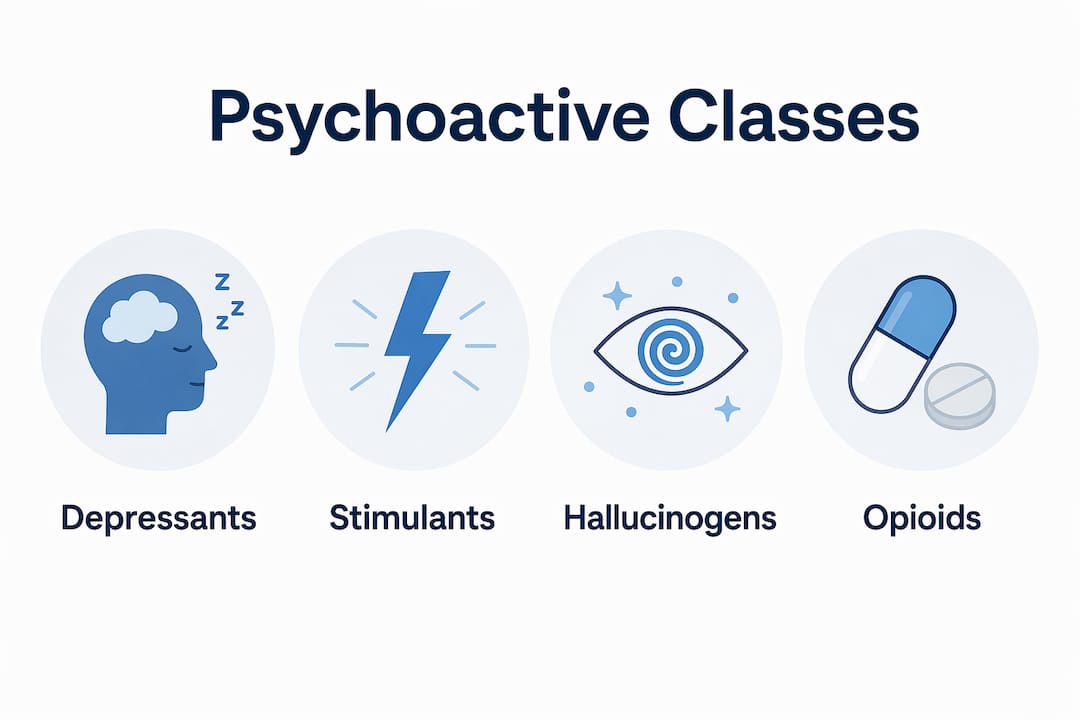
Psychoactive compounds are grouped into four major categories based on how they affect the central nervous system. Each class produces a distinct set of effects because each targets different brain systems.
Depressants slow down central nervous system activity. Alcohol, benzodiazepines like Valium and Xanax, and barbiturates all fall here. They reduce anxiety, promote relaxation, and at high doses cause sedation or unconsciousness. Benzodiazepines affect GABA-A receptors similarly to barbiturates but carry a wider margin between an effective dose and a fatal one. That safety difference is why benzodiazepines replaced barbiturates as the standard clinical treatment for anxiety.
Stimulants increase neural activity. Caffeine, nicotine, cocaine, and amphetamines like Adderall all accelerate heart rate, sharpen focus, and elevate mood by flooding the brain with dopamine and norepinephrine. The effect feels energizing in the short term and depleting over time.
Hallucinogens distort sensory perception and alter thought patterns. Classic psychedelics like psilocybin and LSD act primarily as serotonin 5-HT2A receptor agonists. Dissociatives like PCP and ketamine work differently. They block glutamate NMDA receptors, producing a detached, out-of-body experience rather than the visual and emotional intensity of classic psychedelics. Grouping all hallucinogens together misses this fundamental chemical difference.
Opioids bind to mu-opioid receptors and produce intense pain relief and euphoria. Morphine, heroin, oxycodone, and fentanyl all belong here. Their high addiction potential and narrow safety margin make them the most medically managed class.
| Type | Examples | Primary target | Typical effects |
|---|---|---|---|
| Depressants | Alcohol, benzodiazepines | GABA-A receptors | Sedation, anxiety relief |
| Stimulants | Caffeine, cocaine, Adderall | Dopamine, norepinephrine | Alertness, elevated mood |
| Hallucinogens | Psilocybin, LSD, ketamine | 5-HT2A, NMDA receptors | Altered perception, ego shift |
| Opioids | Morphine, fentanyl | Mu-opioid receptors | Pain relief, euphoria |
How do psychoactive compounds affect the brain biologically?
Every psychoactive substance works by interfering with the brain’s chemical messaging system. Neurons communicate through neurotransmitters, and psychoactive agents either mimic, block, or amplify those signals.
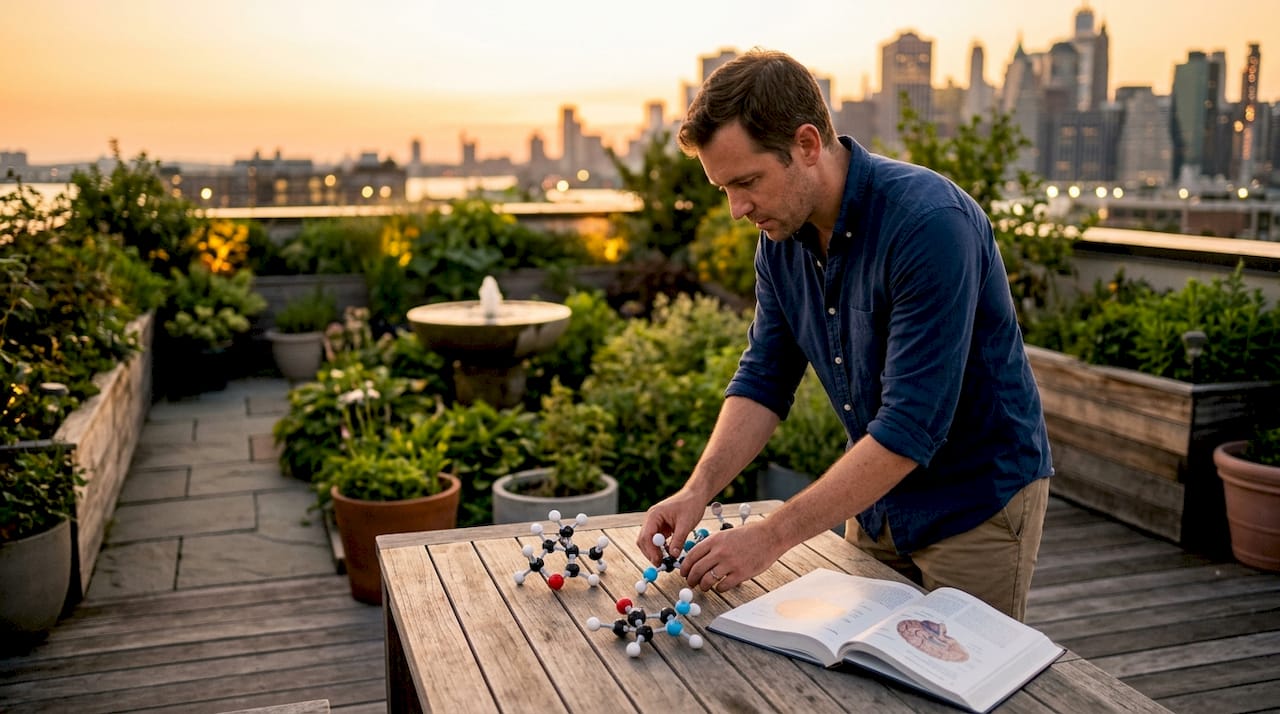
Psychoactive drugs modulate neurotransmitter systems such as GABA, serotonin, dopamine, and glutamate. Each system governs a different aspect of mental experience. GABA is the brain’s primary brake pedal, so enhancing it produces calm. Dopamine drives reward and motivation, so amplifying it produces euphoria. Serotonin regulates mood, appetite, and social behavior, so activating its 5-HT2A receptor with psilocybin or LSD produces profound shifts in perception and self-awareness.
Classic psychedelics go further than simple receptor activation. Altered default mode network activity underlies the ego dissolution that people report on high doses of psilocybin or LSD. The default mode network is the brain region responsible for your sense of self and narrative identity. When psychedelics suppress it, the boundary between “you” and “everything else” temporarily dissolves. Researchers believe this reset may be what makes psychedelics therapeutically useful for conditions rooted in rigid, self-referential thinking.
Pharmacokinetics also matter. How quickly a compound reaches the brain, how long it stays active, and how the body clears it all shape the experience. Lipophilic compounds like THC store in fat cells, which is why cannabis metabolites remain detectable in urine long after the high has passed. That storage effect has no parallel in how long the psychoactive experience actually lasts.
Pro Tip: If you are curious about how terpenes in cannabis interact with psychoactive compounds to shape your experience, the science of terpene and cannabinoid interaction is worth understanding before you choose a product.
What factors shape your individual experience with psychoactive substances?
Two people can take the same dose of the same substance and have completely different experiences. This is not random. The triad of substance, user biology, and environment determines the outcome. Researchers call the psychological and environmental components “set and setting,” a term popularized by Timothy Leary and later validated by clinical research.
“Set” refers to your mindset going in: your expectations, emotional state, mental health history, and intentions. “Setting” refers to your physical and social environment. A person who takes psilocybin in a calm, guided clinical setting reports very different effects than someone who takes the same dose at a loud, unfamiliar party. The compound is identical. The experience is not.
Individual biology adds another layer of variation:
- Genetics affect how quickly your liver metabolizes a compound. CYP2D6 enzyme variants, for example, cause some people to process opioids and certain antidepressants much faster or slower than average.
- Tolerance builds with repeated use. Regular caffeine drinkers need more coffee to feel alert because their adenosine receptors upregulate to compensate.
- Body composition influences how lipophilic compounds like THC distribute and clear from the body.
- Mental health baseline shapes how a person interprets altered states. Pre-existing anxiety can amplify the anxious edge of a stimulant or psychedelic.
Pro Tip: Before trying any new psychoactive substance, read about the differences between microdosing and full psychedelic experiences to understand which approach fits your goals and risk tolerance.
Which psychoactive compounds are being studied for mental health?
The clinical research on psychoactive substances for mental health has accelerated sharply over the past decade. The most studied compounds are psilocybin and LSD, both of which are in active clinical trials for depression, anxiety, and PTSD.
Psilocybin produces effects lasting 4–6 hours, compared to LSD’s 8–12 hours. That shorter duration makes psilocybin easier to administer in a clinical setting, which partly explains why it has moved faster through trials. Johns Hopkins University and NYU have both published results showing significant reductions in treatment-resistant depression after one or two guided psilocybin sessions. The FDA granted psilocybin “Breakthrough Therapy” designation for major depressive disorder, accelerating its review process.
Several psychoactive compounds are already approved medicines. The table below shows the distinction between established therapeutic use and emerging research.
| Compound | Approved use | Research status |
|---|---|---|
| Benzodiazepines | Anxiety, seizures | Established |
| SSRIs (e.g., Prozac) | Depression, OCD | Established |
| Opioids (e.g., morphine) | Pain management | Established |
| Psilocybin | None yet (FDA Breakthrough) | Active trials |
| LSD | None yet | Active trials |
| MDMA | None yet (FDA review) | Phase 3 trials for PTSD |
Psychoactive substances include essential medicines like SSRIs and anxiolytics, which directly counters the assumption that all psychoactives are recreational or addictive. The stigma around the word “psychoactive” often obscures the fact that millions of people take these compounds daily under medical supervision.
New Psychoactive Substances (NPS) represent the riskier end of this spectrum. By november 2023, 1,230 NPS compounds had been reported globally. These are chemically modified versions of existing drugs, designed to sidestep legal controls. Their effects are unpredictable because they have no clinical history. Avoiding NPS is one of the clearest harm-reduction principles in this space. The psilocybin chocolate benefits being studied today come from well-characterized natural compounds, not synthetic analogs with unknown safety profiles.
Key takeaways
Psychoactive compounds alter brain function through specific neurotransmitter systems, and their effects depend on compound type, individual biology, and environment in equal measure.
| Point | Details |
|---|---|
| Four main classes | Depressants, stimulants, hallucinogens, and opioids each target distinct brain receptors. |
| Mechanism matters | Psychedelics suppress the default mode network, which may explain their therapeutic potential for depression. |
| Set and setting | The same dose produces different outcomes depending on mindset and environment. |
| Clinical research is active | Psilocybin and MDMA are in late-stage trials for depression and PTSD respectively. |
| NPS carry serious risk | Over 1,230 synthetic compounds have been reported globally, with unpredictable and uncharacterized effects. |
The misconception that costs people the most
The biggest mistake I see is treating “psychoactive” as a synonym for “dangerous.” That framing shuts down curiosity before it starts, and it ignores the fact that the most widely used psychoactive compound on earth is caffeine. The second most prescribed class of psychiatric drugs, SSRIs, are psychoactive by definition.
What actually determines risk is not whether a substance is psychoactive. It is the compound’s specific mechanism, the dose, the person’s health history, and the context of use. Psilocybin has a well-documented physiological safety profile in controlled settings. Fentanyl, also psychoactive, has an extremely narrow margin between a therapeutic dose and a fatal one. Lumping these together under one label produces fear, not understanding.
The research coming out of Johns Hopkins, NYU, and Imperial College London is forcing a serious reconsideration of how we categorize these substances. Psilocybin is not the same as methamphetamine. Ketamine is now an FDA-approved antidepressant. The cannabinoids list keeps expanding as researchers identify new compounds with distinct effects. The science is moving faster than the cultural conversation.
My honest view: education is the most underrated harm-reduction tool available. People who understand how a compound works, what it does to their brain, and what factors amplify or reduce its effects make far better decisions than people who operate on fear or hype alone. Read, ask questions, and choose sources that distinguish between mechanism and moralizing.
— Juiced
Theelevatedremedies: quality products for curious minds in Ann Arbor
Theelevatedremedies, located at 1123 Broadway St in Ann Arbor, Michigan, carries a curated selection of psilocybin products for people who want to explore psychoactive wellness with confidence. The team there knows the difference between a quality product and a risky one, and they stock accordingly.
If you are curious about naturally occurring psychoactive mushrooms beyond psilocybin, the Amanita muscaria product page at Theelevatedremedies is a solid starting point. Amanita muscaria works through muscimol rather than psilocybin, giving it a completely different effect profile worth understanding. Whether you are new to this space or already informed, Theelevatedremedies offers the products and knowledge to help you move forward responsibly.
FAQ
What are psychoactive compounds?
Psychoactive compounds are chemical substances that alter brain function by interacting with neurotransmitter systems, producing changes in mood, perception, cognition, and behavior. Common examples include caffeine, alcohol, psilocybin, and SSRIs.
How do classic psychedelics differ from dissociatives?
Classic psychedelics like psilocybin and LSD act on serotonin 5-HT2A receptors, while dissociatives like ketamine and PCP block glutamate NMDA receptors. This difference in mechanism produces fundamentally different experiences: visual and emotional intensity versus detachment and anesthesia.
Is psilocybin being used in mental health treatment?
Psilocybin is not yet FDA-approved but holds FDA Breakthrough Therapy designation for major depressive disorder. Clinical trials at institutions like Johns Hopkins show significant results for treatment-resistant depression after one or two guided sessions.
What is “set and setting” and why does it matter?
Set and setting refers to the user’s mindset and physical environment at the time of use. Research confirms that the same dose of a psychoactive substance can produce very different outcomes depending on these two factors, making context as important as chemistry.
What are New Psychoactive Substances (NPS)?
New Psychoactive Substances are chemically modified versions of existing drugs designed to bypass legal controls. By november 2023, over 1,230 NPS compounds had been identified globally, and their unpredictable effects make them significantly more dangerous than well-studied natural compounds.